
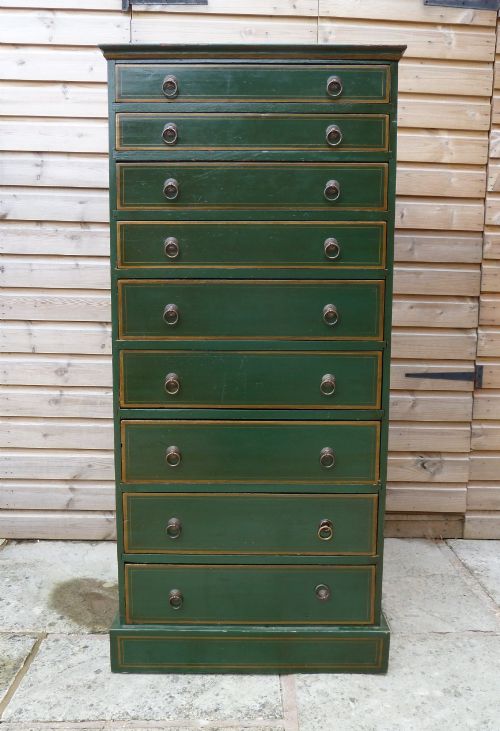
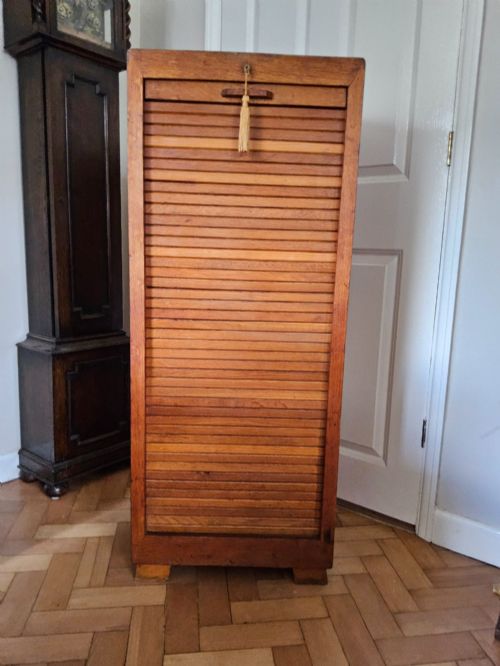
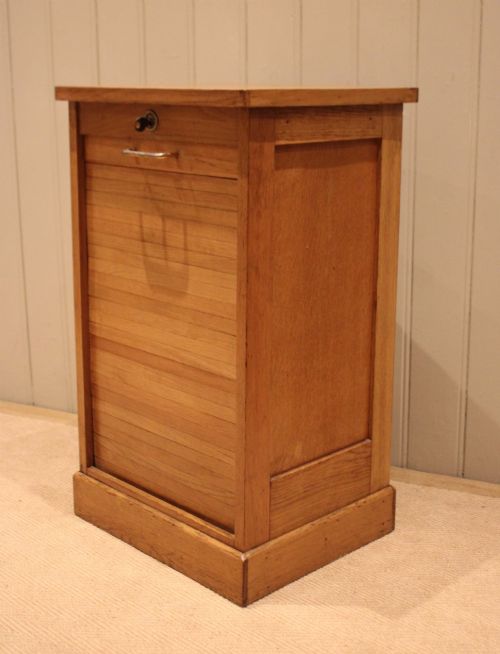
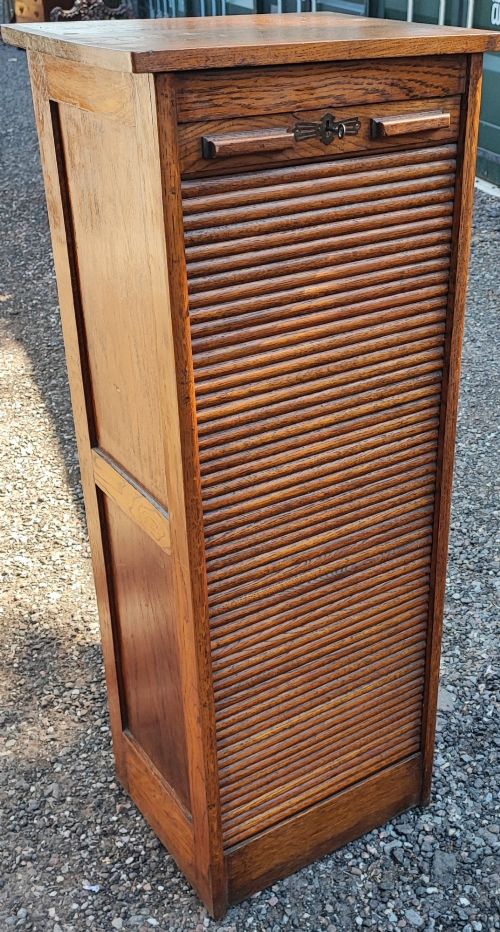
Vintage Office Document Cabinet
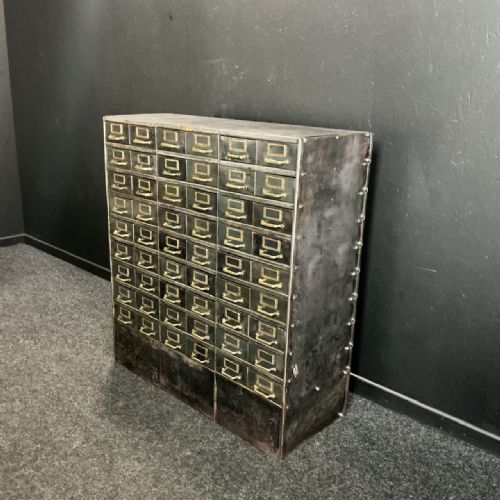
A vintage office document cabinet keeps papers ordered through deep banks of drawers, tambour doors, and pigeon holes.
Vintage Office Document Cabinet
A vintage office document cabinet is a practical piece designed to sort papers, letters, and files in a workspace. These pieces emerge from periods spanning the late nineteenth century through the early twentieth century, including Victorian and Edwardian eras.
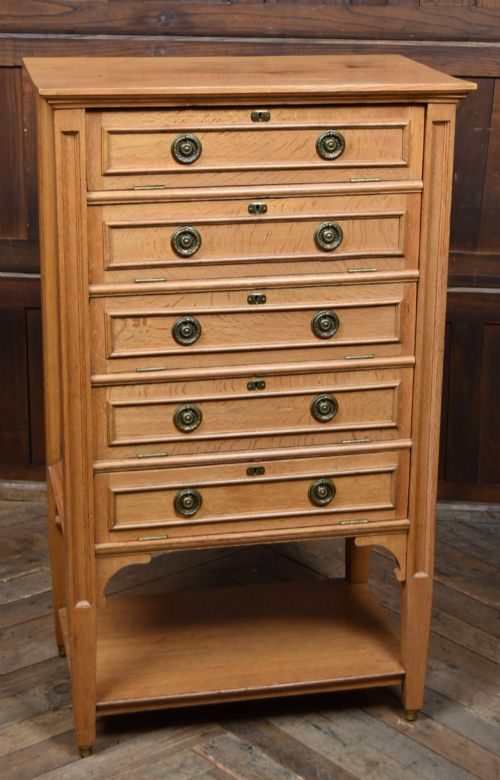
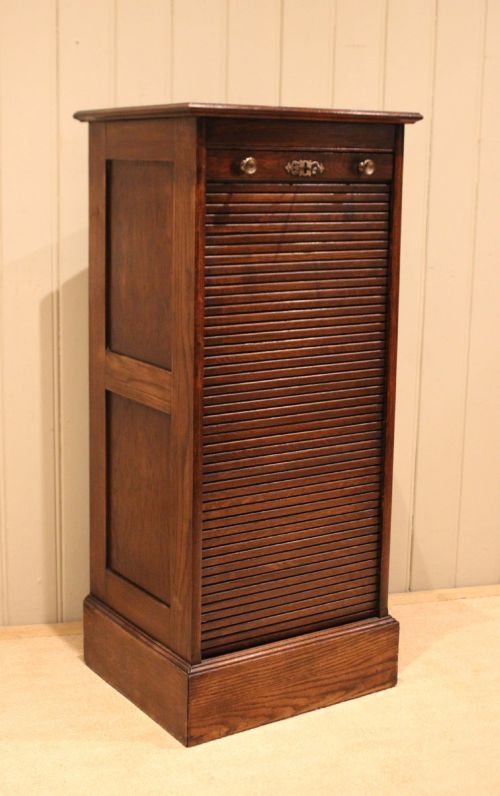
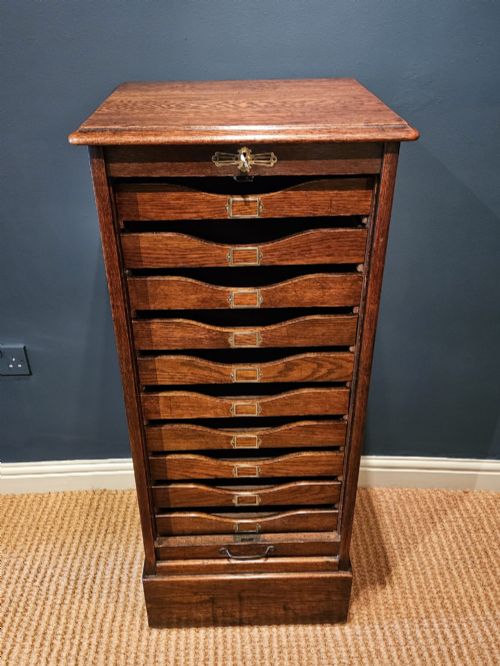
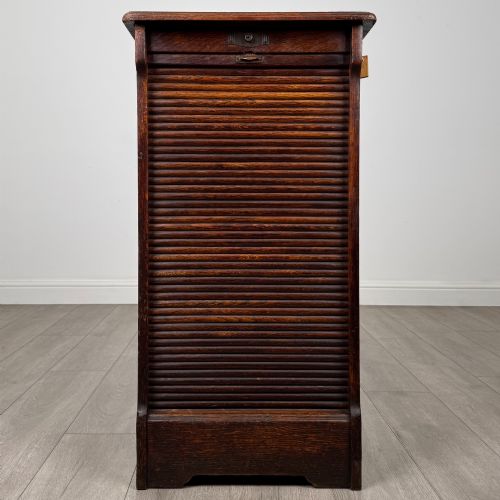
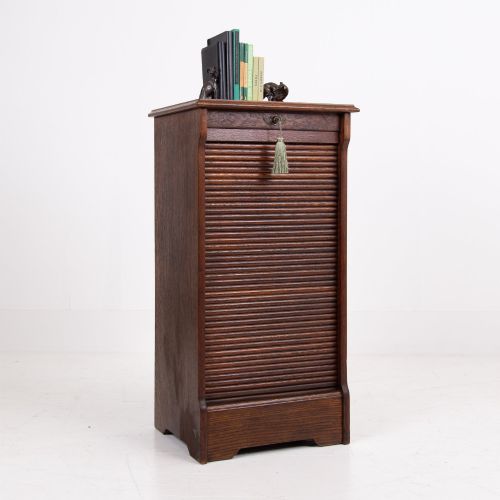
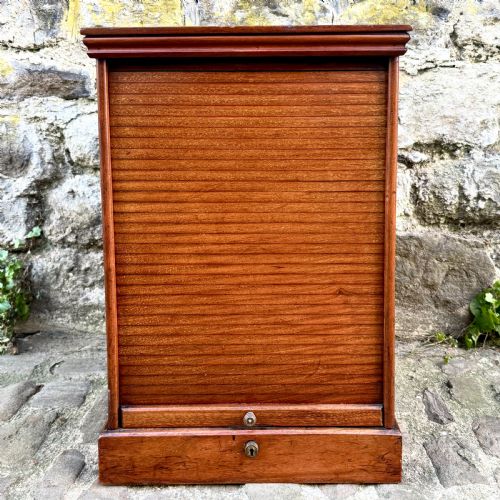
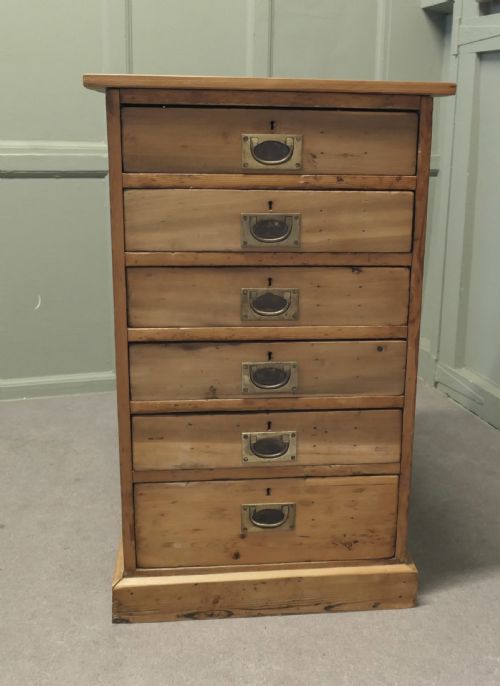
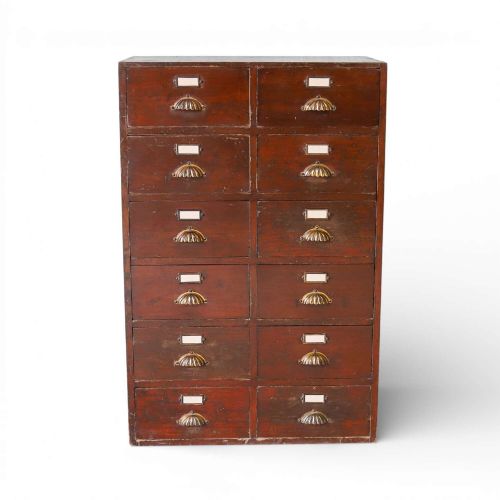
The most common formats met on this page are oak and mahogany filing cabinets, banks of drawers, and tambour front cabinets. Pieces also appear as desktop pigeon holes, campaign furniture, and industrial banks.
Origins include English workshops, Scottish pieces, and French industrial or post office designs. Buyers find everything from large pedestal units to small proportioned desk organisers.
Materials and construction
Construction relies heavily on timbers such as oak, mahogany, pine, and walnut, often paired with brass handles, label holders, and shell pulls. Selected pieces incorporate steel, metal, canvas, and leather elements.
Techniques range from traditional dovetail joints on drawers to slatted tambour doors that slide smoothly around a track. Campaign pieces utilise robust brass hardware for portability, while patent letter files employ specialised internal mechanisms.
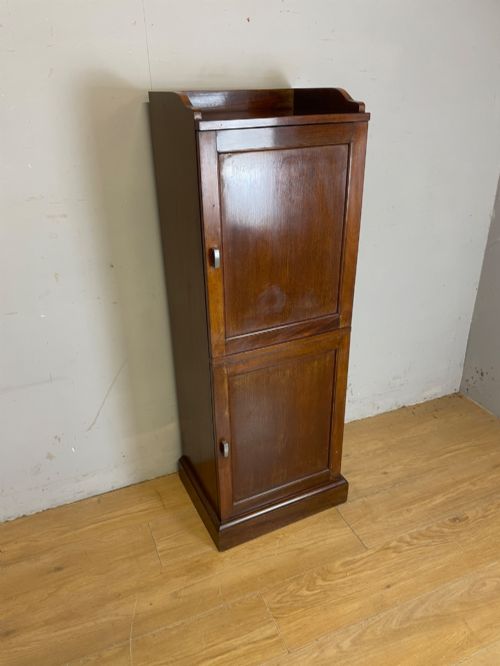
Gamekeepers once stored paperwork alongside game records in specialised oak clerk's cupboards.
Judging the build
Quality rests on the selection of solid hardwoods like oak and mahogany over softer pine, alongside the integrity of the joinery. Smooth operation of tambour doors and tight joints in multi-drawer banks signal superior cabinet-making.
Original hardware such as brass label holders, shell pulls, and period locks elevate a piece. Finer examples retain their original surface finishes and working mechanical filing systems.
The Vintage Office Document Cabinet Glossary
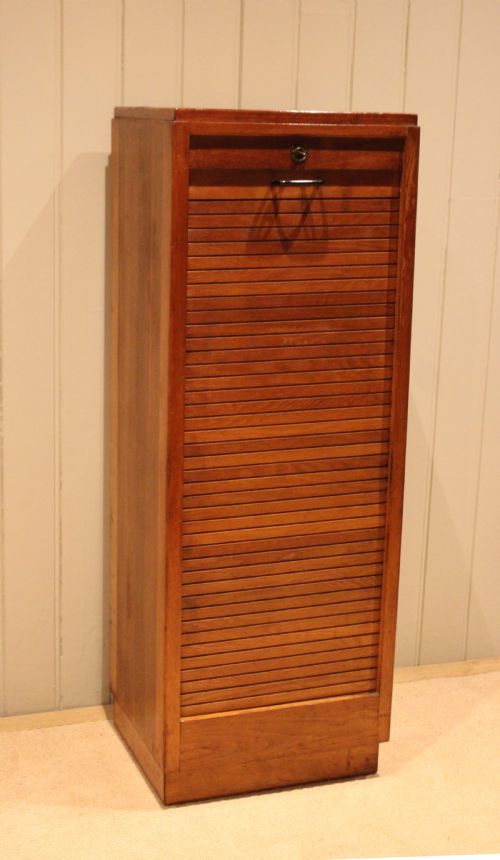
- Tambour
- A flexible door made of narrow strips of wood glued to canvas, allowing it to slide around a curved track. This mechanism conceals the interior filing space.
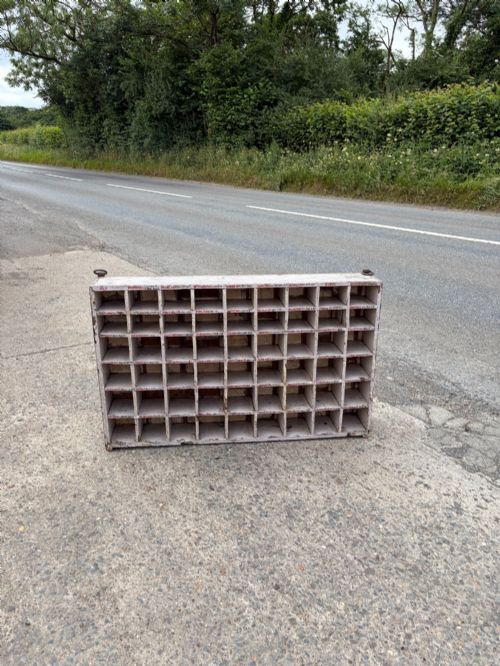
- Pigeon holes
- Compartments arranged in rows and tiers for sorting documents and letters by hand. They sit on desks or inside larger cabinetry.
- Campaign
- Furniture designed to dismantle or withstand transport, featuring recessed brass handles and reinforced corners. These pieces originate from military or travel use.
- Cartonniere
- A decorative French cabinet fitted with leather-fronted boxes or shelves to hold papers. They frequently appear in walnut or mahogany.
- Shell pull
- A handle shaped like a half-shell that doubles as a frame for a paper label. They are commonly found on banks of drawers.
Vintage Office Document Cabinet: Frequently Asked Questions
What is a tambour front cabinet?
A tambour front cabinet uses a sliding slatted wooden door that tracks around a curve to open and close.
This design saves space in tight offices because the door disappears into the cabinet frame rather than swinging outward.
How do I date an office cabinet?
Dating relies on timber choices, construction methods, and hardware styles found across the piece.
Victorian and Edwardian examples often feature solid oak or mahogany with hand-cut dovetails, while later industrial pieces introduce steel and metal elements.
Are these cabinets suitable for modern paper?
Many vintage filing cabinets and banks of drawers accommodate standard contemporary paperwork and folders.
Some patent letter files or older pigeon holes suit smaller documents, notes, and stationery rather than modern suspension files.
What is campaign furniture?
Campaign furniture is portable cabinetry built for travel with recessed brass hardware to prevent damage.
These sturdy pieces bring modular storage and military history into a home study.