
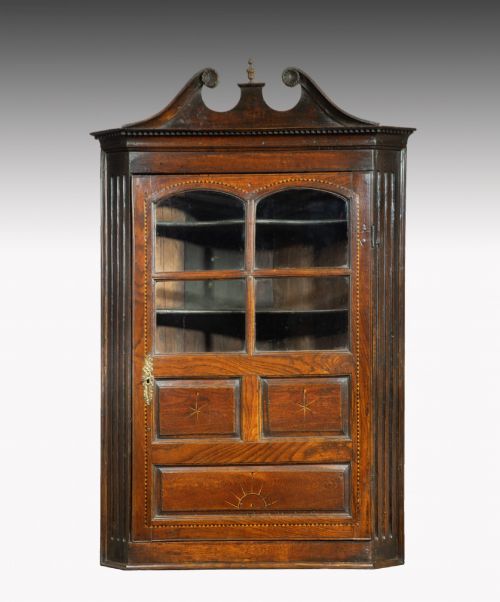
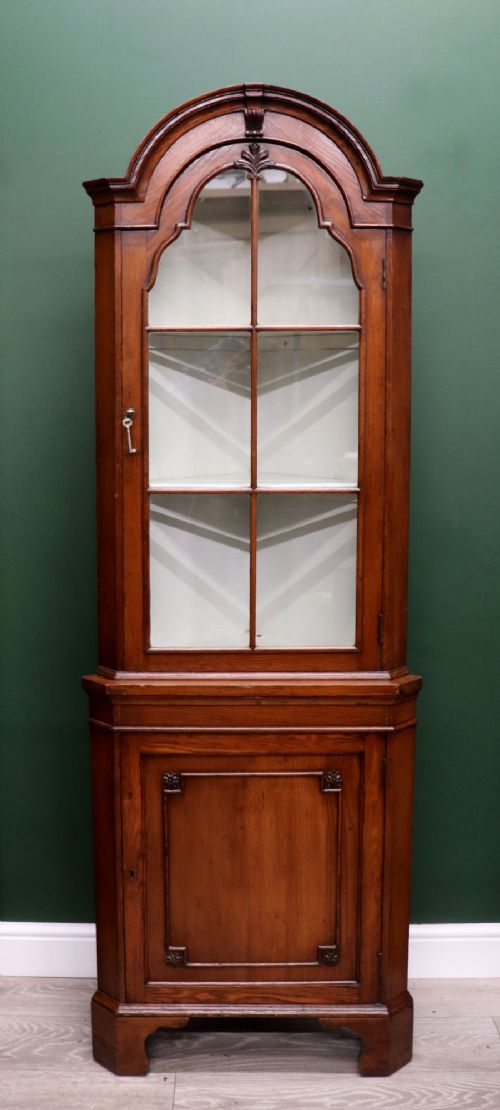


Vintage Oak Corner Unit
A vintage oak corner unit brings warmth and architectural purpose to dead space, offering sturdy timber and period character that modern joinery simply cannot replicate.
What these pieces are
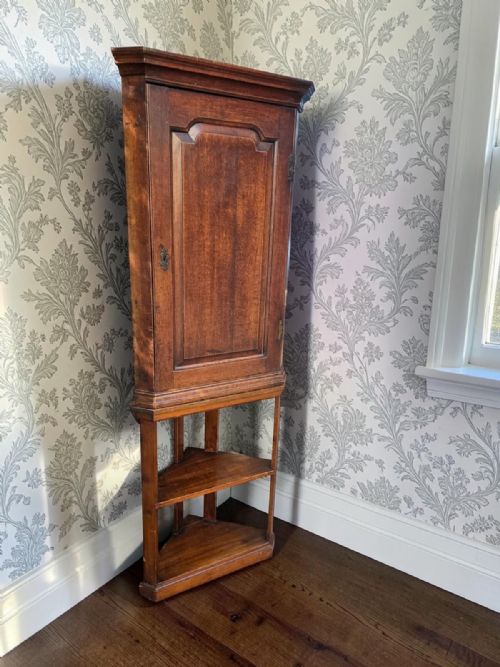
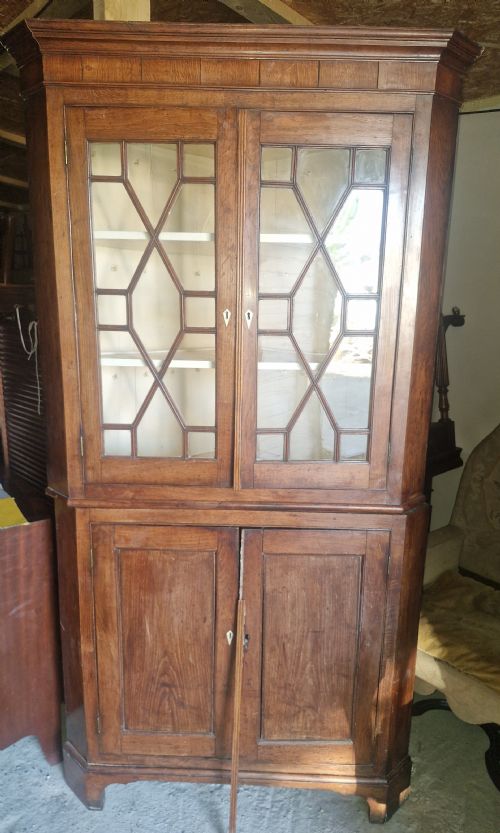
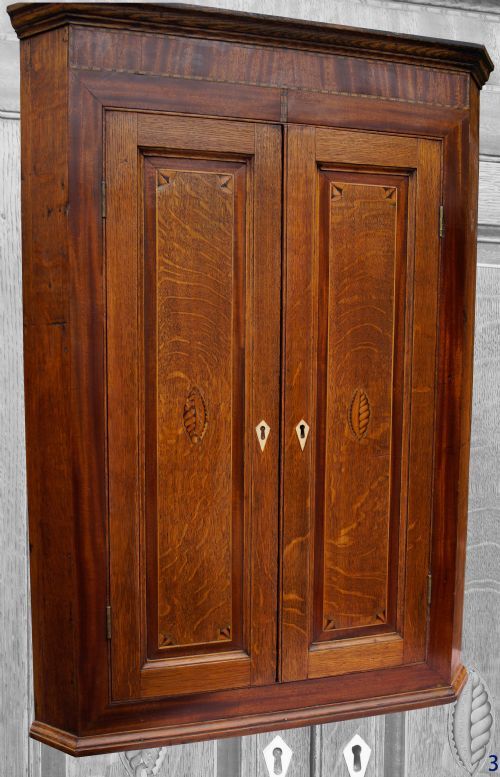
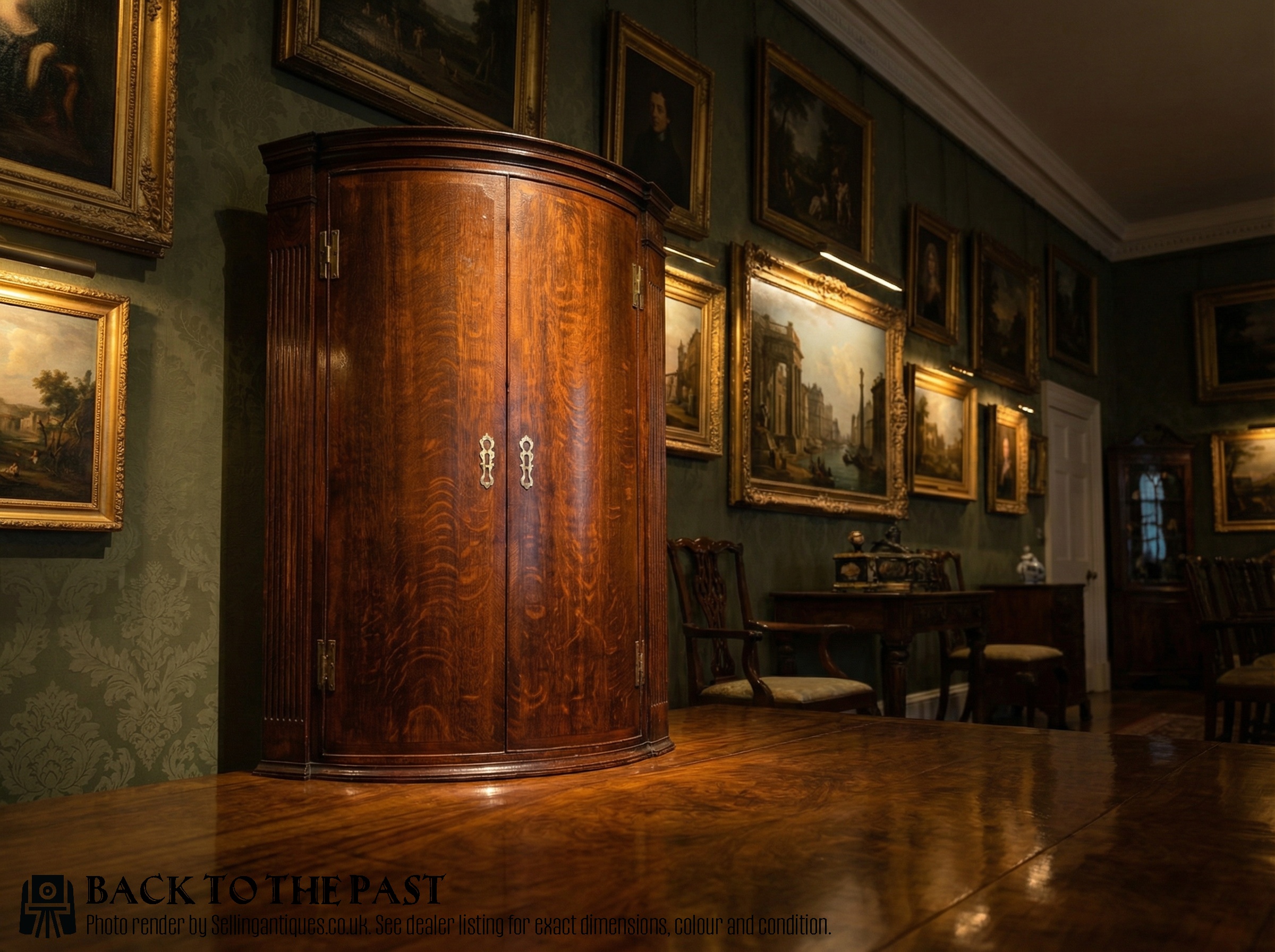
A vintage oak corner unit is a fitted or freestanding storage piece designed specifically to occupy the junction of two walls, making efficient use of overlooked room layouts. The selections on this page span several centuries, encompassing sturdy floor-standing models in two parts and compact wall-hung cupboards.
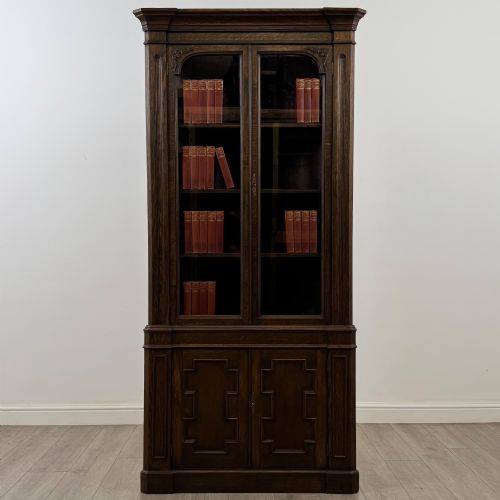
The materials and aesthetic lean heavily towards traditional British craftsmanship, utilising solid oak across various epochs. Buyers encounter styles ranging from plain Georgian utility to decorative Jacobean Revival carvings and late Victorian interpretations.
The configurations vary between single-door cupboards, glazed display fronts for china, and raised models standing on distinct wooden bases. This variety ensures that whether a room calls for a monumental Welsh floor-standing piece or a simple 1930s cabinet, the fundamental form remains rooted in practical domestic storage.
How they were made
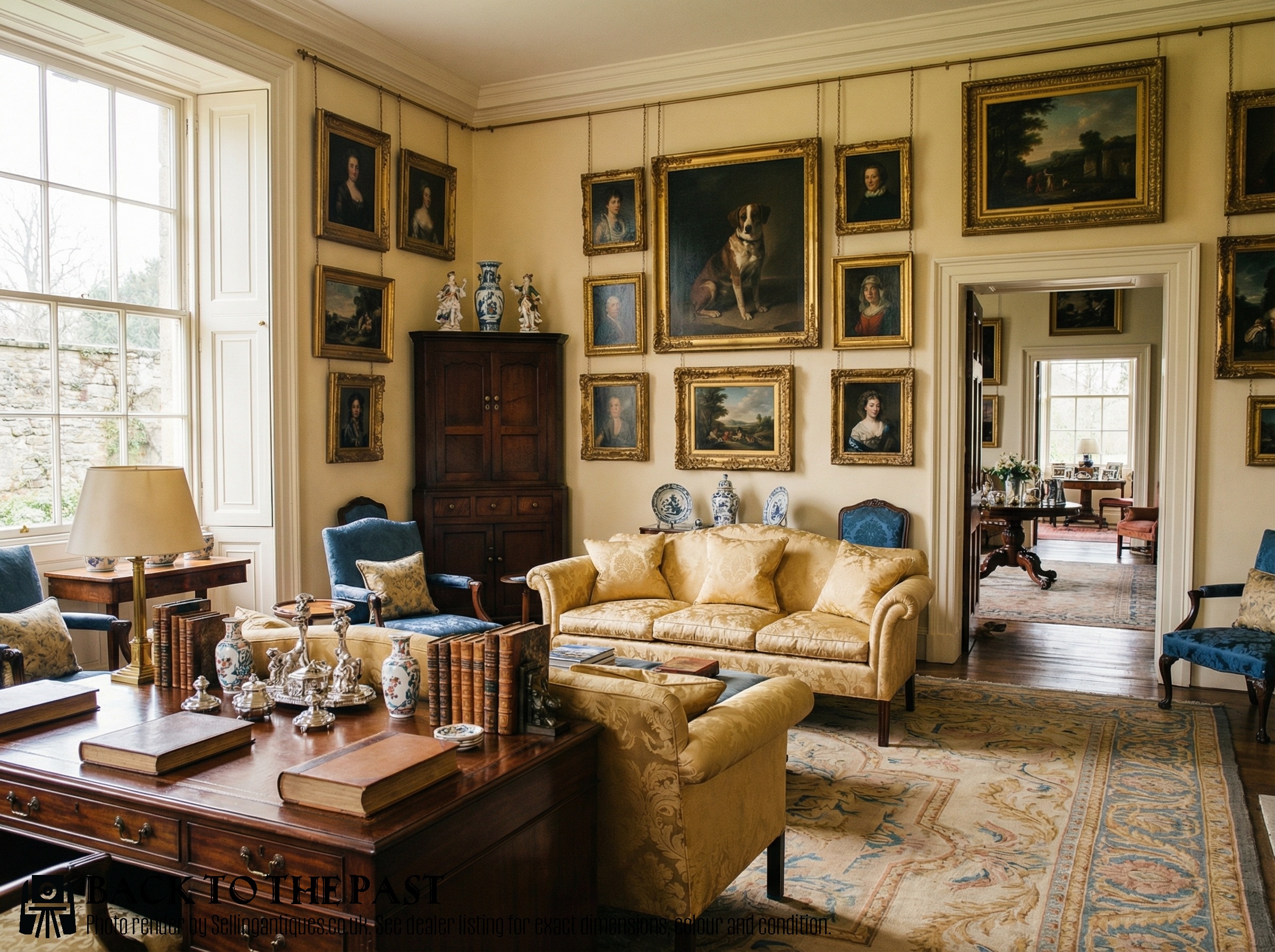
Construction relies primarily on solid oak, selected for its durability and prominent grain patterns, joined using traditional methods suited to supporting heavy timber frames. Many examples incorporate brass hinges and escutcheons to secure heavy doors, while glazed sections utilise timber framing to hold individual panes of glass securely in place.
Older pieces from the eighteenth century demonstrate pegged mortise and tenon joints, whereas later Victorian and Edwardian examples often employ machine-cut precision alongside hand-finishing. Surfaces are typically finished with wax or polish to protect the timber while highlighting the natural figuring of the oak.
Retail Price Guide 2026
Typical UK retail prices for vintage oak corner unit, calculated from the Sellingantiques database of over a million retail prices indexed since 2003. This retail price guide relies exclusively on Sellingantiques data; no external sources or auction records are used, so the figures do not describe the wider market.
Many of these sturdy cupboards spent generations guarding household dried herbs and preserves before ever holding a single wine glass.
What varies in quality
Quality in these pieces is dictated by the selection of the timber and the integrity of the original construction rather than surface ornamentation alone. Superior examples feature quarter-sawn oak with tight medullary rays, indicating stable and durable boards that resist warping over generations.
The treatment of internal shelving, original hardware such as brass butterfly hinges, and the crispness of any applied mouldings or Jacobean-style carving separate standard utility items from finer cabinetwork. Two-part floor-standing cupboards demand superior joinery to ensure the upper and lower sections align precisely without shifting.
The Vintage Oak Corner Unit Glossary
- Bow-front
- A convex curved cabinet front that projects outward, offering a softer silhouette than traditional flat-fronted corners. This shape requires advanced woodworking skill to bend or shape the timber accurately.
- Floor-standing
- A tall piece of furniture that rests directly on the floor rather than hanging on a wall. These units often divide into two separate stacking sections for easier transport.
- Jacobean Revival
- A nineteenth or early twentieth-century decorative style imitating seventeenth-century English furnishings. It is characterised by heavy mouldings, geometric paneling, and deep, dark patination.
- Quarter-sawn
- A method of log cutting where the timber is sliced radially, producing straight, decorative grain lines. This technique results in boards that are less prone to shrinking or expanding.
- Escutcheon
- A protective metal plate surrounding a keyhole, usually made of brass on these cabinets. It prevents the wood around the lock from splitting through repeated use.
Frequently Asked Questions
How do I fit a corner unit into a modern room?
Measure the wall depth from the exact corner outward to ensure the cabinet sides do not protrude past surrounding doors or windows. Freestanding floor models simply slide into place, while wall-hung versions require secure fixings into masonry or studwork.
Allow clearance for the door to swing open fully, as angled units often require more clearance than flat cupboards. Positioning them away from direct radiators prevents the dry heat from splitting the aged oak timber.
Are these cupboards suitable for small spaces?
Corner units are explicitly designed to utilise dead space where two walls meet, making them ideal for compact dining rooms or hallways. By occupying an angle, they keep floor space open while offering deep interior storage.
Wall-mounted variants free up the floor entirely, allowing other furniture to sit beneath them. Their triangular footprint draws the eye smoothly around the room perimeter.
How do I tell an 18th-century piece from a Victorian copy?
Examine the interior construction, backboards, and tool marks visible on the timber for clues to the period. Eighteenth-century panels often show hand-planed irregularities and pegged joinery, whereas later revival pieces may use machine-sawn boards and modern screws.
The colour and depth of the polish also develop naturally over centuries, creating a dry, warm sheen that chemical patination cannot easily replicate. Checking the hinges and nail types helps confirm whether hardware is original to the era.
What is the difference between a corner cabinet and a cupboard?
Historically, cupboards enclosed storage space behind solid wooden doors, often reserved for utility or pantry items. Cabinets frequently incorporate glass panels in the upper section to display ceramics or glassware.
In modern parlance, the terms are often used interchangeably for these triangular units. Reviewing the specific door construction on each listing reveals whether the interior is meant to be hidden or displayed.