





Freestanding Corner Cabinet
A freestanding corner cabinet turns a dead junction in a room into a showcase for your prized possessions.

What these pieces are
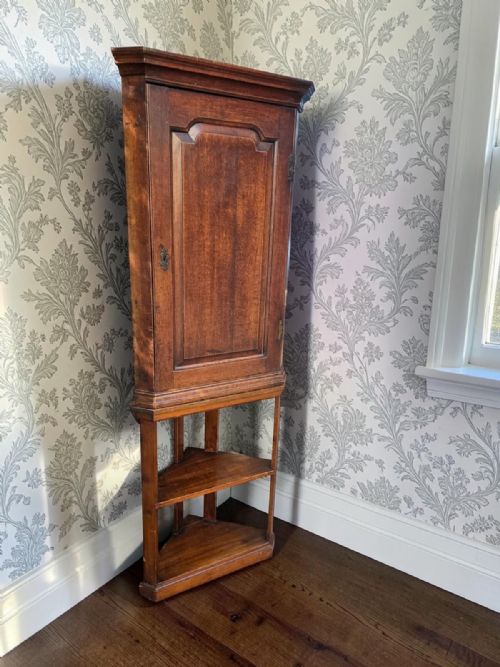
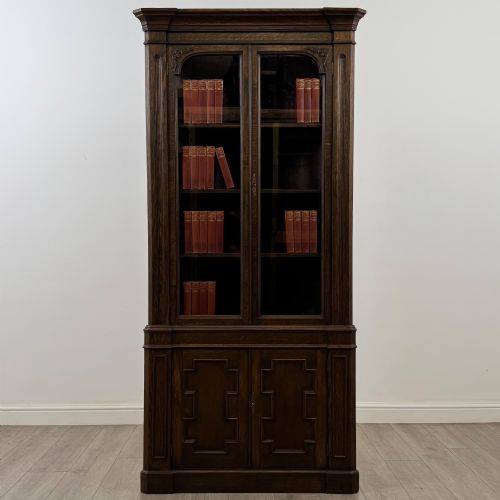
A freestanding corner cabinet is designed to fit snugly into the ninety-degree angle of a room without requiring wall fixings, making it a clever use of difficult floor space. These pieces serve either as display cabinets with glazed doors or as enclosed cupboards, offering practical storage alongside distinct period charm.
On this page, you are most likely to meet mahogany and oak examples spanning the eighteenth, nineteenth, and early twentieth centuries. The selection ranges from plain early panelled softwood and oak versions to refined Edwardian and late nineteenth-century specimens featuring satinwood inlay and bowfronts.

How they were made
Cabinet makers constructed these architectural pieces using solid timbers and select veneers such as mahogany, oak, and satinwood, often pairing them with secondary woods like pine. Structural integrity in the corner relies on robust dovetail joints and sturdy cornice mouldings at the top.
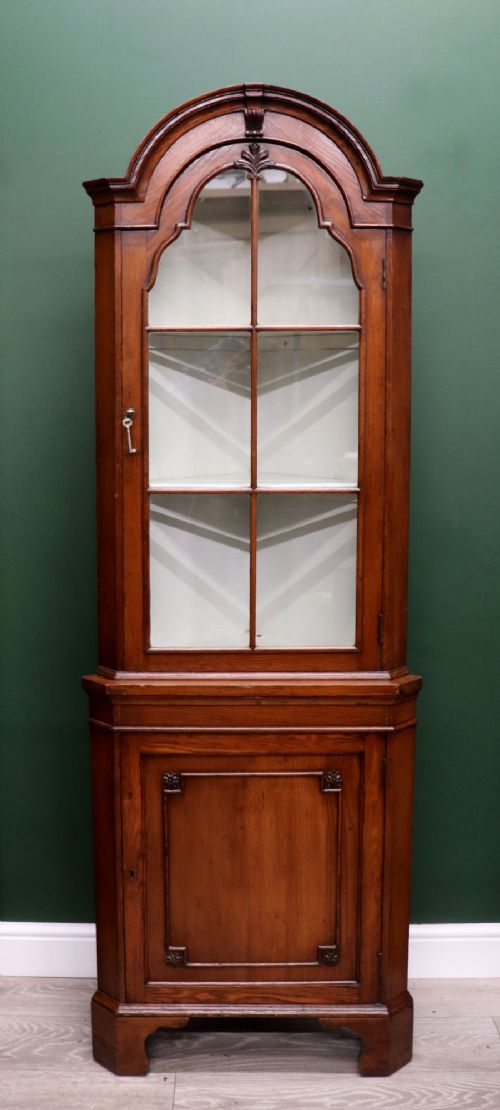
Surface decoration on finer examples includes delicate stringing and inlaid motifs, complemented by functional brass hardware such as key escutcheons and hinges. Glazed doors utilise individual wooden glazing bars to hold panes of glass securely within the frame.
Retail Price Guide 2026
Typical UK retail prices for freestanding corner cabinet, calculated from the Sellingantiques database of over a million retail prices indexed since 2003. This retail price guide relies exclusively on Sellingantiques data; no external sources or auction records are used, so the figures do not describe the wider market.
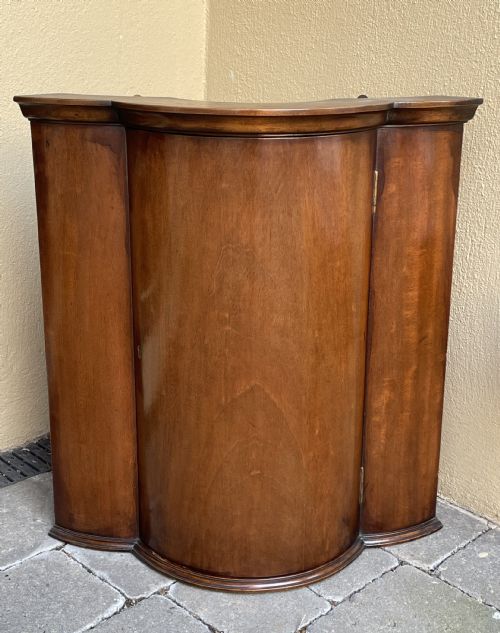
A Swedish bowfronted corner cupboard brings a touch of northern maritime elegance straight into a snug British dining room.
What varies in quality
The distinction between standard utility pieces and the top of the range lies in the selection of timbers and the finesse of the joinery. Cabinet makers who utilised finely figured mahogany veneers or crisp carving distinguished their work from simpler provincial items made of painted softwood.
Edwards & Roberts
The Freestanding Corner Cabinet Glossary
- Bowfront
- A convex, curved front to a cabinet that projects outward in a smooth arc. This curved profile softens the hard angles of a room.
- Inlay
- A technique where pieces of contrasting wood or other materials are inserted into a recessed surface to form a pattern. Satinwood and lighter stringing are frequently used for this decorative effect.
- Glazing bars
- The narrow wooden strips that divide individual panes of glass within a cabinet door. These structural elements form geometric patterns across the display area.
Frequently Asked Questions
Will a corner cabinet fit any room?
These cabinets are specifically proportioned to tuck into standard ninety-degree room corners, utilising space that often remains empty. Their triangular footprint allows them to command presence without jutting too far into the main floor area.
Buyers should measure both the wall space from the corner out and the diagonal width of the cabinet front to ensure correct placement. Standard ceiling heights easily accommodate most freestanding corniced versions.
How do I secure the doors?
Many period cupboards rely on original working brass locks and keys to keep the doors shut rather than modern magnetic catches. The key often turns to throw a bolt into the top or bottom of the frame.
Keeping the hinges properly aligned prevents the heavy timber or glazed doors from dropping over time. A small adjustable foot or discreet shim helps level the cabinet if the floor slopes.
What is the difference between displayed and enclosed storage?
Cabinets featuring glass doors and internal wooden shelves were traditionally built to exhibit porcelain, glassware, and books. Solid wood panelled doors kept provisions or less decorative household items out of sight.
Both variants make use of the corner footprint, but glazed models tend to lighten the visual weight in a smaller dining room or drawing room.
How do I date a piece?
Examining the secondary woods inside the carcass, the style of the hinges, and the type of construction reveals the period of manufacture. Eighteenth-century examples often display pegged joinery and hand-panelled backs, while later Victorian and Edwardian iterations show machine-sawn elements and standardised screws.
Stylistic revivals, such as Chippendale or Jacobean taste, indicate that a nineteenth or twentieth-century maker drew inspiration from earlier centuries.