


Vintage Nesting Coffee Tables
Vintage nesting coffee tables provide a practical surface arrangement that slides away neatly when floor space matters most.
Vintage Nesting Coffee Tables
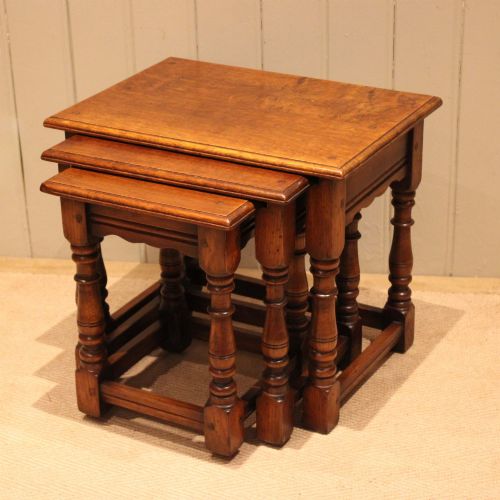
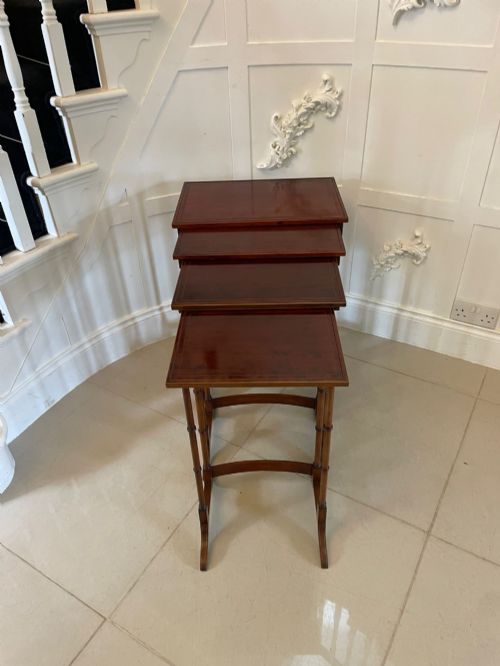
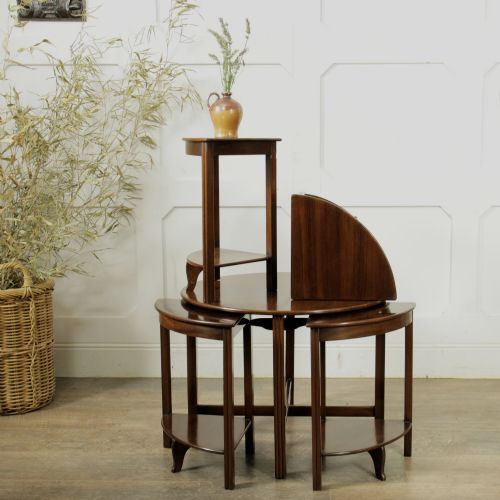
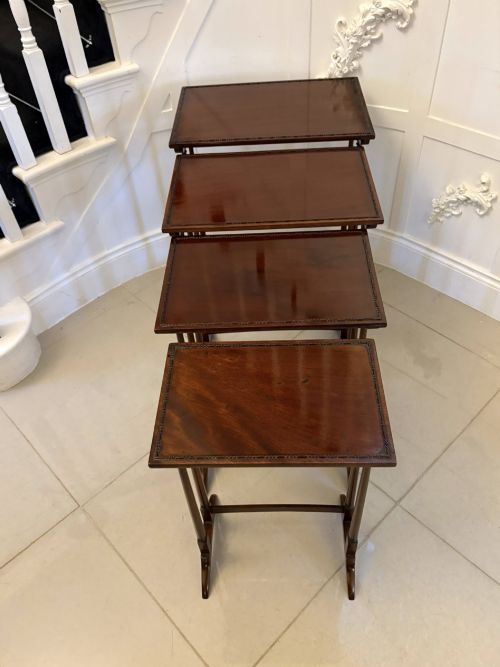
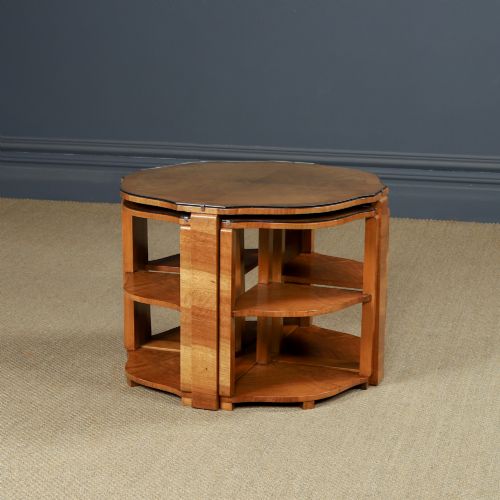
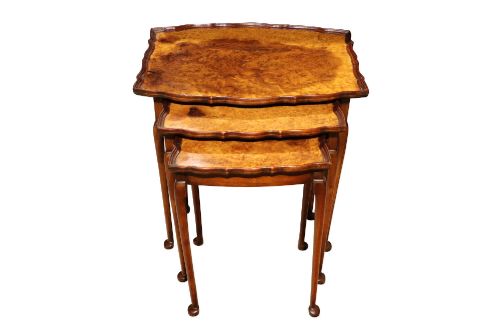
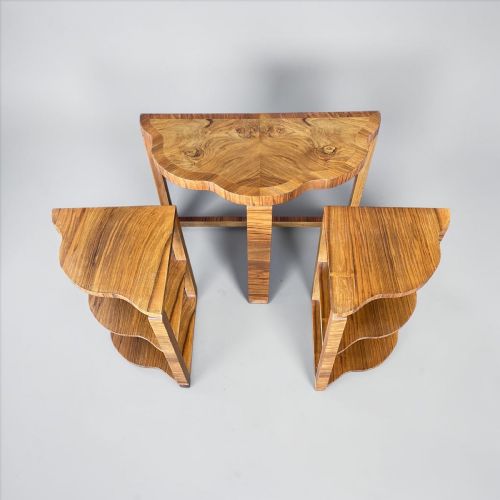
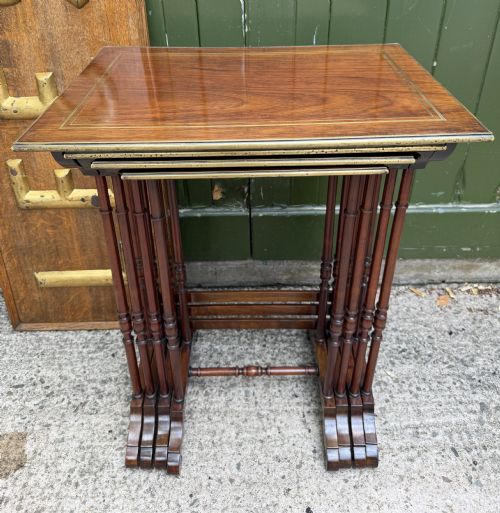
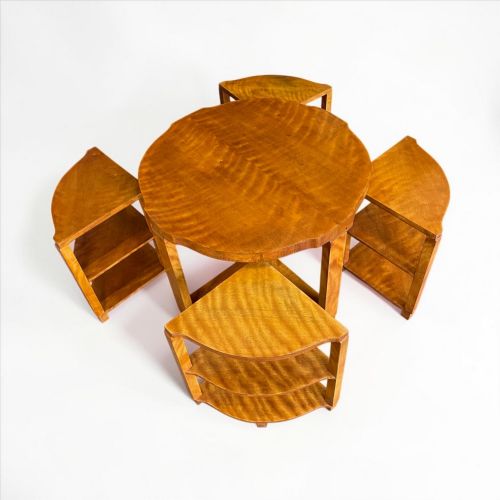
Vintage nesting coffee tables encompass sets of tiered or graduated tables designed to fit together compactly under the largest surface. These tables appear in forms ranging from traditional quartetto sets of four to circular configurations holding up to five pieces.
The pieces emerge predominantly from the Edwardian period and the Art Deco era, alongside examples from the nineteenth century, Regency period, and nineteen-twenties. Common configurations include rectangular, square, round, and oval shapes utilised for daily entertaining or display.
Edwardian mahogany examples and Art Deco walnut or teak sets dominate the selection, offering varying table counts from three to five per nest. Buyers encounter both plain timber surfaces and decorated tops featuring inlay, lacquer, or leather.
Materials and Construction
Cabinetmakers constructed these tables using a variety of hardwoods including mahogany, walnut, burr walnut, oak, satinwood, teak, and rosewood. Workshops often selected figured grain patterns for the primary surfaces to highlight the natural timber.
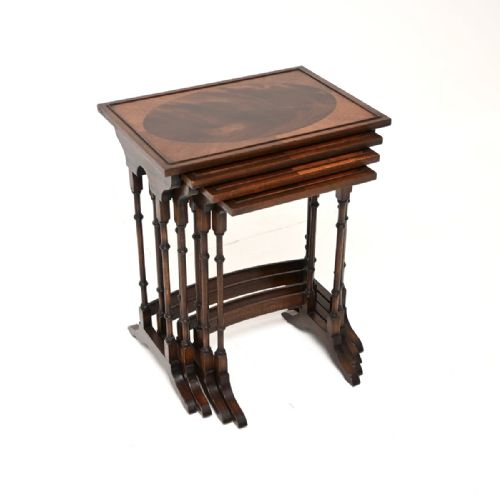
Decoration relied on skilled techniques such as brass inlay, satinwood stringing, floral parquetry, embossed leather inserts, and Chinoiserie lacquering. Makers shaped the timber into graduated frames allowing smaller tables to slide smoothly beneath the main surface.
Certain nineteen-twenties teak sets feature tables carved entirely with elephants.
Markers of Quality
Quality rests upon the selection of timber veneers and the precision of the joinery that allows each table to slide into position without binding. Superior sets employ dense hardwoods and stable secondary timbers that resist warping over decades of use.
Refinement shows in the intricacy of decorative elements, from fine stringing and parquetry to hand-carved details and balanced proportions across all tables in the set. Maker attribution also separates standard production items from workshop-signed pieces.
Harry and Lou Epstein·Heal's
The Vintage Nesting Coffee Tables Glossary
- Quartetto
- A matched set of four tables designed to nest together. This term appears frequently in Edwardian and nineteenth-century furniture descriptions.
- Chinoiserie
- European imitation of Chinese and East Asian artistic motifs, typically applied through lacquer and painted decoration on furniture. Such finishes provide glossy, patterned surfaces.
- Parquetry
- Geometric mosaic woodwork formed by small veneer pieces laid in patterns on a surface. This technique creates decorative geometric borders and tabletops.
- Satinwood
- A durable, lustrous yellow-brown timber used for stringing, inlay, or entire tabletops. It offers a bright contrast against darker woods like mahogany.
- Burr walnut
- Timber taken from a walnut tree growth, yielding complex, swirling grain patterns. Cabinetmakers prize this material for decorative furniture tops.
Vintage Nesting Coffee Tables: Frequently Asked Questions
What is a quartetto nest?
A quartetto nest consists of four tables graduated in size to slide neatly beneath one another.
Cabinetmakers designed these sets to save space while providing multiple surfaces for serving tea or holding decorative objects.
How do I date a nest of tables?
Dating relies on timber choices, leg styles, and decorative techniques characteristic of specific eras like Edwardian or Art Deco.
Edwardian sets frequently feature inlaid mahogany, whereas nineteen-thirties pieces often showcase walnut or teak veneers with geometric lines.
Where were these tables used?
These tables served primarily in drawing rooms and sitting rooms as flexible surfaces for daily hospitality.
Owners expanded the nest when guests visited and stacked the tables together to clear floor space afterward.
How do I care for inlaid wooden tables?
Maintenance requires dusting with a soft cloth and avoiding placement near direct heat sources or strong sunlight.
Keeping timber hydrated with appropriate wax prevents the delicate veneers and stringing from drying out.