

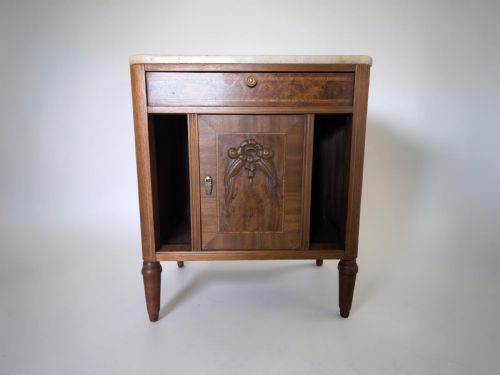
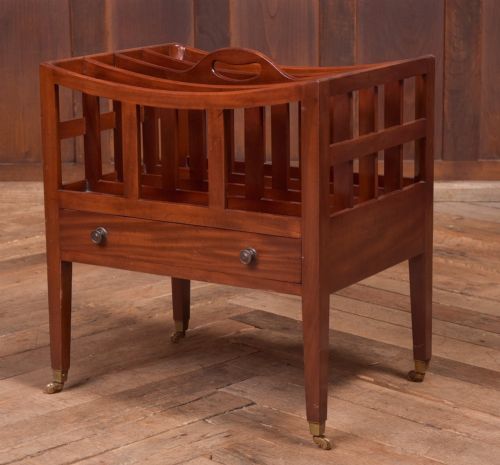
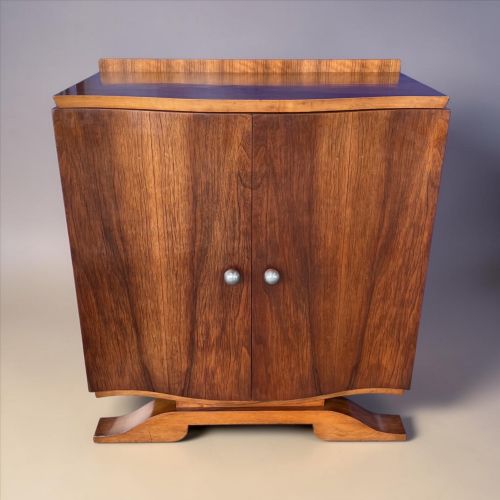
Vintage Music Cabinet
A vintage music cabinet organises scores and sheet pieces with dedicated interior shelving, combining practical storage with period joinery.
Vintage Music Cabinet
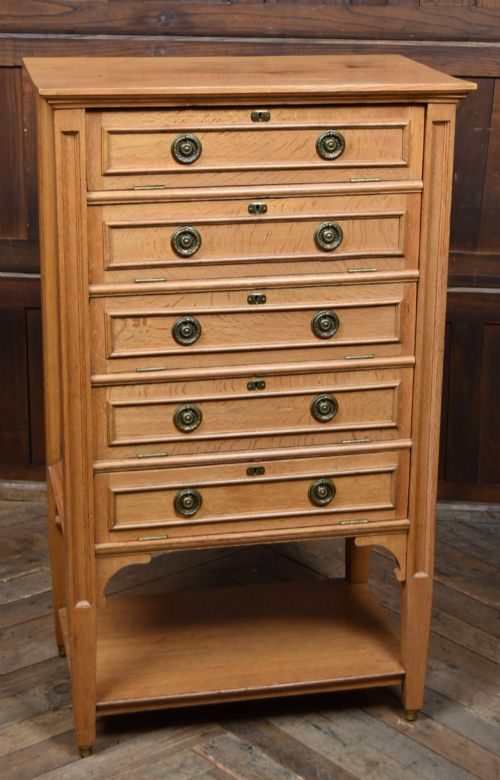
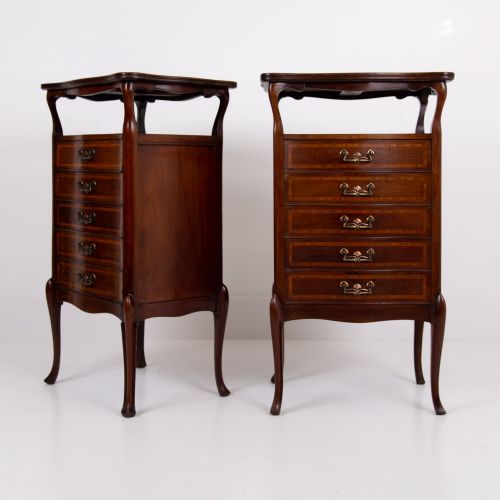
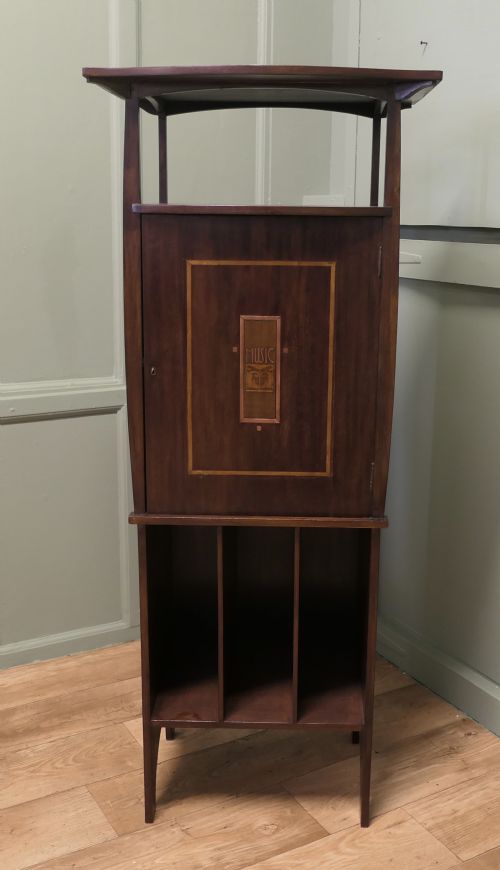
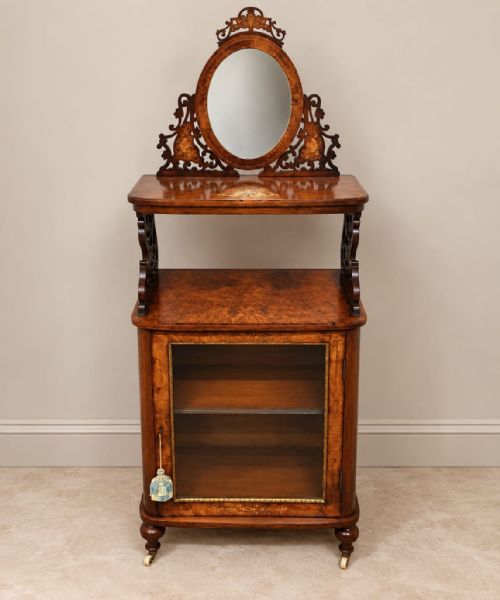
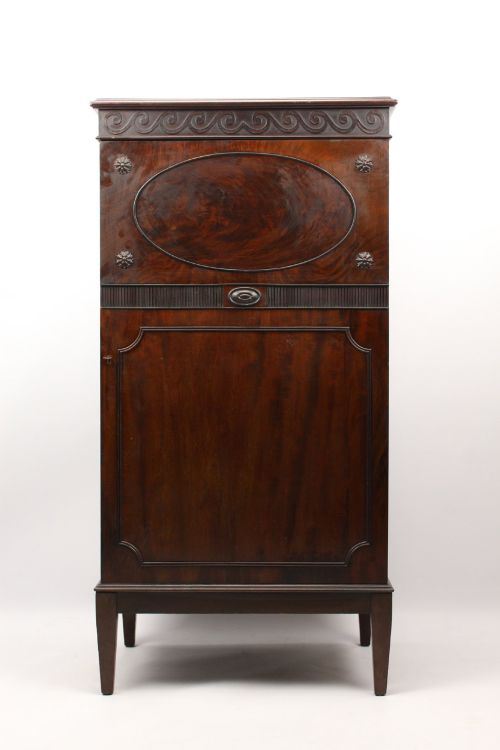
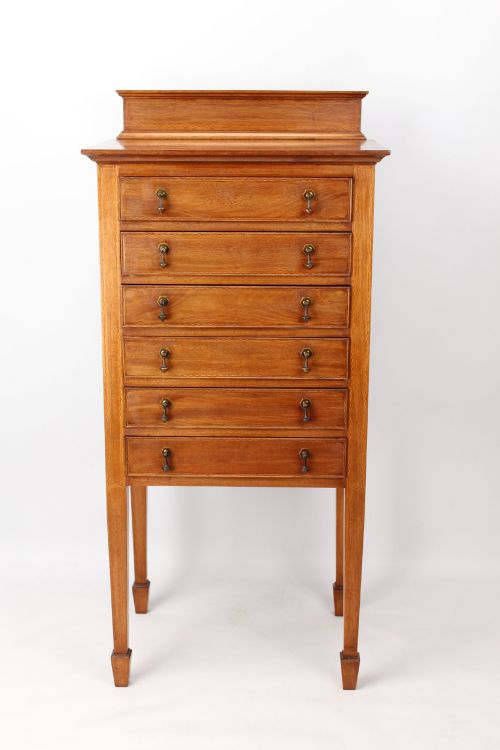
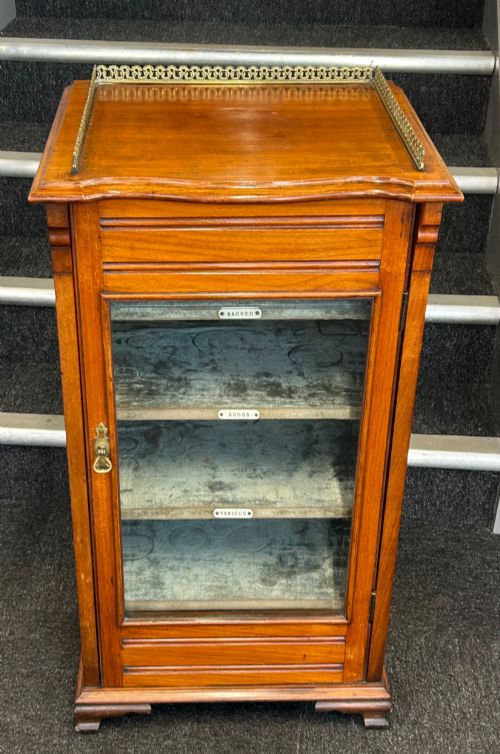
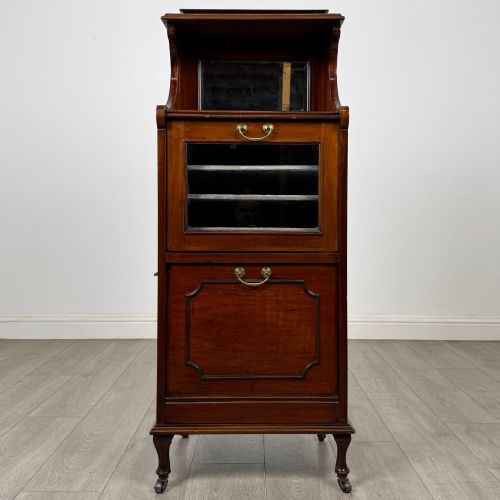
A vintage music cabinet is designed specifically to store sheet music, scores, and related folios in upright compartments or drop-front drawers. Buyers encounter these pieces most frequently in Edwardian and Victorian forms, often rendered in mahogany, walnut, or oak.
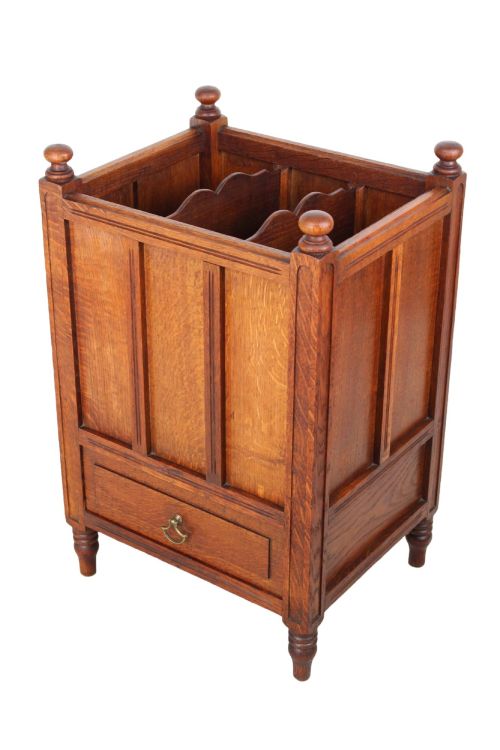
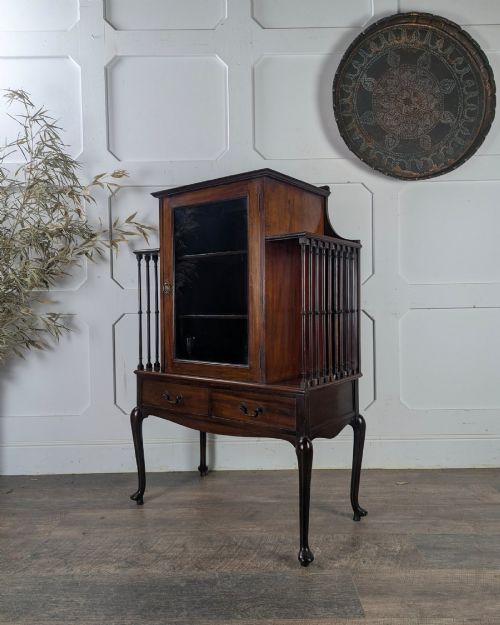
The inventory includes related formats such as Canterburys, magazine racks, and filing cabinets that share the same compact footprint. These items originated to serve the Victorian and Edwardian parlour, where domestic music-making formed a central part of daily life.
Assessing craftsmanship and execution
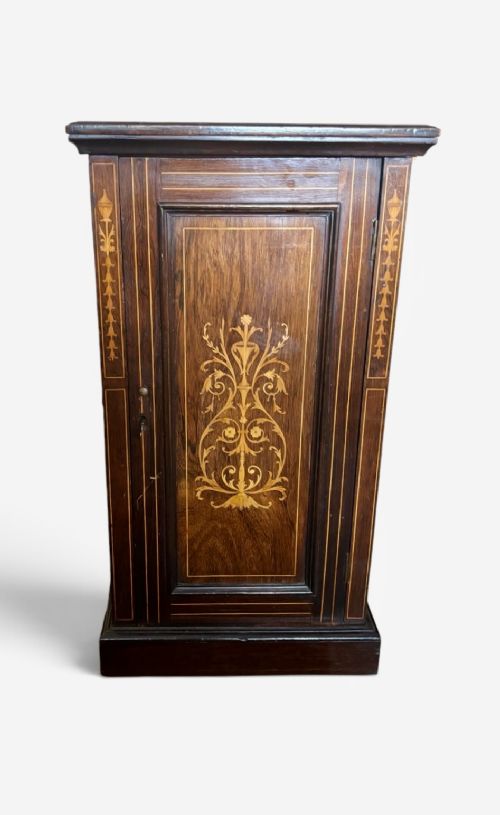
Quality in these cabinets rests upon the choice of timber and the precision of the internal dividers, where solid woods outperform veneered deal carcasses. Finer examples display meticulous marquetry, intact brass hardware, and secondary timbers of matching quality inside the drawers.
The refinement of the carving, the smooth operation of drop-front mechanisms, and the integrity of the original glass or tambour elements distinguish standard utilitarian storage from exceptional cabinet work.
Listings feature pieces spanning the 18th to the 20th centuries, covering Victorian, Edwardian, Arts and Crafts, and Art Deco styles.
GM Elwood for JS Henry·Denby and Spinks·U Phone of Leeds·Lochmanns·Collinson and Lock London·Keeble London
The Vintage Music Cabinet Glossary
- Canterbury
- A low, open-framed stand featuring vertical divisions for holding sheet music, folios, or magazines.
- Tambour
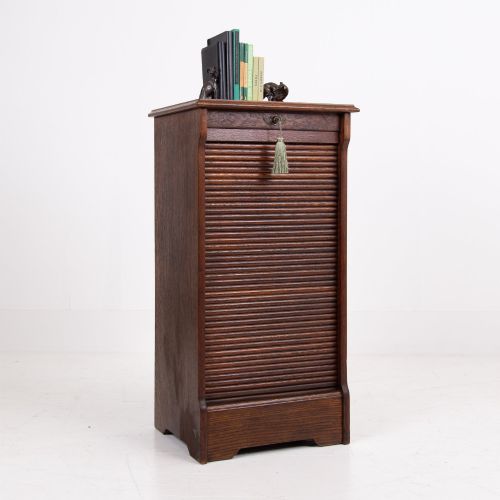
- A flexible door constructed from narrow strips of wood glued to a canvas backing, allowing it to slide smoothly around a curved track.
- Marquetry
- Decorative woodwork in which fine pieces of veneer are fitted together to form pictorial patterns and designs on the cabinet surface.
- Pedestal cabinet
- A tall, narrow freestanding piece of furniture designed to occupy limited floor space while offering deep internal storage.
- Drop-front
- A hinged panel that lowers to provide horizontal access to interior compartments or writing surfaces.
Vintage Music Cabinet: Frequently Asked Questions
What is a vintage music cabinet?
A vintage music cabinet is a dedicated piece of furniture built to hold sheet music, scores, and folios in an orderly fashion. They typically feature specialised internal shelving, drop-front drawers, or vertical partitions.
Most surviving examples date from the Victorian and Edwardian eras, constructed from timbers such as mahogany, walnut, and oak. Their compact dimensions made them ideal for domestic parlours of the period.
How were music cabinets used originally?
These cabinets were placed in drawing rooms and parlours to keep sheet music clean, flat, and easily accessible for the piano or other instruments. Musicians would sort their pieces by composer or genre within the dedicated compartments.
Beyond music storage, households utilised them for general paperwork, magazines, and small household items. Their refined exteriors ensured they blended seamlessly with other parlour furniture.
How do I style a music cabinet at home?
A music cabinet functions effectively as a bedside table, hallway storage unit, or living room side table due to its narrow footprint. The top surface provides an ideal spot for lamps, ceramics, or decorative objects.
Inside, the original partitions can still hold vinyl records, art prints, or stationery supplies. Their classic wood tones coordinate easily with both traditional and contemporary interiors.
How do I tell Edwardian cabinets from Victorian ones?
Victorian music cabinets often display darker, heavier timbers like rosewood and burr walnut, frequently accompanied by rich marquetry and ornate carvings. Their overall aesthetic tends to be formal and robust.
Edwardian pieces generally exhibit lighter mahogany or oak construction, sometimes featuring simpler satinwood stringing and Arts and Crafts influences. The lines on Edwardian examples are typically straighter and less ornate than their Victorian predecessors.