

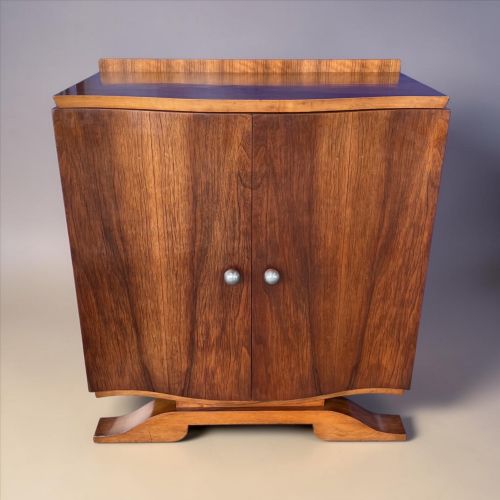
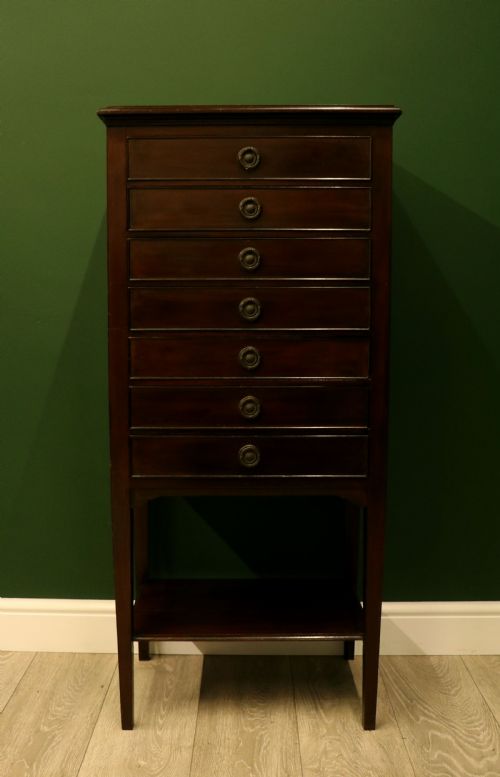


Vintage Record Storage Cabinet
A vintage record storage cabinet organises sheet music and early recordings with period timber and brass hardware.
Vintage Record Storage Cabinet
A vintage record storage cabinet serves as dedicated furniture for housing sheet music and early recordings within domestic interiors. These pieces take the form of music cabinets, music filing cabinets, and LP record cabinets designed to keep paper scores and discs sorted.
The versions most frequently met on this page span the Victorian, Edwardian, and Art Deco periods, alongside pieces dated to the opening decades of the twentieth century. Makers of these items employed timber forms that range from slim profiles to substantial cupboards.
Origins stretch from French Art Nouveau expressions to classical Edwardian and Victorian designs. Buyers encounter music cabinets structured with interior shelving or vertical filing spaces tailored to domestic performance rooms.
How they were made
Carpenters constructed these cabinets using solid and veneered hardwoods such as mahogany, walnut, burr walnut, oak, and rosewood. Timber surfaces frequently display decorative marquetry inlay alongside natural grain patterns.
Hardware elements incorporate brass handles, hinges, and lock plates affixed to wooden doors and drop-down fronts. Glass panels appear on select cabinet doors to display the interior contents while protecting paper sheets from dust.
French Art Nouveau and Art Deco styles appear among the traditional English Victorian and Edwardian furniture forms.
What varies in quality
The grade of timber selection and complexity of veneer work distinguish standard pieces from superior examples. Finely figured burr walnut and rosewood sit above plain oak or softwood frames.
Detailing in the marquetry inlay and the precision of brass furniture indicate the level of craftsmanship invested in the piece. Robust internal joinery and clean cabinet construction separate utilitarian filing boxes from sophisticated parlour furniture.
The Vintage Record Storage Cabinet Glossary
- Burr walnut
- A figured timber veneer taken from the growth excrescences of walnut trees. It yields swirling patterns prized for decorative cabinet fronts.
- Marquetry
- The art of applying small pieces of veneer to a structure to form decorative patterns. Craftsmen use various coloured woods to build pictorial motifs.
- Music cabinet
- A specialised item of furniture designed to store sheet music and scores. They feature internal partitions or drawers sized for paper.
- Rosewood
- A dense, heavy timber with a dark grain used in high-end cabinet making. Edwardian makers utilised it for inlaid luxury pieces.
Vintage Record Storage Cabinet: Frequently Asked Questions
What is a vintage record storage cabinet used for?
These cabinets were originally built to hold sheet music, scores, and early sound recordings within the home. The internal compartments keep paper items flat and organised.
Today, owners utilise them to store modern vinyl records and media items while retaining period aesthetics in their living spaces.
How do I tell Victorian cabinets from Edwardian ones?
Victorian examples often feature darker timbers like black walnut and heavier proportions with dense carving or simple panels. They reflect the formal tastes of the nineteenth century.
Edwardian cabinets typically display lighter mahogany or walnut surfaces, frequently enhanced by delicate inlaid stringing and marquetry. These pieces lean towards slender silhouettes.
Can these cabinets hold modern vinyl LPs?
Many Edwardian and later music cabinets accommodate twelve-inch records depending on the internal shelf dimensions and partition layout. Some variants specifically note LP storage capabilities in their construction.
Buyers should verify internal cabinet measurements to ensure standard record sleeves fit comfortably without damaging the spines.
What woods were used for these cabinets?
Cabinet makers predominantly worked with mahogany, walnut, and oak to build the primary carcase and doors. Burr walnut and rosewood appeared on decorative surfaces and high-grade models.
Brass fittings complemented these timbers, while glass panels and inlaid wood veneers added ornamental detail to the exterior.