





Vintage Monk Bench
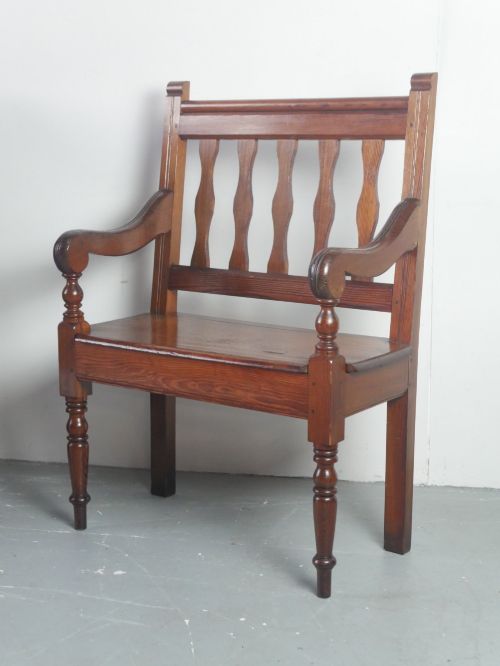
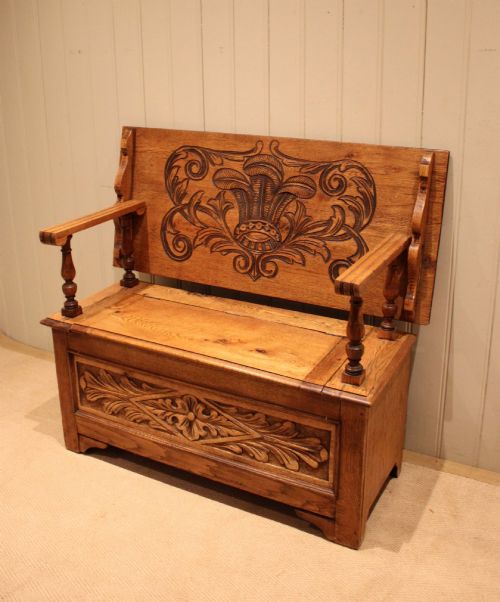
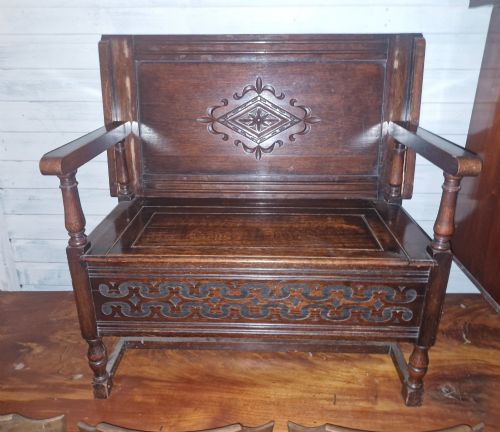
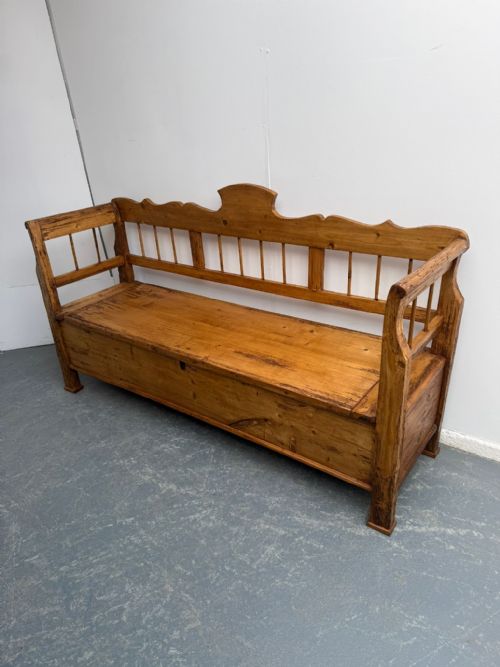
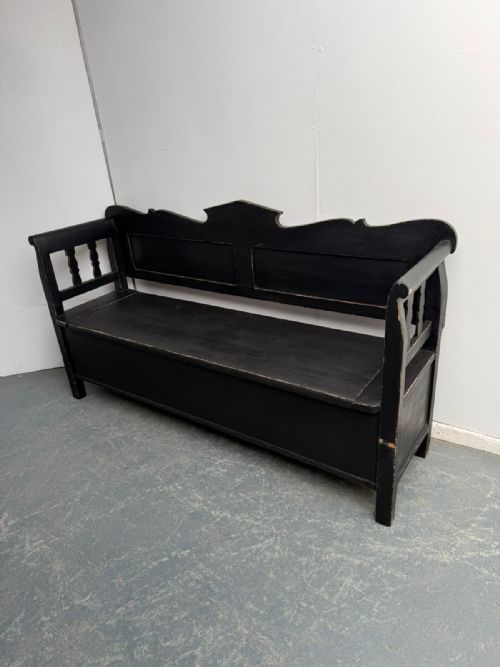
These vintage monk benches combine seating and tabletop utility in solid oak and pine, offering practical hallway storage rooted in traditional forms.
Vintage Monk Bench
A vintage monk bench functions primarily as a hall seat or settle, with many examples providing dual utility through a fold-over top that converts the backrest into a table surface. Buyers exploring this category will find sturdy hall benches and settles originating from periods spanning the nineteenth century through to the nineteen-thirties.
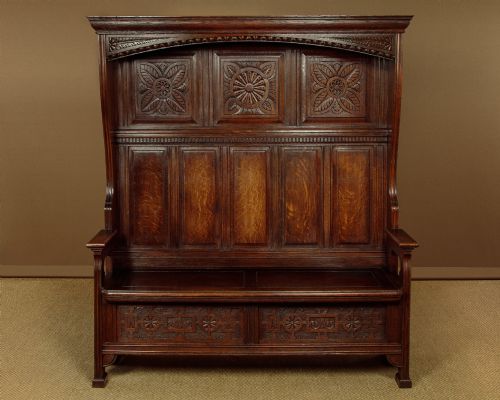
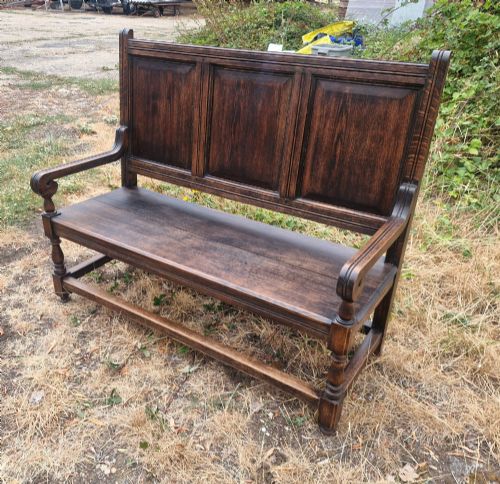
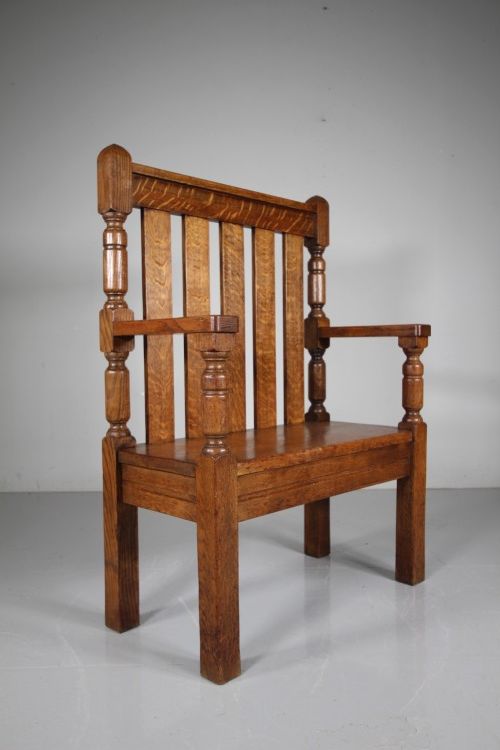
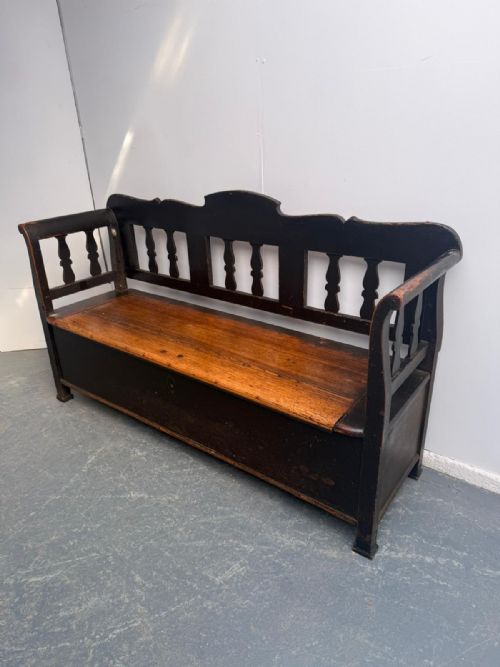
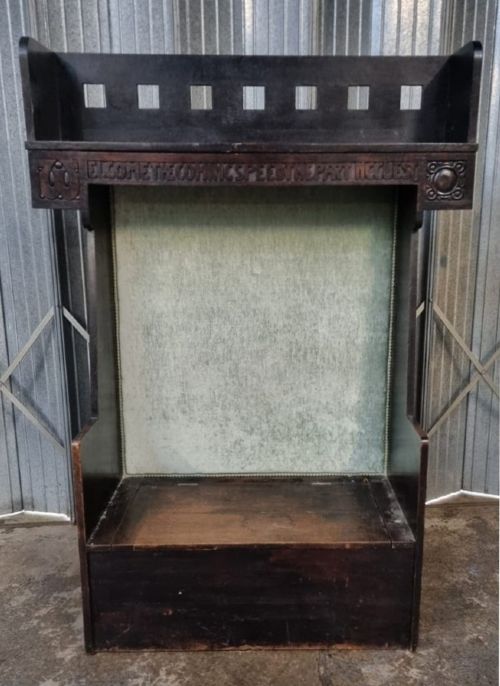
The selections here range from compact oak seats to larger painted pine settles and canopy top box settles. Common forms include pieces with lift-up storage compartments beneath the seat, alongside elaborately carved oak armchairs and table top hall benches.
Origin and regional styles vary significantly across the available stock. Pieces encompass English country styles, Jacobean Revival motifs, Arts and Crafts movements, and Hungarian painted folk art.
How they were made
Makers relied principally on solid timber construction, utilising heavy oak, pitch pine, and old pine for structural integrity. Panels were frequently joined with pegged mortise and tenon joints, while surfaces received wax finishes or black paint.
Detailing on these pieces involves hand-carved ornamentation, such as panelled backs, canopy tops, and spindled galleries. Supplementary materials like leatherette and iron hardware appear on specific settles and box storage units.
Several settles double as impromptu tables, proving that Victorian hallways loved multitasking just as much as modern studio flats.
What varies in quality
Quality in these benches is determined by the depth and crispness of the hand-carving and the weight of the timber used. Heavier solid oak frameworks and balanced conversion mechanisms for fold-over tops represent superior construction.
The integrity of the original joints and the preservation of authentic surface treatments, whether waxed grain or early painted finishes, distinguish finer examples from simpler utilitarian workshop output.
Liberty·Shapland and Petter
The Vintage Monk Bench Glossary
- Settle
- A wooden bench with a high back, solid arms, and often a storage box beneath the seat. It was designed to keep draughts away from people sitting near the hearth.
- Monks bench
- A multifunctional seat featuring a hinged back that folds down flat over the arms to form a small table. This form gained popularity during revival periods inspired by earlier furniture.
- Box settle
- A heavy wooden seat incorporating a concealed compartment accessed by lifting the hinged lid of the seat. These served to store household goods in communal hallways.
- Canopy top
- An architectural wooden projection built over the upper back of a hall seat or settle. It provided shelter from cold air currents in traditional domestic hallways.
- Jacobean Revival
- A nineteenth and early twentieth century style that imitates seventeenth century English furniture. It is characterised by dark oak, geometric panelling, and strapwork carving.
Vintage Monk Bench: Frequently Asked Questions
What is a vintage monk bench?
A vintage monk bench is a traditional wooden seat that usually incorporates a hinged backrest which folds forward to create a table top. They frequently include a box storage compartment beneath the seat.
These versatile items were traditionally placed in hallways to provide a seat for putting on shoes and a surface for hats or parcels.
How do you use the table function?
The upper backrest is lifted and rotated forward so that it rests horizontally upon the wide wooden arms. This converts the seating back into a flat table surface.
Lifting the back back into the vertical position restores the piece to a standard hall seat or armchair.
Were these benches actually used by monks?
Despite the traditional name, these pieces generally date from the Victorian, Edwardian, and early twentieth century revival periods rather than medieval monasteries.
Cabinet makers of the nineteenth century adopted and romanticised earlier vernacular furniture styles, creating these multifunctional items for domestic entrance halls.
How do you tell an older bench apart?
Examining the construction reveals clues about age, with older pieces utilising pegged joints, hand-cut joinery, and heavy solid oak or waxed pine. Revival pieces from the Edwardian period often feature machine-sawn timbers and lighter secondary woods.
Stylistic markers such as Jacobean Revival strapwork or Arts and Crafts simplicity also help date the manufacture of the piece.