
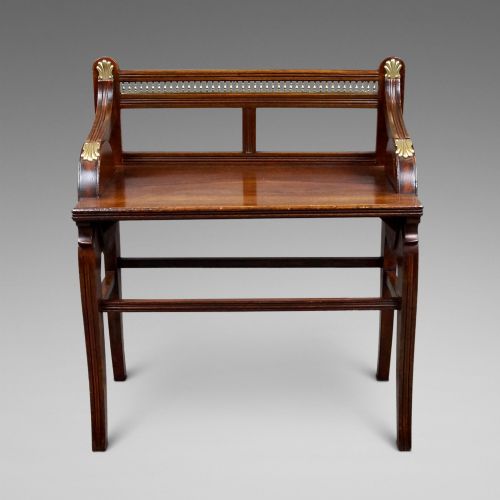
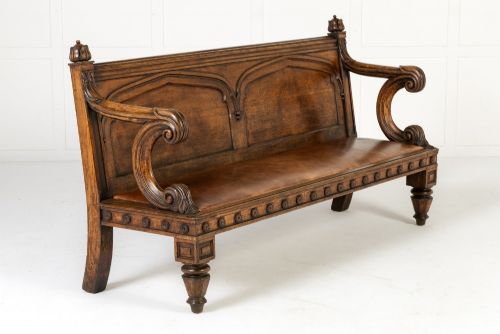
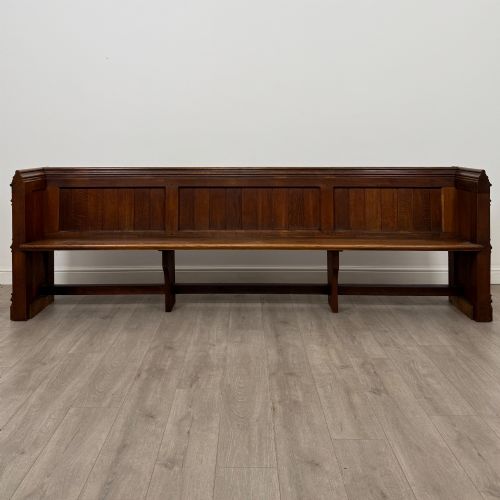
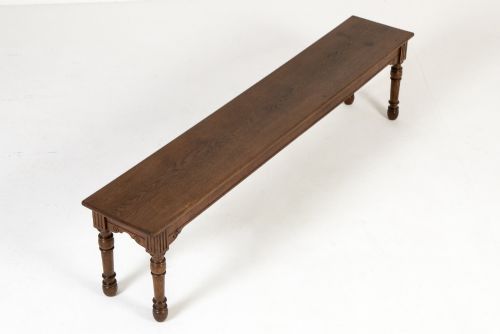
Victorian Carved Hall Bench
A victorian carved hall bench makes a striking statement in an entranceway, offering both practical seating and architectural presence.
Victorian Carved Hall Bench
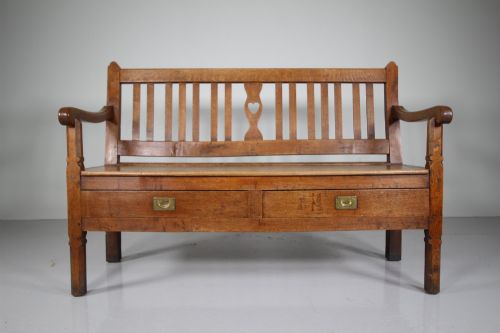
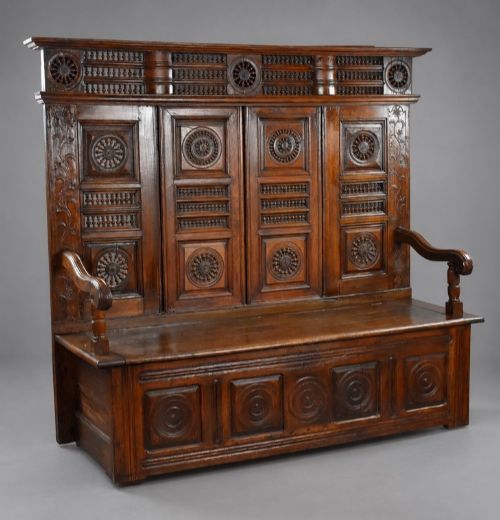
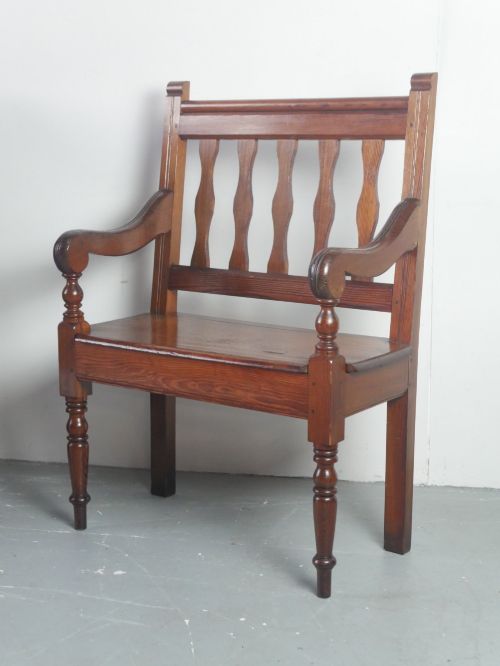
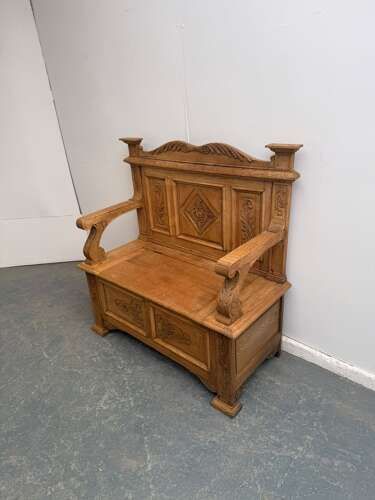
A victorian carved hall bench functions as a substantial seating option designed for entrance halls, corridors, and reception rooms. These pieces often incorporate high panelled backs, architectural details, and integrated storage beneath lift-up seats or box compartments.
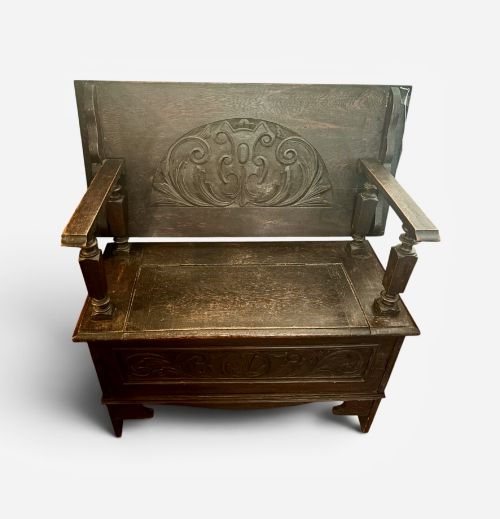
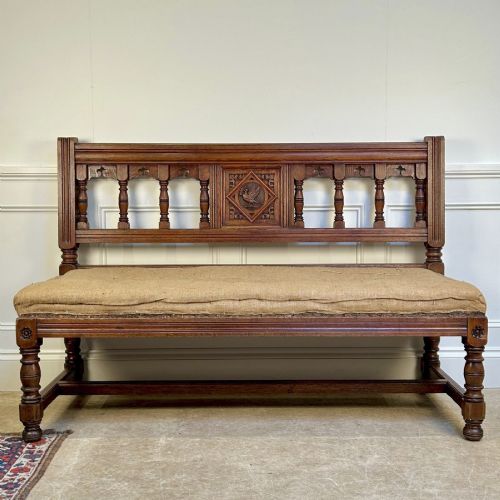
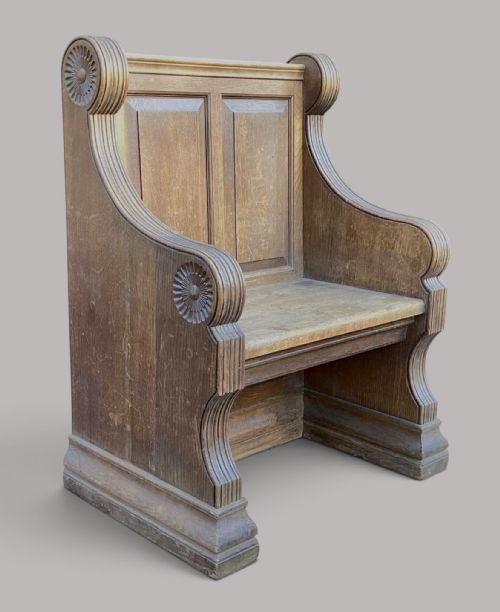
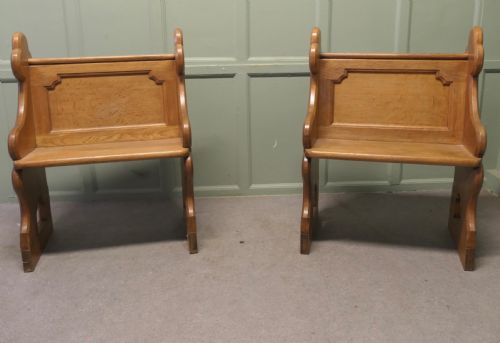
The version most commonly encountered on this page is constructed from solid oak with deep relief carving, spanning periods from the mid-nineteenth century to around 1900. Variants range from monastic settles and monk's benches to gothic revival seats and upholstered window benches.
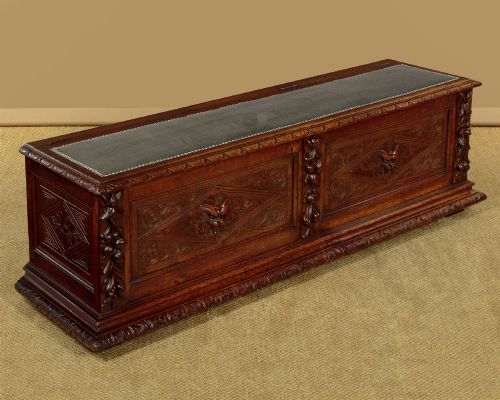
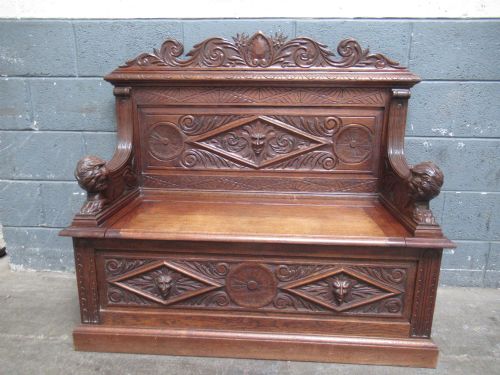
Makers and designers working in this category drew upon Renaissance, Jacobean, and Gothic revival styles, resulting in heavy mouldings, linenfold panelling, and occasional figural carvings such as Green Man motifs.
Materials and construction techniques
Construction relies heavily on solid English and continental timbers, predominantly oak, supplemented by occasional use of mahogany, walnut, and elm. Cabinetmakers employed traditional mortise and tenon joinery to ensure the structural integrity of these heavy seating units.
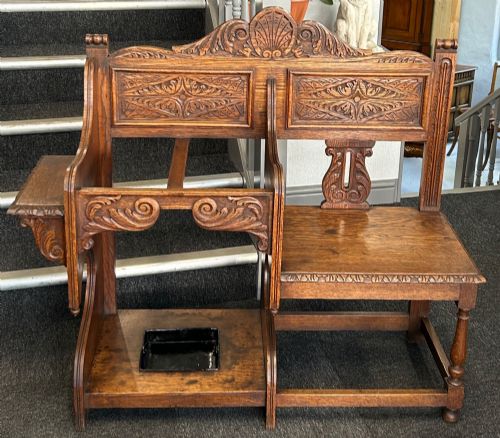
Decorative surfaces display hand-carved relief work, chip carving, and architectural mouldings executed by skilled artisans. Secondary materials such as brass fittings, iron hooks, and upholstered fabric or leather inserts appear on specific chair and stand hybrids.
Listings feature oak as the dominant material across nineteenth-century periods, alongside mahogany, walnut, brass, and iron.
Factors determining quality
Quality separates along the depth and crispness of the hand-carving, the selection of timber grain, and the ambition of the architectural form. Pieces produced by documented cabinetmakers or prominent workshops display superior proportion and refined joint work compared to utilitarian workshop output.
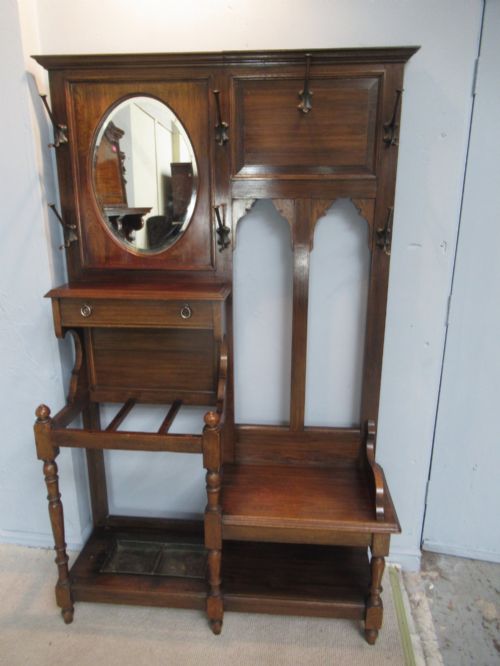
The integrity of the structural frame, the original condition of the timber surface, and the presence of integrated storage boxes or functional umbrella stands also define the upper tier of surviving examples.
Gillows·James Shoolbred And Co·Jas Shoolbred
The Victorian Carved Hall Bench Glossary
- Settle
- A wooden bench with high back, solid arms, and enclosed base often used for storage. This form provides a draught-proof seat historically placed near hall entrances.
- Monk's bench
- A convertible piece of furniture featuring a pivoting back that folds down to form a table top. These items combine dual-purpose utility with compact seating.
- Gothic Revival
- A nineteenth-century design movement drawing inspiration from medieval architecture. This style utilises pointed arches, tracery, and heavy structural mouldings.
- Green Man
- A sculptural motif depicting a human face carved with leaves and vines issuing from the mouth. This architectural ornament symbolises rebirth and spring in revival furniture.
- Panelling
- Flat wooden sections fitted within a rigid frame to construct backrests and bases. This technique accommodates wood shrinkage while maintaining structural strength.
Victorian Carved Hall Bench: Frequently Asked Questions
Where were hall benches placed?
These pieces sat primarily in grand entrance halls, vestibules, and reception corridors of period homes. They served visitors waiting to be announced or family members changing footwear.
Their robust construction endured heavy daily traffic and kept draughts away from the main living quarters.
How do storage seats function?
Many examples feature a hinged lid forming the seat base, opening to reveal a deep timber box compartment. Households utilised this cavity for storing boots, umbrellas, and outdoor wear.
This built-in utility kept hallways tidy while maintaining the formal appearance of antique seating.
How do I date a carved oak bench?
Dating relies on examining the timber patination, tool marks, joinery methods, and prevailing decorative styles. Pieces incorporating Gothic or Renaissance revival motifs typically point toward the mid-to-late nineteenth century.
Makers' stamps, brass registry marks, or documented workshop labels provide definitive chronological placement.
Are these benches comfortable for daily use?
Most antique hall pieces feature rigid wooden backs and seats designed for short-term seating rather than lounging. Adding custom cushions or loose squabs improves comfort for modern seating requirements.
Their primary appeal remains their strong architectural presence and functional storage capacity.