


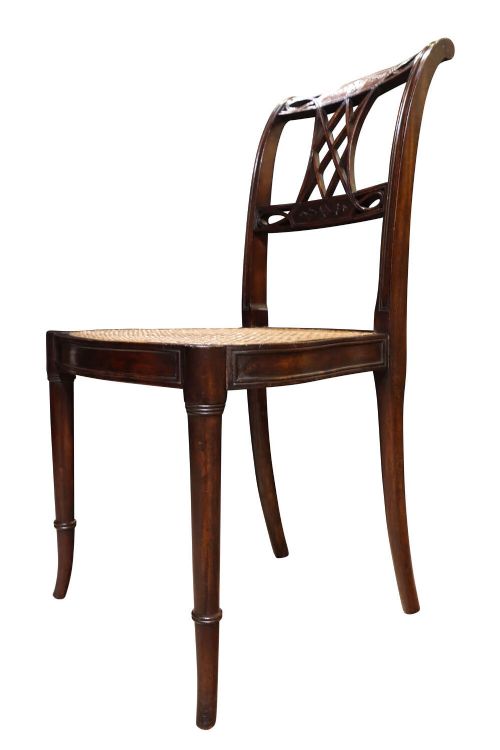
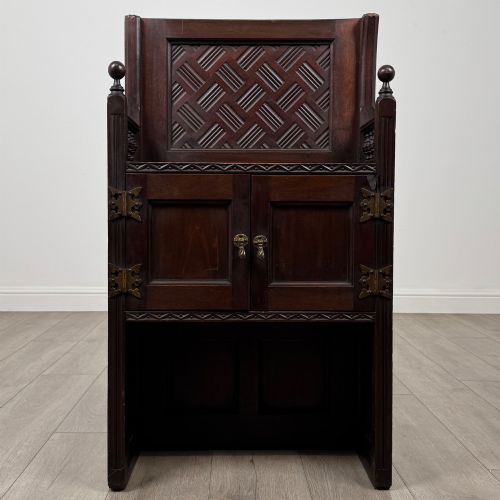
Dark Wood Hall Seat
A dark wood hall seat offers a commanding presence in an entranceway, combining practical seating with substantial period character.
Dark Wood Hall Seat
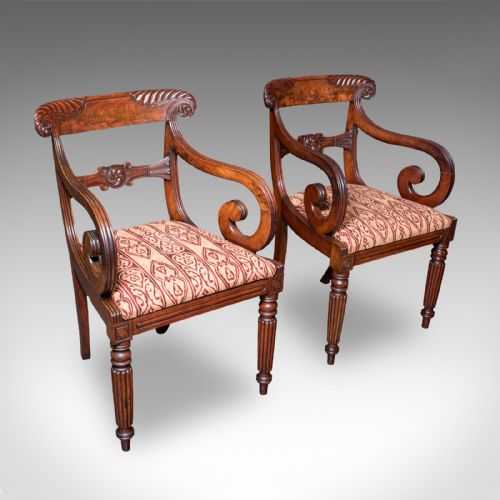
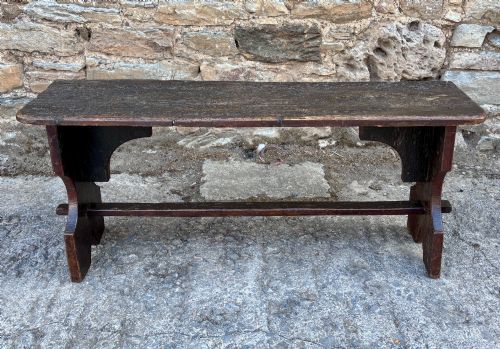
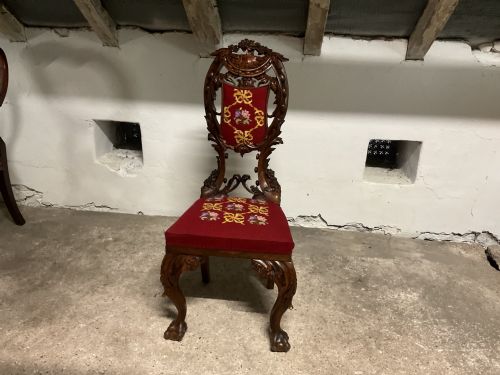
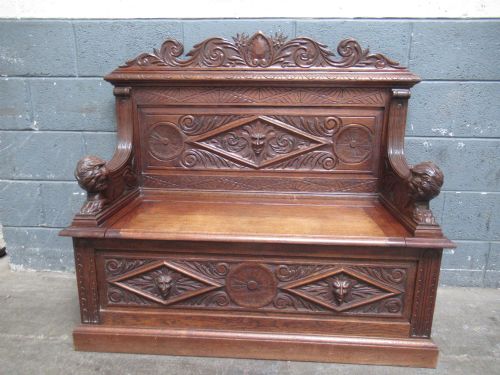
A dark wood hall seat encompasses heavy oak benches, mahogany hall chairs, and carved settles designed for hallways and reception spaces. These items originate from periods spanning the eighteenth century through the Edwardian era, with significant representation from Victorian and Regency workshops.
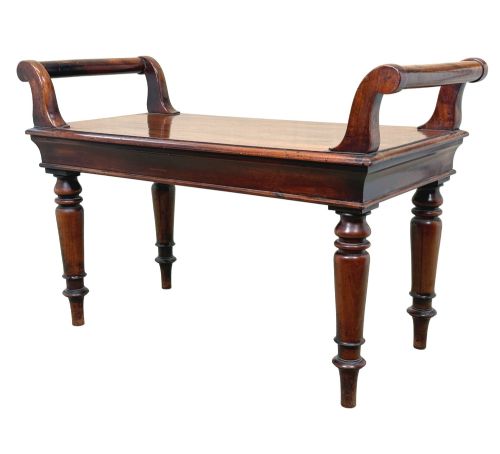
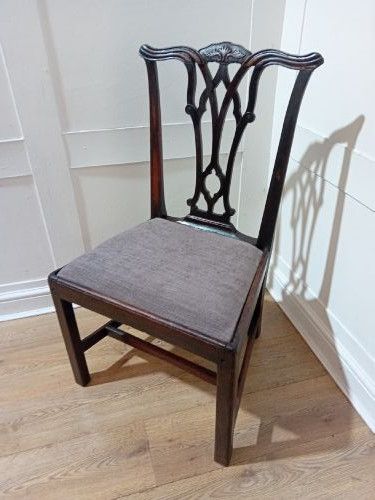
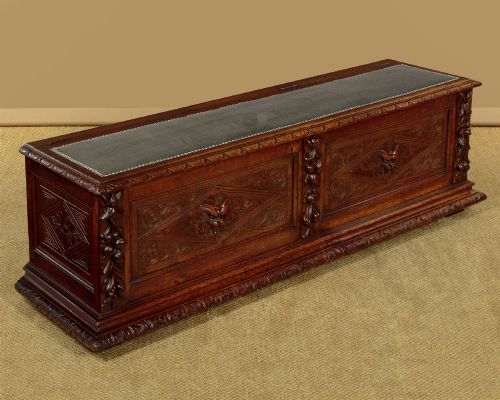
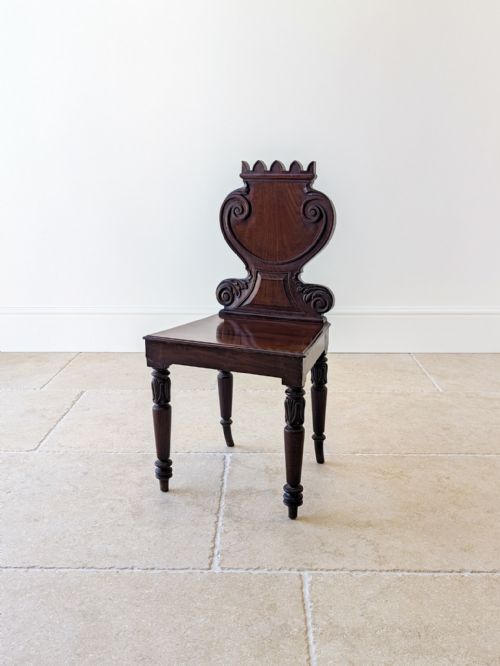
The pieces on this page appear as single chairs, pairs, long window benches, and box settles featuring hinged lids for storage. Oak and mahogany dominate the forms, frequently decorated with carved panels, shield backs, or armorial motifs.
How they were made
Cabinet makers utilised solid timber, primarily oak and mahogany, constructing frames with traditional joinery such as mortise and tenon. Secondary woods like beech appear alongside decorative elements including cane panels, brass fittings, and pearl inlay.
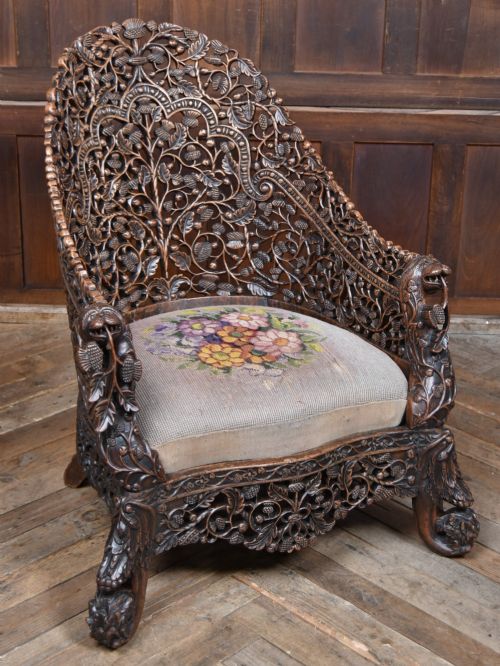
Carving serves as the primary method of ornamentation, yielding deep relief work on chair backs, settle arms, and friezes. Surface finishing relied on hand-applied polish or wax to enhance the natural grain of the dark woods.
Dark Wood Hall Seat Retail Price Guide 2026
Typical asking prices for dark wood hall seat among the pieces listed under this phrase on Sellingantiques today, from the lower quarter to the upper quarter. They describe what is for sale here now, not the wider market.
Materials recorded across the inventory include cane, brass, fabric, and pearl inlay applied to seating frames.
What varies in quality
The depth and crispness of the hand-carving dictate the artistic merit of each piece, distinguishing utilitarian items from high-status country house commissions. Sharp detailing in heraldic shields or botanical motifs indicates skilled workmanship.
Structural integrity depends on the selection of dense, well-seasoned timber and the preservation of original joints. Pieces retaining their primary surfaces and uncompromised structural frames hold greater integrity than those with extensive replacement parts.
James Shoolbred & Co.
The Dark Wood Hall Seat Glossary
- Settle
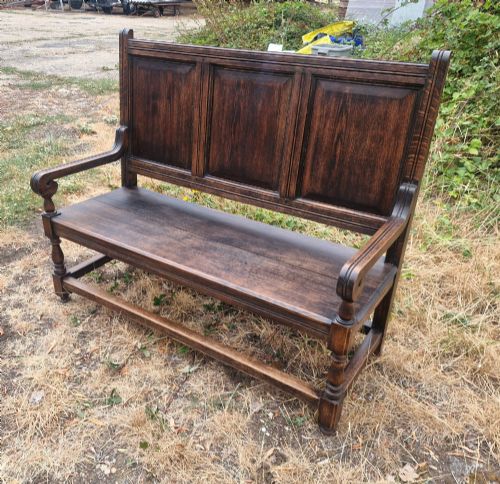
- A wooden bench with high back, solid arms, and often a storage box beneath the seat. This form provided draught protection in traditional hallways.
- Sgabello
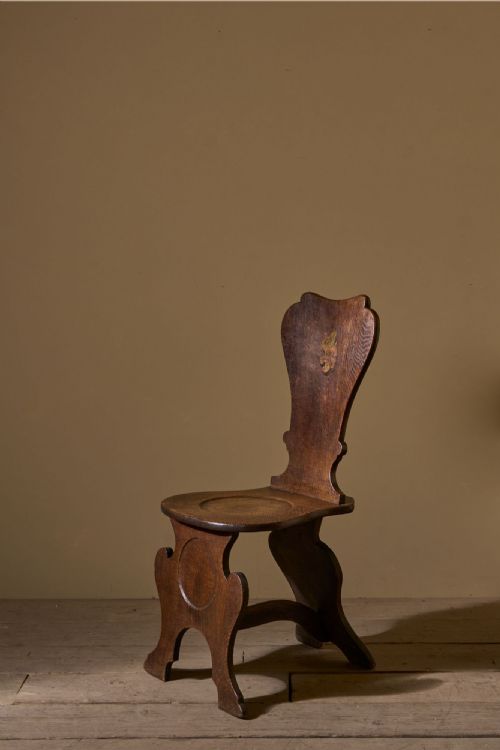
- A lightweight wooden chair with a high back and trestle supports, originating in the Italian Renaissance and revived in nineteenth-century oak.
- Shield back
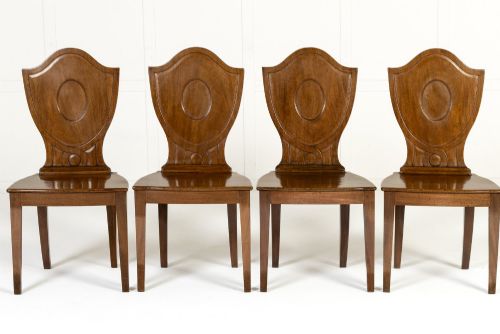
- A chair back shaped in the outline of a heraldic shield, popular during the eighteenth century in mahogany dining and hall seating.
- Window seat
- A long bench designed to fit within a window recess, constructed in styles ranging from Regency mahogany to Victorian carved oak.
Dark Wood Hall Seat: Frequently Asked Questions
Where did people put hall seats?
Historic households placed these wooden seats in entrance halls, corridors, and reception rooms to provide temporary seating for visitors and guests waiting to be received.
They also served as functional furniture where occupants could remove heavy outer garments or footwear before entering the main living quarters.
How do I use a box settle?
The hinged seat lid lifts to reveal a hidden compartment suitable for storing household items, blankets, or boots. This dual purpose makes them practical additions to modern boot rooms and hallways.
Position the settle against a sturdy wall to support the high wooden back and distribute weight evenly across the frame.
Are mahogany and oak pieces from different eras?
Oak construction appears frequently across seventeenth- and eighteenth-century pieces as well as nineteenth-century revival styles like Jacobean and Arts and Crafts. Mahogany gained popularity during the Georgian, Regency, and Victorian periods for formal reception furniture.
Examining the grain, colour, and carving style helps determine whether a piece belongs to its original period of manufacture or a later revival.
How do I care for dark wood?
Maintain the timber by applying a microcrystalline wax polish occasionally to nourish the surface and protect against dryness. Avoid placing wooden furniture near direct heat sources or in strong sunlight.
Dust regularly with a soft, dry cloth to prevent the accumulation of grit in carved recesses and joints.