
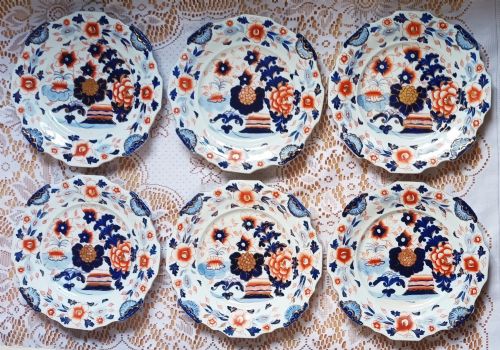


Vintage Masons Ironstone Plate
These vintage masons ironstone plate selections offer robust ceramic service forms painted in bold patterns, bringing enduring 19th century utility and colour to a table.
Vintage Masons Ironstone Plate
When you search for a vintage masons ironstone plate, you encounter sturdy ceramic tableware designed for serious domestic service across the nineteenth and early twentieth centuries. These pieces encompass everything from everyday dinner plates and charger plates to large meat platters, dessert dishes, and specialised drainers.
The versions you meet most frequently on this page belong to the nineteenth century, though Regency, Georgian, Edwardian, and nineteen-twenties examples also appear. Patterns range from traditional Chinoiserie and Victorian Imari designs to the Old School House pattern, Blue Pheasants, and exotic bird motifs.
How they were made
Potters produced these objects using durable ironstone ceramic bodies designed to withstand heavier daily use than traditional porcelain while maintaining a refined appearance. Manufacturers applied hand-painted enamel colours and glazed finishes to the ceramic surfaces.
Many items incorporate gold leaf detailing and rich ground colours such as orange and yellow, fixed through high-temperature kiln firing to preserve the intricate Chinoiserie and Imari patterns.
Current listings span the nineteenth century through the nineteen-twenties, featuring ironstone ceramic bodies decorated with enamel, glaze, and gold leaf.
What varies in quality
The standard of a piece rests largely on the crispness and complexity of the hand-painted decoration, where master painting creates depth in exotic bird and Chinoiserie motifs. Richness of ground colour and the sparing or generous application of gold leaf also distinguish finer service wares.
Preservation of the original glaze and enamels separates well-kept cabinet pieces from heavy-use kitchen pottery, while uniform moulding of the ironstone body marks superior manufacture.
The Vintage Masons Ironstone Plate Glossary
- Ironstone
- A heavy, durable ceramic material patented in the nineteenth century to imitate porcelain while offering greater strength for domestic service.
- Imari
- A decorative style featuring bold cobalt blue, iron-red, and gold, heavily influenced by traditional Japanese export wares.
- Chinoiserie
- European artistic interpretations of Chinese and East Asian artistic traditions, often depicting pagodas, exotic birds, and imaginary landscapes.
- Charger plate
- A large decorative or base plate placed beneath other courses during formal dining.
- Ashet
- A Scottish and northern English term for a large serving platter or dish.
Vintage Masons Ironstone Plate: Frequently Asked Questions
Are these plates safe for daily use?
These historical ceramics function well for gentle modern dining, though hand washing preserves the delicate enamels and gold leaf best.
Avoid microwave heating and harsh dishwasher detergents to protect the nineteenth-century glazes.
How do I date a piece?
Makers' marks stamped into the ironstone body provide the primary clue, alongside stylistic shifts between Georgian neoclassical forms and later Victorian patterns.
Colour palettes also help, as bright orange grounds and specific Chinoiserie transfers align with distinct production decades.
What is the difference between a plate and a charger?
Chargers measure significantly wider than standard dining plates and typically served a decorative or foundational role on the table.
Standard plates handled individual portions of food during dessert or main courses.
How should I display them?
Wall mounting plates utilising proper wire hangers lets you exhibit bold Chinoiserie and Imari patterns safely.
Platters and cheese dishes anchor dresser displays or sideboard arrangements effectively.