


Large Oval Serving Dish
A large oval serving dish brings generous presence to the table, uniting practical service with centuries of ceramic design.
Large Oval Serving Dish
When you search for a large oval serving dish, you encounter expansive platters and chargers intended for substantial dining. These pieces arrive from the eighteenth and nineteenth centuries, spanning Georgian eras through the Victorian period. The selection includes transfer-printed earthenware, robust ironstone, and delicate porcelain.
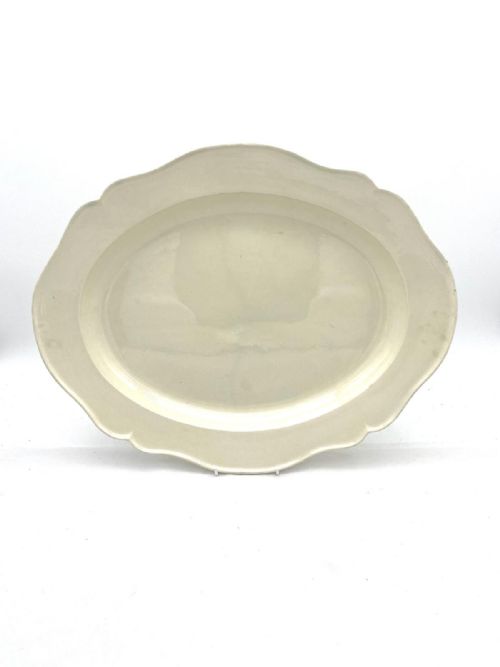
You are most likely to meet Victorian blue and white meat platters on this page, alongside Chinese export wares and Continental porcelain. Forms range from simple creamware chargers to massive ironstone dishes complete with drainers and silverplated meat domes. Each vessel served a central role in formal domestic hospitality.
How they were made
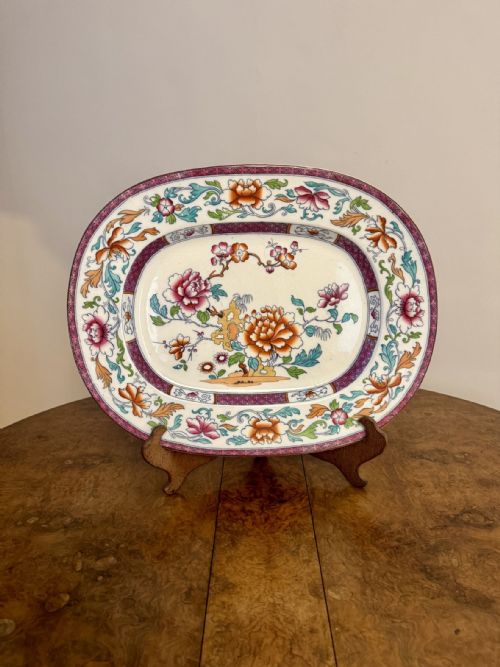
Potters shaped these large oval serving dishes using earthenware, ironstone, and porcelain, applying lead glaze or enamel to seal the surface. Many nineteenth-century examples utilise blue and white transfer printing to apply intricate patterns onto the ceramic body. Higher-end pieces incorporate hand-painted enamel and gold leaf detailing over the glaze.
The sheer scale of these platters required robust firing techniques to prevent warping in the kiln. Ironstone provided a dense, heavy body capable of supporting large joints of meat, while porcelain versions allowed for refined decorative scenes. Accessory elements such as silverplated domes and ceramic drainers added further functional complexity.
Some nineteenth-century meat dishes come with removable ceramic strainers designed to keep your Sunday roast safely out of its own gravy.
What varies in quality
Quality in a large oval serving dish rests upon the crispness of the transfer print or the precision of the hand-painted enamel. Early creamware chargers demonstrate elegance in their moulded edges, whereas ironstone versions rely on sheer heft and durable glaze condition. The presence of subsidiary components like drainers elevates the utility and interest of the piece.
The distinction between standard utility platters and finer works lies in the artistry of the decoration and the prestige of the maker. Porcelain trays from European factories exhibit delicate bleu céleste grounds and detailed figurative scenes. Simpler blue and white meat plates depend entirely on the depth of the cobalt pigment and the clarity of the printed motif.
Samson Paris·Meissen
The Large Oval Serving Dish Glossary
- Creamware
- A fine earthenware developed in the eighteenth century, characterised by a pale yellowish-cream lead glaze. It offered a lighter, more refined alternative to traditional salt-glazed stonewares.
- Ironstone
- A heavy, durable type of ceramic patented in the nineteenth century to imitate Chinese porcelain. It resists chipping and staining, making it ideal for large meat platters.
- Transfer print
- A decorative technique where an engraved copper plate transfers a design onto tissue paper, which is then pressed onto the ceramic body before firing. This allowed for intricate, repeatable blue and white patterns.
- Meat dome
- A domed cover, often silverplated, designed to fit over a large serving dish to keep joints of meat warm at the table. These pieces complement heavy ironstone and earthenware platters.
- Charger
- A large decorative plate or dish used historically for ceremonial display or as a base plate during formal dining. In modern contexts, they function as substantial serving platters.
Large Oval Serving Dish: Frequently Asked Questions
How were these large dishes used?
These large oval serving dishes were designed to present substantial joints of meat and main courses at the dining table. They often worked alongside drainers to catch juices and meat domes to retain heat.
In grand nineteenth-century households, they formed the centrepiece of formal dinners. Their generous proportions allowed servants to serve multiple guests from a single vessel.
How do I date a blue and white platter?
Dating relies on stylistic clues, ceramic bodies, and transfer print characteristics. Earlier eighteenth-century pieces often feature creamware bodies with moulded edges, while mid-nineteenth-century examples frequently employ dense ironstone.
Backstamps, where present, provide direct evidence of manufacture. Examining the clarity of the transfer print and the colour of the glaze also helps narrow the period.
What is the difference between earthenware and ironstone?
Earthenware is a porous, lower-fired ceramic that requires a thorough glaze to remain waterproof. Creamware and standard transfer-printed meat plates fall into this lighter category.
Ironstone is a much denser, semi-vitrified ceramic patented to withstand heavy kitchen use. It absorbs less moisture and provides a heavier foundation for massive serving dishes.