




Blue Ironstone Platter
A blue ironstone platter is a durable ceramic serving piece designed for heavy table use, prized by collectors for its robust weight and rich transfer-printed decoration.
Blue Ironstone Platter
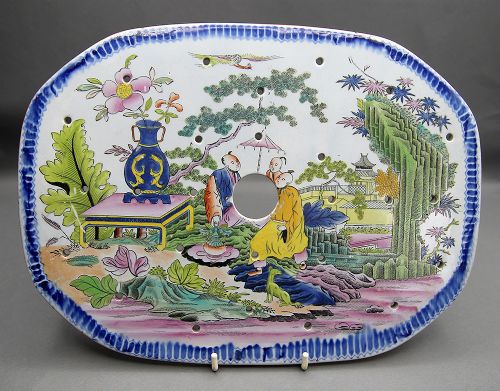
A blue ironstone platter combines the resilience of stoneware with the refined appearance of porcelain, emerging from British potteries during the Georgian and Victorian eras. These serving dishes range from massive meat platters and well-and-tree designs to specialised platter drainers and cheese dishes.
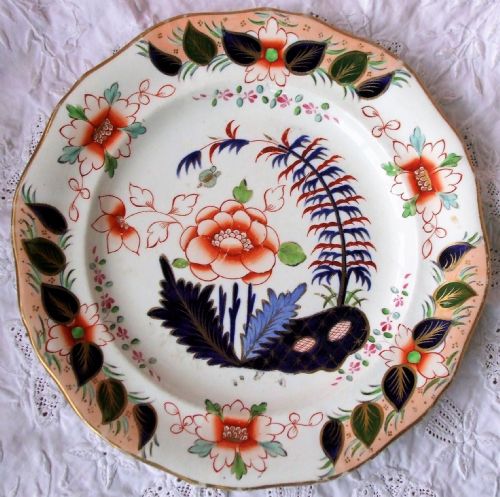
The pieces on this page span the nineteenth century, covering Regency and Victorian periods alongside Georgian examples. Collectors frequently encounter transfer-printed patterns influenced by Chinoiserie, Imari, and picturesque landscapes executed in deep blue pigments.
How they were made
Potters formulated ironstone using a dense mixture of ball clay, china stone, and slag of iron to create a heavy, vitreous ceramic body capable of withstanding rigorous daily service. This robust earthenware was then fired at high temperatures to achieve a stone-hard durability.
Decoration relied primarily on blue transfer printing, sometimes enhanced by hand-painted enamel colours and touches of gold leaf over the glaze. This technique allowed intricate patterns like grasshopper, pagoda, and Chinoiserie motifs to be applied consistently across large meat dishes and serving platters.
Listings feature nineteenth-century ironstone dinnerware utilising materials such as ceramic, earthenware, glaze, enamel, and gold leaf.
What varies in quality
The distinction between ordinary utility wares and exceptional pieces rests upon the crispness of the transfer print and the ambition of the form. Elaborate moulded details, such as well-and-tree configurations or integrated drainers, separate standard serving dishes from high-status items.
Artistic execution further defines the upper tier, where blue underglaze printing is meticulously aligned and augmented with skilful hand-enamelling or gold leaf. The presence of named patterns and recognised potters adds historical weight to the ceramic body.
John Davenport of Longport·John Ridgway·Mason's Ironstone·Minton
The Blue Ironstone Platter Glossary
- Ironstone china
- A patented heavy earthenware developed in the nineteenth century to provide a durable and cheaper alternative to true porcelain. It contains refined clay and silicate of alumina.
- Transfer printing
- A mechanical method of applying complex engraved designs to ceramic surfaces using a paper tissue transferred from a copper plate. This technique enabled mass production of detailed blue patterns.
- Well and tree
- A specialised serving platter design featuring a recessed channel and central well to catch meat juices during carving. These large dishes were essential for formal nineteenth-century dining.
- Platter drainer
- A curved ceramic insert perforated to allow meat juices to drain away from the roast on the platter. They are frequently found paired with large nineteenth-century meat dishes.
- Imari
- A decorative style inspired by Japanese export porcelain featuring deep cobalt blue, iron red, and gold highlights. Victorian potteries adapted this palette onto ironstone bodies.
Blue Ironstone Platter: Frequently Asked Questions
How do I date a blue ironstone platter?
Dating relies upon factory marks stamped or printed on the reverse, stylistic clues such as Regency or Victorian moulding, and the specific depth of the blue transfer print.
Earlier nineteenth-century examples often display sharper potting and distinct pattern names like grasshopper or pagoda associated with specific ceramic houses.
Can I use an antique platter for serving food?
These ceramic platters were originally created for heavy meat service and dinner parties during the Georgian and Victorian periods. Most modern collectors continue to use them for dining, provided they are hand-washed carefully.
Sudden thermal shock and automated dishwashers should be avoided to protect the historic glaze and delicate enamel or gold leaf details.
What is the difference between ironstone and stoneware?
Ironstone is a specific type of heavy earthenware patented to mimic porcelain through the inclusion of slag of iron and refined stone. Stoneware is fired at higher temperatures until the ceramic body itself becomes completely vitrified and non-porous.
Both materials yield robust serving vessels, but ironstone provides a whiter canvas suited for detailed blue transfer printing.
Why do some platters include a drainer?
Platter drainers were engineered to sit inside large meat dishes to elevate joints of meat above their juices during carving at the table. They reflect the formal dining practices of nineteenth-century households.
Finding a matching platter and drainer together is a notable occurrence for collectors of nineteenth-century ceramic dinnerware.