
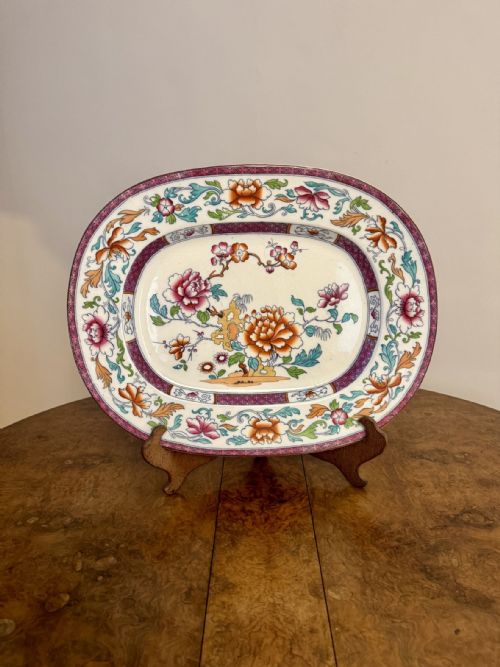


Large Ironstone Meat Dish
A large ironstone meat dish is a heavy ceramic serving piece built for the grand dining tables of the nineteenth century.
Large Ironstone Meat Dish
A large ironstone meat dish provides the substantial surface required for serving joints of meat and poultry at nineteenth century feasts. These sturdy platters appear in forms such as serving platters, game plates, and dishes complete with strainers.
The pieces on this page span the Victorian and Georgian periods, showcasing origins in English ceramic production. Makers such as Minton and Mason's dominate the offerings, bringing robust utility to the table.
Decorations range from blue and white transfers to rich enamel patterns like Chinoiserie, Imari, and Italianate landscapes. Buyers encounter both plain utility ironstone and elaborate polychrome examples designed for display.
How they were made
Potters formed these heavy platters using durable ironstone earthenware, a dense ceramic body designed to resist chipping during heavy use. Artisans applied thick glazes to seal the surface against grease and moisture.
Decoration relied on hand-painted enamels, transfer printing in blue, and occasional touches of gold leaf. Specialised forms like well and tree platters incorporated carved channels and wells to direct juices away from the meat.
Listings feature 19th Century, Victorian, and Georgian periods, utilising materials such as ironstone, earthenware, enamel, and gold leaf.
What varies in quality
The complexity of the decoration determines much of the distinction between standard utilitarian platters and high-end exhibition pieces. Hand-painted Chinoiserie and Imari patterns demand greater artistic skill than simple blue and white transfer prints.
The presence of specialised components like original drainage strainers elevates the status of a dish. Crispness in the moulded ironstone body and the preservation of vibrant enamel colours define the upper tier of survivals.
Minton·Mason's
The Large Ironstone Meat Dish Glossary
- Ironstone
- A heavy, durable ceramic body patented in the nineteenth century to rival Chinese porcelain. It offers high resistance to impact and thermal shock.
- Well and tree
- A specialised platter design featuring a carved central well and branching channels that drain meat juices during carving. This keeps the joint elevated from pooling liquids.
- Chinoiserie
- A European decorative style reflecting imaginative interpretations of Chinese art and landscapes. It frequently appears on nineteenth century ceramic tableware in blue or multi-coloured enamels.
- Imari
- A decorative style inspired by Japanese export wares featuring iron red, cobalt blue, and gold leaf. Makers utilised this palette on sturdy earthenware bodies.
- Transfer printing
- A mechanical decoration technique using an engraved copper plate to transfer a design onto tissue paper and then onto the ceramic surface. This allowed complex scenes like Italianate landscapes to be reproduced consistently.
Large Ironstone Meat Dish: Frequently Asked Questions
What is an ironstone meat dish?
An ironstone meat dish is a heavy ceramic platter produced in the nineteenth century to serve large joints of meat at the dining table. These pieces combined utilitarian durability with decorative patterns suited for country houses.
The dense earthenware body prevented staining and chipping, making them practical for daily service in grand Victorian households.
How were well and tree platters used?
Well and tree platters were utilised during formal dinners for carving meat at the table. The carved channels directed juices into the lower well, keeping the joint dry.
This functional innovation prevented grease from spilling onto the tablecloth and made carving large poultry or roasts much cleaner.
How do I date a large meat platter?
Dating relies on maker marks, style periods, and the specific ceramic body used. Nineteenth century pieces often feature impressed registry marks or printed factory stamps on the reverse.
Stylistic cues such as Victorian Imari or transfer printed Italianate landscapes also help narrow the production era to the Georgian or Victorian periods.
Can I use antique ironstone for serving food?
Many collectors continue to use these robust ironstone platters for serving food during modern meals. The glazed ceramic surface remains functional for dry foods and large roasts.
Hand washing is recommended to preserve the nineteenth-century glazes, enamels, and any delicate gold leaf details from harsh detergents.