



Blue Transferware Meat Platter
A blue transferware meat platter brings large-scale 19th-century ceramic art directly to the modern table.
Blue Transferware Meat Platter
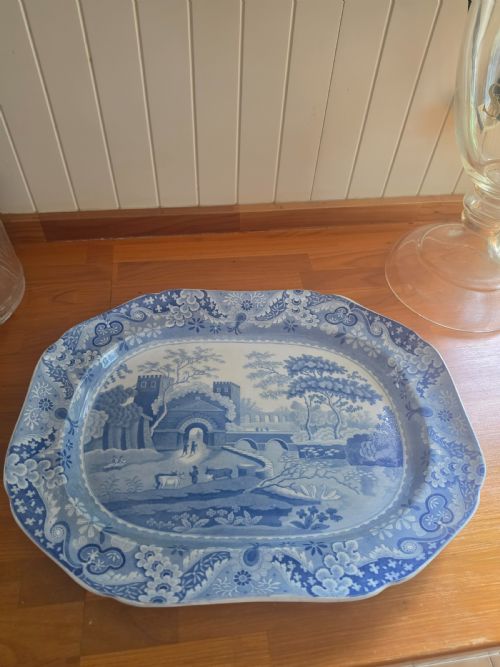
When you search for a blue transferware meat platter, you encounter large serving dishes designed for carving and presenting joints at the table. These ceramic pieces date from the Georgian and Victorian eras, spanning the 19th century.
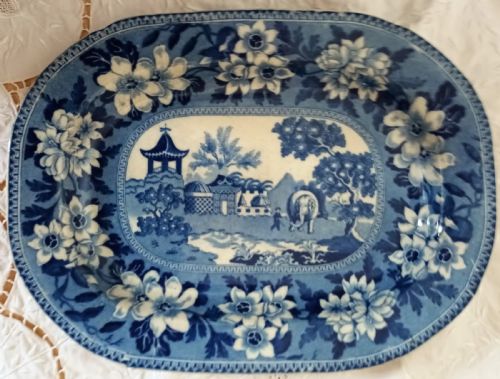
The version you are most likely to meet on this page is a Staffordshire earthenware or ironstone vessel featuring intricate blue printed scenery. Many examples include specific named patterns such as India Temple, Elephant, or Chinese Villa.
Makers ranged from major potteries like Spode and Mason's to regional works producing chargers, platters, and fitted drainers. These objects served utilitarian dining functions before transitioning into decorative display pieces.
How They Were Made
Potters formed these heavy serving dishes from earthenware, pearlware, or ironstone, applying a smooth ceramic glaze to seal the porous clay body. Cobalt pigment provided the deep blue colour for the printed designs.
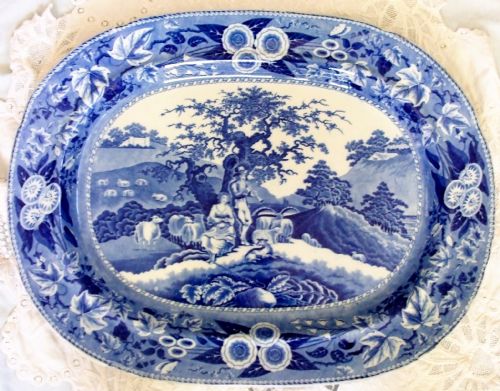
Makers transferred engraved copperplate images onto tissue paper and pressed them onto the damp ceramic surface before firing. This blue transfer printing technique allowed complex landscapes, architectural views, and Chinoiserie patterns to be replicated across large platters.
Listings feature 19th-century periods including the Georgian and Victorian eras, alongside specific dates from 1800 to 1890.
What Varies in Quality
Quality in these platters depends on the crispness of the transfer print and the complexity of the landscape design. Finer plates display sharp lines in detailed series like Byron Views or specific armorials rather than blurred or smudged pigment.
The weight, substance, and refinement of the underlying ceramic body also differentiate standard tableware from substantial ironstone or pearlware examples. Intact matching elements, such as integrated gravy wells or removable drainers, elevate the sophistication of the piece.
John Rogers and Son·Thomas Lakin·Don Pottery·Elkin Knight and Bridgwood·Copeland and Garrett
The Blue Transferware Meat Platter Glossary
- Transferware
- Ceramic decorated by transferring a printed design from an engraved copper plate using pigment. This technique defined 19th-century volume production in Staffordshire.
- Pearlware
- A refined earthenware body perfected by Josiah Wedgwood featuring a bluish glaze that pooled in recesses. It bridged the gap between creamware and later white ironstone.
- Ironstone
- A heavy, durable type of ceramic patented in the early 19th century. It resisted chipping and served as a sturdy base for large meat platters.
- Meat Drainer
- A perforated ceramic insert that sat inside a platter to lift joints above accumulated juices. They are frequently found in larger Georgian and Victorian service pieces.
- Gravy Well
- A recessed hollow at one end of a serving platter designed to collect meat juices during carving. This functional addition is characteristic of better-quality dining pieces.
Blue Transferware Meat Platter: Frequently Asked Questions
How do you date a blue transferware platter?
Dating relies on combining the ceramic body type, backstamps, and the stylistic period of the transfer pattern. Early 19th-century pieces often use pearlware bodies, while later Victorian items commonly utilise heavier ironstone.
Named pattern series, registry marks, and known operating dates of potteries like Spode or Mason's help narrow the timeline. Examining the depth of the glaze and the sharpness of the cobalt pigment also offers clues to the era of manufacture.
How do I live with a meat platter?
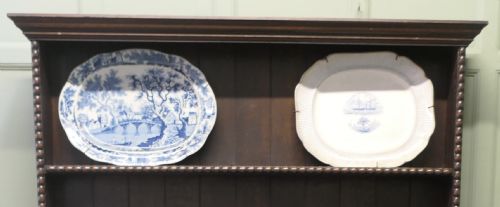
These robust earthenware and ironstone pieces suit wall mounting using appropriate plate hangers or display on sturdy dressers and sideboards. Their deep blue patterns anchor traditional and eclectic interior schemes alike.
Due to their age and delicate glaze surfaces, modern hand washing preserves the ceramic better than mechanical dishwashers. Treating them as functional art allows you to use smaller platters for serving while protecting antique finishes.
What is the difference between earthenware and ironstone?
Standard earthenware provides a traditional porous ceramic body that defined early 19th-century Staffordshire production. It offers a slightly softer appearance under the glaze.
Ironstone, introduced slightly later, uses a denser, vitrified formula that resists chipping and supports larger, heavier serving platters. This robust material made ironstone the preferred choice for heavy-duty dining service.