
Vintage Marble Console
A vintage marble console brings a heavy, veined stone surface to an entrance hall or living room.
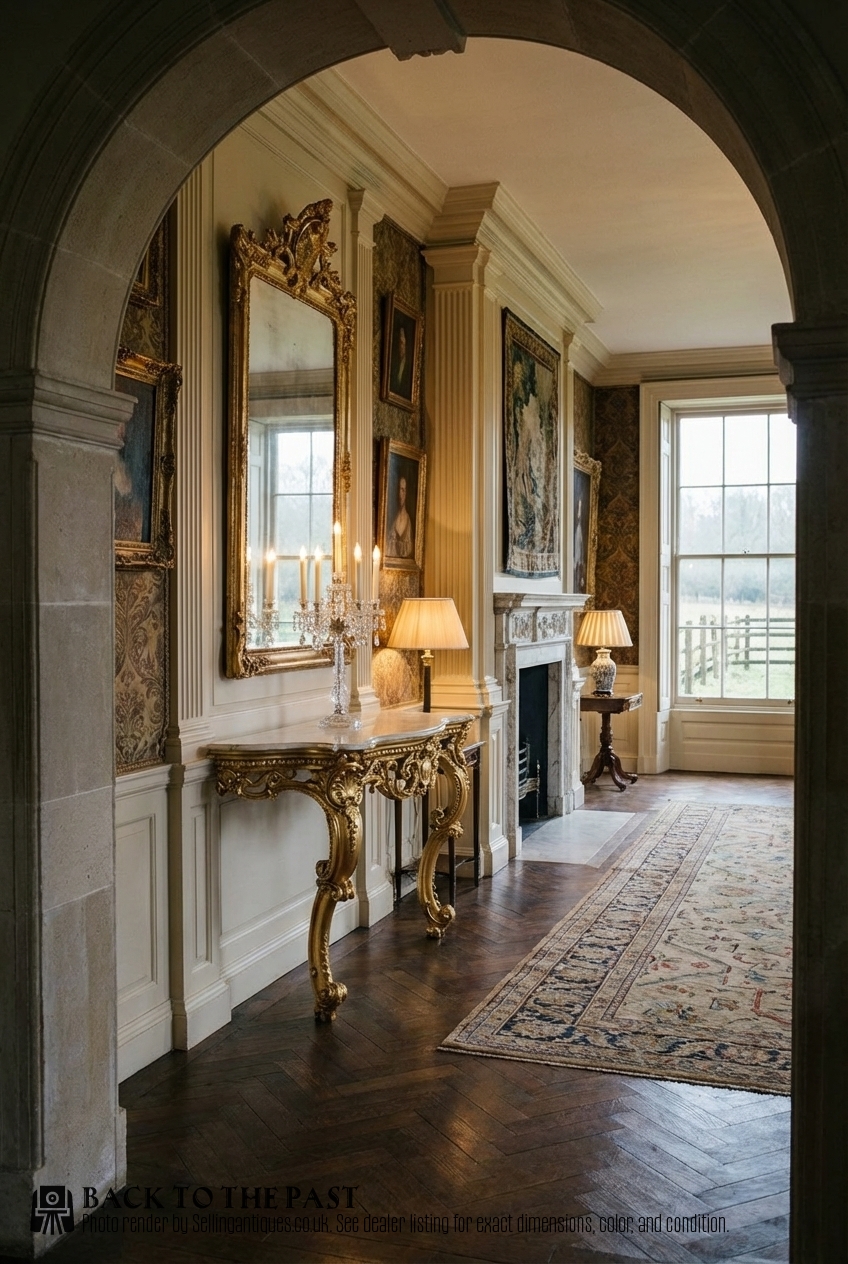
Vintage Marble Console
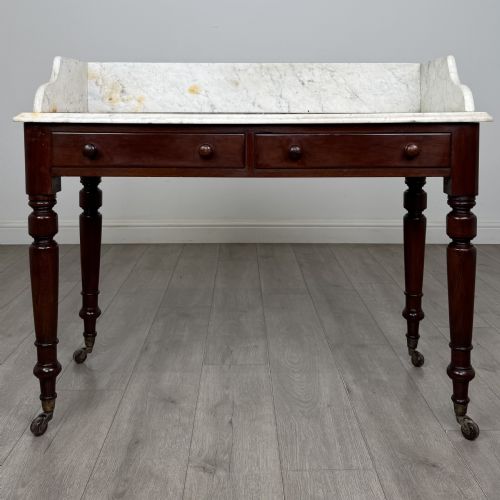
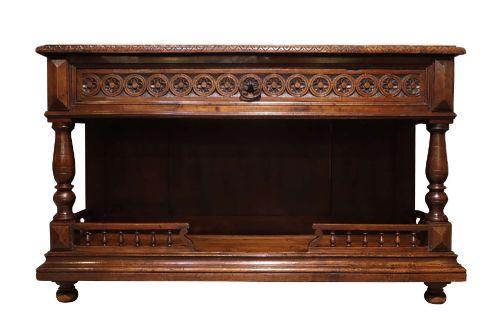
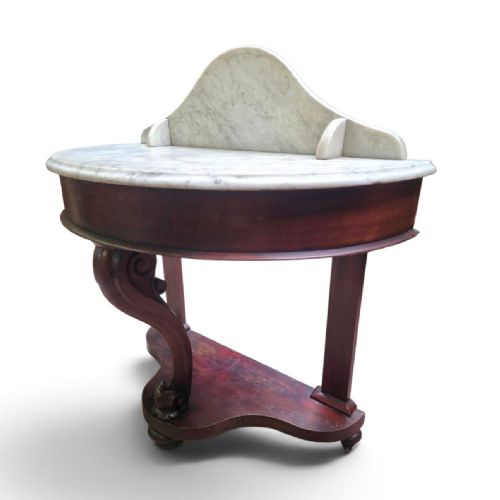
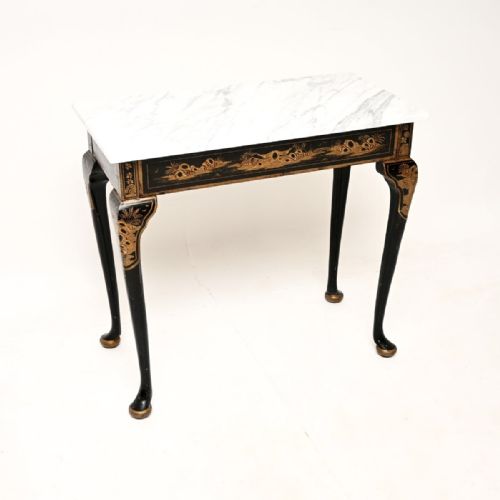
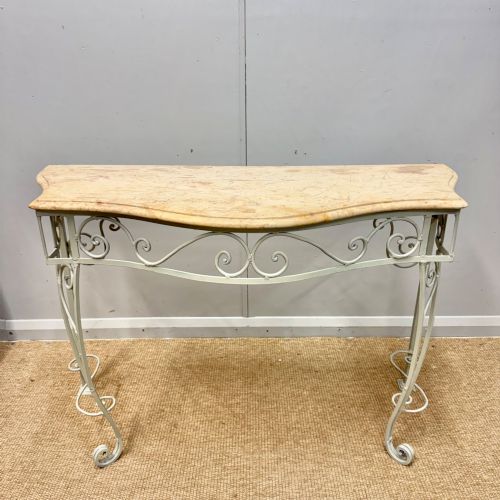
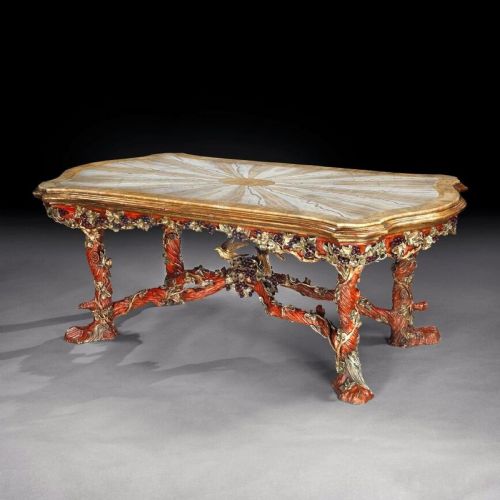
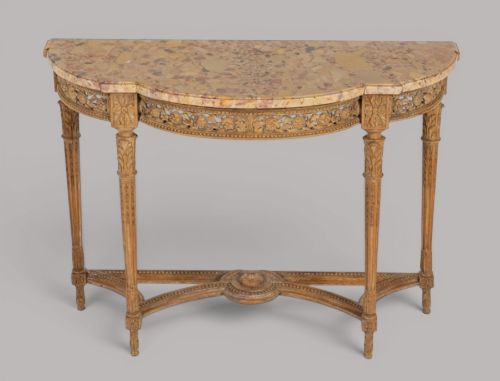
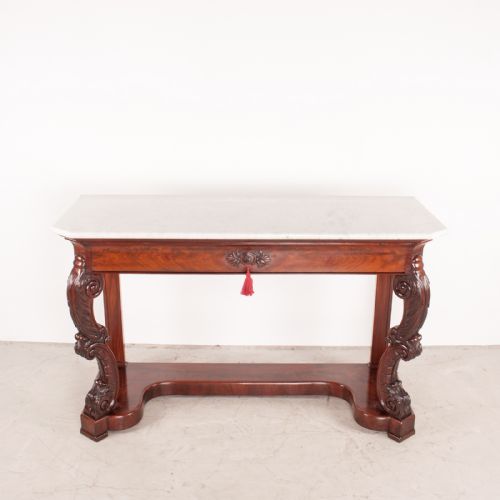
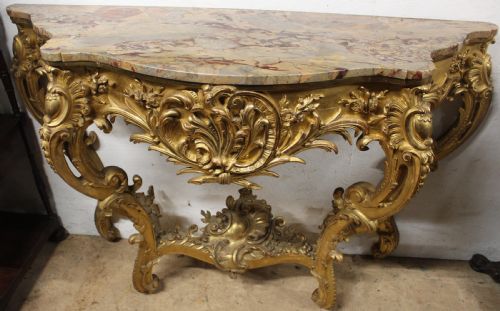
A vintage marble console sits flat against a wall or serves as a central surface, defined primarily by its substantial stone top. When you search for a vintage marble console, you encounter pieces designed for French provincial settings, grand townhouses, and practical work spaces alike. The listings here span centuries of craftsmanship, ranging from simple washstands to elaborate giltwood tables.
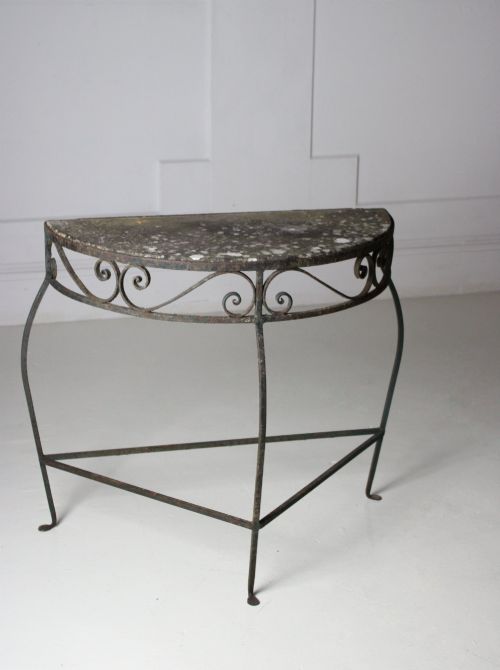
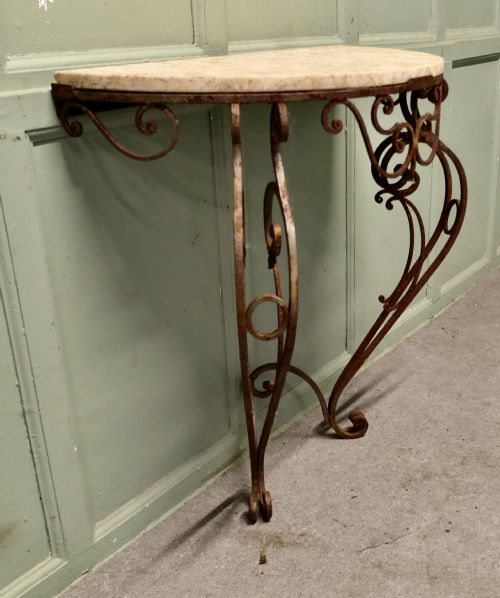
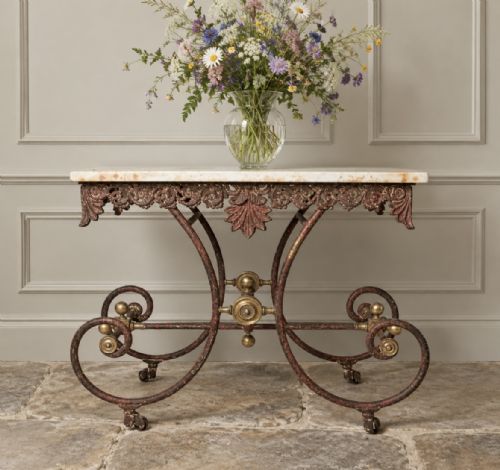
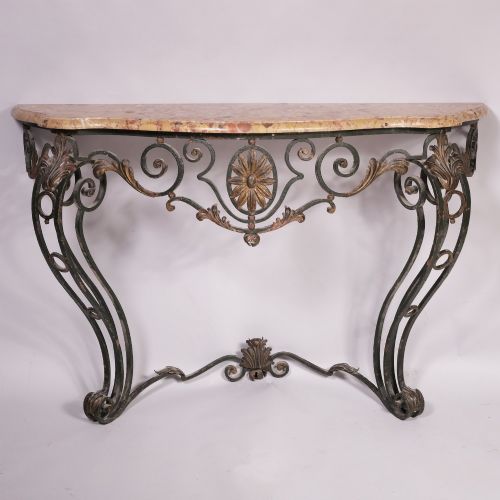
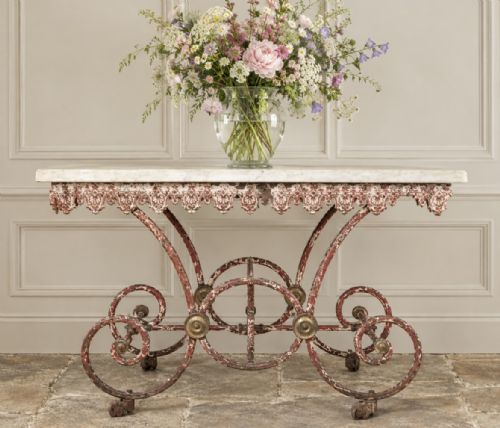
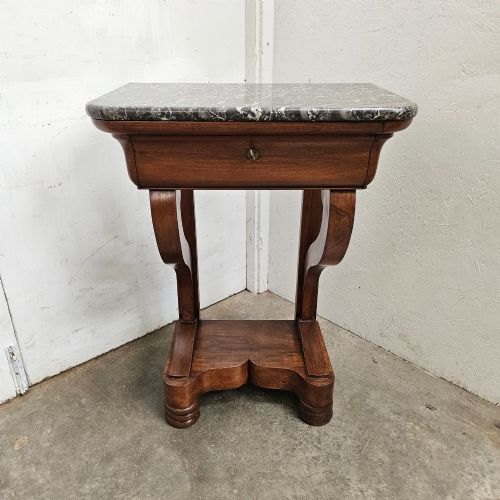
The most common iterations on this page pair sturdy iron or timber frames with smooth marble tops. You will find French wrought iron variants alongside English mahogany and walnut pieces from the nineteenth and early twentieth centuries. These tables combine decorative presence with practical, hardwearing surfaces suited for everyday use.
Materials and construction methods
Makers built these frames using dense timbers like mahogany, walnut, oak, and satinwood, frequently employing traditional joinery to support the immense weight of the stone. Alternatively, metal frames rely on forged wrought iron or cast iron, offering slender structural lines that contrast with the heavy top. Gilding, polychrome paint, and lacquered finishes complete the decorative treatment of the wooden bases.
The stone tops themselves are cut from various marbles and onyx, shaped into rectangular, serpentine, or circular slabs. These surfaces are polished smooth to highlight the natural fossilisation and mineral veining. Each top rests securely upon its base, often held in place simply by gravity due to its substantial mass.
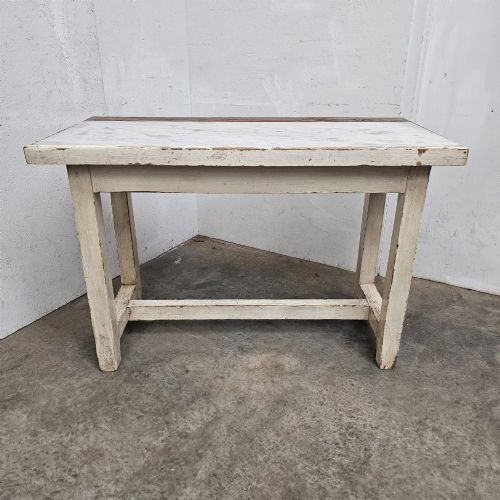
Several items on this page began life scrubbing vegetables or displaying butcher's meat before finding retirement as elegant hallway tables.
Distinctions in craftsmanship and materials
Quality reveals itself in the harmony between the stone top and its supporting frame. Superior examples feature finely figured marble or onyx paired with hand-carved woodwork, intricate giltwood, or skillfully forged ironwork. Lesser pieces rely on simpler construction and plain timber bases with standard commercial stone slabs.
The integrity of the structural joints and the crispness of any applied carving or painted detail also separate standard items from finer works. Original surfaces on the timber and metal components retain a depth of patina that heavy restoration often diminishes.
Amleto Bertoni
The Vintage Marble Console Glossary
- Console
- A table designed to stand against a wall, traditionally supported by brackets or legs at the front. These pieces often anchor hallway spaces or sit beneath large mirrors.
- Giltwood
- Timber coated with a thin layer of gold leaf or gold paint. This technique creates a luminous, reflective surface frequently seen on Neoclassical and Rococo frames.
- Serpentine
- A curved line that undulates inwards and outwards in a gentle wave. This contour appears frequently on the front edges of high-end marble table tops.
- Washstand
- A utilitarian piece of furniture adapted to hold a basin and jug, often fitted with a marble top to resist water damage. Many examples from this category now function as hallway consoles.
- Wrought iron
- Iron beaten into shape by hand using a hammer and anvil. This material provides strong, slender supports for heavy stone tops in French country and industrial designs.
Vintage Marble Console: Frequently Asked Questions
Can I use a vintage marble console outdoors?
These tables are constructed primarily for interior use in hallways, living rooms, and bedrooms. Placing them outside exposes wooden frames and ironwork to moisture that causes rust and timber decay.
While the marble top withstands damp conditions, the overall structural integrity relies on indoor environments to prevent warping and degradation of the joints.
How do I clean a vintage marble top?
Clean the stone surface using a soft cloth dampened with warm water and a mild, neutral soap. Avoid acidic cleaners, vinegar, and lemon juice, which etch the polished finish.
Dry the surface thoroughly after washing to prevent water spots from forming on the porous mineral structure of the stone.
Are these tables heavy to move?
The combined weight of the solid stone top and the dense timber or iron frame makes these consoles exceptionally heavy. Lifting requires at least two people to avoid injury and strain on the structural joints.
It is best to lift the marble top off the base before moving the piece to reduce weight and prevent the stone from sliding off during transport.
How do I identify a Neoclassical console?
Neoclassical pieces feature restrained geometric lines, symmetrical forms, and classical architectural motifs inspired by ancient Greece and Rome. You will often notice straight tapered legs and carved fluting on the wooden frames.
These designs reject the asymmetry of earlier Rococo styles in favour of balanced proportions and dignified simplicity.