

Vintage Mahogany Wall Mirror
These vintage mahogany wall mirror pieces bring warmth and refined reflection to a room, spanning periods from the eighteenth century to the twentieth.
Vintage Mahogany Wall Mirror
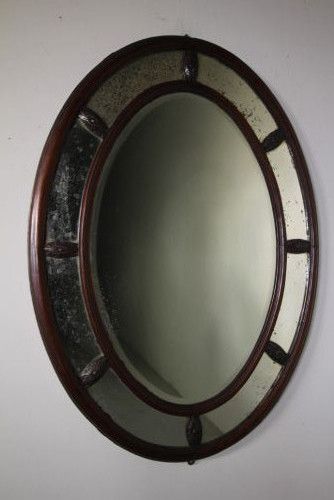
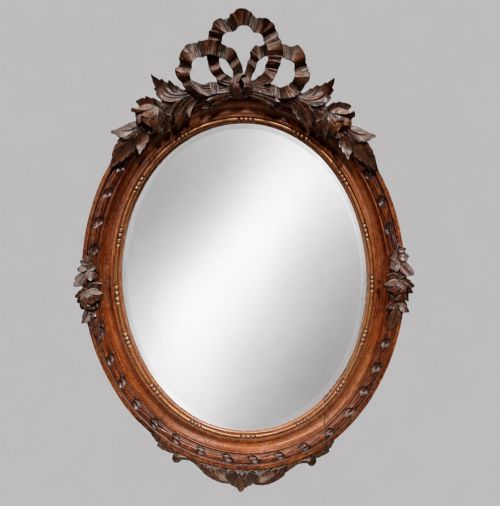
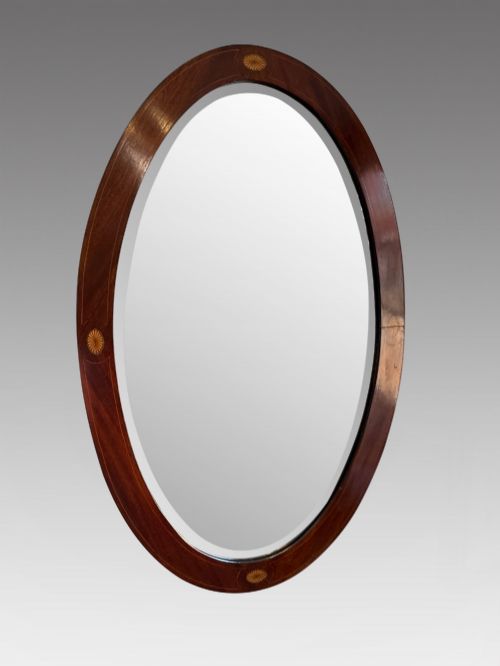
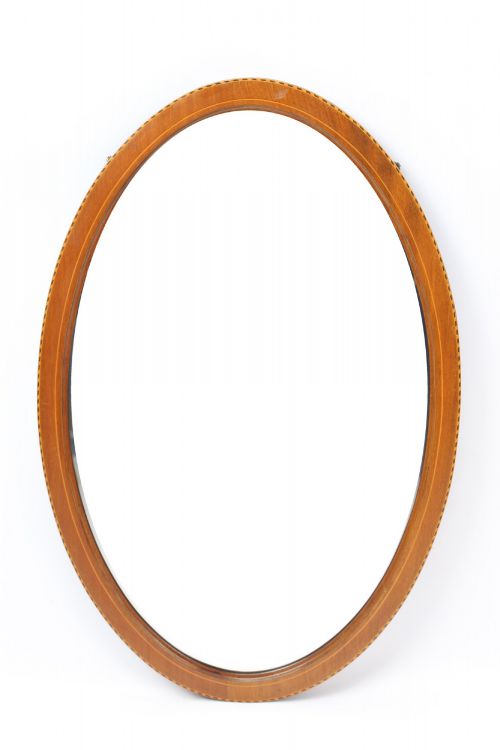
A vintage mahogany wall mirror provides both utility and decorative presence, drawing on centuries of cabinet-making traditions. When searching this phrase, a buyer encounters forms ranging from simple Edwardian ovals to elaborate Georgian fretwork designs.
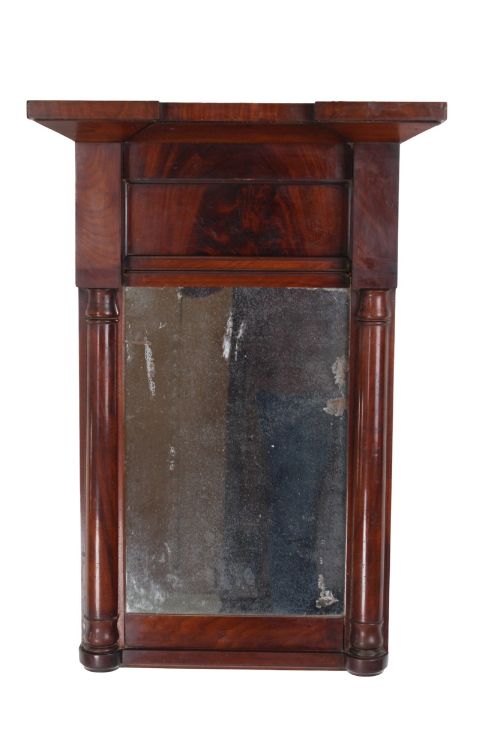
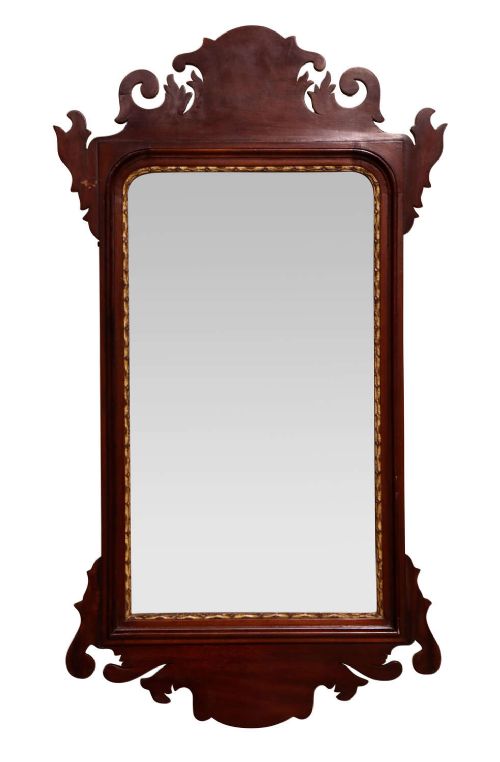
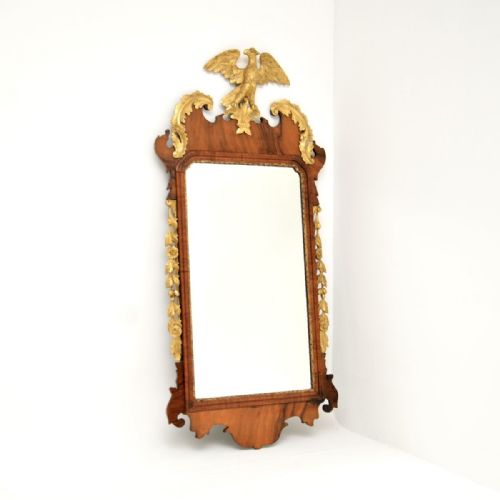
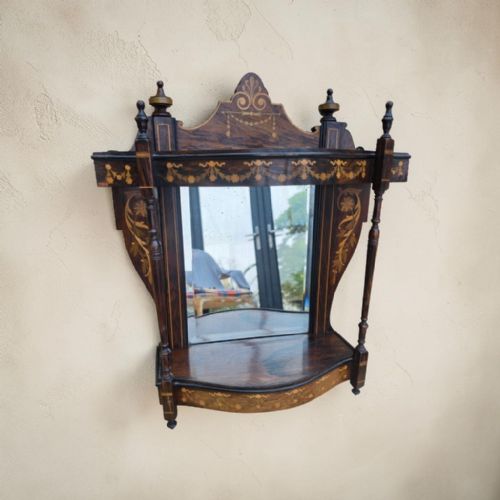
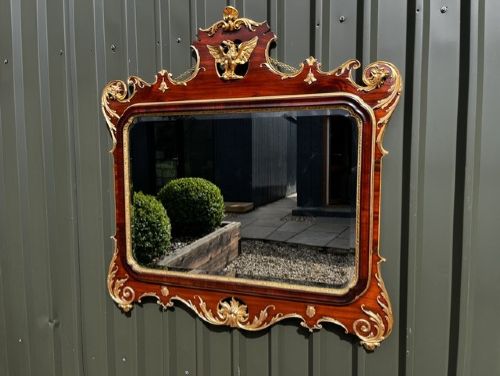
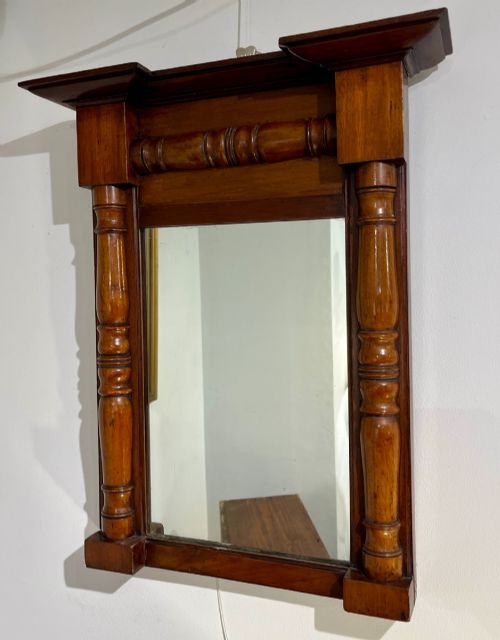
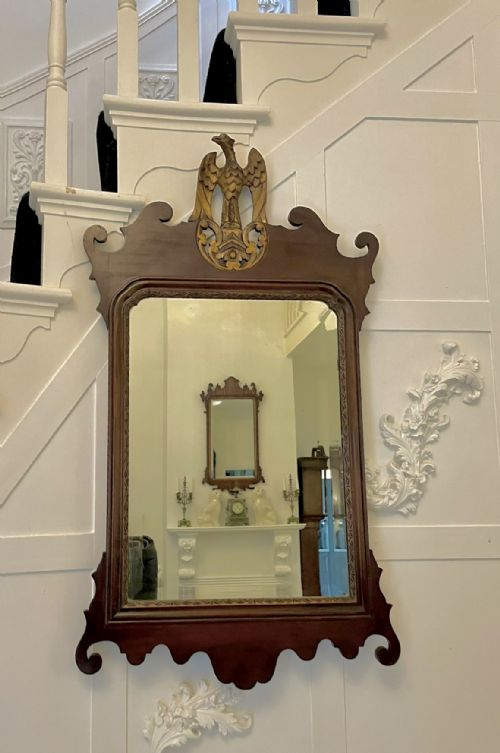
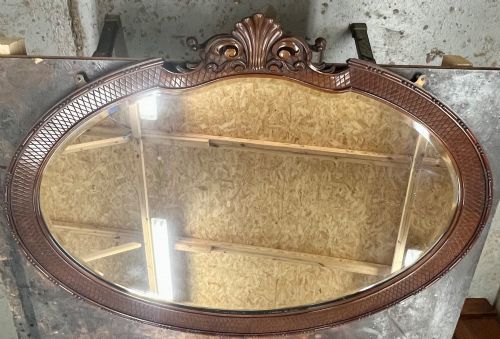
The pieces on this page include pier mirrors, overmantel mirrors, and smaller wall-hanging items with inlaid details or parcel gilt accents. Many reflect revival styles such as Chippendale and Sheraton, produced during the Victorian and Edwardian eras.
Originating mostly from British workshops, these mirrors vary from country house proportions to compact bedroom and hallway formats. The selection captures both formal eighteenth-century designs and later interpretations created around nineteen hundred.
Materials and Construction
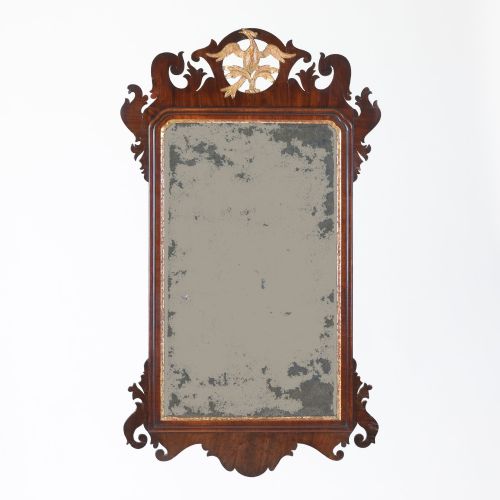
Makers utilised solid mahogany and mahogany veneers over secondary timbers, frequently incorporating satinwood inlay or brass fittings. Giltwood highlights and parcel gilding often accent carved details such as ho-ho birds and scrolling foliage.
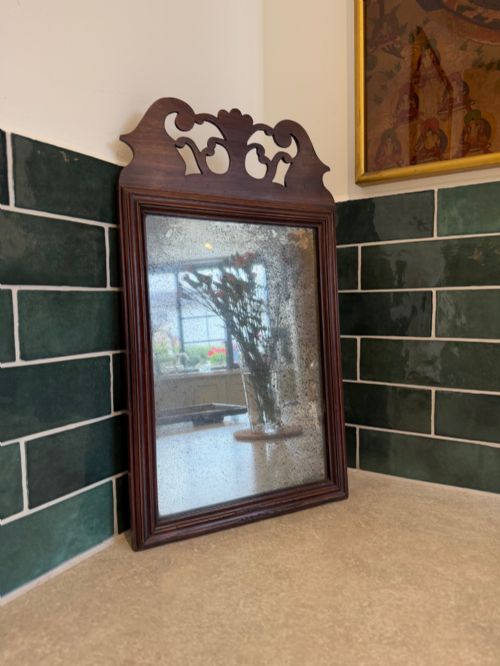
Glass plates vary from early mercury silvering to later bevel-edged mirror glass set within rebated frames. Joinery techniques include traditional fret-cutting for pierced scrollwork frames and fine veneer work on Edwardian toilet and wall mirrors.
A few unusual listings feature sorcerer balls and bathroom shaving cabinets with built-in shelf space for morning routines.
Judging Quality and Execution
Quality rests in the crispness of the carving and the depth of the mahogany grain. Pierced fretwork frames demand high skill to avoid splintering along the delicate scroll edges.
The choice of secondary woods, the preservation of original mirror glass, and the precision of satinwood or marquetry inlay separate standard production items from finer workshop pieces.
The Vintage Mahogany Wall Mirror Glossary
- Parcel Gilt
- Partial gilding applied to specific carved details on a wooden frame, often highlighting mouldings or floral motifs.
- Fretwork
- Openwork ornamentation cut from a thin board using a fretsaw, frequently seen on eighteenth-century and revival wall mirrors.
- Pier Mirror
- A tall narrow mirror designed to hang on the wall space between windows.
- Overmantel Mirror
- A wide mirror intended to be hung above a fireplace mantelpiece.
- Marquetry
- Decorative veneer work forming patterns using various coloured woods and shell.
Vintage Mahogany Wall Mirror: Frequently Asked Questions
How do I hang a heavy mahogany mirror?
Check the weight of the frame and ensure the wall fixings match the structure of your wall. Heavy overmantel mirrors require direct mounting into wall studs or masonry.
Distribute the weight evenly using strong picture wire or mirror brackets attached securely to the wooden frame back.
Can I put these mirrors in a bathroom?
Bathroom placement is possible if the room ventilation prevents excessive moisture buildup. Edwardian shaving mirrors were specifically designed for daily grooming use.
Protect the antique wood and silvered glass backing from direct water splashes to preserve the finish.
How do I tell an original Georgian mirror from a revival piece?
Examine the timber construction, the type of screws or fixings used at the back, and the ageing of the mirror plate. Eighteenth-century pieces show hand-cut joinery and subtle wood shrinkage.
Revival pieces from the Victorian and Edwardian periods often utilise machine-sawn elements and later glass manufacturing methods.
How do I clean antique mirror glass?
Wipe the glass gently with a soft cloth slightly dampened with water or a mild glass cleaner. Avoid spraying liquid directly onto the glass edge.
Keep moisture away from the wooden frame and the silvered backing to prevent damage.