



Mahogany Hall Mirror
A mahogany hall mirror brings warmth and functional elegance to an entrance space, reflecting light while offering a final check before stepping outside.
Mahogany Hall Mirror
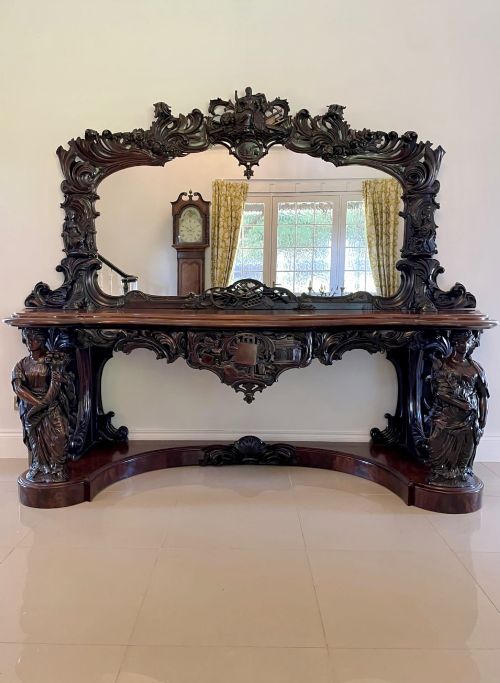
A mahogany hall mirror is an essential entrance piece, combining rich timber frames with reflective glass designed for daily use in hallways, vestibules, and reception spaces.
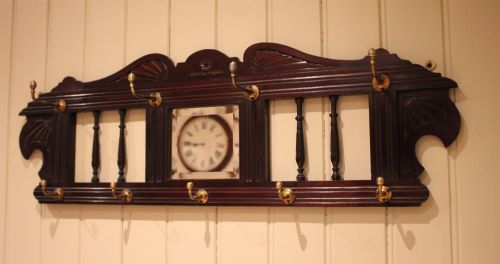
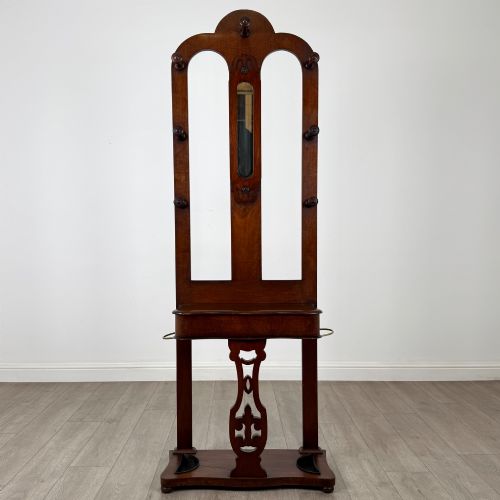
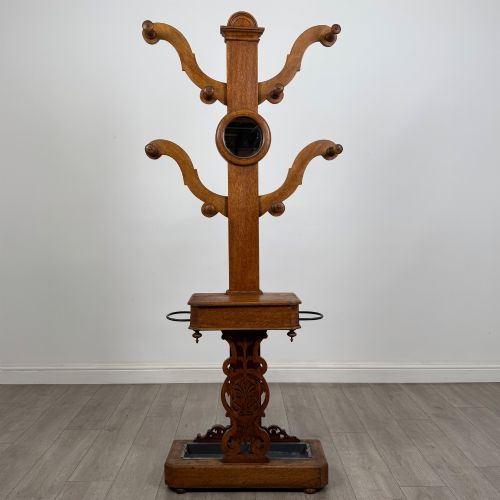
The selections available range from simple wall-hanging plates with brass coat hooks to substantial Victorian hall stands incorporating marble shelves, umbrella compartments, and key boxes.
Originating predominantly from the nineteenth and early twentieth centuries, these objects capture the decorative tastes of the Victorian, Edwardian, and Regency periods through dense mahogany grain and carved details.
How they were made
Makers constructed these frames primarily from solid mahogany and flame mahogany veneers, applying shellac polishes to highlight the deep red-brown figures of the timber.
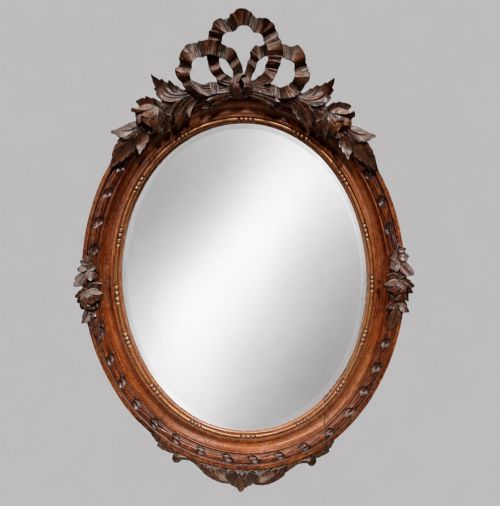
Reflective surfaces utilise heavy glass plates, frequently featuring hand-bevelled edges that catch light at distinct angles within the entranceway.
Structural integrity often relies on joined pine or oak carcases supporting brass hardware, cast iron umbrella wells, and occasional inset marble slabs.
Listings feature mahogany hall mirrors spanning the Georgian, Regency, Victorian, and Edwardian eras, utilising brass, marble, and mirror glass.
What varies in quality
The depth and crispness of carved mouldings, fretwork, and turned wooden elements dictate the standard of execution, separating standard production from exhibition pieces.
Timber selection governs visual appeal, with figured flame mahogany and subtle marquetry inlay achieving greater decorative harmony than plain stock.
Originality of components matters significantly, including unbroken mirror plates, matching brass coat hooks, and retained drip pans or tile backs on larger stands.
Gillingtons of Dublin
The Mahogany Hall Mirror Glossary
- Flame mahogany
- A veneer figure resembling flickering flames, created by cutting across the branch junctions of the tree.
- Pier glass
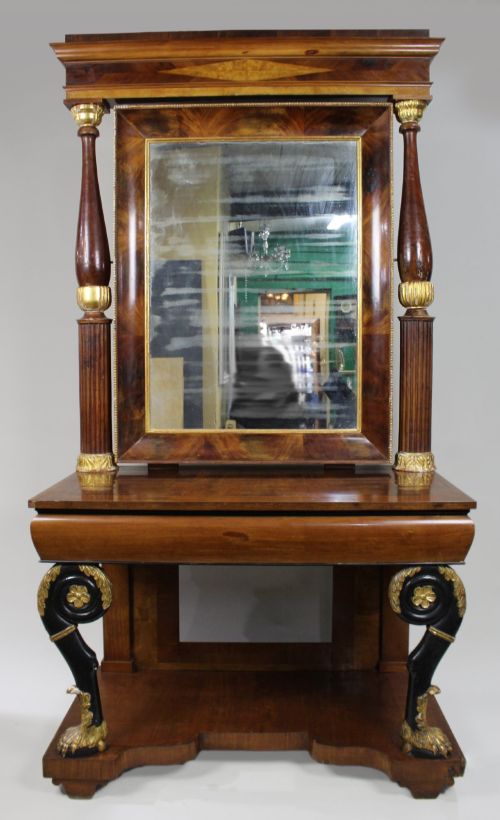
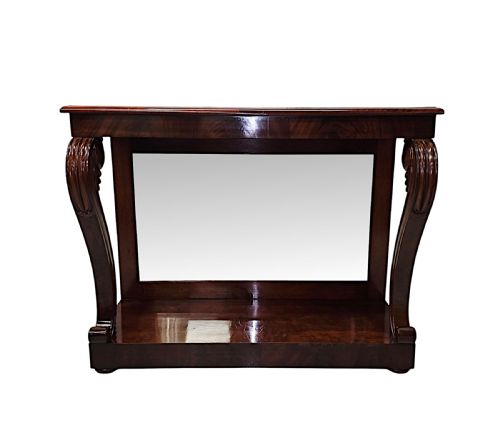
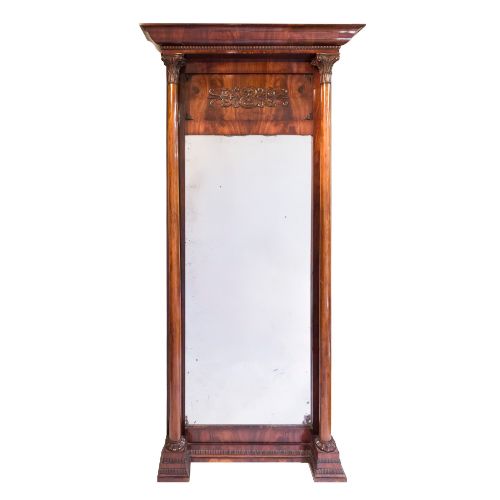
- A tall mirror specifically designed to hang on the wall space between windows, often paired with a console table.
- Hall stand
- A multi-functional entrance piece combining a mirror, coat hooks, glove drawers, and umbrella stands.
- Vauxhall mirror
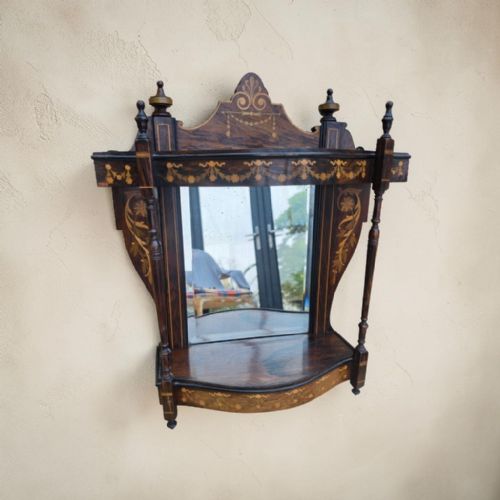
- An eighteenth or nineteenth-century wall mirror featuring bevelled plate glass with characteristic multi-part construction or engraved decoration.
- Bevel
- The angled edge ground around the perimeter of a mirror plate to refract light and add depth.
Mahogany Hall Mirror: Frequently Asked Questions
What is a hall stand?
A hall stand is a composite entrance furniture piece that integrates a mirror with practical elements such as coat hooks, umbrella wells, and small shelves for keys and gloves. These items served as central organizational hubs for Victorian and Edwardian households.
They combine cabinetmaking with utilitarian metalwork, frequently housing marble surfaces and drip trays to handle wet outerwear and walking sticks.
How do I date a mahogany mirror?
Dating relies on observing construction methods, timber choice, and stylistic motifs associated with periods like the Regency, Victorian, or Edwardian eras. Earlier pieces often display hand-cut joinery and heavy flame mahogany veneers, while later examples incorporate machine-cut mouldings and simpler Edwardian inlay.
Examining the mirror glass itself also helps, as older plates may show subtle distortion, handmade silvering irregularities, or deep hand-bevels.
Where should I hang a hall mirror?
A hall mirror belongs in an entrance hall, vestibule, or narrow corridor where it can bounce natural light from nearby doors or windows. Positioning the glass at eye level maximises its primary function for a final check before departure.
Consider the weight of the timber frame and whether the wall fixing needs to support integrated coat hooks and heavy backing boards.
What is flame mahogany?
Flame mahogany is a highly decorative wood veneer obtained from the fork of the mahogany tree where branches diverge from the main trunk. This growth pattern produces a distinctive, undulating grain that resembles flickering fire.
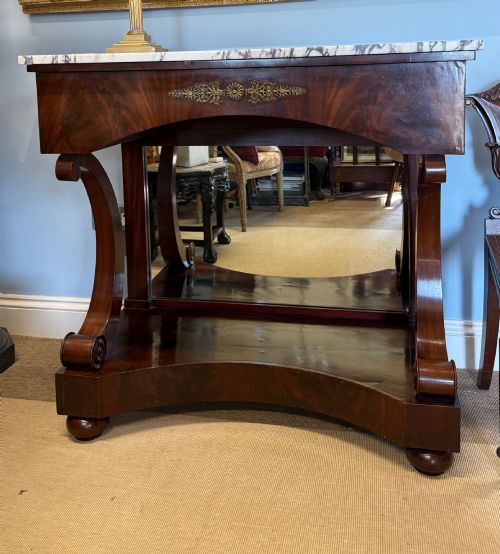
Cabinetmakers utilised this figured timber on the primary display surfaces of high-status mirrors and console tables to create striking visual movement.