




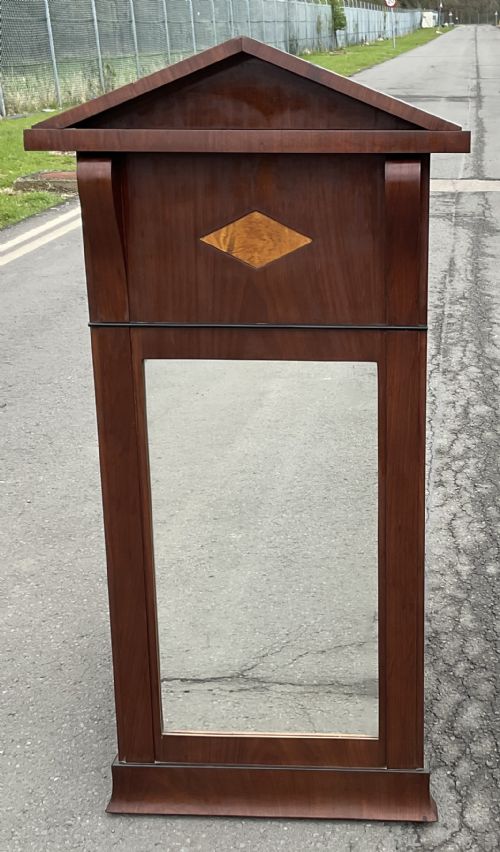


Edwardian Inlaid Wall Mirror
An edwardian inlaid wall mirror brings light and warmth to a room through balanced proportions and subtle wood decoration.
Edwardian Inlaid Wall Mirror
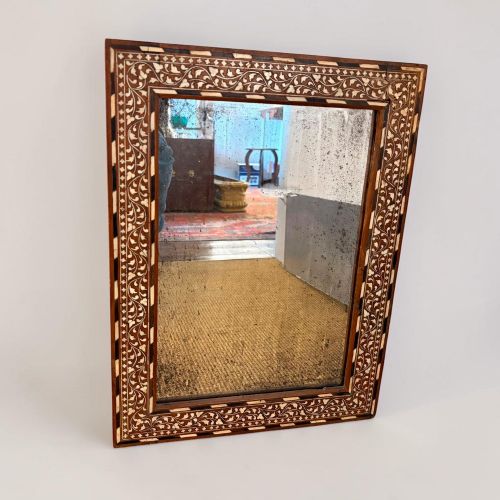
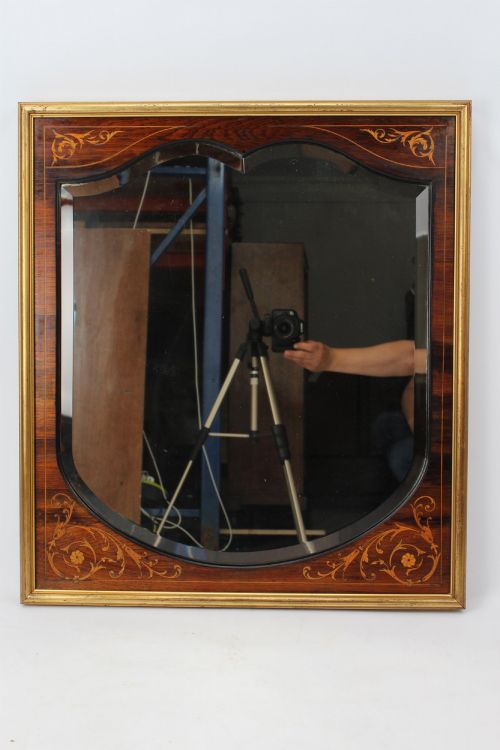
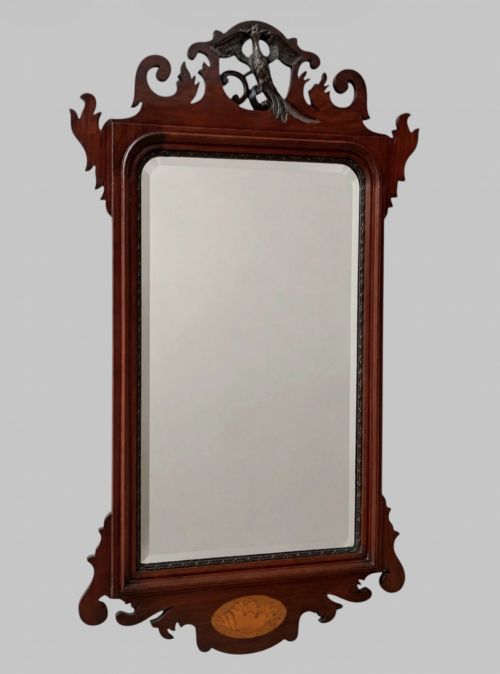
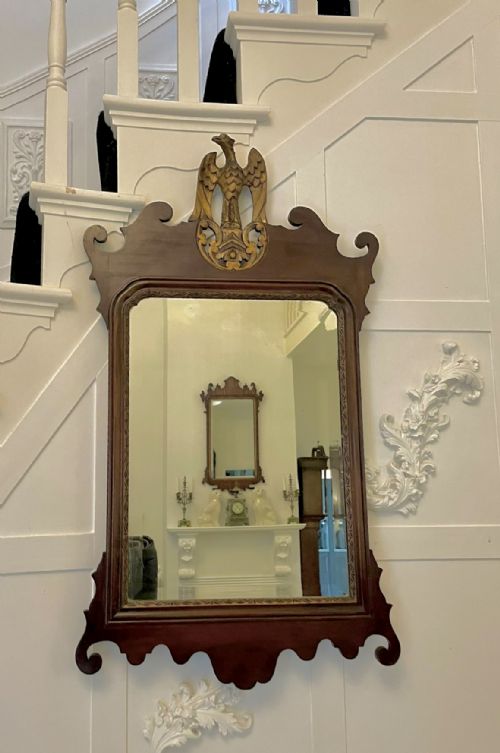
An edwardian inlaid wall mirror most commonly appears as an oval or rectangular hanging piece framed in mahogany or rosewood. These pieces often incorporate delicate wood inlay, drawing on Sheraton revival motifs that favour symmetry and lightness.
The archive and current selection show that many examples take an oval form designed for hall or bedroom use. Alongside standard wall mirrors, overmantel versions and pieces with integrated shelves or console tables also appear.
Materials and Construction
Makers built these frames using dense hardwoods like mahogany, rosewood, and walnut, often applying contrasting veneers of satinwood or lighter timbers for the decorative elements. Glass plates were typically bevelled at the edges to catch the light.
Inlay work relied on precise cutting of tinted or natural woods, fitted flush into the primary timber ground. Gilt wood details and brass elements occasionally augmented the wooden frames.
Edwardian Inlaid Wall Mirror Retail Price Guide 2026
Typical asking prices for edwardian inlaid wall mirror among the pieces listed under this phrase on Sellingantiques today, from the lower quarter to the upper quarter. They describe what is for sale here now, not the wider market.
Several examples include integrated shelves or bear the specific title last look mirror, serving a quick final check before stepping out the front door.
Judging Quality and Execution
The refinement of the wood inlay sets the finer pieces apart from standard production. Crispness in the botanical or geometric motifs and tight joints in the frame show the hand of a skilled cabinet maker.
The clarity and depth of the glass plate, alongside the preservation of the original polish on the timber, determine the overall integrity of the piece.
Rowley Gallery
The Edwardian Inlaid Wall Mirror Glossary
- Inlay
- A technique where pieces of contrasting wood or other materials are inserted into a recessed matrix to form a decorative surface. This method defines the primary ornamentation on these frames.
- Marquetry
- Form of inlay that creates pictorial or decorative patterns using various wood veneers. It differs from simple linear stringing by forming complex pictures.
- Overmantel mirror
- Large mirror designed to hang specifically above a fireplace mantel. These often span considerable widths to balance the hearth below.
- Fretted
- Woodwork cut with a fretsaw into openwork or pierced patterns. This style appears frequently on the crests and borders of revival mirrors.
- Bevelled glass
- Glass plate with an angled edge polished down to a thinner perimeter. This catches light and adds depth to the reflection.
Edwardian Inlaid Wall Mirror: Frequently Asked Questions
Where should I hang an Edwardian mirror?
These mirrors suit hallways, above bedroom dressing tables, or centered over living room mantelpieces where they reflect natural light.
Consider the surrounding timber tones in the room to ensure the mahogany or rosewood frame complements existing furniture.
How do I date an Edwardian wall mirror?
Look for characteristic Sheraton revival styling, lighter mahogany or rosewood timbers, and delicate satinwood inlay work typical of the period around nineteen hundred.
Construction details such as the backing boards and mirror plate bevelling also help confirm the manufacturing era.
Are these mirrors heavy to hang?
Most standard wall mirrors of this type use secure hanging loops attached to the wooden frame, requiring proper wall fixings depending on their size.
Larger overmantel variations require substantial wall anchors due to their considerable weight and solid timber construction.
How do I care for the wood and glass?
Dust the timber frame regularly with a dry cloth and avoid harsh chemical polishes that might damage the antique finish or the inlay.
Clean the glass plate using a mild glass cleaner applied to a cloth rather than sprayed directly onto the surface.