
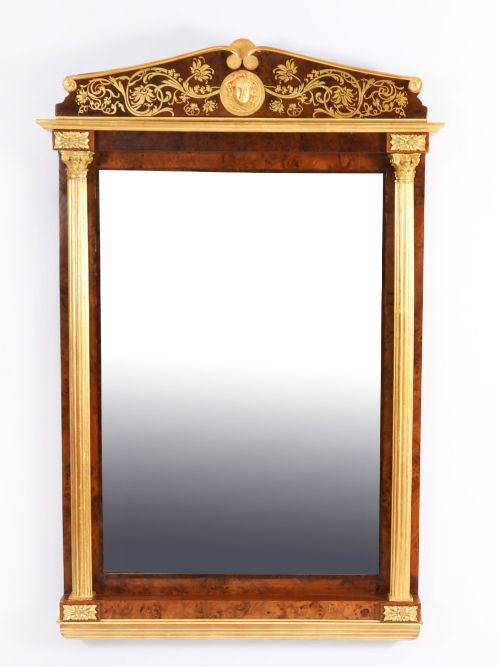
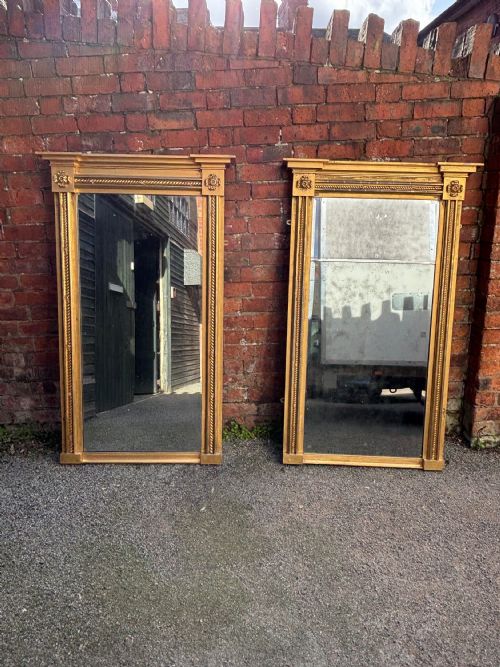


Classical Pilaster Wall Mirror
A classical pilaster wall mirror brings architectural symmetry and reflected light to a room through fluted columns and gilded frames.
Classical Pilaster Wall Mirror
A classical pilaster wall mirror uses structural uprights framing the glass to project an architectural presence on the interior wall. These pieces function primarily as vertical wall mirrors or wider overmantel mirrors designed to sit above a fireplace.
The versions met on this page span the nineteenth century, including Regency, George IV, and Victorian iterations. Makers of the period drew heavily on neoclassical and Adam styles to shape these formal furnishings.
Most examples take the form of pier mirrors meant to hang between windows or grand overmantel mirrors built to dominate a chimney breast. Their design vocabulary relies on flanking pilasters to anchor the composition visually.
How they were made
Frames are constructed from timber carcases in softwood or mahogany, often built with applied composition ornaments and gesso. Artisans then applied giltwood or silver leaf finishes to the decorative surfaces to achieve a bright metallic sheen.
Specialist decorative techniques include faux marble paint and eglomise decoration on glass panels, adding depth and colour above the main mirror plate. Carved details define the capitals and bases of the pilasters.
Early nineteenth-century craftsmen relied on composition paste pressed into wooden moulds to build up elaborate neoclassical relief decoration quickly.
What varies in quality
Quality rests in the crispness of the carved woodwork and the depth of the gilding applied over the gesso ground. Stronger pieces show meticulous hand-carved detail on the pilaster capitals rather than purely moulded composition ornaments.
The handling of secondary materials such as eglomise panels and the clarity of the silvered or gilt finish separate standard production from finer workshop output. Structural integrity in the heavy timber frames also distinguishes better survivals.
The Classical Pilaster Wall Mirror Glossary
- Pilaster
- A rectangular architectural column that projects slightly from the wall, used here to frame the sides of the mirror plate. It mimics a classical pillar without carrying structural weight.
- Giltwood
- Timber that has been coated with thin sheets of gold leaf over a prepared ground. This finish provides a warm, reflective surface characteristic of formal period frames.
- Eglomise
- A technique involving gilding and painting on the reverse side of glass panels. It frequently appears in the upper frieze of Regency pier mirrors.
- Pier mirror
- A tall mirror designed specifically for the wall space or pier between two windows. These pieces often incorporate candle sconces or decorative consoles below.
- Overmantel mirror
- A wide mirror proportioned to hang directly above a mantelpiece. They reflect the hearth and distribute light across the room.
Classical Pilaster Wall Mirror: Frequently Asked Questions
Where should I hang a classical pilaster wall mirror?
These mirrors suit principal reception rooms where their architectural frames can command attention. Placing them above a fireplace or between tall windows maximises their ability to bounce natural light around the interior.
Ensure the wall construction can support the substantial weight of timber, glass, and gesso frames. Secure fixings attached directly to wall studs or masonry are essential for safety.
How do I identify a Regency period mirror?
Regency mirrors typically display classical restraint, featuring clean architectural lines, reeded pilasters, and often eglomise glass panels in the upper section. The use of giltwood and carved ball ornaments beneath a cornice is also characteristic of the era.
Later Victorian interpretations often adopt Adam revival motifs with lighter surface ornamentation. Examining the construction timber behind the frame helps clarify the manufacturing date.
What is the difference between a pier mirror and an overmantel mirror?
Pier mirrors are traditionally tall and narrow, proportioned to fit the specific wall space between architectural openings like windows. Their vertical emphasis draws the eye upward along the wall.
Overmantel mirrors are built wider to span the horizontal width of a fireplace surround. They fill the large wall expanse above the mantelpiece and anchor the hearth visually.
How do I clean the giltwood frame safely?
Dust the carved surface gently using a soft, dry brush to remove particles without disturbing the delicate gold leaf. Avoid moisture and chemical cleaning agents entirely, as water lifts gesso and gilding.
For the glass plate, apply a mild glass cleaner to a cloth rather than spraying directly onto the glass. This prevents liquid from seeping behind the frame edges and damaging the backing.