
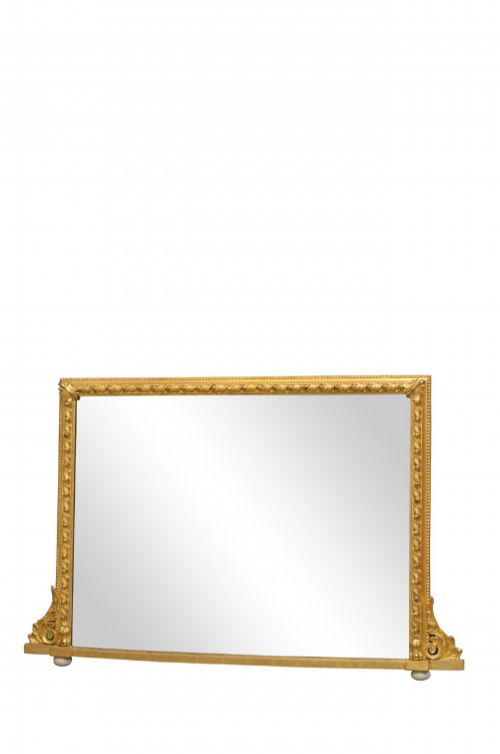


Horizontal Fireplace Mirror
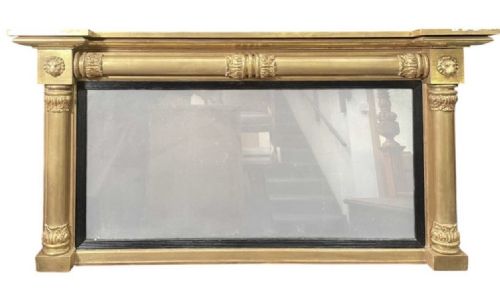
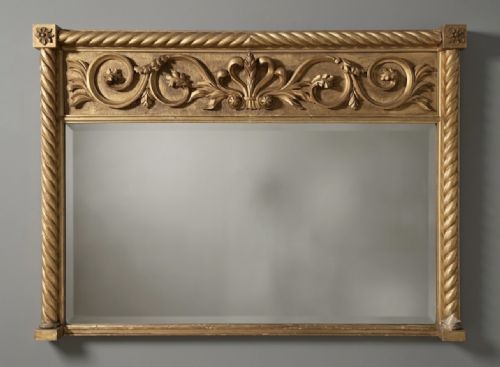
These horizontal fireplace mirror pieces, spanning the Georgian to the Art Deco periods, sit low and wide above hearths to catch and double the room's firelight.
Horizontal Fireplace Mirror
A horizontal fireplace mirror is designed to sit wide above a mantelpiece, framing the hearth with a low profile that spans the width of the fireplace below.
You are most likely to meet 19th Century and Regency examples on this page, alongside Victorian, 18th Century, Edwardian, and 1930s forms.
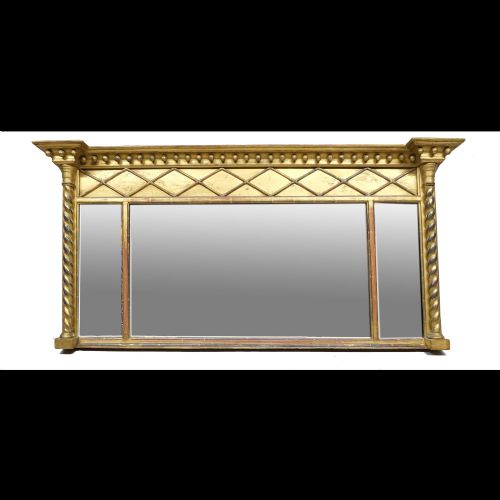
The objects appear as overmantel mirrors and wall mirrors, taking rectangular or triple-section formats built specifically to fill the wall space above a chimney breast.
How they were made
Carved wooden frames in pine, mahogany, rosewood, walnut, and giltwood provide the structural skeleton for these wide wall pieces.
Gesso and composition ornaments are applied over the timber base before being painted or gilded with gold leaf to achieve the traditional metallic sheen.
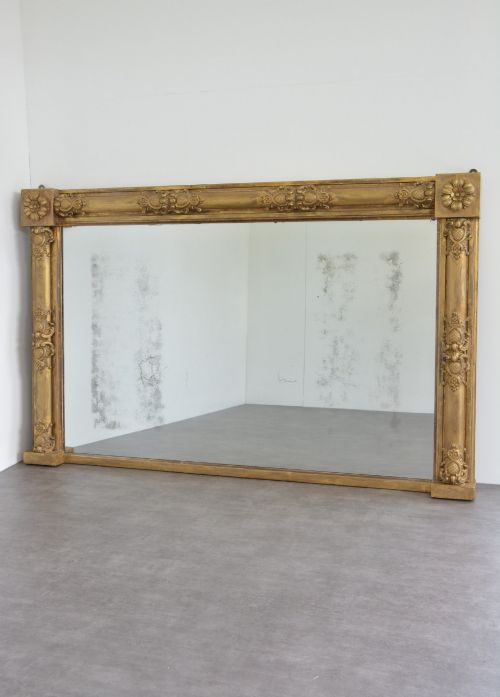
Original mirror glass, sometimes lightly foxed with age, is set within the rebate to reflect the interior light.
Some mirrors carry centuries of soot trapped in their carved gesso crevices, proving they sat beside open coal fires.
What varies in quality
The crispness of the hand-carved woodwork and the depth of the applied gesso mouldings separate ambitious cabinet work from simpler production.
The preservation of the original gilding and the character of the aged glass plate determine the visual weight and authenticity of the piece.
The Horizontal Fireplace Mirror Glossary
- Overmantel mirror
- A large mirror specifically proportioned to hang on the chimney breast directly above a fireplace mantel. These pieces stretch horizontally to match the hearth opening.
- Giltwood
- Timber, typically pine or softwood, coated in gesso and leaf gold. This finish gives the frame its characteristic reflective metallic surface.
- Gesso
- A plaster-like mixture of gypsum and binder applied to wood frames. Artisans carve and mould this layer to create relief decoration before gilding.
- Composition
- A moulded paste of whiting, resin, and oil pressed into ornamental shapes. It offers a quicker alternative to hand carving for repeating decorative motifs.
- Tryptic
- A mirror plate divided into three distinct vertical sections within a single frame. This layout is frequently seen in Regency overmantel designs.
- Foxed glass
- Mirror plate displaying dark spots or patches resulting from the degradation of the silver backing over time. Collectors value this sign of chemical age.
Horizontal Fireplace Mirror: Frequently Asked Questions
Where should a horizontal fireplace mirror hang?
These pieces belong centred on the chimney breast directly above the mantelpiece shelf, where their broad proportions balance the width of the fireplace.
Hanging them at this traditional height ensures the glass reflects the room rather than the ceiling, fulfilling their original architectural purpose.
How do I identify a Regency overmantel mirror?
Regency pieces often feature classical motifs like rope twists, ball ornaments, or tripartite glass plates divided by slender pilasters.
Their frames typically combine rich gilding with architectural symmetry characteristic of the early nineteenth century.
What is foxed glass?
Foxed glass refers to mirror plates that have developed cloudy spots and dark oxidation where the silver backing has aged.
This natural deterioration creates a mottled appearance that confirms the antiquity of the glass plate.
How do I clean an antique giltwood frame?
Dusting gently with a dry, soft brush is the only safe maintenance for fragile giltwood and composition surfaces.
Water and chemical cleaners strip away historical gold leaf and soften the underlying gesso.