



Ebonised Column Mirror
These ebonised column mirrors bring architectural discipline to a room, balancing dark wood and bright gilding with Regency clarity.
Ebonised Column Mirror
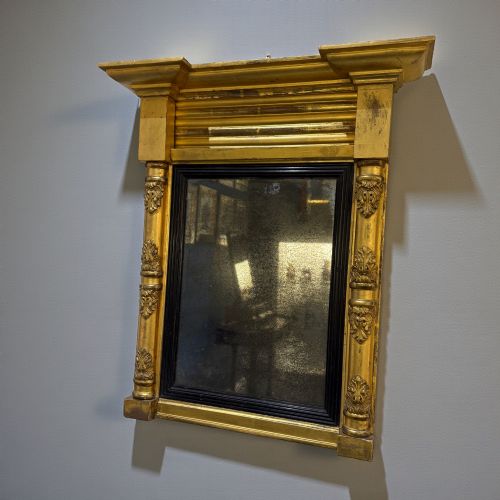
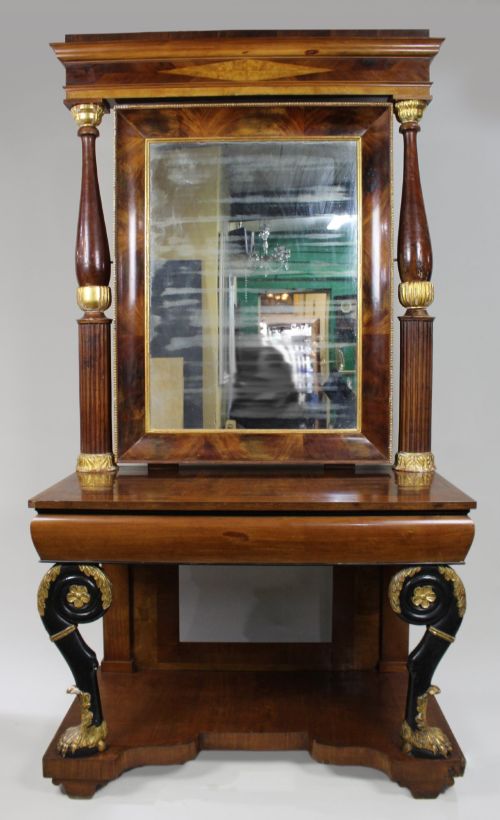
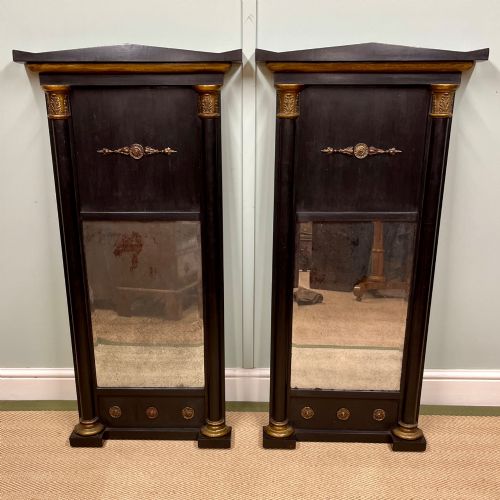
An ebonised column mirror combines dark, blackened woodwork with classical architectural detailing, most frequently appearing in nineteenth-century overmantel and pier forms. These pieces often pair deep ebonised finishes with contrasting giltwood or gilt metal accents to highlight structural mouldings.
Most examples date from the Regency and Victorian eras, reflecting Empire and Swedish Biedermeier design influences. Buyers encounter substantial overmantel formats designed for chimney breasts alongside neat vanity and hanging wall mirrors.
The integration of columns and acanthus-decorated pilasters gives these mirrors a distinct architectural presence. They serve equally well above a fireplace or as a principal wall hanging in a hallway.
How they were made
Maker's workshops built these frames using solid timber bases such as birch, applying layered gesso and composition ornaments to form crisp architectural details like acanthus leaves. Wood was stained or painted black to achieve the signature ebonised finish, frequently contrasted with applied gold leaf on carved sections.
Mirrors relied on silvered flat glass plates fitted securely within rebated wooden frames. Giltwood and gilt metal mounts were then pinned or glued in place to accentuate the classical column supports characteristic of the Regency and Empire styles.
Ebonised Column Mirror Retail Price Guide 2026
Typical asking prices for ebonised column mirror among the pieces listed under this phrase on Sellingantiques today, from the lower quarter to the upper quarter. They describe what is for sale here now, not the wider market.
Listings feature nineteenth-century pieces spanning Regency, Victorian, Empire and Swedish Biedermeier styles, utilising ebonised wood, giltwood, composition and birch.
What varies in quality
Quality rests in the crispness of the composition ornamentation and the depth of the ebonised and gilt surfaces. Finer nineteenth-century examples display sharp carving on acanthus-decorated columns and balanced proportions that integrate the glass and frame harmoniously.
The treatment of the timber and the retention of original gilding dictate the visual authority of the piece. Superior craftsmanship shows in the seamless joining of architectural elements and the integrity of the original backing and glass plates.
The Ebonised Column Mirror Glossary
- Ebonised wood
- Timber treated with stain, dye or polish to imitate expensive ebony. This dark finish creates a stark contrast against gilt ornaments.
- Overmantel mirror
- A large horizontal mirror designed specifically to hang above a fireplace mantelpiece. These often incorporate triptych glass panels and architectural columns.
- Pier mirror
- A tall, narrow mirror made to hang on the wall space between two windows. They make efficient use of reflected light in nineteenth-century interiors.
- Triptych mirror
- A mirror divided into three distinct vertical sections within a single frame. The central plate is usually flanked by two narrower panels.
- Gesso
- A plaster-like mixture applied to wood frames to provide a smooth base for gilding or painting. It allows craftsmen to model intricate relief decorations.
Ebonised Column Mirror: Frequently Asked Questions
Where should an ebonised column mirror be hung?
These mirrors work best anchored above a fireplace mantelpiece or positioned as a focal point on a principal reception room wall. Their architectural columns and dark frames demand a clear wall space to frame their proportions properly.
They also function effectively in hallways as hanging wall mirrors, reflecting light while introducing a strong neoclassical element to the entrance.
How do I identify a Regency period mirror?
Regency mirrors typically display classical architectural motifs such as columns, pilasters and acanthus decoration inspired by ancient Greece and Rome. They often combine ebonised surfaces with bright giltwood highlights.
Construction details, timber choices like birch, and traditional gesso preparation help confirm nineteenth-century origins.
How do I care for ebonised and gilt surfaces?
Keep the wood and gilding free of dust using a soft, dry cloth without applying harsh chemical polishes. Moisture and direct sunlight can damage nineteenth-century gesso and flake delicate gold leaf.
Handle the frames carefully when cleaning, as the composition ornaments applied over the timber can be sensitive to impact.