




Gilt Eagle Mirror
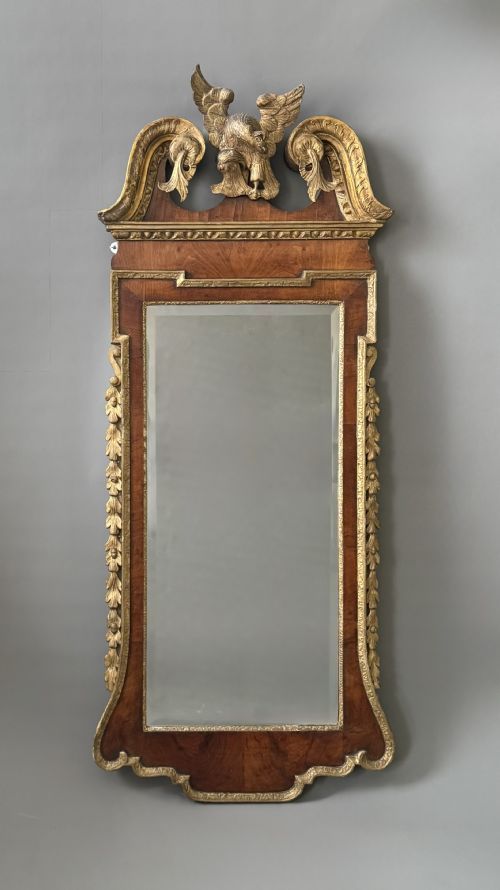
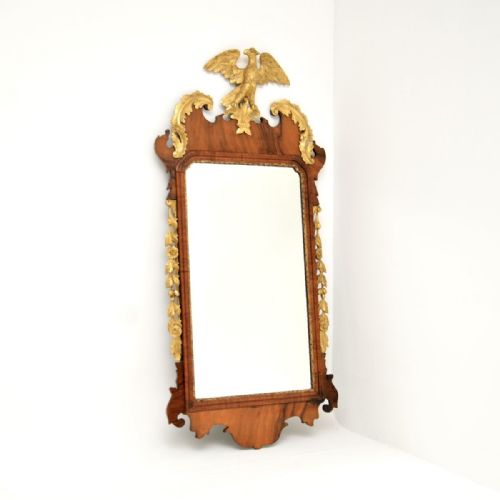
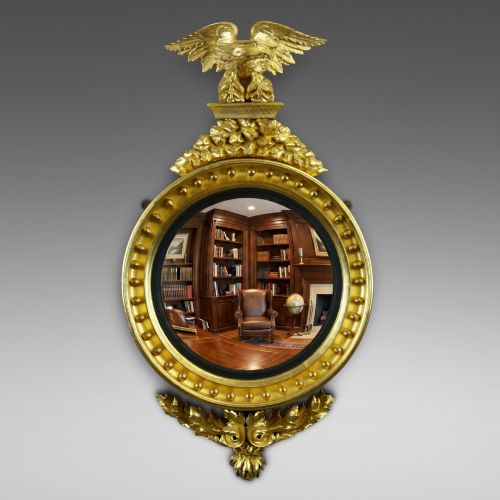
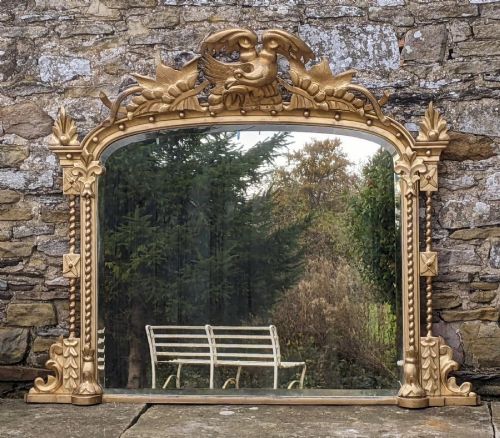
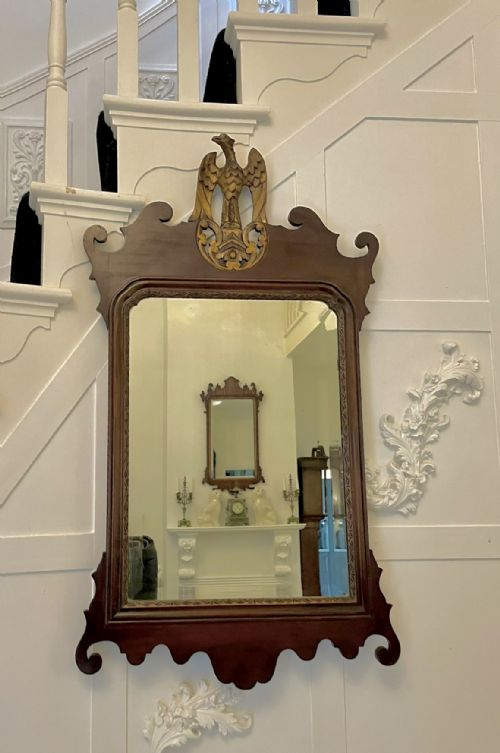
When hunting for a gilt eagle mirror, you are seeking a commanding wall glass defined by a carved raptor crest and gilded frame.

Gilt Eagle Mirror
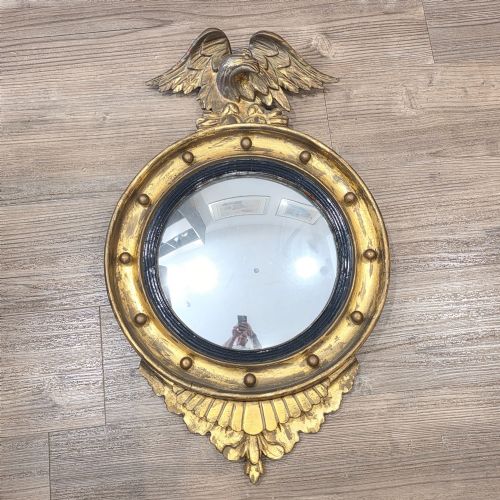
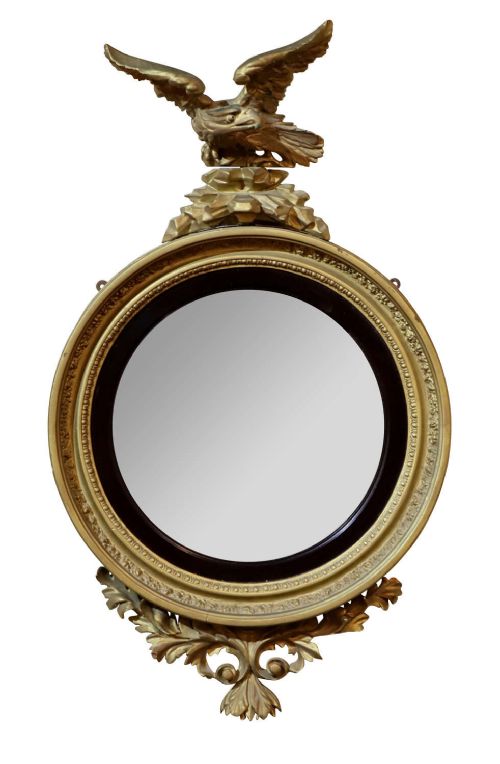
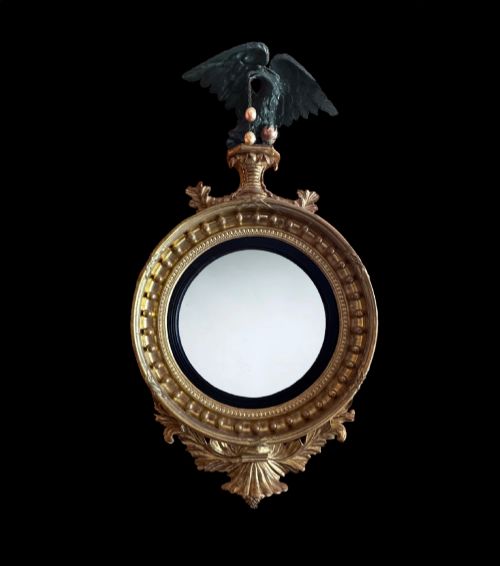
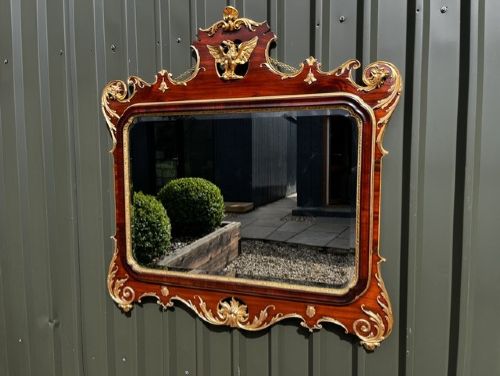
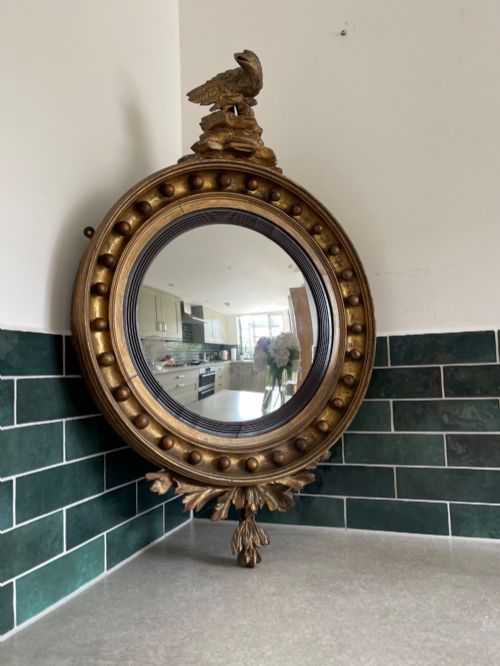
A gilt eagle mirror unites a circular or rectangular wall glass with a prominent carved bird crest, frequently taking the form of a convex mirror originating from the Regency and Georgian eras.
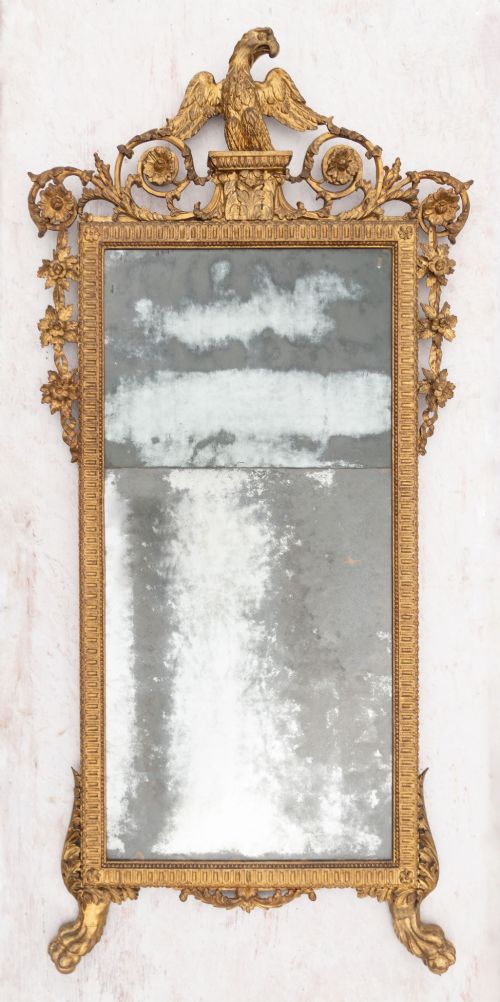
The surviving pieces on this page span from the eighteenth century through the Victorian period and into later revivals, displaying formats that range from compact circular wall glasses to broad overmantel mirrors.
Convex variants dominate the selection, offering a warped, panoramic reflection that historically served to survey an entire room from a single vantage point.
Materials and construction
Carvers shaped these frames from dense timbers such as mahogany and walnut, or built up sculptural details using gesso laid over a wooden base.
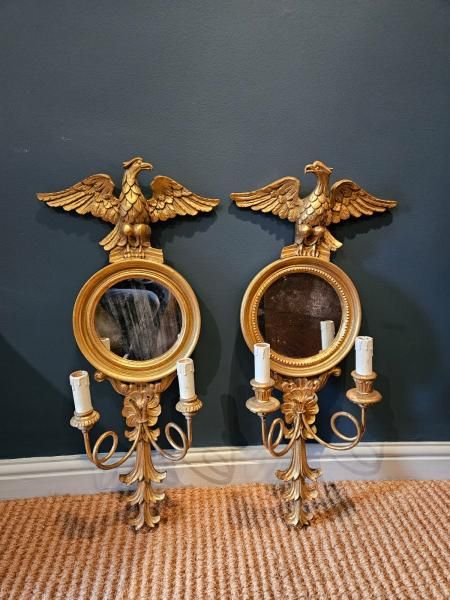
Applying fine sheets of gold leaf to the prepared surfaces created the characteristic gilded finish, often complemented by ebonised details or brass candle arms known as girandoles.
Gilt Eagle Mirror Retail Price Guide 2026
Typical asking prices for gilt eagle mirror among the pieces listed under this phrase on Sellingantiques today, from the lower quarter to the upper quarter. They describe what is for sale here now, not the wider market.
Listings include eighteenth-century Georgian pieces alongside nineteenth-century Regency examples and later twentieth-century revivals.
Craftsmanship and proportion
The crispness of the eagle carving separates superior examples from simpler work, with the finest birds showing deeply undercut feathers and a powerful stance upon their plinth.
Proportion dictates value, as the balance between the weight of the crest, the width of the frame moulding, and the diameter of the glass plate governs the visual harmony of the object.
The Gilt Eagle Mirror Glossary
- Convex mirror
- A round glass curved outward to produce a wide-angle, distortion-heavy reflection of the interior. It is often called a butler's mirror.
- Gesso
- A mixture of plaster of Paris and glue used to coat wooden frames before gilding. This substance allowed artisans to carve intricate relief ornaments.
- Girandole
- A wall mirror featuring attached candle sconces that project forward. The metal arms multiply the flickering light of candles within the room.
- Parcel gilt
- A finishing technique where only specific raised portions of a wooden frame receive gold leaf. The remaining areas display the natural grain of walnut or mahogany.
Gilt Eagle Mirror: Frequently Asked Questions
Where should I hang a convex mirror?
These pieces function best in principal reception rooms, halls, or dining spaces where their wide-angle reflection can capture the breadth of the interior.
Because they naturally draw the eye, positioning them opposite a window or light source maximises their decorative impact on the wall.
How do I clean an antique gilt frame?
Dust the gilded surfaces gently with a very soft, dry brush to prevent dislodging delicate flakes of gold leaf or damaging the underlying gesso.
Avoid all water, chemical sprays, and abrasive cloths, as moisture will quickly ruin historical gilding.
Are convex mirrors originals or later copies?
Examining the construction of the timber backing, the oxidation of the mirror plate, and the wear on the gesso helps determine the age of the piece.
Many styles originating in the Georgian and Regency periods were later re-created during revival movements in the Victorian era and the early twentieth century.
What is the purpose of the eagle crest?
The eagle served as a powerful patriotic and classical emblem in British interior decoration throughout the eighteenth and nineteenth centuries.
Beyond symbolism, the grand wingspan balanced the circular geometry of convex glass frames, adding vertical drama to the wall hanging.