


Vintage Mahogany Nesting Tables
Vintage mahogany nesting tables are practical tiered surfaces that slide together to save floor space, prized for their clever engineering and rich timber grain.
Vintage Mahogany Nesting Tables
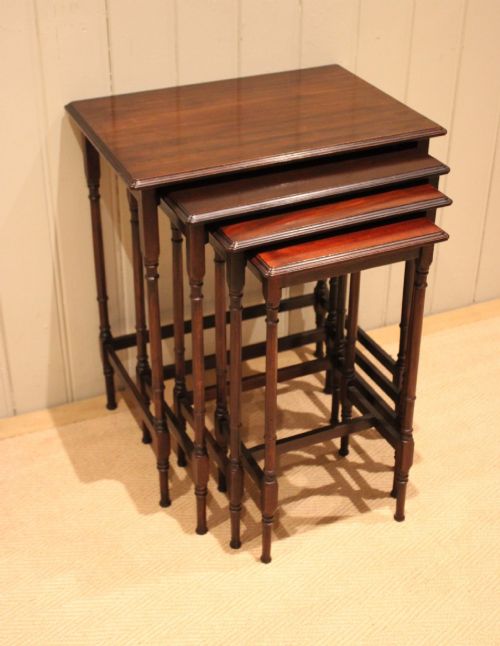
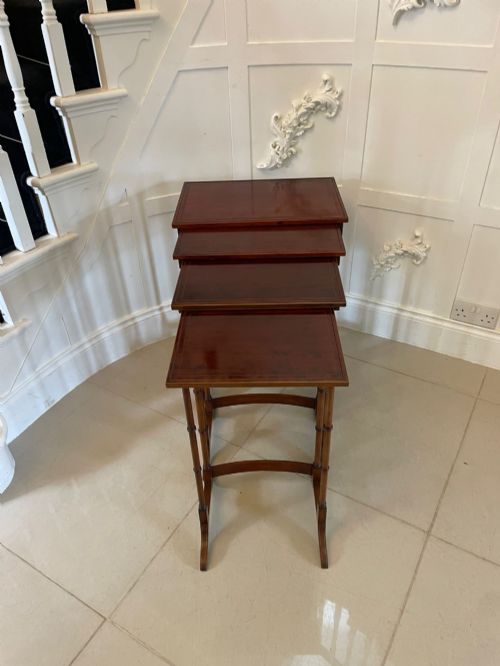
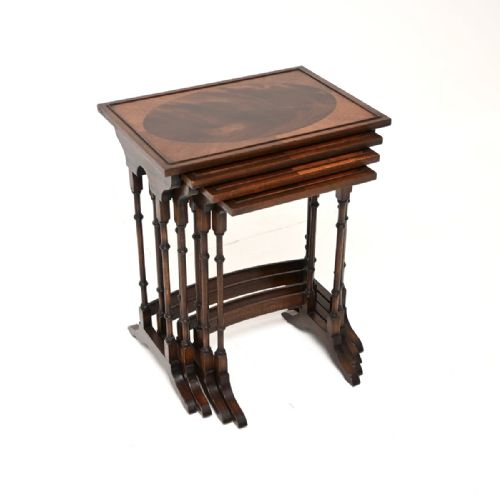
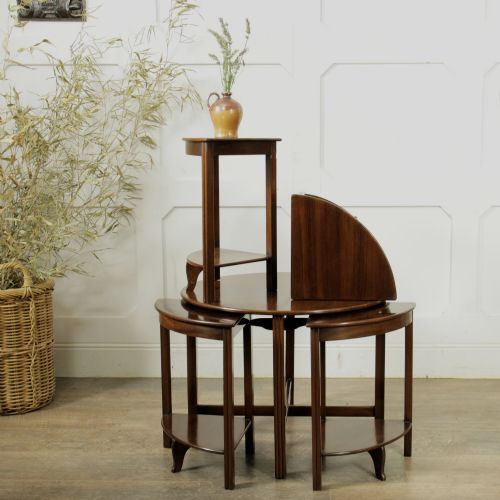
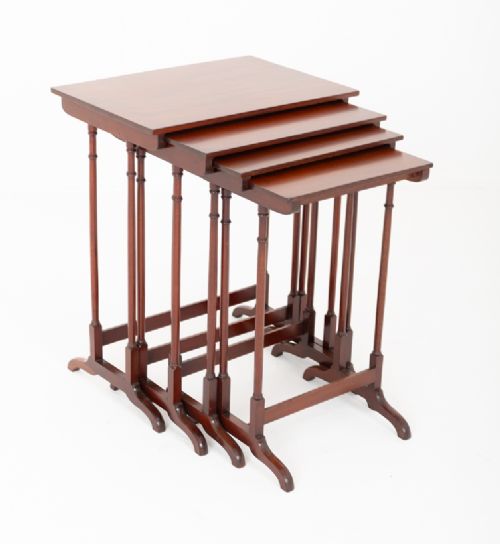
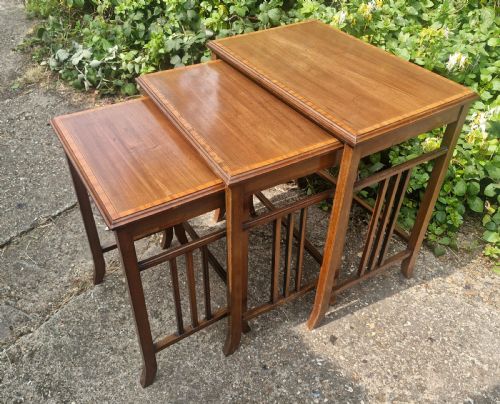
Vintage mahogany nesting tables are multi-tiered sets of occasional surfaces designed to store compactly beneath one another when not in use. The examples found here span the Edwardian period, the 1920s, the 1900s, the 19th century, the 1910s, the 1930s, the Georgian era, and the Victorian period. Buyers will most frequently encounter Edwardian sets alongside pieces from the 1900s and 1920s, taking forms such as nests of three or four tables, quartetto sets, and circular or oval top variations.
The objects serve primarily as side tables or occasional surfaces in drawing rooms and parlours, offering flexible placement options without cluttering a room. Formats range from simple rectangular sets to graduating quartetto arrangements where each smaller table slides neatly into the next. Certain variations include shaped tops, glass inserts, or embossed leather surfaces, demonstrating the adaptability of the form across different decades.
How they were made
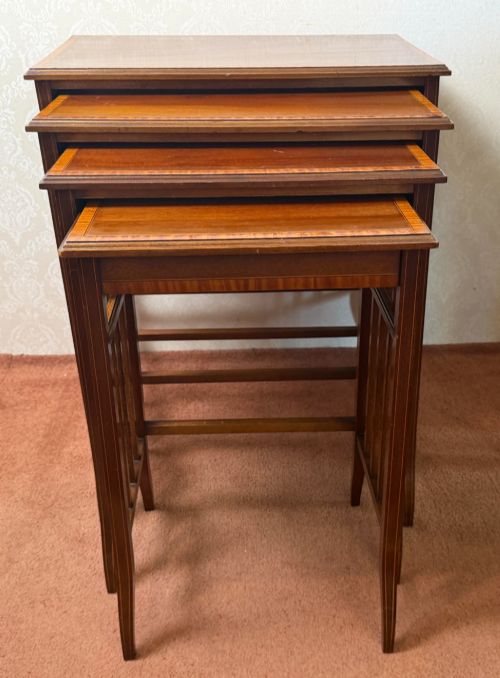
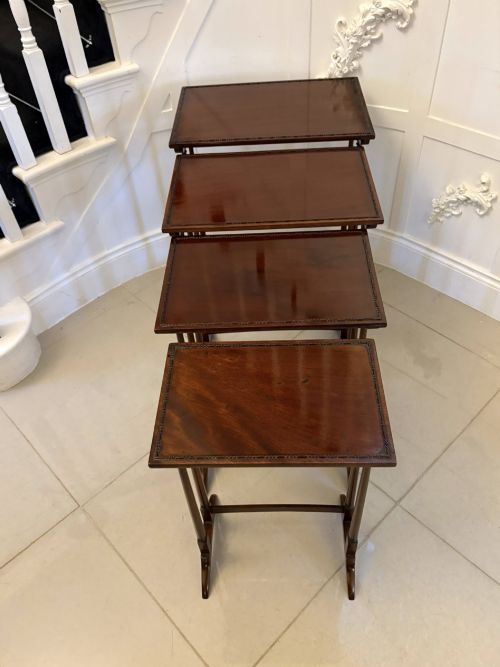
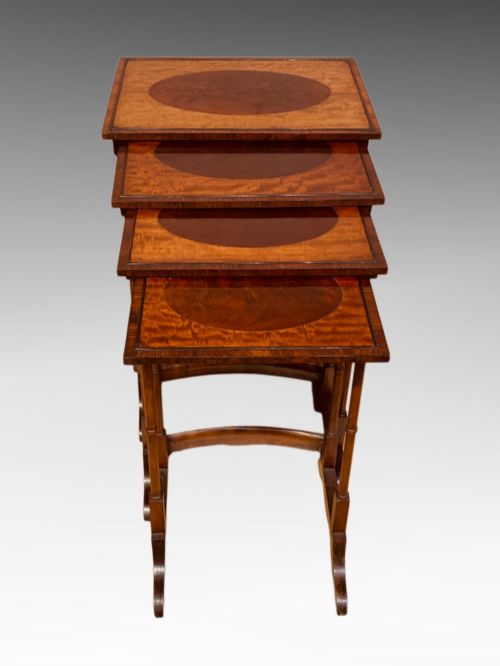
The primary material across these pieces is mahogany, frequently paired with secondary woods and veneers to create stable structural frames and decorative surfaces. Cabinet makers utilised contrasting timber inlays such as satinwood and boxwood to outline table edges and introduce subtle geometric or floral motifs. Some pieces incorporate glass panels or embossed leather inset into the timber tops, expanding the textural range of the tables.
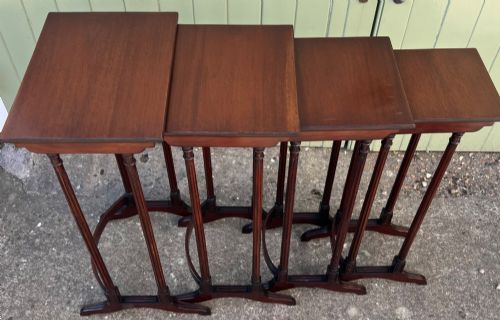
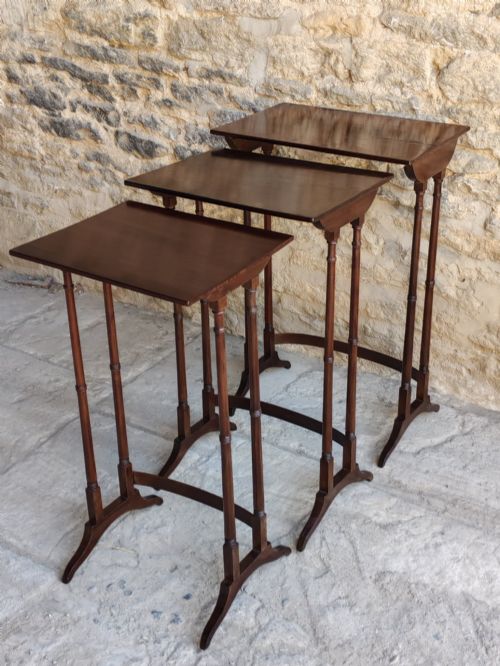
Construction techniques rely on precise sizing so that each table in the nest slides smoothly beneath the larger one above it without binding. Joinery is typically neat and concealed, supporting slender square tapered legs or turned uprights designed to bear weight while maintaining a light profile.
Some Edwardian sets squeeze five tiny tables into a single stack, creating a petite tower of mahogany.
What varies in quality
The refinement of the timber selection dictates the visual appeal of a set, with figured mahogany grain and crisp cross-banding setting finer examples apart from plain counterparts. The precision of the inlay work, particularly fine satinwood or boxwood lines, indicates the care taken by the maker during assembly. Sets that retain a smooth sliding action across all tiers demonstrate superior initial construction and careful preservation.
Proportion and scale also distinguish different tiers of manufacture, as slender legs and balanced graduating dimensions require greater skill than heavier, simpler frames. The inclusion of uncommon configurations, such as circular or oval top formats and quartetto sets of four, points towards more ambitious workshop production.
The Vintage Mahogany Nesting Tables Glossary
- Quartetto
- A set of four graduating tables designed to nest inside one another. This term appears frequently in Edwardian cataloguing.
- Cross banding
- A decorative border of veneer laid with the grain running perpendicular to the main surface. It frames the perimeter of mahogany tabletops.
- Satinwood
- A durable, yellowish timber native to Ceylon and India used for contrasting stringing and inlay. It provides a bright visual accent against dark mahogany.
- Inlay
- The technique of inserting pieces of contrasting wood into a recessed surface to form a pattern. Boxwood and satinwood are common inlay materials in these tables.
- Nesting tables
- A set of portable tables of graduated sizes that slide one beneath another. They conserve space while providing multiple surfaces.
Vintage Mahogany Nesting Tables: Frequently Asked Questions
What is a quartetto nest of tables?
A quartetto nest consists of four tables built in graduating sizes so each smaller unit slides completely beneath the next. This format was popular among Edwardian makers producing compact furniture for drawing rooms.
Such sets allow multiple surfaces to occupy the floor space of a single small table when stored. They offer flexible deployment during social gatherings.
How do I care for mahogany nesting tables?
Mahogany surfaces benefit from occasional dusting with a soft cloth and minimal exposure to direct sunlight or damp conditions. Avoiding excessive moisture protects the timber grain and delicate veneer edges.
Careful handling when sliding the tables in and out prevents unnecessary friction on the runners. This simple maintenance preserves the fit of each tier.
Can these tables support heavy items?
These tables are designed as occasional or side surfaces intended for lamps, books, and tea cups rather than heavy loads. The smaller inner tables in a nest possess slender frames built for lightness.
Distributing weight sensibly across the tiers ensures the joints remain stable over time. Daily domestic use aligns well with their original purpose.
How are different periods identified?
Edwardian and 1900s sets often feature refined satinwood inlay and light proportions, whereas Victorian examples tend to display heavier figured mahogany construction. Georgian and Regency pieces show classical proportions and clean joinery.
Comparing leg styles, timber selection, and edge detailing helps distinguish earlier 19th-century work from later revival pieces.