

Edwardian Inlay Occasional Tables
Edwardian inlay occasional tables are compact, decorative pieces suited to holding a lamp or book, bringing refined woodwork and polished character to a sitting room.
Edwardian Inlay Occasional Tables
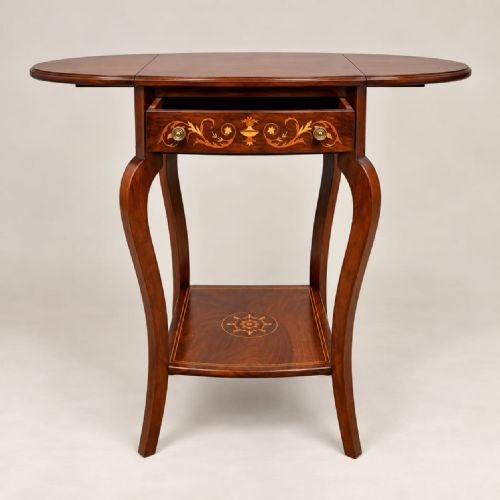
Edwardian inlay occasional tables encompass a variety of small, movable surfaces designed for domestic convenience around the turn of the twentieth century. These include side tables, nests of tables, lamp tables, and Pembroke tables that reflect the tastes of the Edwardian period and the late Victorian era.
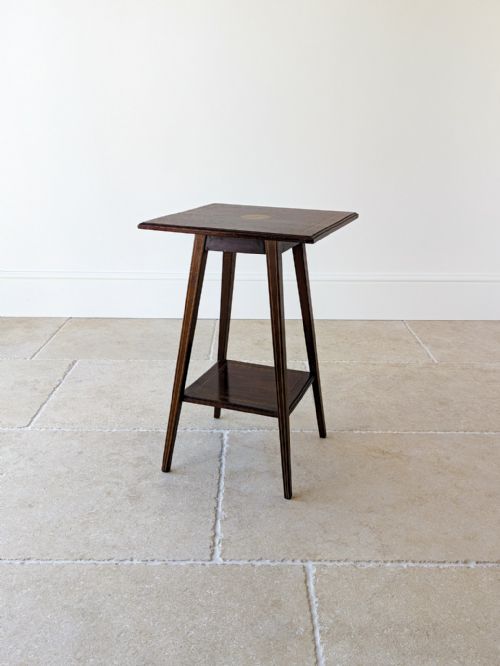
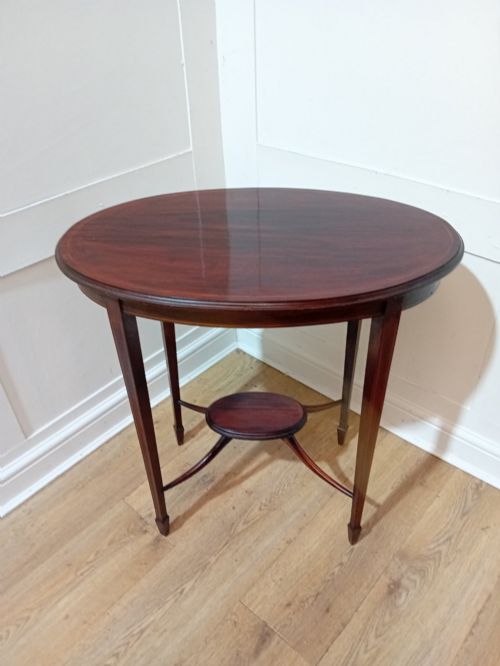
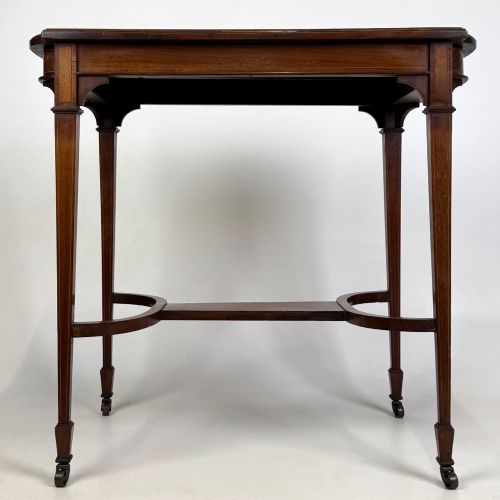
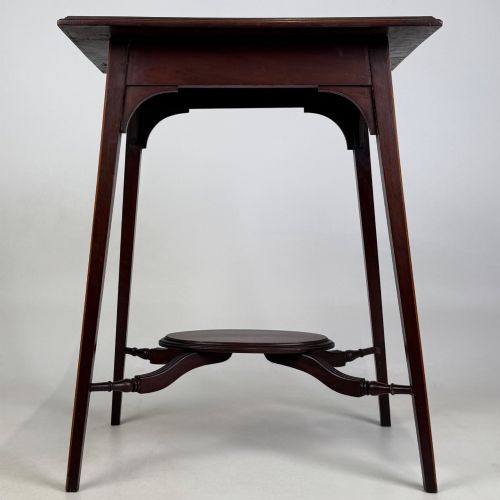
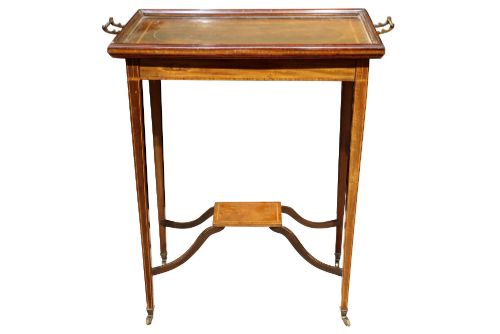
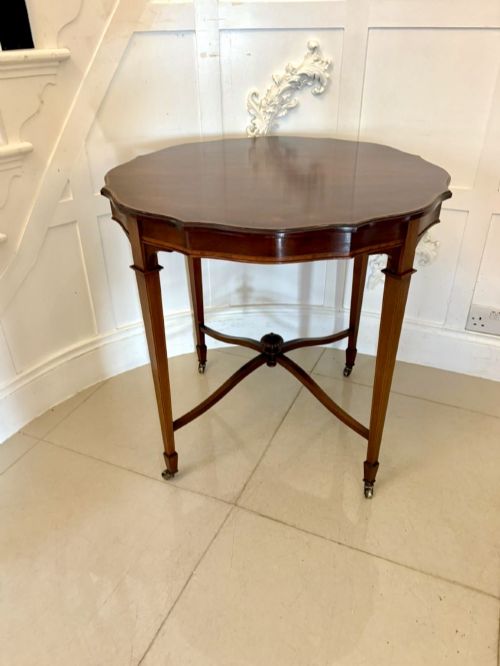
The version most commonly met on this page is constructed from mahogany, often enhanced with satinwood, boxwood, or general wood inlay in Sheraton Revival or classical styles. They appear in circular, oval, octagonal, and rectangular forms, frequently standing on slender tapered legs.
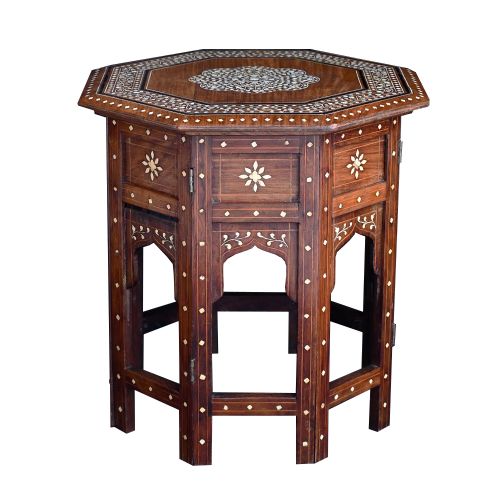
Beyond standard side tables, the selections span specialist forms such as quartetto nests, folding Sutherland tables, and distinct regional interpretations like Anglo-Indian Hoshiarpur tables with bone inlay or Moorish carving. These pieces served diverse functions in period drawing rooms, from displaying ornaments to holding tea.
How they were made
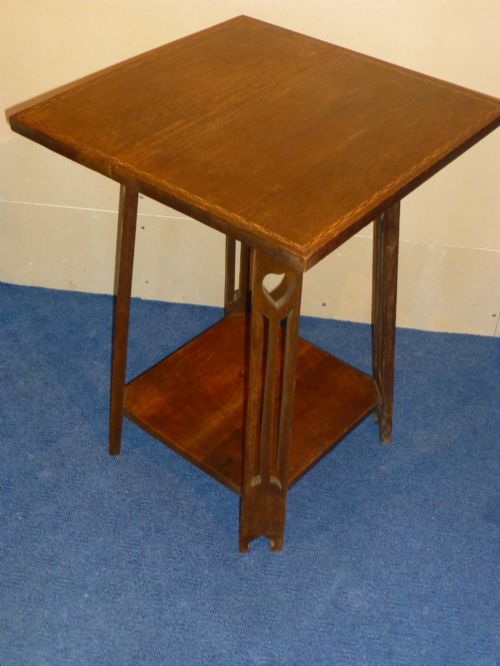
Makers relied primarily on mahogany and rosewood as primary timbers, augmented by contrasting veneers and stringing in satinwood, boxwood, and ebony. Solid walnut and oak also appear, particularly in pieces influenced by the Arts and Crafts movement.
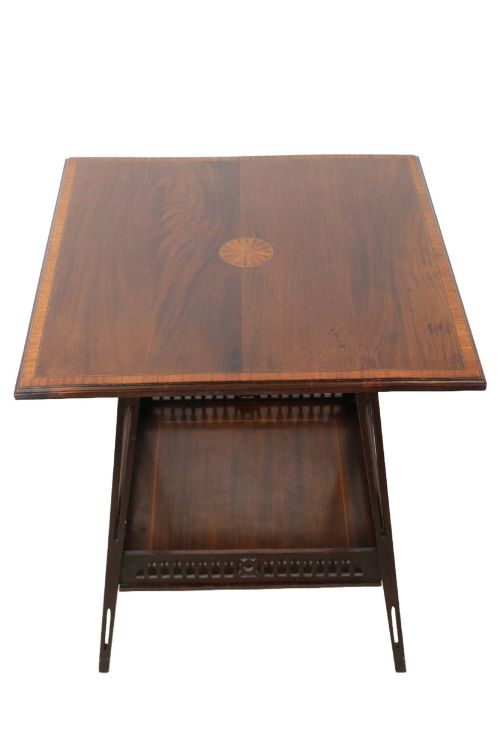
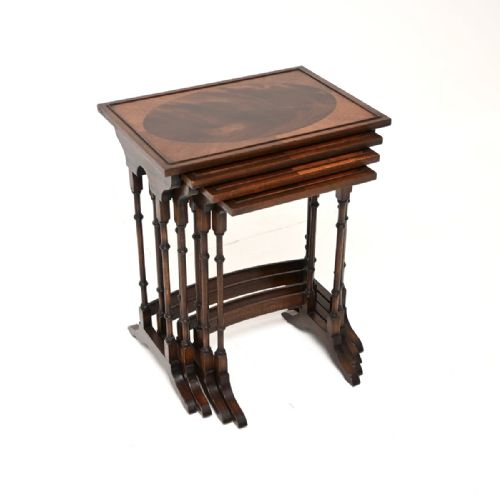
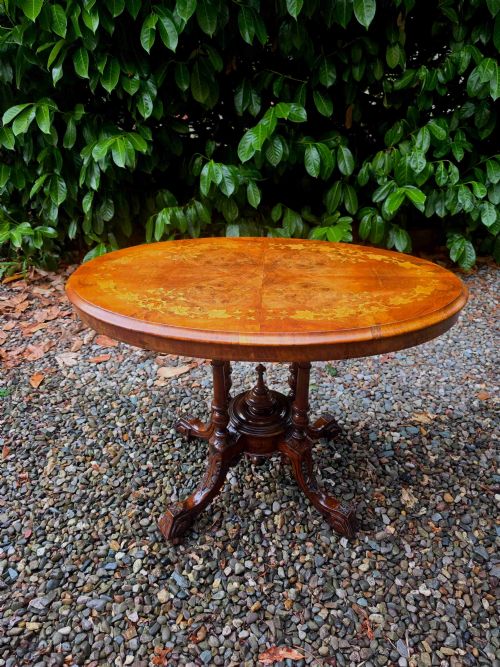
Decorative surfaces typically feature intricate marquetry and parquetry, utilising plant-based boxwood inlay to create classical motifs, urns, ribbons, and foliage. Cross banding along table edges frames the central grain of the wood.
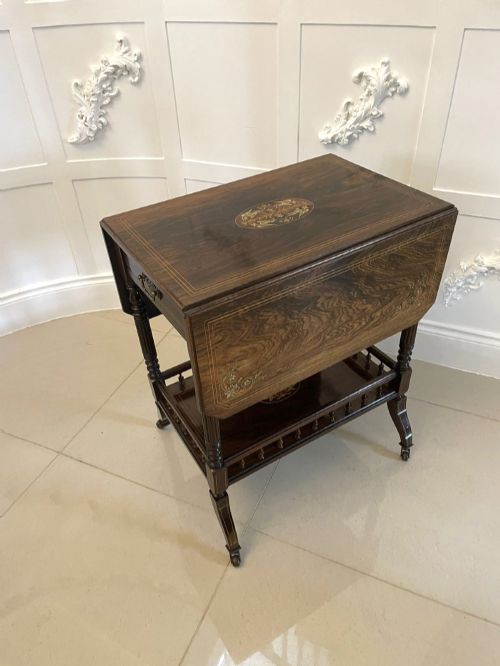
Structural joinery prioritized lightness and portability, employing slender tripod legs, square tapered legs, and interlocking nests. Brass fittings, drop leaves, and tiered shelves add mechanical and spatial complexity to the compact frames.
The documented forms range from standard side tables and Pembroke tables to folding Sutherland tables and multi-tiered etagere display shelves.
What varies in quality
The ambition of the design dictates the tier of the piece, moving from simple utilitarian side stands to exhibition pieces with kidney-shaped tops, elaborate satinwood cross banding, and multi-layered parquetry. Cabinetmakers applied finer hand-cut veneers and more complex geometric or figurative inlays to higher-grade commissions.
Material selection creates a clear distinction across the range, separating standard mahogany frames from dense burr walnut, rich rosewood, or exotic bone-inlaid Anglo-Indian imports. The precision of the contrasting boxwood stringing and the crispness of the carved details further separate standard workshop production from finer studio work.
Trevor Page & Co·Liberty & Co·William Birch
The Edwardian Inlay Occasional Tables Glossary
- Cross banding
- A border technique where veneer is applied perpendicular to the grain of the main surface. This frames the top and provides a decorative contrast.
- Marquetry
- The art of creating pictorial or geometric patterns using fitted pieces of various coloured woods and veneers. It forms the central decoration on many table tops.
- Quartetto nest
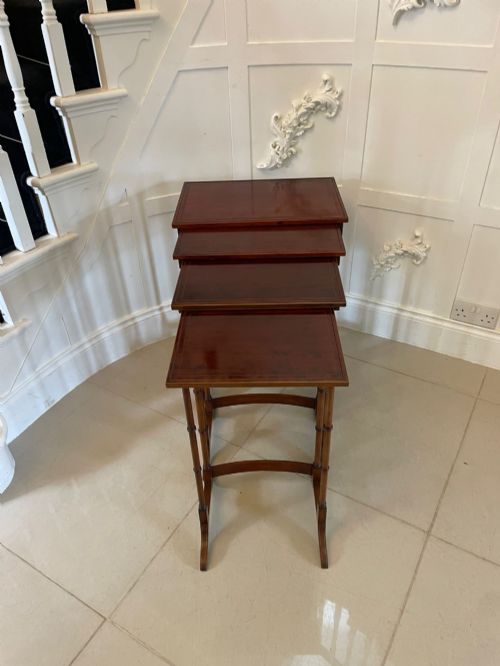
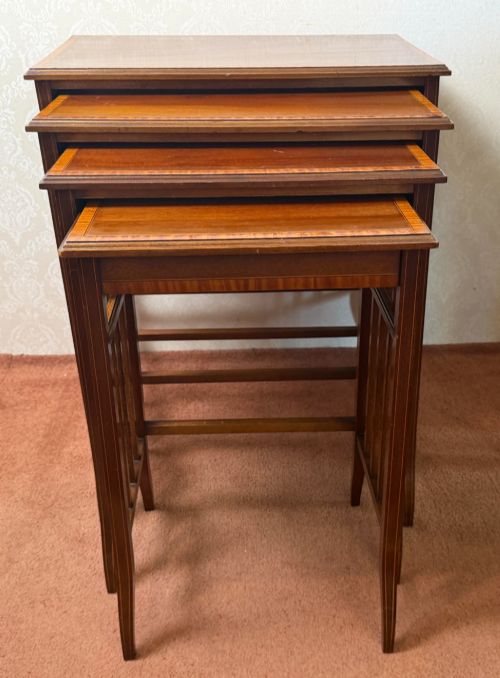
- A set of four graduating tables designed to slide neatly beneath one another. They became popular for saving space during entertaining.
- Satinwood
- A pale, lustrous exotic timber utilised for contrasting inlays and banded borders. It brings a bright golden sheen to darker mahogany structures.
- Stringing
- Thin lines of contrasting wood inlaid into grooves on table legs or borders. It defines edges and panels with subtle linear precision.
Edwardian Inlay Occasional Tables: Frequently Asked Questions
What is an occasional table?
An occasional table is a small, movable piece of furniture designed to be used as needed rather than having a fixed, permanent placement in a room.
In period homes, these tables served specific roles such as holding a lamp, supporting a book, or presenting small decorative objects next to a chair or sofa.
How do I identify an Edwardian table?
Edwardian tables typically date from the period surrounding 1901 and often exhibit lighter construction, brighter mahogany timbers, and delicate inlaid decoration influenced by Sheraton Revival designs.
They frequently feature tapered legs, satinwood cross banding, and graceful forms such as oval or kidney-shaped tops that distinguish them from heavier Victorian precedents.
What are nesting tables used for?
Nesting tables consist of a graduated set of smaller tables that fit together beneath the largest one to save floor space when not in use.
During the Edwardian era, they were pulled out to accommodate guests for afternoon tea or card games without cluttering the drawing room.