


Vintage Mahogany Nest Tables
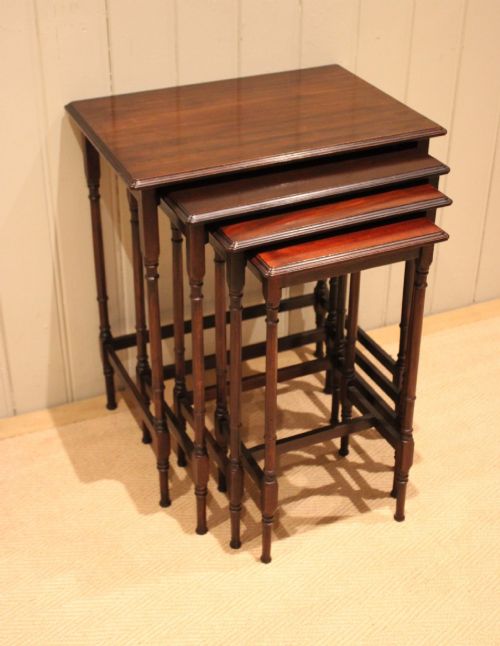
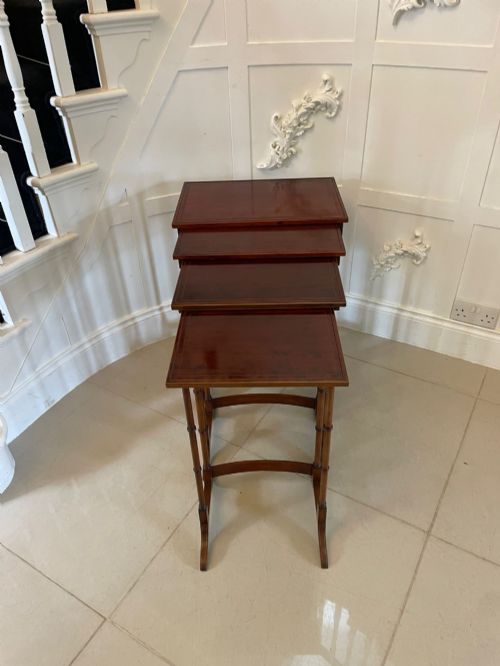
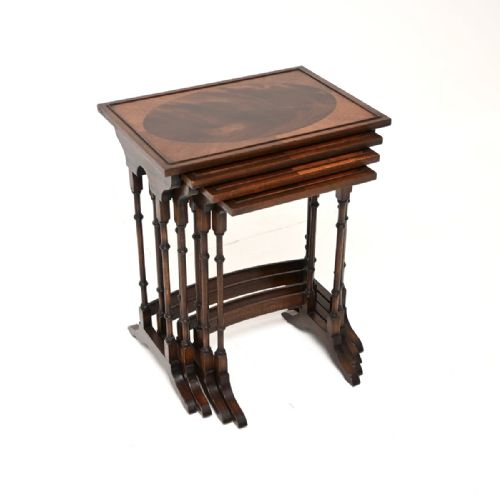
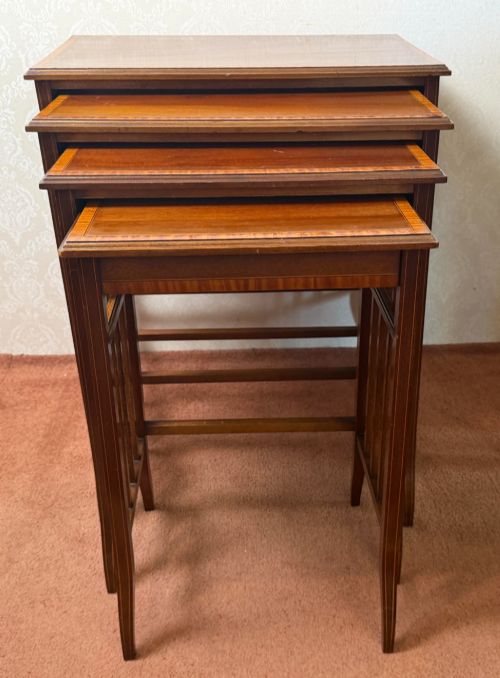
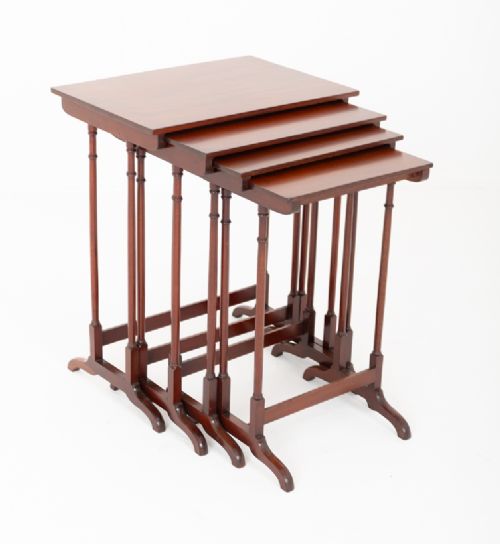
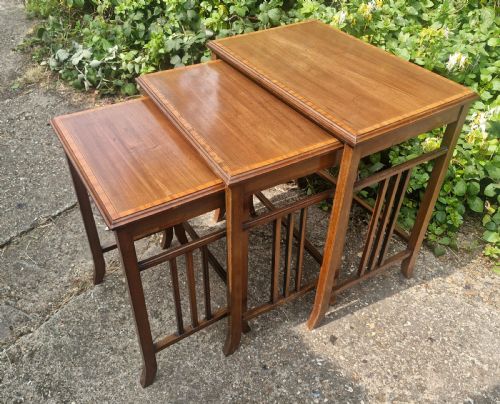
Vintage mahogany nest tables are spacesaving sets of graduated occasional tables that slide neatly beneath one another.

Vintage Mahogany Nest Tables
When you search for vintage mahogany nest tables, you encounter sets ranging from three to five stacked surfaces designed for flexible entertaining. These sets frequently date from the Edwardian period, though examples stretch from the Victorian era through the 1930s.
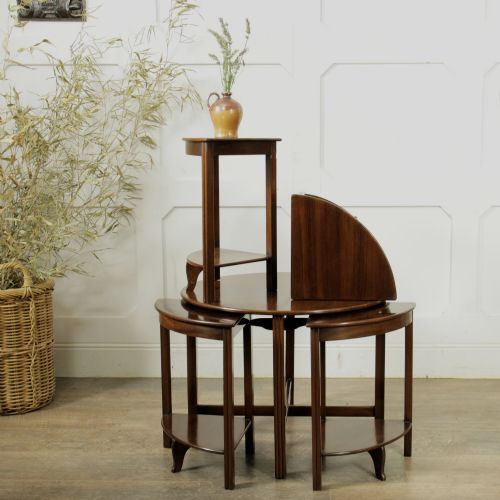
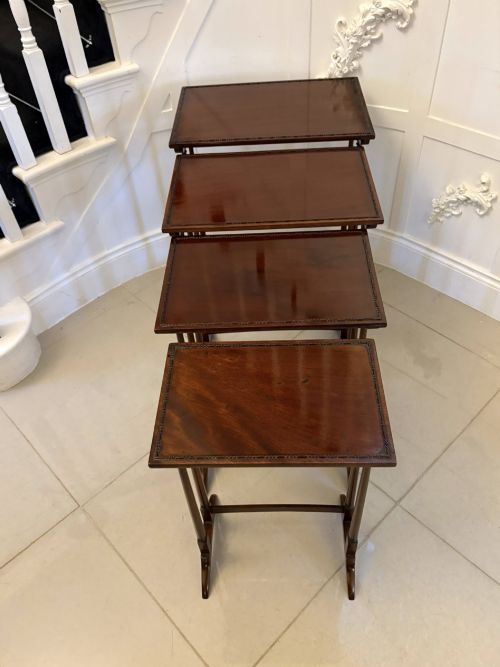
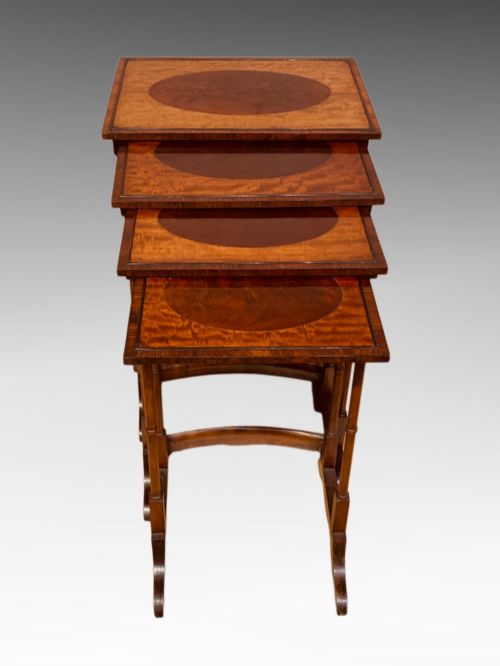
Most pieces on offer take the form of graduating nests of four tables, often known historically as quartetto sets. You will also find circular configurations, oval tops, and occasional three-table arrangements suitable for compact rooms.
Stylistically, the selection spans plain Georgian and Regency revivals alongside Sheraton revival pieces featuring delicate stringing and crossbanding. They function traditionally as tea tables or movable lamp stands that stow away when floor space is required.
Materials and construction
Cabinetmakers constructed these tables primarily from solid mahogany and mahogany veneers, occasionally selecting figured timber for the main display surfaces. They often added contrasting lighter timbers such as satinwood and boxwood for decorative inlay and crossbanding.
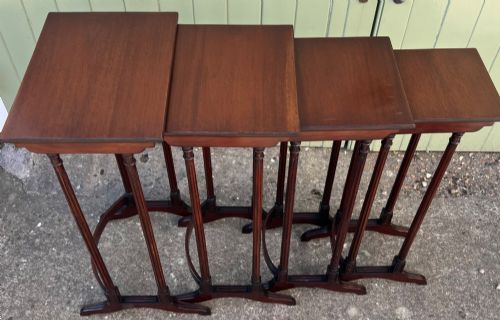
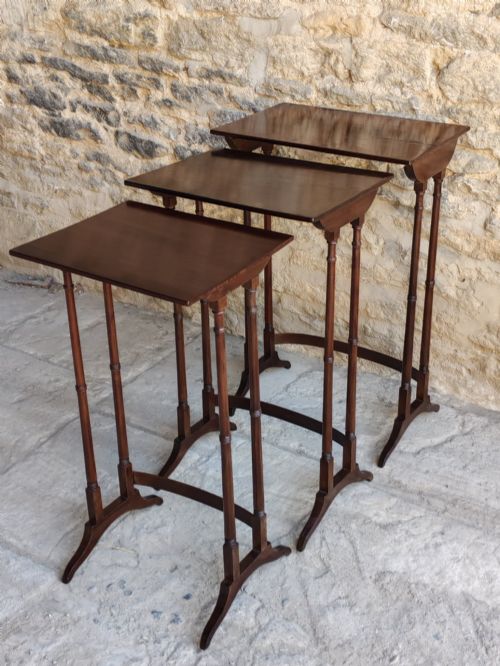
Structural integrity relied on slender framing, frequently incorporating square tapered legs or turned supports to ensure the smaller tables fit smoothly inside the larger ones. Some specialised variations include embossed leather inserts or glass tops secured within the timber frame.
Edwardian makers thoughtfully provided sets of five for extremely crowded drawing rooms.
Judging quality
Quality reveals itself in the selection of the mahogany veneer and the precision of the boxwood or satinwood inlay work. Superior sets demonstrate crisp joinery where each table slides effortlessly into its allotted position without binding.
Finer examples maintain structural stability across the smaller subsidiary tables despite their slender legs and compact proportions. The crispness of carved details and the depth of the polished timber finish separate standard production from exceptional pieces.
The Vintage Mahogany Nest Tables Glossary
- Quartetto
- A set of four tables designed to nest together. This term appears frequently on Edwardian examples.
- Crossbanding
- A strip of veneer applied to the border of a table top with the grain running perpendicular to the centre. It frames the primary mahogany surface.
- Stringing
- A thin inlay of contrasting light wood, such as boxwood, set into channels on the timber surface. It creates delicate linear borders.
- Regency Revival
- A style popular in the late nineteenth and early twentieth centuries copying nineteenth-century classical forms. It emphasises clean architectural lines and subtle curves.
Vintage Mahogany Nest Tables: Frequently Asked Questions
How were nest tables used historically?
These tables served as portable surfaces for afternoon tea, writing, or holding decorative items in multiple rooms of a house. Servants brought out the smaller subsidiary tables as guests arrived.
Once the gathering concluded, the nested set occupied the footprint of only a single table against a wall or beside a chair.
What periods do these tables come from?
The pieces available predominantly date from the Edwardian era around 1900 to 1920, building on earlier nineteenth-century Georgian and Victorian traditions. Later examples extend into the 1930s.
Revival styles from the Edwardian period frequently recreated eighteenth-century Sheraton and Regency aesthetics.
How do I tell Edwardian nests from older ones?
Edwardian versions often feature lighter satinwood or boxwood inlay and machine-assisted precision in the graduated sizing. They frequently carry the quartetto designation for four-piece sets.
Victorian and nineteenth-century examples tend to display heavier figured mahogany veneers and denser timber construction without extensive stringing.
Can I use them as daily coffee tables?
Their original purpose was occasional placement rather than heavy daily weight bearing, but the largest table in the nest functions well for lamps or drinks. You can separate the smaller tables around a room when hosting visitors.
Care should be taken with polished mahogany surfaces to use coasters and avoid excessive moisture.