


Antique End Tables Set
These antique end tables set examples are primarily nests of tables and side tables spanning the Georgian, Regency and Edwardian periods, prized for their space-saving versatility.
Antique End Tables Set
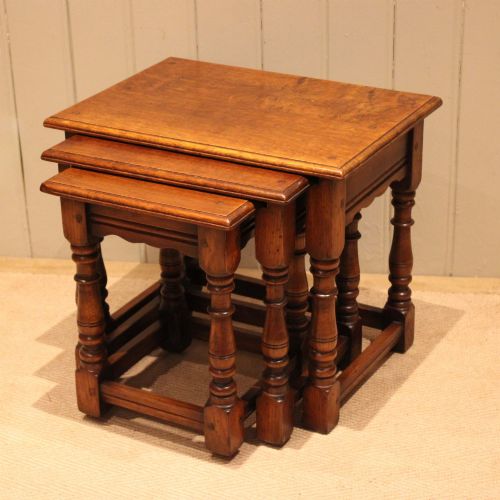
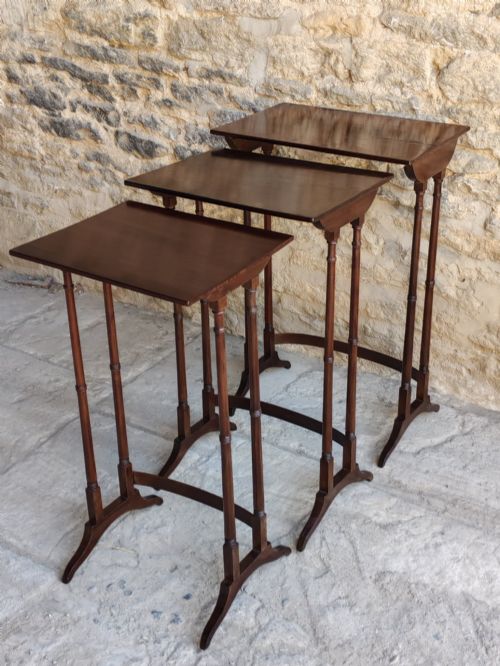
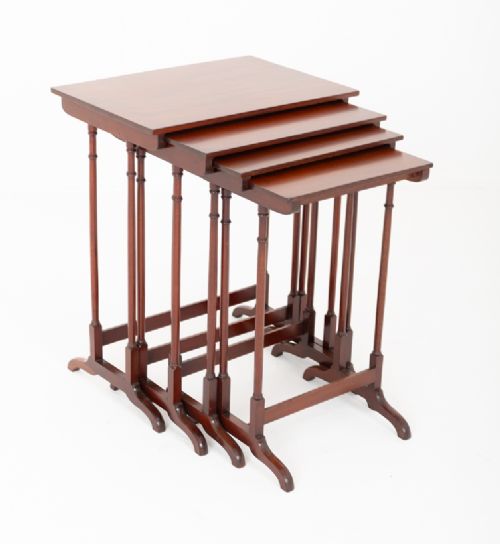
When you search for an antique end tables set, you are primarily looking at nests of tables, occasional side tables and quartetto sets designed to slide together. The examples on this page span several centuries, reaching back to Georgian and Regency designs, though the majority appearing here hail from the Edwardian era and the early twentieth century.
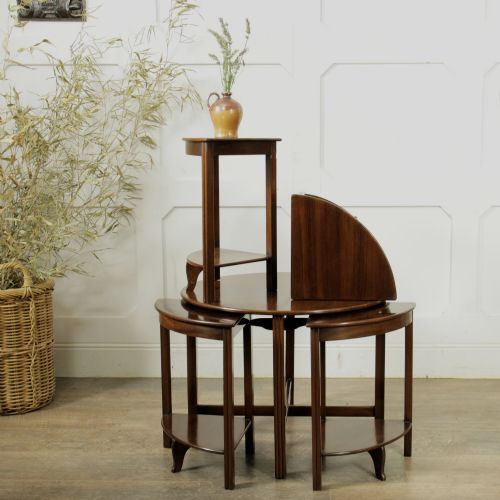
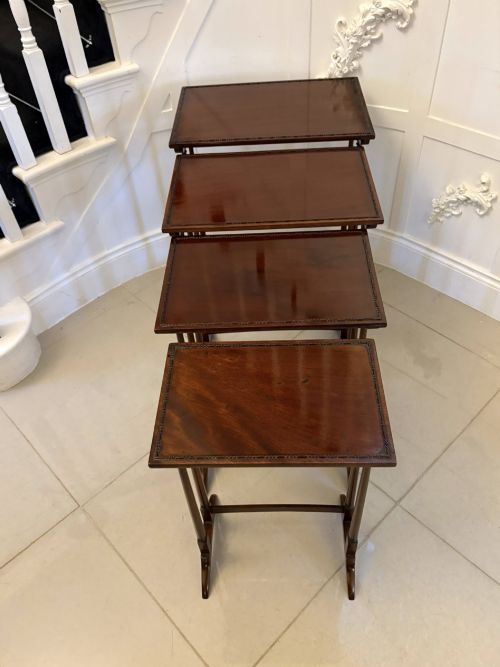
The most common form you will meet is the nest of four graduating tables, often executed in mahogany or walnut. Alongside these traditional nesting sets, you will encounter smaller groups of lamp tables and occasional side tables intended to be positioned beside seating.
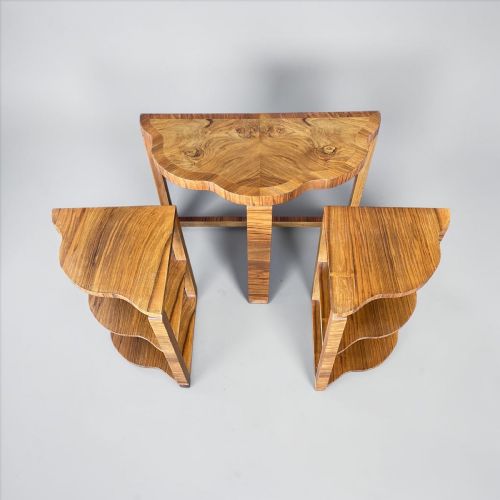
While nests form the backbone of this selection, the evidence also includes specialised regional pieces such as inlaid satinwood variants, French parquetry and carved hardwood examples. These pieces served practical domestic functions in period drawing rooms and parlours, offering movable surfaces that could be deployed as needed.
How they were made
Cabinetmakers relied on dense cabinet woods like mahogany, walnut, rosewood and oak to construct these tables, ensuring stability despite slender frames. Satinwood was frequently employed for contrasting inlay work and geometric banding.
Joinery techniques focused on creating lightweight yet robust structures that could slide smoothly within one another. Surface decoration frequently incorporated floral inlay, parquetry and natural wood grains finished with traditional polishes.
Current listings feature pieces spanning from the 18th Century through the Edwardian era, utilising mahogany, walnut, rosewood and oak.
What varies in quality
Quality in these sets rests upon the selection of timber veneers and the precision of the graduating framework. Superior examples display consistent grain matching across all tiers and intricate inlay work such as satinwood banding rather than painted substitutes.
The structural integrity of the joints where the legs meet the tabletop dictates the durability of the set. Finer pieces maintain rigidity and alignment when fully nested, reflecting skilled cabinetmaking.
The Antique End Tables Set Glossary
- Quartetto
- A set of four graduating tables designed to fit neatly one beneath another. This term appears frequently in Edwardian and nineteenth-century descriptions.
- Nest of tables
- A group of smaller tables constructed in graded sizes to stack within a single footprint. They became especially popular during the Edwardian period.
- Parquetry
- Geometric wood inlay forming a mosaic pattern on the surface of furniture. It is often seen on French walnut examples from the early twentieth century.
- Satinwood
- A durable, lustrous yellowish timber native to India and Ceylon, utilised extensively for stringing and decorative inlay on mahogany pieces.
- Regency Revival
- A stylistic movement reproducing or drawing heavily upon the classical forms of the British Regency period. Pieces from this revival date into the twentieth century.
Antique End Tables Set: Frequently Asked Questions
What is a quartetto table set?
A quartetto set consists of four tables of graduating sizes designed to slide beneath one another into the space of a single table. They provide flexible surface space for tea or reading materials without cluttering a room.
Cabinetmakers utilised this format extensively during the Edwardian era, constructing them in mahogany, walnut and rosewood with occasional inlaid details.
How do I date an Edwardian nest of tables?
Edwardian nests of tables typically date from around 1900 to 1910, reflecting the lighter furniture styles favoured during that reign. They often feature slender turned legs and mahogany construction.
Examining the secondary timbers beneath the tops and the style of the glue blocks helps confirm the period of manufacture.
Where were nests of tables used in period homes?
These tables were kept beside chairs and sofas in drawing rooms and sitting rooms, ready to be pulled out when entertaining guests. Their multi-tiered design allowed households to maximise floor space.
As social habits changed in the Edwardian period, portable occasional tables became essential furnishings for serving refreshments.
What woods were commonly used for antique side tables?
Mahogany and walnut predominate among these listings, valued for their strength and rich grain patterns. Rosewood and oak appear alongside specialised imported hardwoods.
Cabinetmakers often combined a primary timber like mahogany with contrasting satinwood for inlay and decorative stringing.