



Vintage King Bedstead
These vintage king bedstead examples combine generous sleeping space with the substantial weight of nineteenth and early twentieth century metalwork and timber.
Vintage King Bedstead
A vintage king bedstead offers a larger sleeping frame from periods spanning the Victorian era, the Edwardian period, and the late nineteenth century. The selection ranges from robust metal frames to timber constructions.
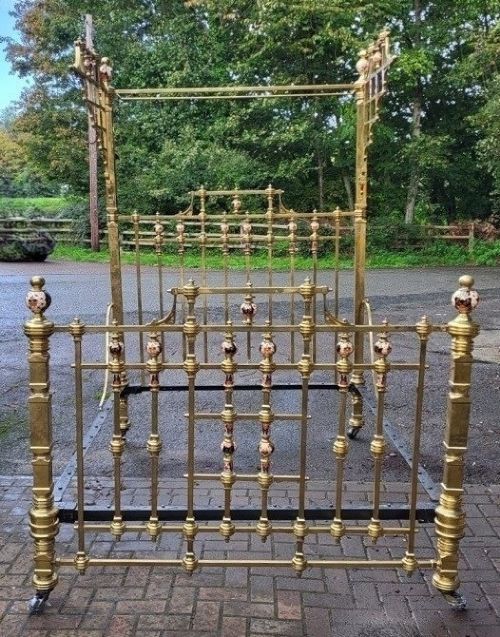
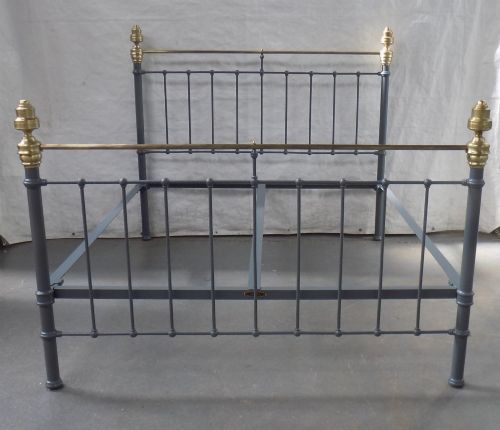
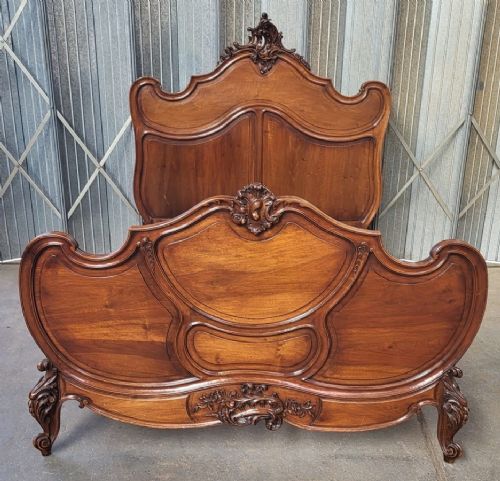
Most pieces seen here combine cast iron and gleaming brass, alongside French styles such as Louis XV and walnut or mahogany frames. Buyers encounter various forms including half tester beds, four poster beds, and simple iron frames.
Origins include English workshops and Irish makers, alongside French provincial designs. These beds provide period character whilst accommodating modern mattress dimensions.
Materials and construction methods
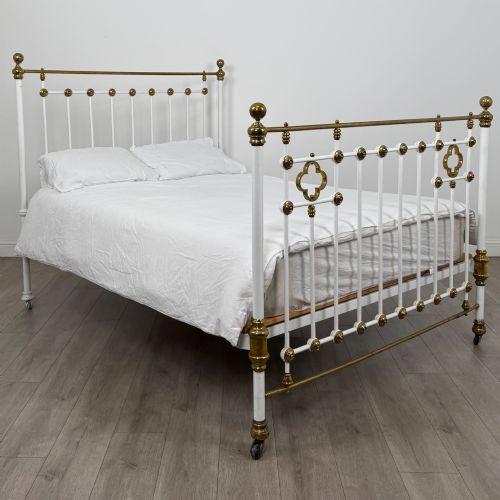
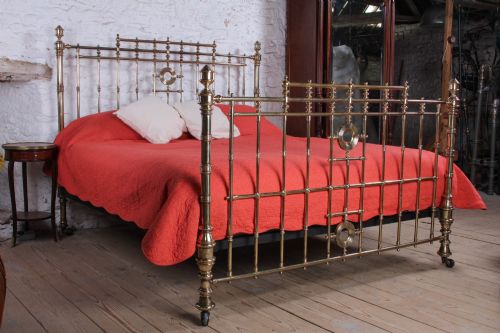
Makers utilised heavy cast iron and wrought iron for structural rigidity, often combining the metal with bright brass tubing and decorative brass castings. Frames feature bolted joints designed to support substantial weight securely.
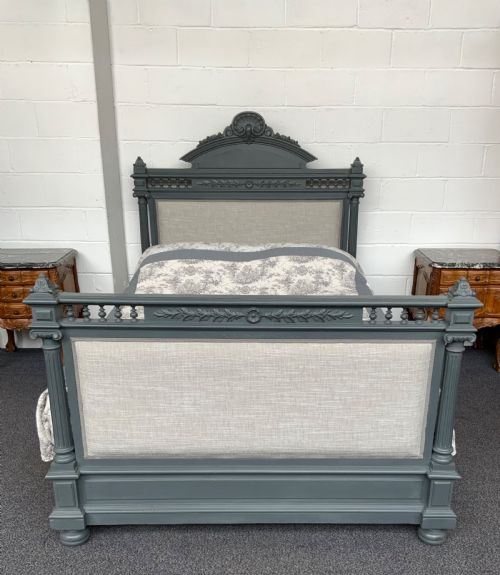
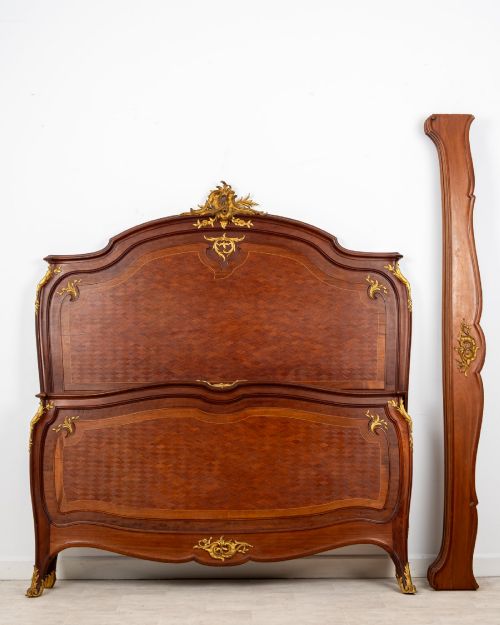
Timber examples employ dense hardwoods like walnut, mahogany, maple, and kingwood, frequently enhanced by hand carving, parquetry, and ormolu mounts. Painted finishes also appear on iron and wooden frames.
Specialised firms incorporated maker marks into the ironwork, whilst brass components received polished finishes to highlight the cast detailing on the headboards and footboards.
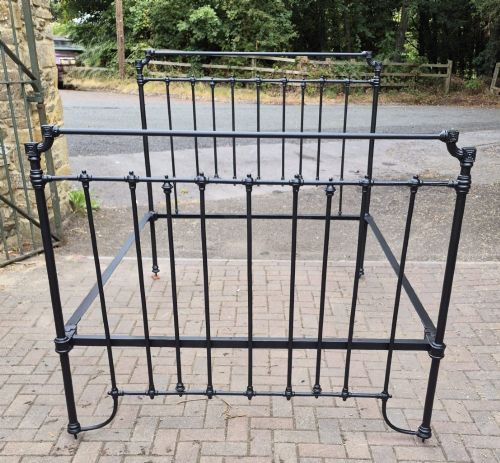
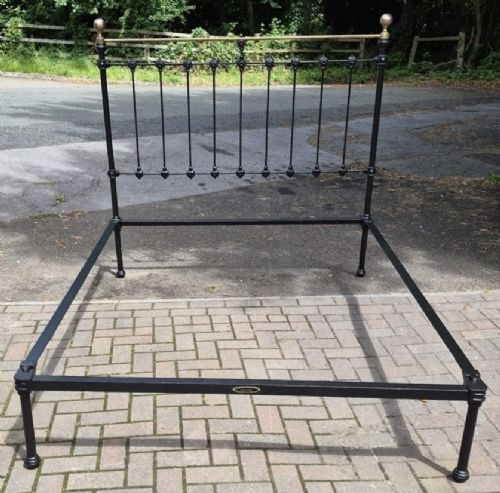
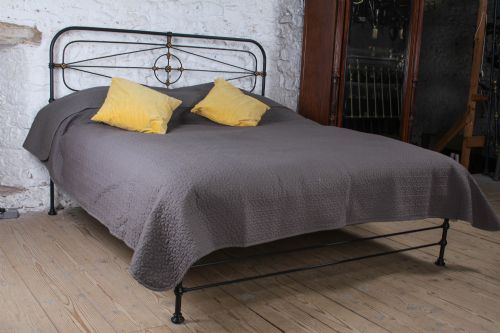
An Irish iron bedstead arrives dressed in a vintage blackbird egg finish.
Judging the standard of a bedstead
Quality rests upon the crispness of the brass castings and the integrity of the structural joints. Superior metal beds feature heavy gauge tubing and detailed ornamentation rather than plain pressings.
In wooden examples, the depth of the hand carving and the selection of figured veneers determine the grade. Original components and signed maker details elevate the standing of the piece.
The weight of the ironwork and the precision of the corner brackets indicate the original workshop standard. Complete sets retaining their original side rails demonstrate superior survival.
Maple & Co·Winfield·RW Winfield·James Shoolbread & Co
The Vintage King Bedstead Glossary
- Bedstead
- The complete framework of a bed, including headboard, footboard, and side rails, designed to support a mattress and base.
- Half tester
- A canopy that projects from the wall or headboard over the upper portion of the bed rather than extending the full length.
- Dip rail
- A headboard or footboard rail that curves downward in the centre, characteristic of Edwardian and late Victorian designs.
- Ormolu
- Gilt-bronze mounts applied as decorative ornaments to wooden furniture frames, frequent in French styles.
- Parquetry
- Geometric patterns formed by inlaid wood veneers on the surface of wooden bed frames.
Vintage King Bedstead: Frequently Asked Questions
Will modern king mattresses fit these antique frames?
Many of these beds were manufactured to nineteenth or early twentieth century dimensions, which can vary slightly from modern standard sizing. Buyers should verify internal rail lengths and widths before purchasing a contemporary mattress.
Adapting antique side rails or utilising custom slatted bases often allows standard mattresses to sit securely within the historic framework without altering the visible exterior structure.
How do I assemble a metal bedstead safely?
Metal frames typically rely on side rails that slot into corner brackets on the headboard and footboard, secured with heavy taper keys or bolts. Ensuring these wedge connections are firmly seated maintains the rigidity of the entire structure.
Two people are usually required for assembly to support the heavy iron and brass components while aligning the side rails evenly to prevent stress on the castings.
What is the difference between iron and brass beds?
Iron beds utilise cast and wrought metal painted in black or other colours, providing a robust and industrial appearance. Brass beds incorporate polished brass tubing and decorative brass finials for a brighter, more ornate aesthetic.
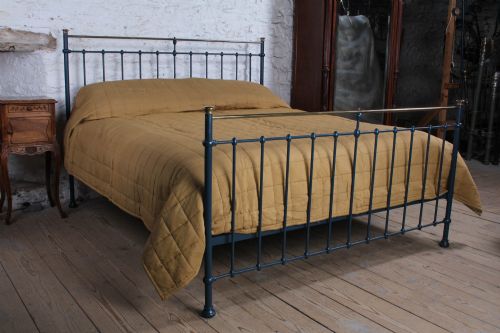
Many Victorian examples combine both materials, using black iron for the main structure and brass for the top rails and decorative castings.
How do I care for polished brass and iron?
Polished brass requires occasional dusting and gentle cleaning with a non-abrasive metal cleaner to maintain its lustre and prevent tarnishing. Coated brass should be wiped simply with a soft, dry cloth.
Iron frames benefit from a light application of wax or oil on painted surfaces to protect the finish from moisture and handling over time.