
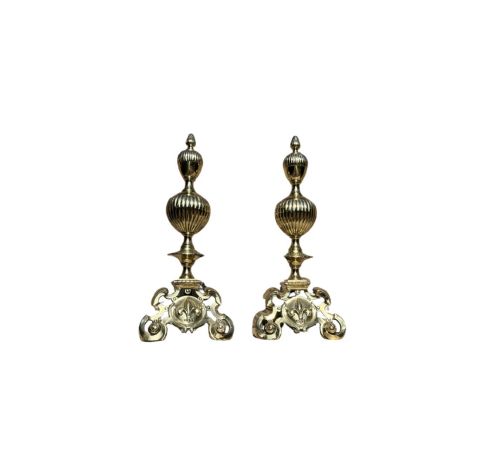
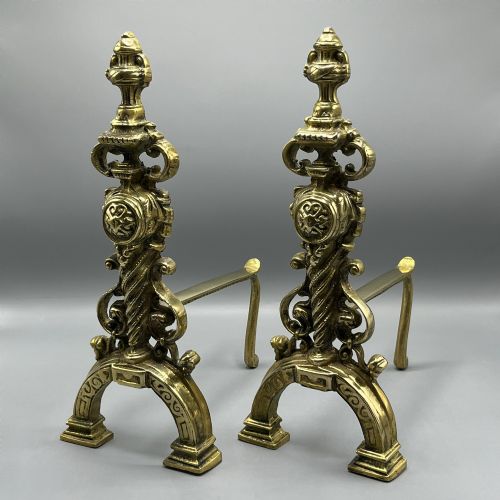
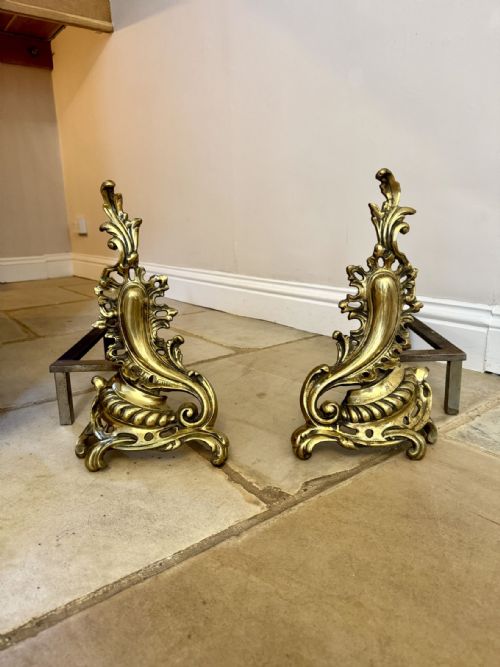
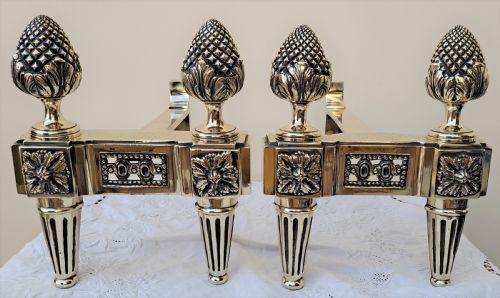


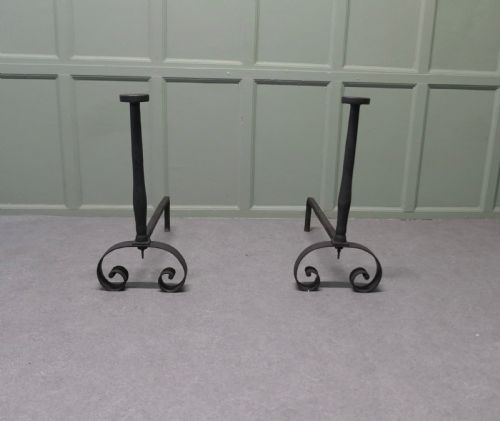
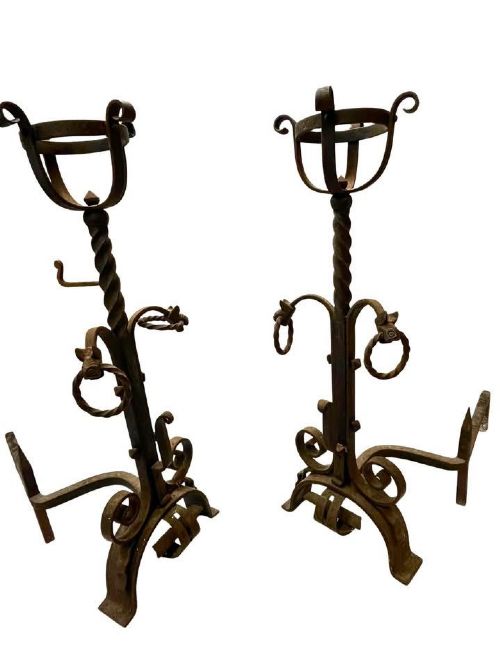
Vintage Iron Andirons
These vintage iron andirons support logs within a hearth while introducing distinct period metalwork to the fireplace.
Vintage Iron Andirons
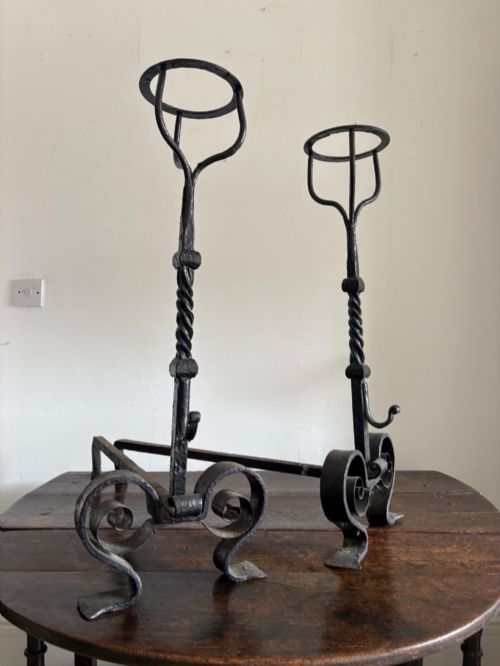
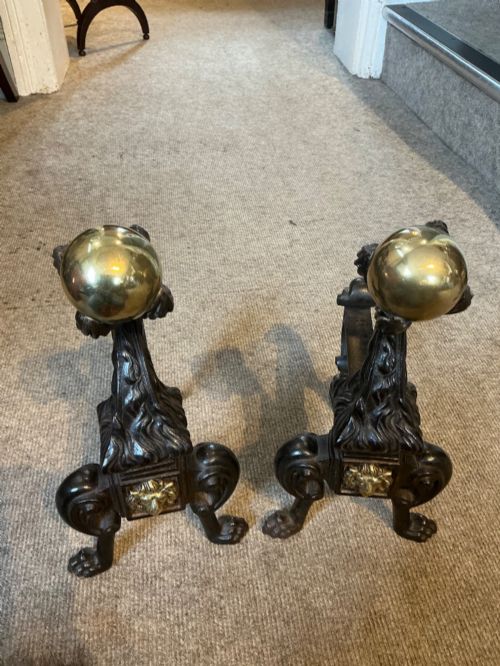
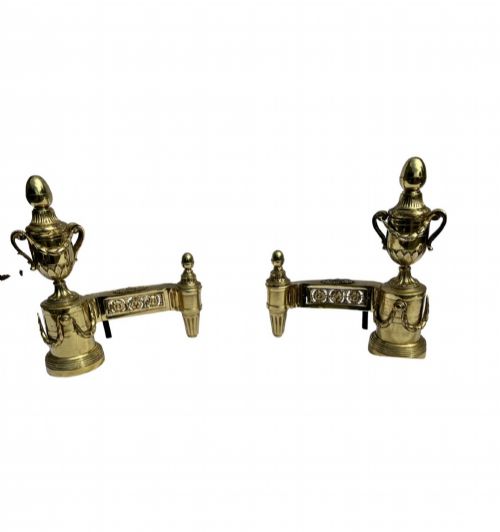
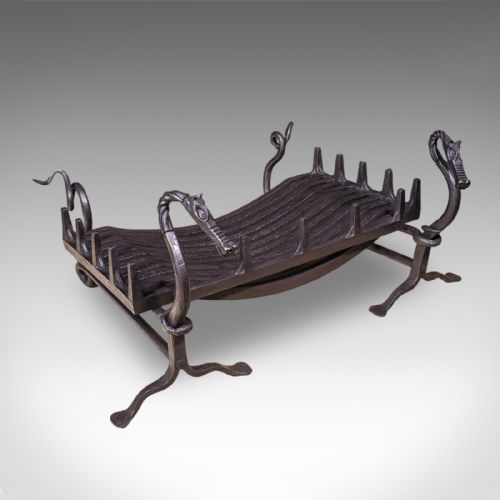
Vintage iron andirons serve as heavy functional supports for burning logs inside a fireplace opening. The examples appearing here span centuries from the sixteenth century onwards, encompassing nineteenth century pieces, Victorian designs, and Edwardian creations.
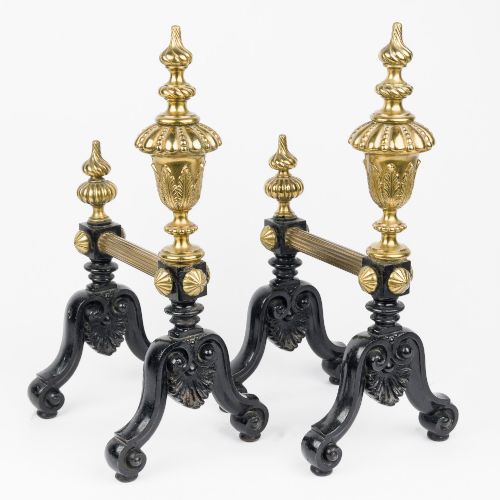
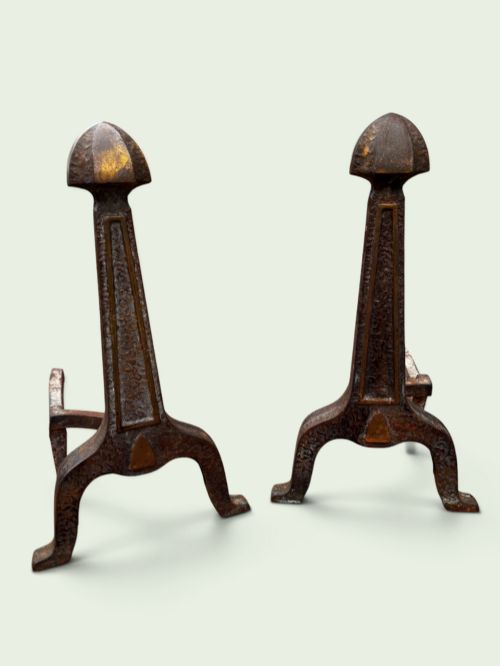
Most items you encounter belong to the nineteenth century, taking the form of paired fire dogs constructed from cast or wrought iron. Alongside simple utilitarian forms, variations include pairs incorporating brass elements, copper accents, and steel components.
Assessment of Standard
The standard of an iron andiron rests upon the weight of the metal, the integrity of the joinery, and the crispness of any applied decoration. Heavier metal gauge and robust construction indicate substantial hearth hardware designed for daily utility.
Artistic execution distinguishes simpler production models from exceptional forged or cast pairs. The definition in decorative motifs and the harmony between iron bodies and brass or copper mounts dictate the standing of the object.
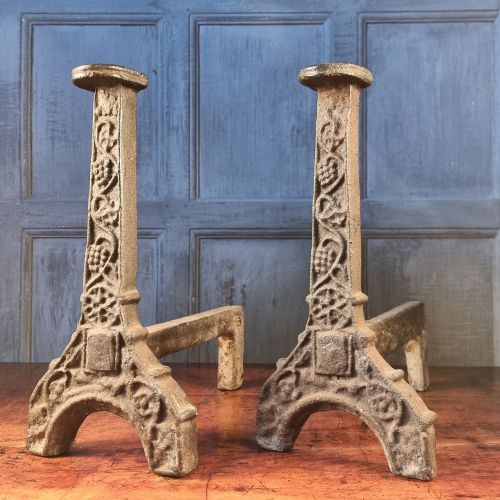
Listings feature iron andirons spanning from sixteenth-century Gothic designs through Victorian and Edwardian periods, incorporating brass and copper elements.
The Vintage Iron Andirons Glossary
- Andiron
- A metal support used in pairs to hold logs above the hearth floor for better air circulation. They are also known historically as fire dogs or chenets.
- Fire Dog
- An alternative term for an andiron, originating from the animal-like shapes often given to the front uprights. These vertical standards prevent logs from rolling forward into the room.
- Chenet
- The French term for an andiron, frequently applied to decorative brass or iron pieces imported from France. They often display rococo or neoclassical styling.
- Wrought Iron
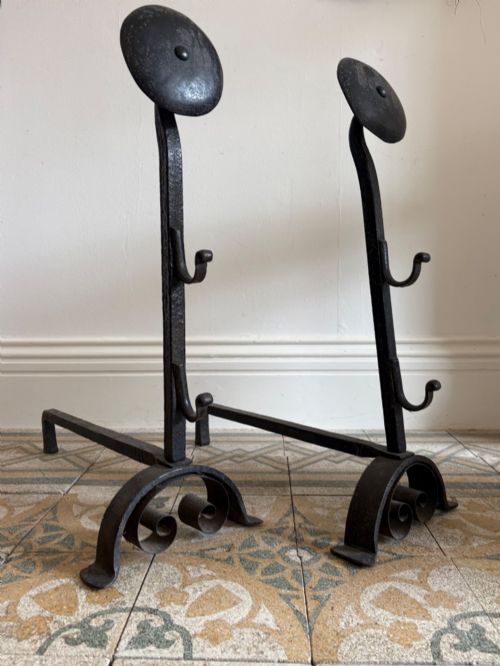
- Iron that has been heated and shaped with tools by a blacksmith rather than cast in a mould. This material displays characteristic hammer marks and fibrous textures.
Vintage Iron Andirons: Frequently Asked Questions
How do I place andirons in the hearth?
Position the two andirons upright inside the fireplace opening with the horizontal bars pointing toward the back wall. Leave sufficient space between them to support logs securely.
Ensure the heavy vertical standards face outward into the room to keep the firewood from sliding forward onto the floor.
Can I burn real wood on these andirons?
These iron andirons are built to bear the weight of burning logs within an active fireplace. Solid cast and wrought iron withstand high heat effectively.
Check that the individual pair has sufficient depth and structural stability before loading heavy logs onto the supports.
How do I clean iron and brass parts?
Wipe iron surfaces with a soft cloth and apply a light coat of neutral paste wax to protect against moisture. Avoid harsh chemical cleaners that strip the historic finish.
Polish brass and copper components gently with a dedicated metal cleaner while keeping substances away from adjacent iron parts.
How do I date an antique andiron?
Examine the manufacturing technique, as hand-forged wrought iron often indicates earlier periods while uniform cast iron frequently points to nineteenth-century production. Stylistic clues like Gothic revival or Victorian neoclassical motifs provide further temporal markers.
Look closely at assembly methods, such as hand-cut screws or pegged joints, which help distinguish older hearth hardware from later reproductions.