



Gothic Hearth Firedogs
Gothic hearth firedogs are substantial fireplace accessories built to support logs, and you want a pair that brings weight and character to your hearth.
Gothic Hearth Firedogs
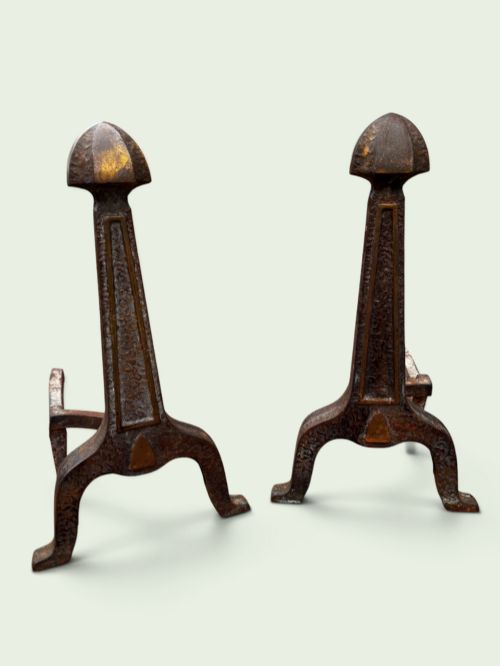
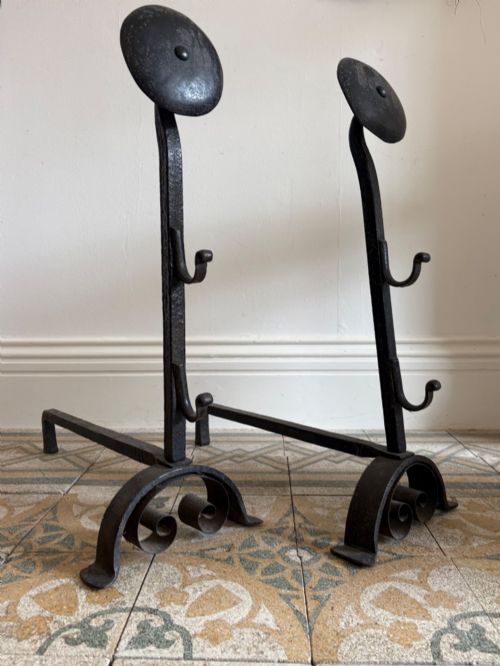
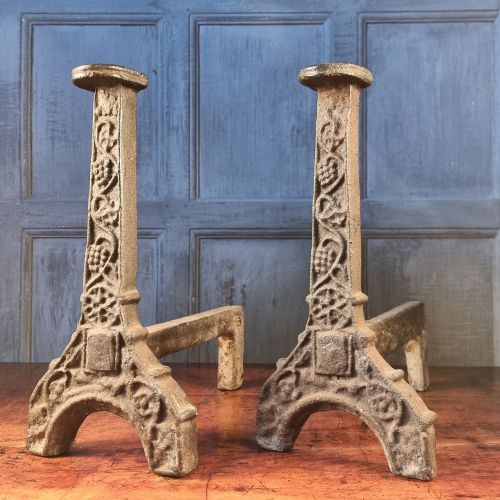
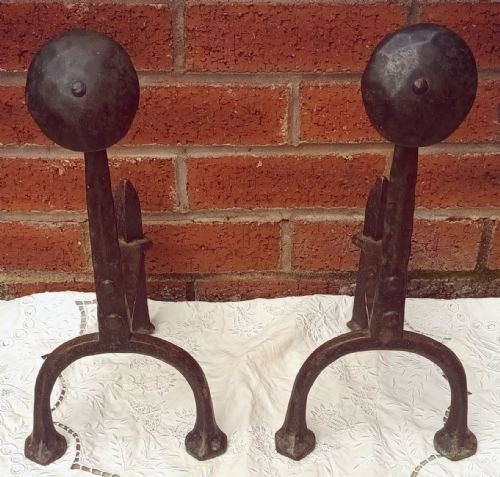
When you search for gothic hearth firedogs, you encounter sturdy fireplace ironmongery designed to hold burning wood within an open hearth. These pieces serve both a practical load-bearing function and a decorative role at the centre of a room.
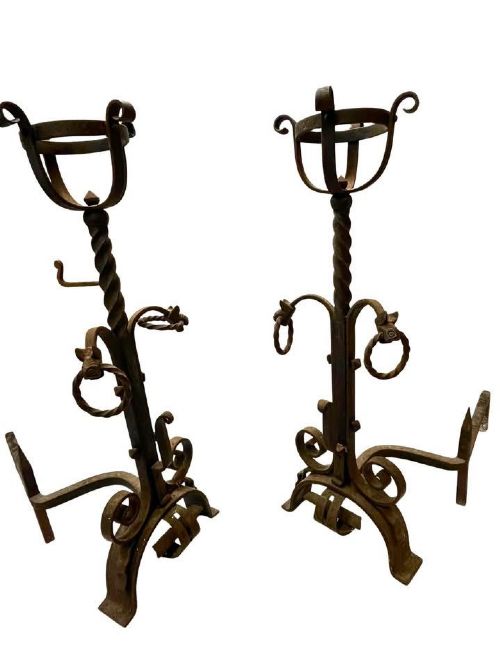
The versions most commonly met on this page date from the nineteenth century, including Victorian Gothic Revival and Arts and Crafts interpretations. Examples range from simple wrought iron pairs to elaborate sets incorporating brass, steel, and cast iron elements.
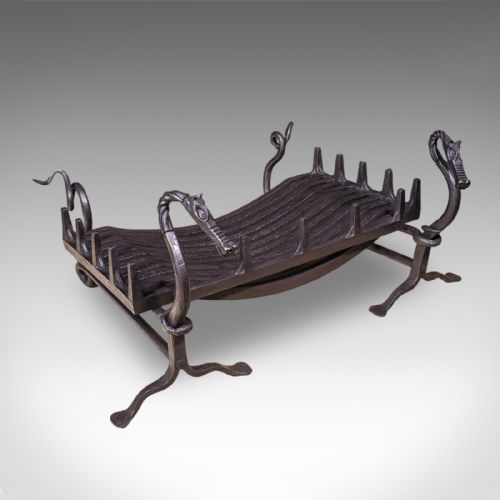
Forms include traditional andirons and fire dogs alongside larger inglenook fire grates and associated fireside accessories. Earlier sixteenth century examples appear less frequently but set a historical benchmark for the style.
How they were made
The construction relies primarily on forged wrought iron and moulded cast iron, chosen for their ability to withstand intense hearth temperatures. Smiths and founders worked these metals into heavy upright standards and horizontal billets.
Brass and steel appear frequently in later nineteenth and twentieth century pieces to provide decorative contrast and surface polish. Makers utilised techniques such as riveting and twisting to shape sturdy uprights and decorative finials.
The listings span from sixteenth-century pieces through the Victorian Gothic Revival and Arts and Crafts movements up to nineteen-forty.
What varies in quality
Quality in these pieces rests upon the integrity of the metalwork and the weight of the casting or forging. Substantial gauge iron and clean, sharp decorative motifs separate superior examples from lighter utility items.
Proportion and balance dictate the visual success of a pair, ensuring they stand level and support heavy logs without distortion. The presence of integrated grates or matching tool rests adds architectural completeness.
The Gothic Hearth Firedogs Glossary
- Andiron
- A horizontal bar raised on legs with an upright pillar at the front, used to support burning logs in an open fireplace. They are also known historically as fire dogs.
- Gothic Revival
- An architectural and decorative style drawing inspiration from medieval design, featuring pointed arches and robust structural forms. This aesthetic dominates the nineteenth century examples found here.
- Wrought iron
- Iron that has been heated and hammered by hand into shape, showing distinctive surface texture from the smith's tools. It provides the tensile strength needed for heavy hearth use.
- Fire basket
- A metal basket designed to hold coal or wood, often mounted directly onto or between a pair of andirons. These units consolidate the fuel area within large inglenook fireplaces.
Gothic Hearth Firedogs: Frequently Asked Questions
What is the difference between andirons and fire dogs?
Andirons and fire dogs are essentially the same object, serving as upright metal supports for logs in an open hearth. The terms are often used interchangeably across different periods and regions.
Historically, regional preferences and trade vocabulary dictated which term appeared in inventories, but both fulfill the identical function of keeping fuel elevated for better airflow.
How do I date a set of iron firedogs?
Dating relies on examining manufacturing marks, tool marks from the forge, and the specific stylistic vocabulary of the metalwork. Victorian and Arts and Crafts pieces often display machine-assisted precision alongside hand-finished details.
Earlier pieces show more irregularity in the forged iron and heavier reliance on hand-welding techniques. Comparing the decorative motifs to known architectural styles of the nineteenth or earlier centuries helps narrow the period.
Can these firedogs be used in a modern fireplace?
Most of these cast and wrought iron pieces are structurally robust enough for regular use in a functional open hearth. Their primary purpose remains supporting logs and promoting proper combustion.
Buyers should measure the depth and width of their fireplace opening to ensure the horizontal billets and uprights fit safely. Heavy iron retains heat long after the fire dies down, requiring careful placement.
How do I clean and maintain antique ironwork?
Maintenance involves removing soot and ash buildup with a dry brush after the metal has cooled completely. Applying a light coat of specialist grate polish or wax helps protect the surface from moisture.
Avoid using harsh chemical cleaners that strip the historic patina accumulated over decades of hearth use. Regular gentle dusting preserves both wrought and cast iron surfaces effectively.