

Vintage Indian Wooden Chest
A vintage indian wooden chest brings robust character and rich timber grain to an interior, offering practical storage with a distinct historical pedigree.
Vintage Indian Wooden Chest
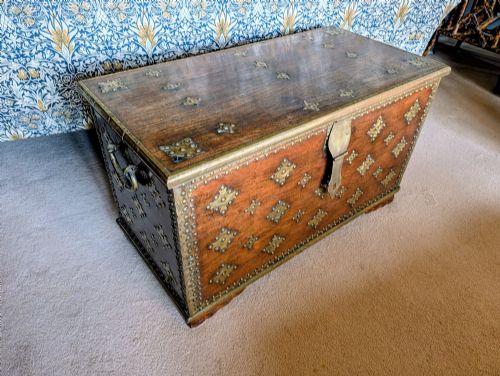
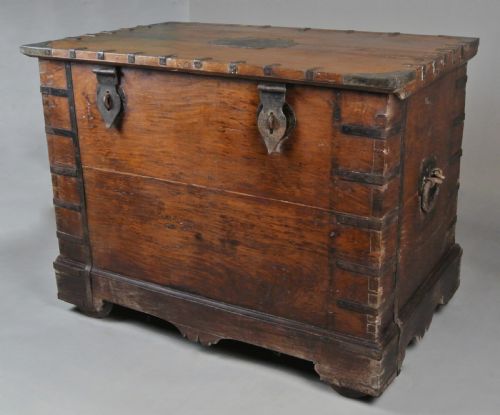
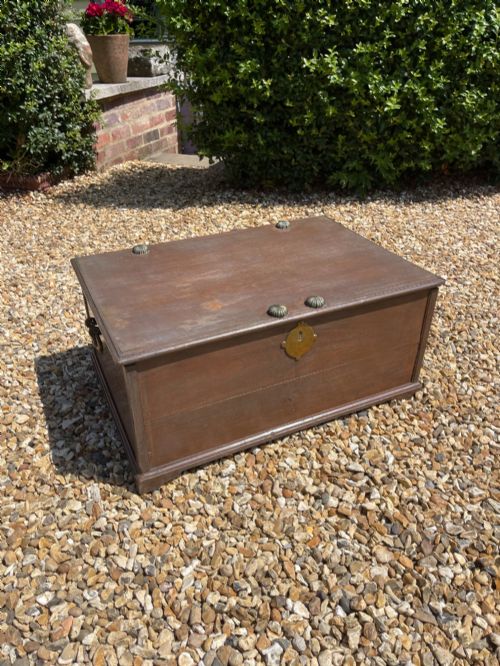
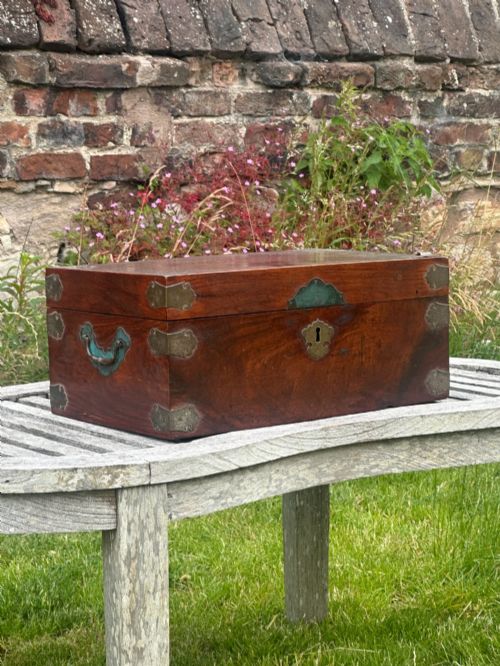
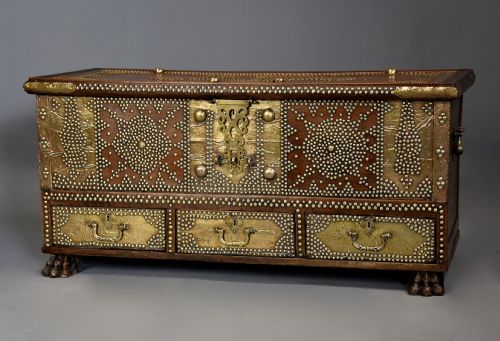
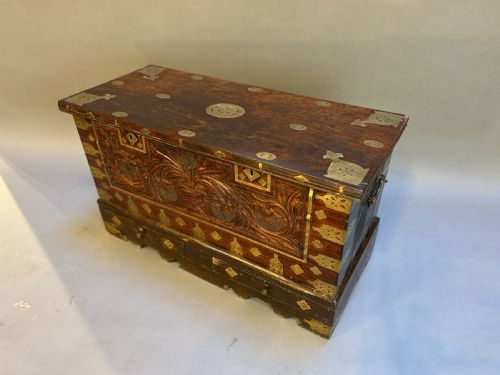
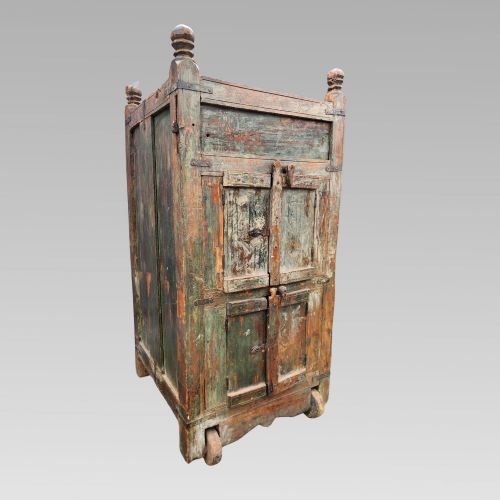
A vintage indian wooden chest encompasses a varied group of utilitarian furniture pieces designed for travel, trade, and domestic storage across the nineteenth and early twentieth centuries. These forms include heavy dowry chests, brass-bound merchants trunks, blanket boxes, and specialised campaign furniture.
The pieces appearing most frequently on this page date from the nineteenth century through the early twentieth century, spanning styles such as Anglo-Indian, traditional Indian, and Victorian campaign. Materials range from dense regional timbers like teak, padouk, and camphor wood to decorative accents of brass, iron, and mother of pearl.
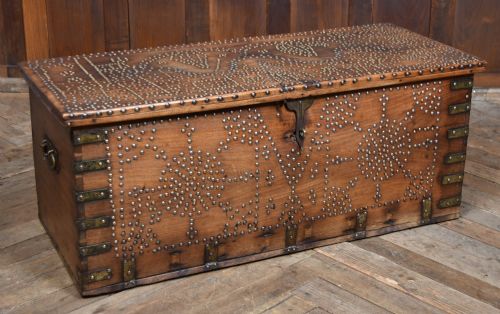
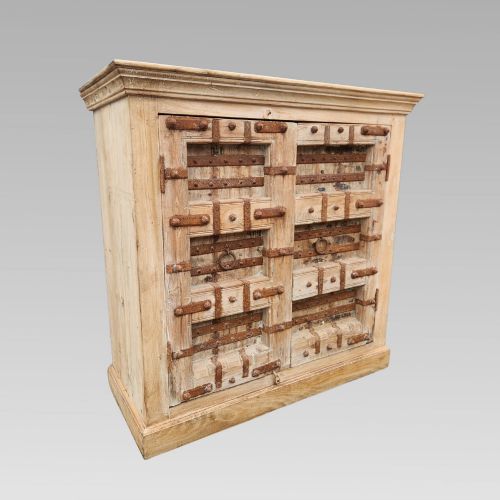
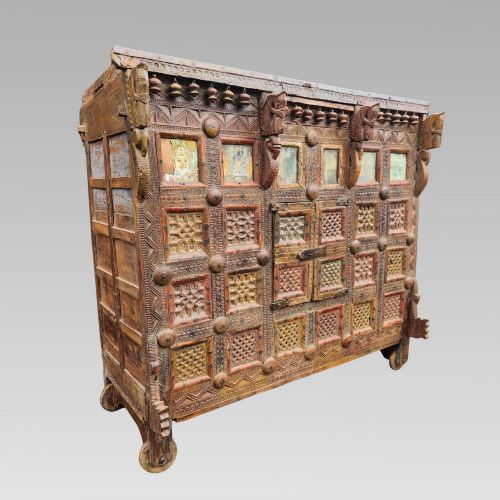
Originating from diverse contexts including Rajasthan, Zanzibar, and colonial administrative hubs, these trunks and coffers reflect a confluence of local craftsmanship and British military or mercantile requirements. Buyers encounter everything from simple iron-banded storage boxes to elaborately carved damchiya dowry cabinets.
How they were made
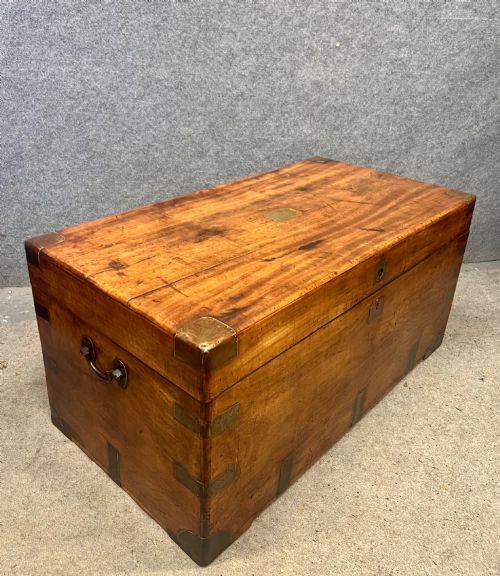
Constructed primarily from durable tropical hardwoods such as teak, padouk, ebony, and camphor wood, these chests rely on dense timbers chosen for resilience against climate and wear. Camphor wood variants additionally offer a natural aromatic quality that deters insects from stored textiles.
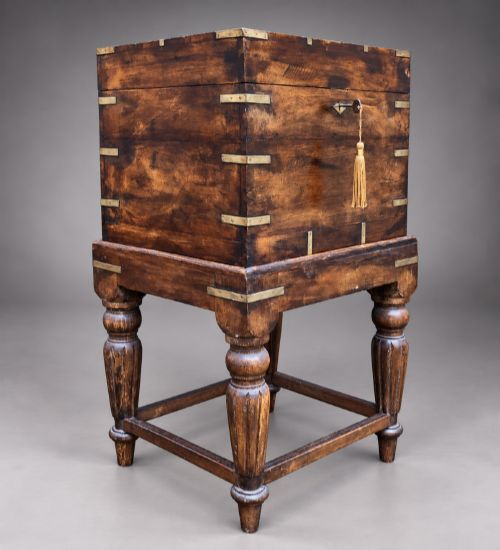
Metal reinforcement defines a large proportion of these pieces, utilising heavy brass strapping, decorative studs, and iron banding to protect corners and joints during transit. This hardware is often secured with hand-beaten pins, combining structural fortification with visual ornamentation.
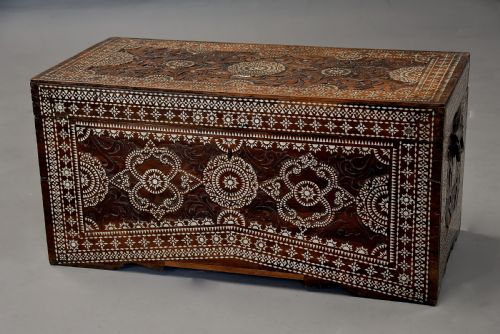
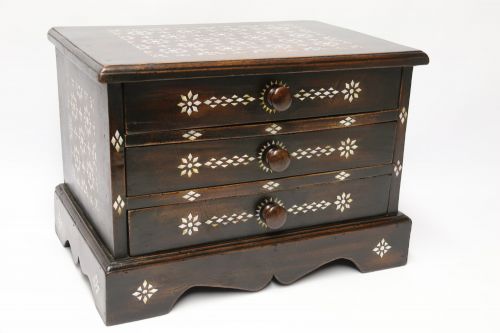
Surface decoration incorporates intricate hand-carving, inlaid mother of pearl, and reeded mouldings, particularly on pieces intended for domestic display rather than rough transport. Joinery methods accommodate the natural movement of solid timber across shifting climates.
Listings span the nineteenth and early twentieth centuries, featuring robust timbers like teak, camphor wood, and padouk alongside brass and iron hardware.
What varies in quality
The calibre of a vintage indian wooden chest rests largely on the integrity of its timber selection and the complexity of its construction. Pieces fashioned from dense, finely figured padouk or seasoned teak sit at the upper end of the scale compared to utility items built from standard regional hardwoods.
Originality of hardware and mounts dictates much of the distinction between examples. Chests retaining their heavy hand-cast brass corner brackets, operational locks with period keys, and intricate stud work hold greater integrity than those with later replacements or modern fastenings.
The depth and execution of hand-carving or inlay work separate standard utilitarian boxes from high-status marriage and display pieces. Crisp, deeply carved motifs on damchiya cabinets or precise mother of pearl placement indicate superior workshop output.
The Vintage Indian Wooden Chest Glossary
- Damchiya
- A traditional low storage cabinet or dowry chest originating from regions like Rajasthan, often featuring ornate carved panels and heavy wooden doors.
- Campaign chest
- Portable furniture made in sections with recessed brass pull handles and corner braces, designed for easy dismantling and transport by military officers.
- Zanzibar chest
- A heavy trade chest characterised by brass studding, strapwork hinges, and a distinctive domed or flat lid associated with maritime commerce.
- Cellarette
- A specialised container designed to hold bottles of wine or spirits securely, often raised on a stand and lined for temperature regulation.
- Padouk
- A heavy, durable reddish-brown tropical hardwood prized for its stability and rich grain, frequently utilised in fine nineteenth-century Anglo-Indian cabinetry.
Vintage Indian Wooden Chest: Frequently Asked Questions
What is a damchiya chest?
A damchiya is a traditional Indian dowry chest or storage cabinet, typically featuring heavily carved wooden panels and robust construction.
These pieces were traditionally created as part of a bride's household goods and served as secure domestic storage for textiles and valuables.
How do I care for camphor wood?
Camphor wood requires minimal maintenance beyond dusting with a dry cloth and avoiding placement near direct heat sources.
The natural oils within the timber help preserve the wood and protect stored contents without the need for heavy chemical polishes.
Were these chests made for travel?
Many examples, particularly those designated as campaign furniture or merchants trunks, were explicitly built for frequent transport by ship or carriage.
Sturdy iron or brass bindings and recessed handles protected the corners during long journeys across trade routes.
What timber was used most often?
Teak is the most prevalent wood found across these listings, valued for its strength and resistance to humidity and splitting.
Other prominent timbers include dense padouk, aromatic camphor wood, and occasional accents of ebony or rosewood.