
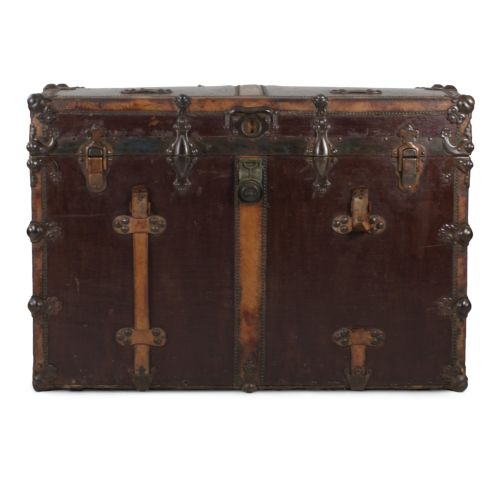
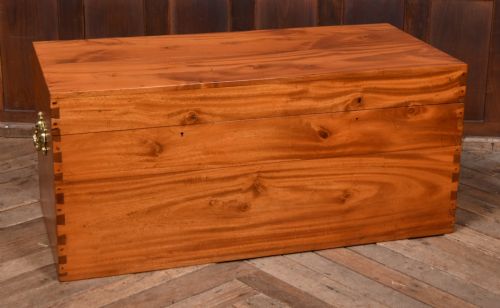
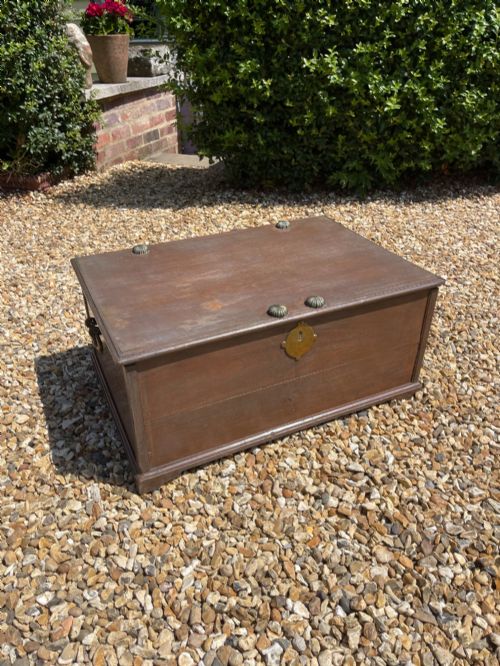
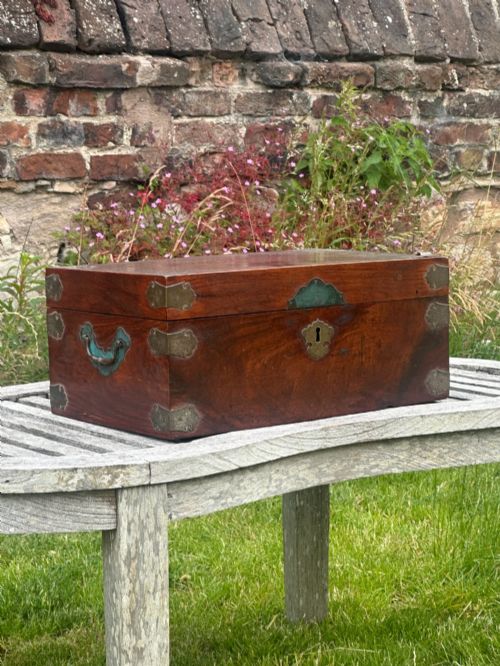
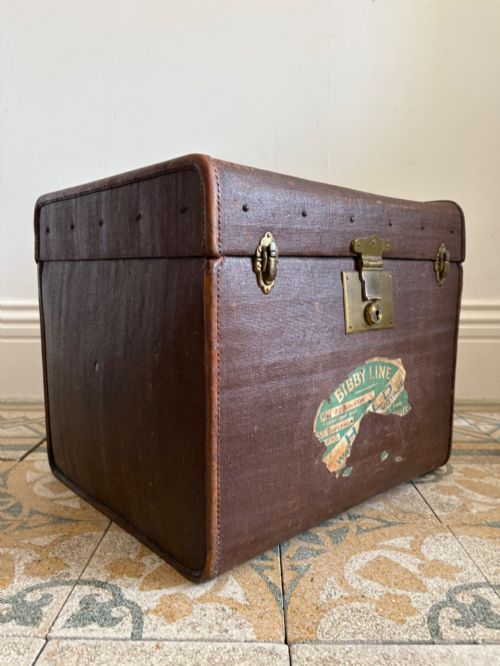
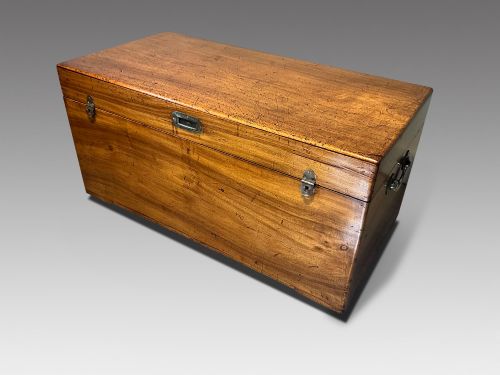
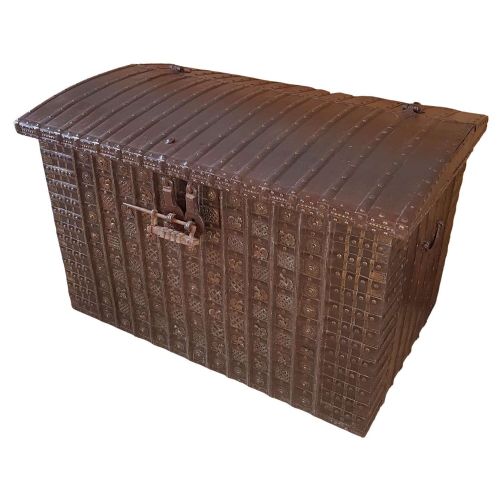


Brass Fitted Coffer Chest
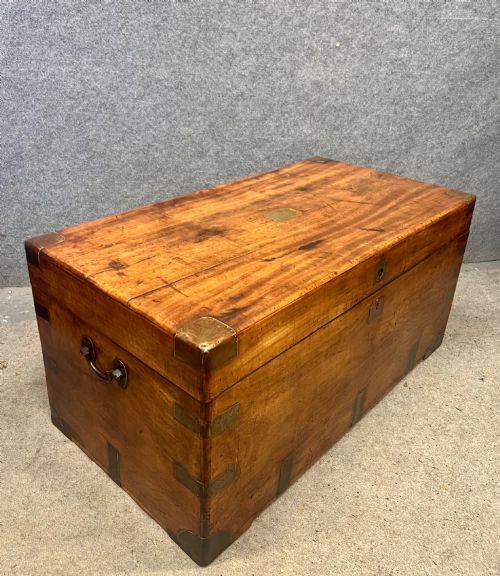
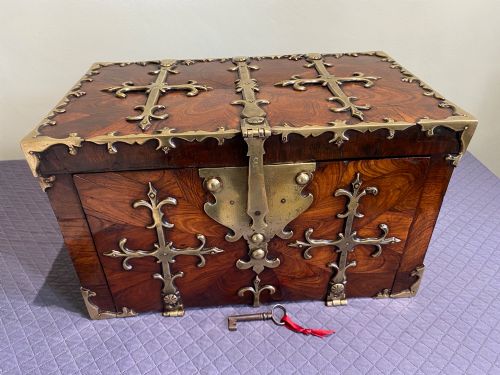
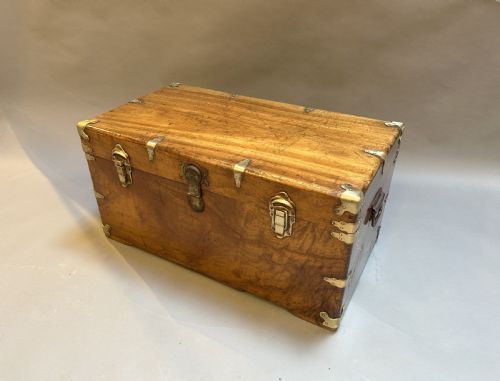
A brass fitted coffer chest brings solid timber and metal hardware together for functional storage with a distinct travel-worn character.
Brass Fitted Coffer Chest
When you search for a brass fitted coffer chest, you encounter sturdy storage boxes designed for transport, security, and household use across centuries. The pieces on this page span from the seventeenth century through the Edwardian era, incorporating various forms of trunks, blanket boxes, and campaign chests. Most examples you meet here date from the nineteenth century and the Victorian period, reflecting the expansion of travel and trade.
The assortment includes specialised items like deed boxes, dowry chests, and silverware trunks alongside standard steamer and luggage trunks. Many retain their original structural integrity, displaying the heavy hardware and practical compartments characteristic of utilitarian antique furniture.
How they were made
Construction relies heavily on dense timbers like teak, camphor wood, and oak, selected for their durability against pests and moisture during travel. Cabinetmakers joined panels using robust methods to endure the stresses of shipping and military campaigns.
Brass corners, straps, and flush-fitting drop handles were added to protect vulnerable edges and allow secure stacking in transit. Iron bands and corner brackets also appear on regional pieces, fastened securely to reinforce the primary wood structure.
Camphor wood trunks retain their distinct medicinal scent after more than a century of guarding woollens.
What varies in quality
The grade of timber and the preservation of original hardware determine the standing of an individual piece. Camphor wood with strong grain patterns and teak boards with consistent colour represent superior material selection.
The execution of brass binding and the retention of original locks, keys, and internal fitted compartments separate standard utility boxes from higher-status campaign and presentation pieces.
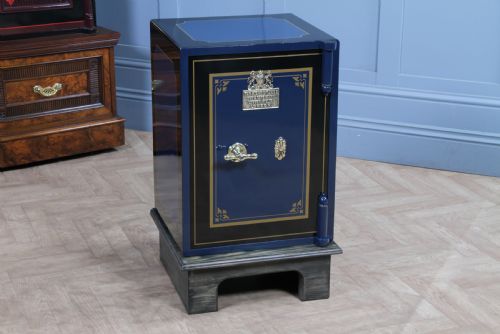
Walker & Hall·Tanns Defiance London
The Brass Fitted Coffer Chest Glossary
- Campaign chest
- A portable piece of furniture, typically made in two or more sections, designed to be easily packed and transported by military officers or travellers.
- Camphor wood
- An aromatic timber frequently utilised for travel chests and trunks because its natural scent deters insects from damaging stored textiles.
- Bandaji chest
- A traditional Korean storage chest constructed with distinctive metal hardware and corner plates, used primarily for bedding and clothing.
- Coffer
- A heavy wooden box or chest traditionally used for holding valuables, money, or precious documents.
Brass Fitted Coffer Chest: Frequently Asked Questions
What is a brass fitted coffer chest used for?
These pieces served historically for transporting personal belongings, military equipment, or valuables during long journeys and military campaigns. In modern interiors, they function as practical storage furniture for blankets, linens, and household items.
Their sturdy construction and decorative metal hardware also allow them to double as coffee tables or statement storage pieces in living spaces.
How do I care for camphor wood?
Camphor wood requires minimal maintenance due to its natural oils and characteristic aroma, which helps protect stored fabrics. Keep the wood away from direct heat sources and strong sunlight to prevent drying or fading.
Dust the surface regularly with a dry cloth and avoid applying heavy commercial polishes that might alter the natural finish of the timber.
How do I identify campaign furniture?
Campaign furniture is identifiable by its modular construction, often separating into stacked sections for ease of transport. Recessed brass handles and corner brackets protect the edges from damage during transit.
These pieces were built by military outfitters and cabinetmakers to withstand frequent relocation while maintaining formal appearance.
Are these chests waterproof?
While historical travel trunks and chests were built to withstand difficult weather conditions and sea voyages, they are not entirely waterproof by modern standards. The tight construction and metal bindings provided protection against rain and moisture during transit.
Today, they are best kept in stable indoor environments rather than exposed to damp conditions.