




Carved Teak Storage Chest
These heavy carved teak storage chest examples bring intricate craftsmanship and robust utility straight from nineteenth-century workshops into modern homes.
Carved Teak Storage Chest
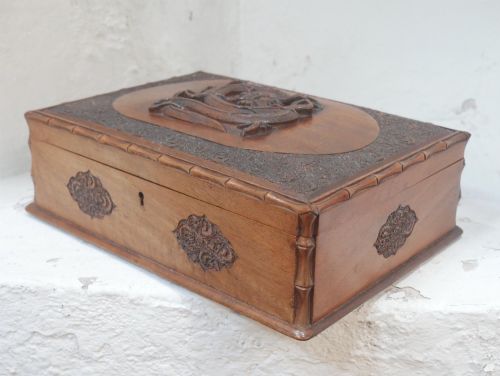
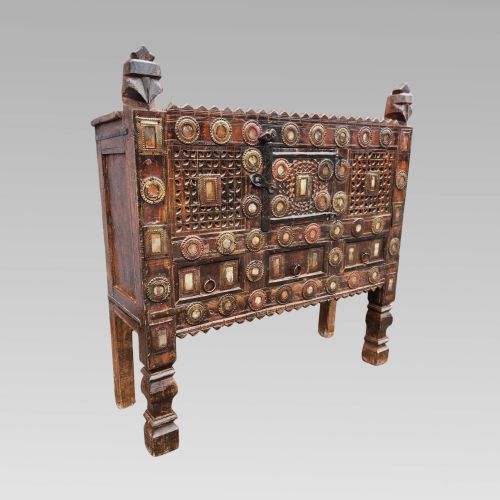
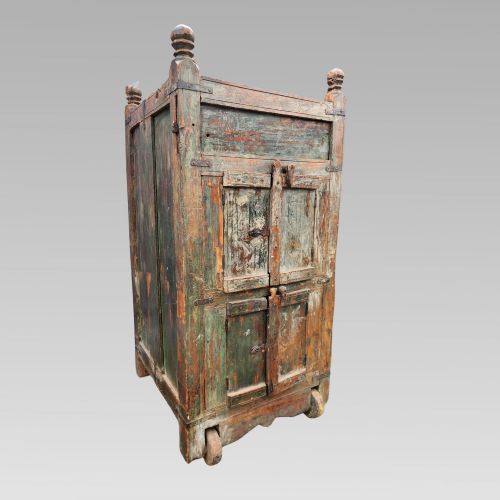
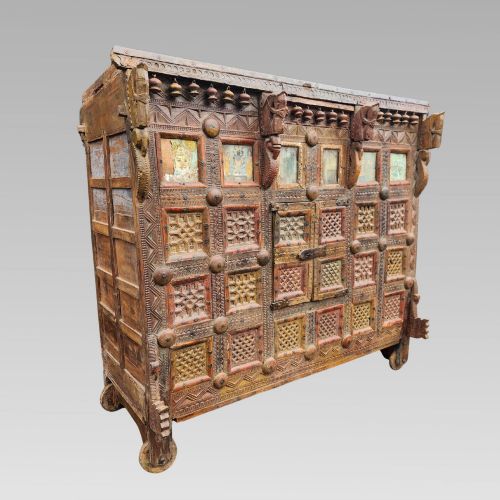
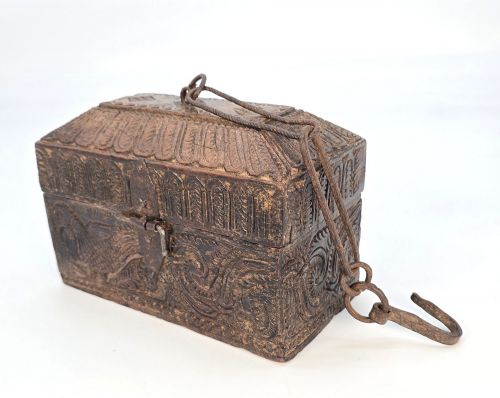
A carved teak storage chest represents a durable domestic container built for travel, dowries, or household provisions across diverse regions. These pieces take various forms including blanket boxes, dowry chests, damchiyas, spice boxes, and tallboys.
The selections span distinct cultural expressions such as Anglo-Indian, traditional Indian, Zanzibar, and Burmese styles. Most items date from the nineteenth century, alongside eighteenth-century and early twentieth-century examples.
Materials and construction
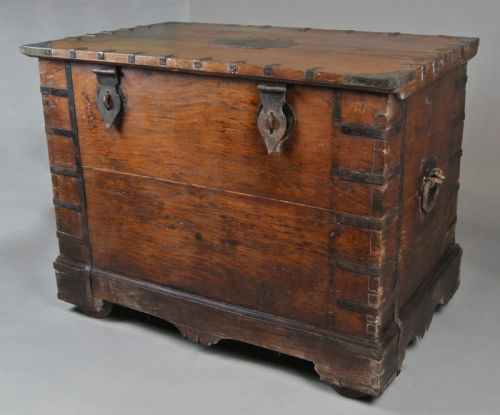
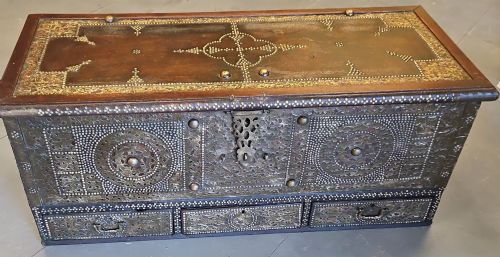
Carpenters utilised dense teak and mixed hardwoods, shaping planks into heavy panels joined with structural iron or brass bindings. Metal studs, brackets, and heavy hinges reinforce the corners and lids of utilitarian trunks and coffers.
Surfaces display intricate hand-carved detailing, relief work, and occasional lacquer or ripple moulding. Internal fittings range from plain storage voids to cedar-lined drawers and specialised compartments.
Carved Teak Storage Chest Retail Price Guide 2026
Typical asking prices for carved teak storage chest among the pieces listed under this phrase on Sellingantiques today, from the lower quarter to the upper quarter. They describe what is for sale here now, not the wider market.
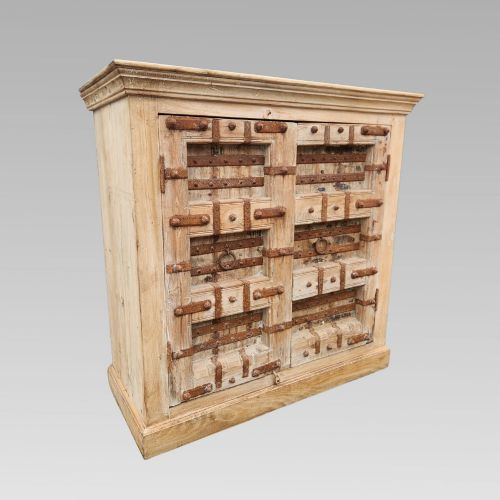
Object forms include traditional storage cabinets, blanket boxes, cellarettes, tallboys, and heavily bound dowry chests.
Evaluating quality and character
Quality rests in the depth and crispness of the hand-carved ornamentation across the teak panels. Finer pieces display balanced proportions and integrated metalwork that serves both structural and decorative purposes.
The integrity of the timber, the retention of original brass or iron hardware, and the complexity of regional styles distinguish standard utility trunks from exceptional cabinetmaker pieces.
The Carved Teak Storage Chest Glossary
- Damchiya
- A traditional low storage cabinet or chest originating from India, often featuring carved panels and cupboard doors. These pieces were traditionally used for storing dowry items and household valuables.
- Zanzibar chest
- A distinct type of heavy timber chest characterised by brass studding, strapwork, and elaborate hardware influenced by trade routes between India, Oman, and East Africa. They were built for maritime transport and domestic display.
- Cellarette
- A lockable container designed for holding bottles of wine or spirits securely within a dining room or campaign setting. In hardwood variants, they often feature internal dividers.
- Almirah
- A freestanding cupboard or wardrobe used for storing garments and household goods, frequently constructed from teak with panelled doors. The term reflects domestic storage furniture found across South Asia.
- Campaign chest
- Modular furniture designed to dismantle into sections for ease of transport during military deployment or colonial travel. These chests typically feature recessed brass handles and reinforced corners.
Carved Teak Storage Chest: Frequently Asked Questions
How were these chests used?
These vessels served primarily for secure transport and storage of textiles, spices, dowry goods, and personal valuables. Their robust build suited both stationary domestic use and travel.
Iron bindings and heavy locks protected contents from moisture, pests, and theft during transit.
Where do these styles originate?
The pieces originate from regional workshops across India, Burma, Zanzibar, and colonial trading posts influenced by British presence. Each area imparted local carving motifs onto durable teak.
Anglo-Indian and colonial examples blend European furniture forms with traditional Eastern woodworking techniques.
How do I care for antique teak furniture?
Maintain the timber by keeping it away from direct heat sources and sudden humidity changes to prevent the hardwood from splitting. Dust regularly with a dry cloth and occasionally nourish the grain with appropriate natural wax.
Avoid chemical cleaning products that might damage the original carved surface finish or corrode the brass and iron mounts.