


Anglo Indian Coffer Chest
An anglo indian coffer chest is a sturdy timber storage piece built for colonial travel and domestic trade, offering deep compartments and heavy metal mounts.
Anglo Indian Coffer Chest
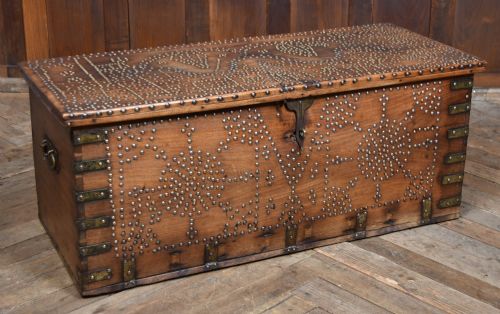
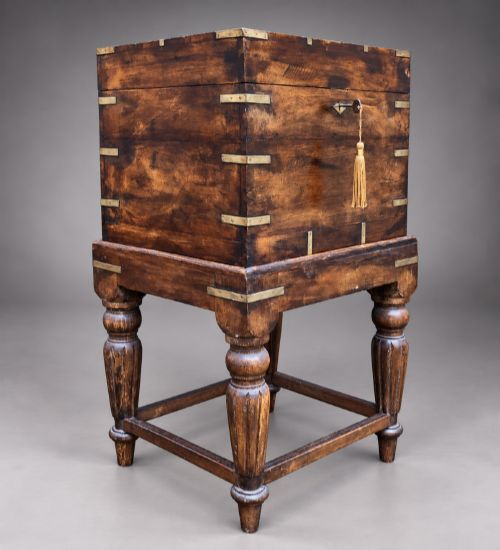
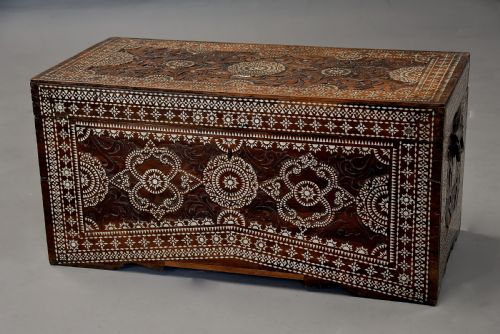
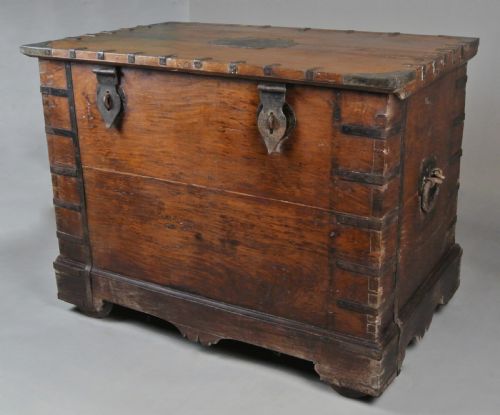
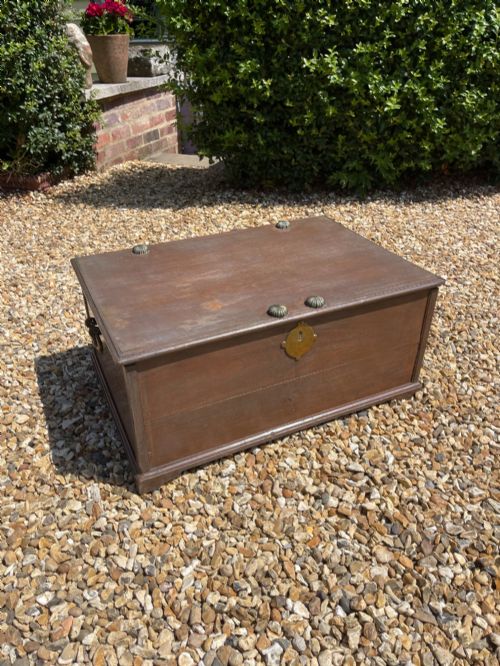
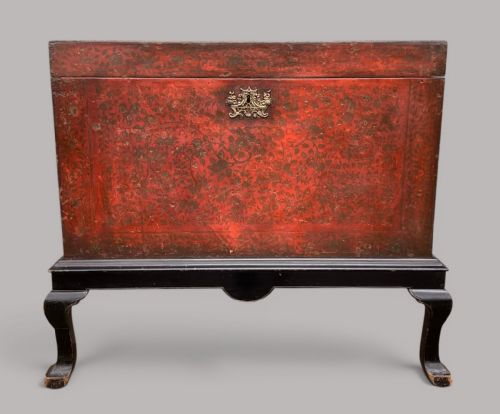
An anglo indian coffer chest brings together traditional British campaign requirements and eastern joinery methods, resulting in robust storage furniture built to withstand long maritime journeys. Buyers searching for an anglo indian coffer chest will encounter forms ranging from heavy iron-bound trunks to elevated blanket boxes on stands.
The pieces listed here span the nineteenth and early twentieth centuries, drawing on styles described as colonial, campaign, and Victorian. Most examples function as storage chests, blanket boxes, or wine cellarettes designed for mobility and security.
Materials and construction methods
Maker workshops utilised dense tropical hardwoods such as teak, padouk, camphor wood, and satinwood to resist humidity and insect damage during transit. These heavy timbers were joined with precision and reinforced against splitting.
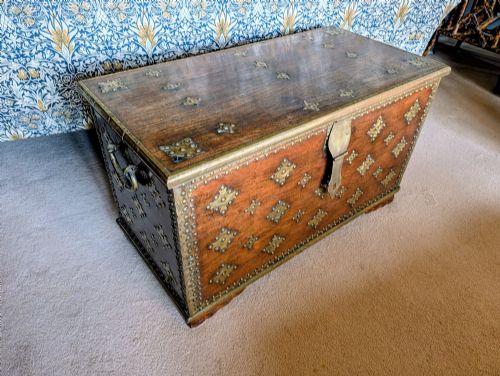
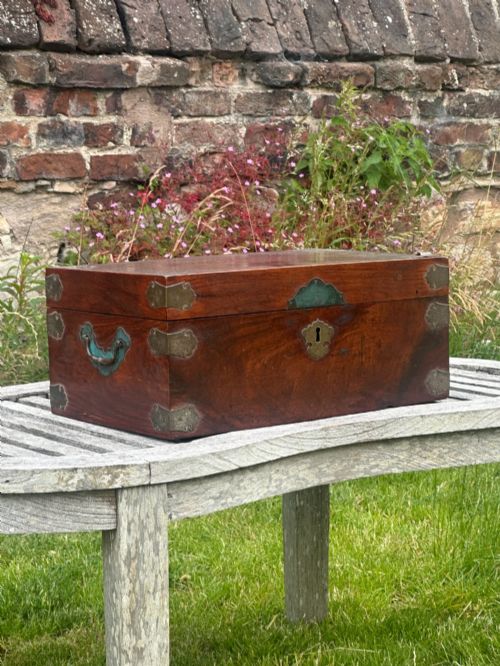
Metalwork played a critical structural role, with brass straps, iron banding, and inset carrying handles fitted to protect the corners and edges of each anglo indian coffer chest. Some specific examples also incorporate detailed mother-of-pearl inlay or surface lacquer.
Many camphor wood chests double as natural mothballs, keeping your woollens safe while smelling faintly of distant spice routes.
Judging the standard of a piece
The standard of an anglo indian coffer chest depends upon the weight and selection of the timber, alongside the integrity of the original brass or iron hardware. Heavy, unwarped planks of padouk or teak indicate a superior build intended for serious transport.
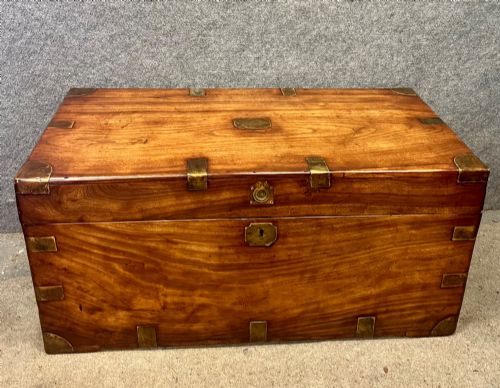
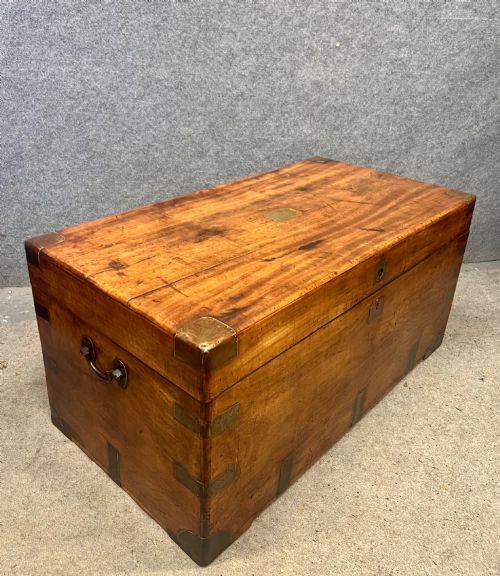
Attention to detail in the corner mounts, flush-fitting campaign handles, and the condition of interior compartments distinguish standard domestic boxes from higher-grade military or merchant chests.
The Anglo Indian Coffer Chest Glossary
- Campaign chest
- A portable storage box made in sections with recessed brass handles and corner brackets, designed for military officers on the move.
- Zanzibar chest
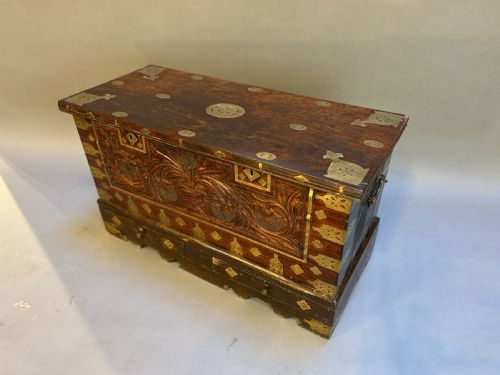
- A heavy hardwood trunk featuring intricate brass studding, strapwork, and often a concealed internal till or secret compartment.
- Padouk
- A dense, reddish-brown tropical hardwood prized by colonial cabinet makers for its stability and rich grain.
- Cellarette
- A specialised lockable container originally built to hold wine bottles securely during transport.
- Coffer
- A large, heavy chest traditionally used for storing valuables, linens, or documents.
Anglo Indian Coffer Chest: Frequently Asked Questions
How were these chests used?
These pieces served officers, merchants, and travellers as portable wardrobes and secure strongboxes during long sea voyages and overland journeys.
At home, they functioned as heavy storage furniture for blankets, linens, and family valuables within colonial residences.
What woods were commonly used?
Cabinet makers relied heavily on durable tropical timbers such as teak, padouk, camphor wood, and satinwood to endure humid climates.
Camphor wood was particularly favoured for blanket boxes because its natural aroma helped protect stored textiles from insects.
How do I date a campaign chest?
Dating relies on examining the joinery, the style of the brass hardware, and the specific locking mechanisms fitted to the box.
Nineteenth-century examples often feature hand-cut dovetails and heavy brass binding, while later pieces show shifts in manufacturing methods.
How do I care for camphor wood?
Keep the timber away from direct heat sources and extreme humidity fluctuations to prevent the natural oils from drying out.
Dust the surface regularly with a dry cloth and avoid harsh chemical polishes that might damage the wood grain.