


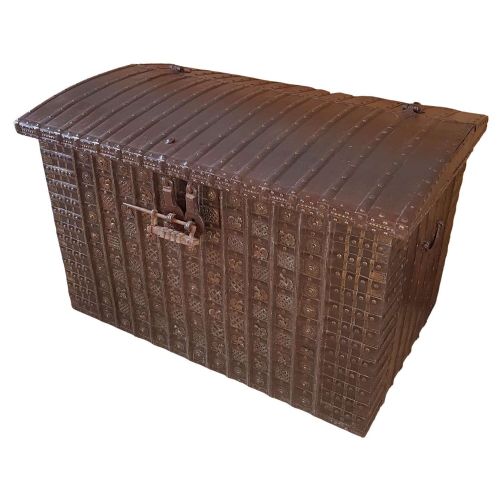


Brass Strapped Storage Box
These brass strapped storage box pieces are sturdy travel chests and smaller caskets built for movement, offering robust construction and enduring character.
Brass Strapped Storage Box
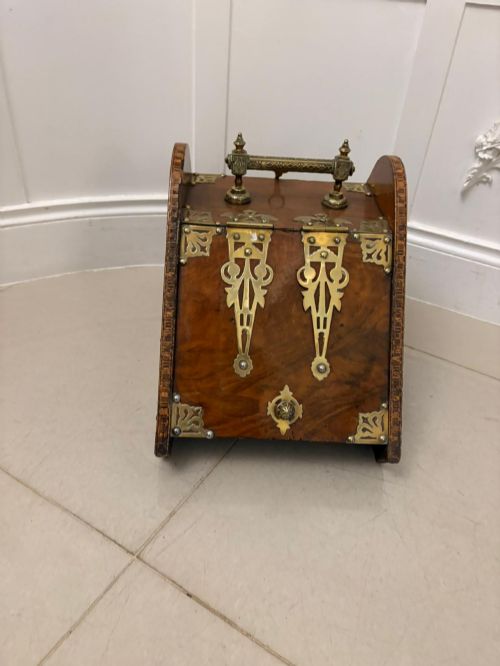
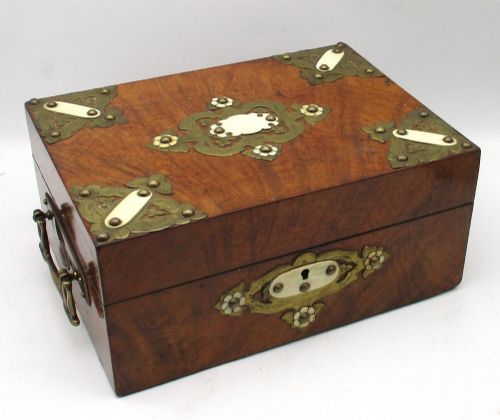
A brass strapped storage box encompasses a variety of portable containers designed for travel and domestic use, spanning the Georgian, Victorian, and later nineteenth century periods. These items range from large merchants trunks and military campaign chests down to smaller jewellery boxes, cigar humidors, and coal scuttles.
The objects originate from domestic British workshops as well as colonial contexts, including Anglo-Indian and Rajasthani traditions. Buyers will frequently encounter teak, camphor wood, and oak trunks fortified with metal bands, alongside smaller elm and walnut caskets.
Forms vary from dome-top coffers and dowry chests to officers travelling chests and silver boxes. Each iteration serves the fundamental purpose of secure storage, whether for military expeditions, mercantile trade, or household organisation.
How they were made
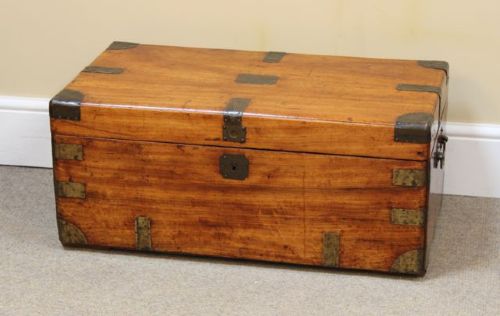
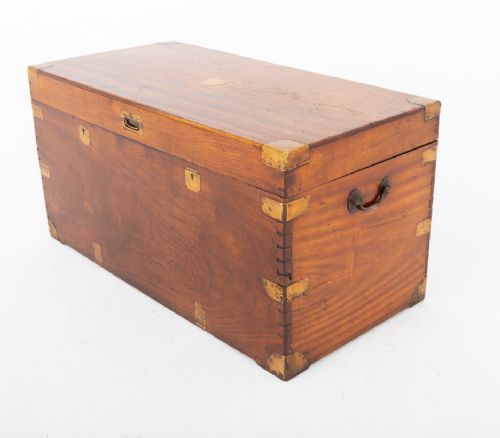
Carpenters constructed these boxes using dense timbers such as teak, camphor wood, oak, pitch pine, and walnut, selecting woods capable of withstanding rigorous travel and shifting climates. Iron and brass straps, bands, and corner mounts were applied to reinforce the structural joints and protect the edges from heavy impacts.
Metal components, including hinges, locks, and strapping, were typically hand-fixed with screws or rivets to the wooden carcase. In many instances, flush-fitting brass drop handles were recessed into the sides to facilitate lifting without obstructing tight packing spaces.
Brass Strapped Storage Box Retail Price Guide 2026
Typical asking prices for brass strapped storage box among the pieces listed under this phrase on Sellingantiques today, from the lower quarter to the upper quarter. They describe what is for sale here now, not the wider market.
One listed trunk bears the specific records of Sir Randolph Isham Routh KCB, who served as Waterloo Commissary General.
What varies in quality
The grade of a brass strapped storage box depends heavily on the selection of timber and the precision of the metalwork. Finely fitted dovetail joints and well-cast brass mounts indicate superior workmanship, whereas coarser assembly points to utilitarian or regional production.
The presence of original inscriptions, specific regimental history, or specialised internal fittings elevates the standing of a piece. Quality also rests on the preservation of the original surface patination and the intactness of the hardware.
The Brass Strapped Storage Box Glossary
- Campaign chest
- A portable set of drawers or a trunk designed to be easily dismantled or transported during military deployments. These pieces often feature recessed brass handles and reinforced corners.
- Camphor wood
- An aromatic timber frequently utilised for campaign trunks and chests due to its natural insect-repellent properties. It protected stored textiles and uniforms during long sea voyages.
- Coffer
- A large, heavy storage chest, often featuring a dome top and robust wooden or iron framing. These early receptacles were primarily used for household valuables and textiles.
- Damchiya
- A traditional low dowry chest originating from Rajasthan, characterised by decorative iron bands and intricate locking mechanisms. They served both functional storage and ceremonial roles in local households.
- Scuttle
- A specialised container designed for holding coal or logs by a fireplace, often constructed from timber with metal reinforcement and carrying handles.
Brass Strapped Storage Box: Frequently Asked Questions
What were brass strapped storage boxes used for?
These boxes served multiple functions, ranging from transporting officers' uniforms and personal effects on military campaigns to storing silver, documents, and merchants' goods during long sea voyages.
Smaller iterations functioned domestically as desk-top boxes, cigar humidors, jewellery caskets, or fireside coal scuttles, keeping valuable or heavy items secure and portable.
How do I date a camphor wood chest?
Dating relies on observing construction methods, timber choice, and the style of the brass hardware. Pieces from the Georgian and Victorian eras typically show hand-cut dovetails and specific lock mechanisms.
Makers often integrated inset brass handles and reinforced strapping that evolved in design from the eighteenth century through the late nineteenth century.
Are campaign trunks waterproof?
While these trunks were built to endure harsh travel conditions and tropical climates, they were not hermetically sealed against prolonged submersion. The dense timbers and tight joints offered substantial protection against rain and sea spray.
Internal compartments and robust lids kept contents dry during overland transport by animal or cart and during shipboard transit.
How should I care for an antique wooden box?
Maintain these boxes in stable indoor environments away from direct heat sources and strong sunlight, which can dry out timber and crack historical finishes. Periodic application of suitable wax helps nourish woods like teak, oak, and camphor.
Avoid excessive moisture on the brass strapping and ironwork to prevent tarnish and corrosion on the metal mounts.
What is an Anglo-Indian trunk?
An Anglo-Indian trunk is a piece made in India during the colonial period, frequently combining traditional local forms with British furniture requirements. Workshops often utilised native timbers such as teak and camphor wood.
These items are distinguished by distinct brass strapwork, regional locking mechanisms, and decorative flourishes adapted for British officers and merchants.