





Colonial Indian Teak Trunk
A colonial indian teak trunk brings the robust utility of campaign life and the warmth of dense timber straight into a modern interior.
Colonial Indian Teak Trunk
A colonial indian teak trunk is a substantial storage piece built for travel and domestic use during the nineteenth century. Buyers searching this phrase encounter campaign chests, merchants' trunks, and storage boxes shaped by British and Indian cabinet-making traditions.
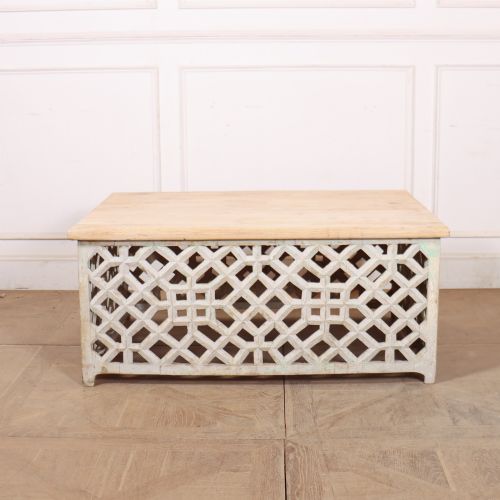
The pieces on this page span several decades of the nineteenth century alongside early twentieth-century examples. Many take the form of heavy chests bound in brass or iron, while others appear as lacquer boxes or low coffee tables adapted from earlier forms.
Materials and construction
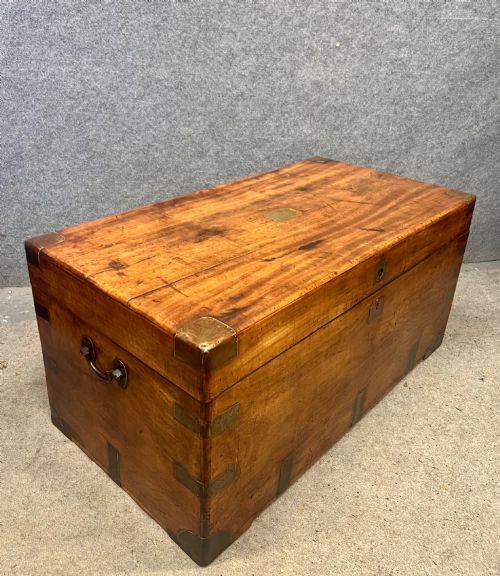
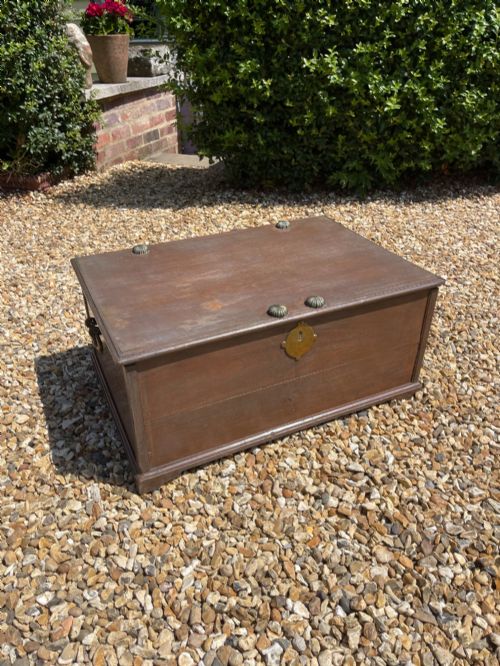
Construction relies heavily on dense teak and mixed hardwoods joined to withstand long journeys and tropical climates. Metal reinforcement is common, with heavy brass corners, straps, and corner brackets secured by numerous small studs.
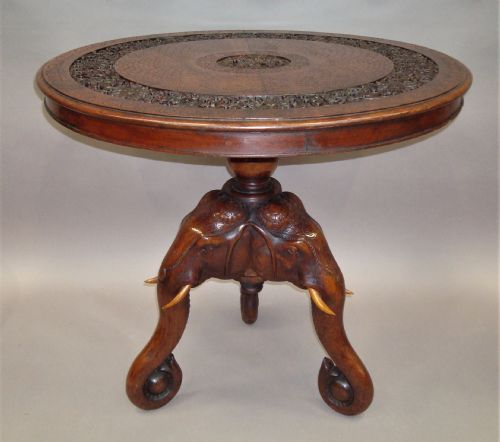
Surface treatments range from plain polished timber and dark lacquer to intricate carved panels depicting elephants and foliate motifs. Iron bindings and brass strapping provide structural strength while defining the utilitarian aesthetic of campaign furniture.
Colonial Indian Teak Trunk Retail Price Guide 2026
Typical asking prices for colonial indian teak trunk among the pieces listed under this phrase on Sellingantiques today, from the lower quarter to the upper quarter. They describe what is for sale here now, not the wider market.
Listings feature nineteenth-century campaign trunks alongside early twentieth-century occasional tables in teak, hardwood, and brass.
Quality and craftsmanship
The distinction between standard utility items and finer pieces lies in the precision of the joinery and the complexity of the metalwork. Superior examples display dense, well-selected teak boards with tightly fitted brass straps and flush-mounted carrying handles.
Carved decoration also separates the ordinary from the exceptional, particularly where artisan workshops executed deep, crisp relief work on panels and tables. The weight and quality of the brass or iron hardware signal the original purpose and grade of the trunk.
The Colonial Indian Teak Trunk Glossary
- Campaign trunk
- A portable storage chest designed for military officers or officials on the move. These pieces typically feature recessed brass handles and reinforced corners for protection during transport.
- Zanzibar chest
- A distinct type of heavy storage chest influenced by trade routes linking India, the Persian Gulf, and East Africa. They are characterised by elaborate brass studding and strapwork over dark timber.
- Coffer
- A large box used historically for holding valuables or textiles. They often feature hinged lids and sturdy iron or brass bindings.
- Lacquer
- A durable resin finish applied in layers to seal and decorate wooden surfaces. In these listings, lacquer appears on specialist trunks mounted on stands.
- Elephant table
- A low occasional table supported by carved wooden figures of elephants. These items reflect late nineteenth and early twentieth-century Anglo-Indian design.
Colonial Indian Teak Trunk: Frequently Asked Questions
What is a colonial teak trunk used for today?
These trunks serve well as coffee tables, blanket boxes, or statement storage pieces in a living room or bedroom. Their robust build allows them to hold heavy items while providing a flat surface for daily use.
The deep interior space accommodates bedding, books, or household items out of sight. Placing one in a hallway or at the foot of a bed adds texture and historical character to the space.
How do I care for antique teak furniture?
Teak is a durable timber that requires minimal maintenance beyond dusting with a soft, dry cloth. Avoid placing the trunk near direct heat sources or strong sunlight to protect the finish and prevent the wood from drying out.
Occasional treatment with a suitable wax or nourishing oil helps maintain the natural lustre of the hardwood. Check the brass or iron hardware periodically to ensure fixings remain secure.
How can I tell a campaign trunk apart from a standard chest?
Campaign furniture is defined by portability and practical adaptations for travel. Look for inset brass carrying handles, protective metal corners, and sometimes sectional designs that separate into multiple parts.
Standard domestic chests lack these specific military-style reinforcements and flush fittings. The presence of strapwork and locking mechanisms designed for secure transit points directly to a campaign origin.
Where were these trunks manufactured?
Many pieces originated in workshop centres across the Indian subcontinent during the British colonial period. Cabinet-makers in regions such as Bombay produced furniture for both local British residents and export markets.
Trade routes also connected these workshops with maritime hubs in the Indian Ocean, influencing the styles found in Zanzibar and wider regional exchange.