






Vintage Hunting Scene
A vintage hunting scene captures the drama and pageantry of rural pursuits across oils, watercolours and engravings spanning multiple centuries.
Vintage Hunting Scene
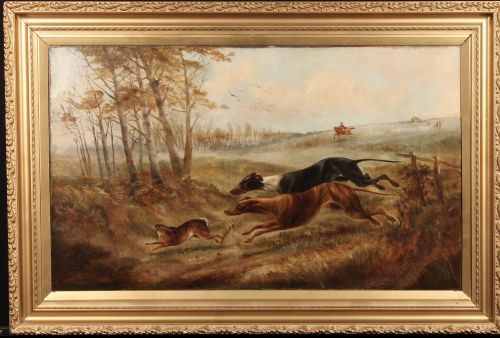
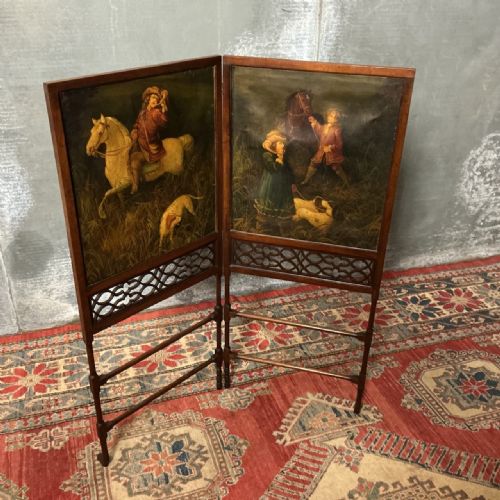
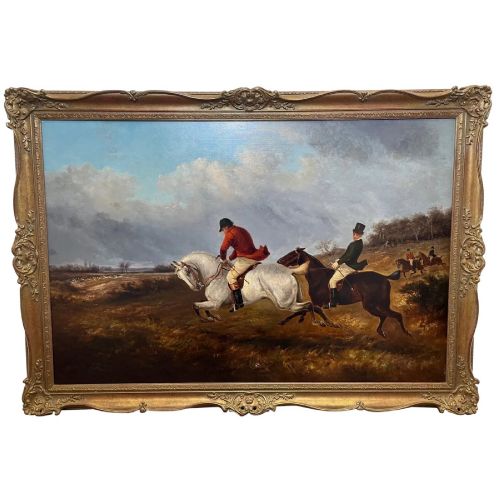
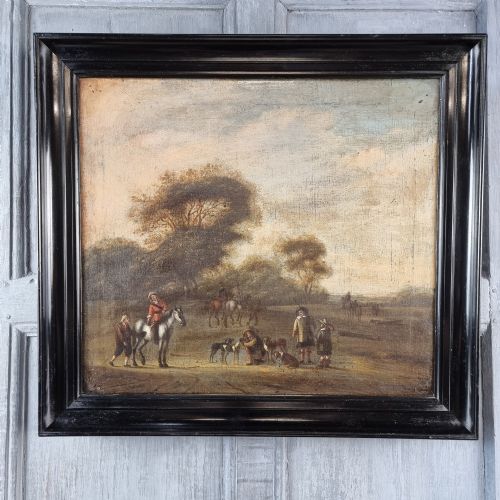
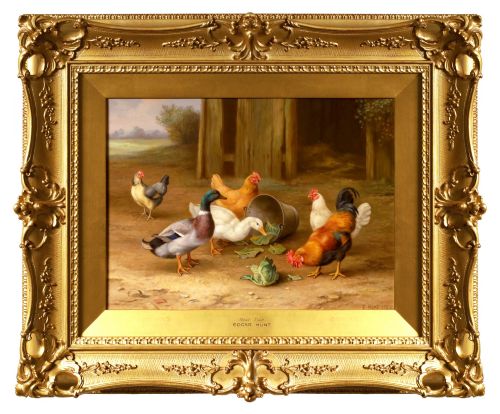
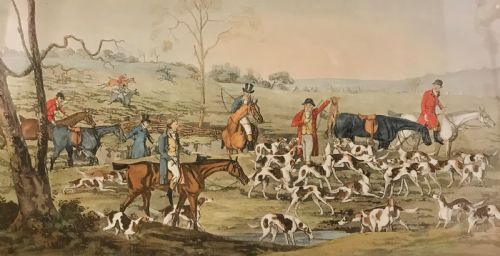
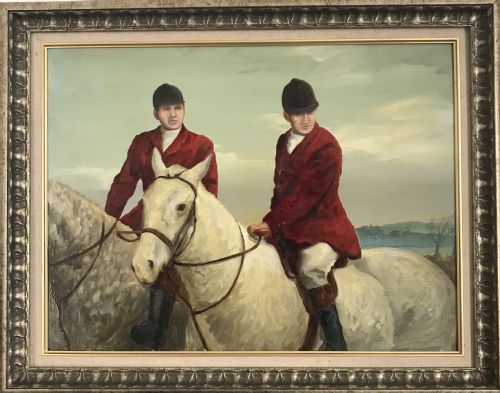
A vintage hunting scene encompasses framed oil paintings, watercolours, engravings and decorative objects recording equestrian sports, hounds and rural pursuits. These works range from large nineteenth century canvas depictions of galloping horses and hounds to delicate glass and ceramic pieces bearing hand painted motifs.
Buyers frequently encounter Victorian and Edwardian sporting art, alongside earlier engravings and mid twentieth century watercolours. The subjects stretch from hare coursing and fox hunting to falconry and coaching scenes, rendered across diverse domestic items such as fire screens, glassware and wall panels.
Materials and techniques
Artists and makers utilised oil paint on canvas or wood panels alongside watercolour, pencil and chalk on paper. Engravings and lithographs were printed from prepared plates, occasionally receiving hand applied colour after printing.
Decorative objects demonstrate craftsmanship in hand blown glass with enamelled decoration, carved wood panels, brass stands and beadwork fragments. These varied mediums reflect the widespread popularity of sporting subjects across different functional and decorative domestic items.
Listings feature works created across four centuries, moving from seventeenth century needlework and landscapes to twentieth century watercolours and Art Deco glass.
Assessing the pieces
Quality rests upon the artist's ability to render equine anatomy, hound movement and landscape perspective with anatomical accuracy and vitality. Finer oil paintings and watercolours display confident brushwork and balanced composition, distinguishing accomplished hands from more repetitive studio output.
The precision of the engraving lines, the crispness of moulded or carved details on wood and glass, and the preservation of original pigments determine the standing of each piece. Contextual provenance, such as identifiable artists or notable publishers, further elevates the status of printed works and paintings.
George Armfield·Thomas Smythe·Edgar Hunt·Philip Henry Rideout·John Sanderson Wells·Henri Schouten·Guillaume Urban Régamey·Francis Calcroft Turner
The Vintage Hunting Scene Glossary
- Sporting Art
- Depictions of rural pastimes, particularly equestrian subjects, shooting, fishing and hounds. This genre flourished notably in British art during the eighteenth and nineteenth centuries.
- Engraving
- A printmaking technique where an image is incised into a metal plate, usually copper or steel, holding ink to transfer fine lines onto paper under pressure.
- Lithograph
- A planographic printing process using a flat stone or metal plate treated to repel ink everywhere except where the design is drawn.
- Watercolour
- A painting method where fine pigment is suspended in a water soluble vehicle, typically applied to paper to create translucent washes of colour.
- Animalier
- A nineteenth century artistic focus on the realistic portrayal of animals, capturing their musculature and movement in paintings and sculptures.
Vintage Hunting Scene: Frequently Asked Questions
What periods do these pieces usually date from?
The listings span from the seventeenth century through the Victorian and Edwardian eras up to the mid twentieth century. Most works cluster around the nineteenth and early twentieth centuries.
Earlier examples include seventeenth century engravings and landscape panels, while later items encompass Art Deco glass decorations and mid century pencil drawings.
How were these decorative items used in period homes?
Large oil paintings and framed engravings typically hung in reception rooms, libraries and halls of country houses. Smaller items served practical domestic functions alongside their decorative role.
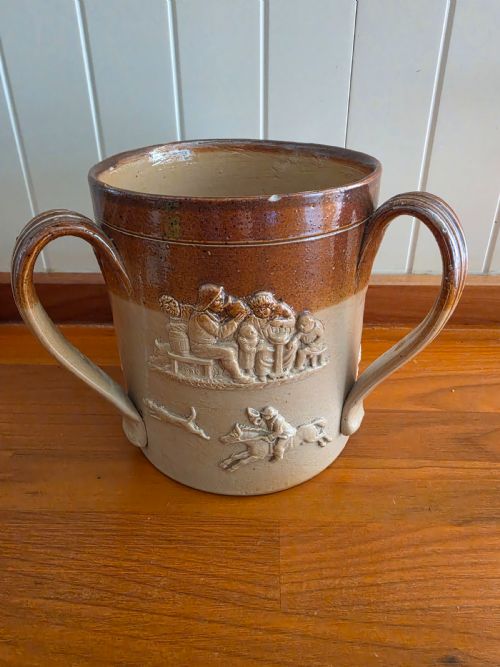
Examples include brass fire companion stands, folding room screens, glass vases and ceramic jugs used in daily household life.
How do I distinguish between an original painting and a print?
Original oil paintings and watercolours show textured brushstrokes, pooled pigment, and paper or canvas surfaces without repetitive dot patterns. Examining the work under magnification reveals the hand of the artist.
Prints and engravings display uniform ink placement within incised lines or printed dots, often accompanied by publisher details and publication dates in the margins.
What subjects besides fox hunting appear in this category?
The category embraces various rural and equestrian pursuits beyond fox hunting. These include hare coursing, coaching scenes with stagecoaches and hounds, falconry, and mounted gatherings known as meets.
Artistic focus extends to animalier studies of horses and dogs in moorland landscapes, alongside tavern interiors featuring hunters and landlords.