

Equestrian Wall Print
An equestrian wall print brings the energy of the turf, the hunt, and the paddock straight into a room.
Equestrian Wall Print
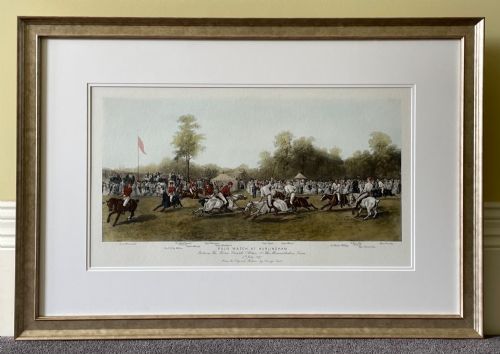
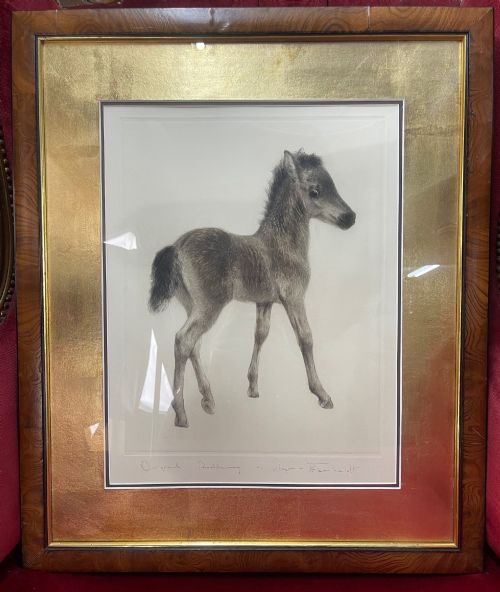
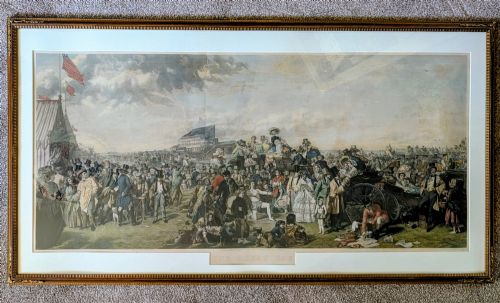
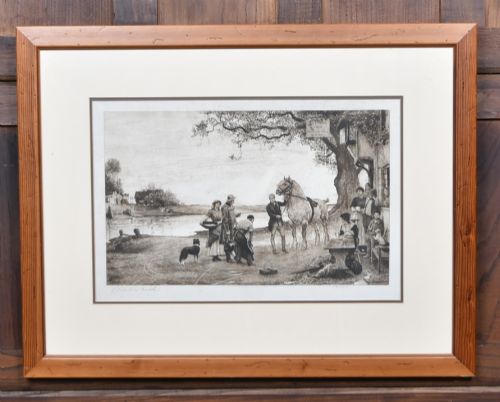
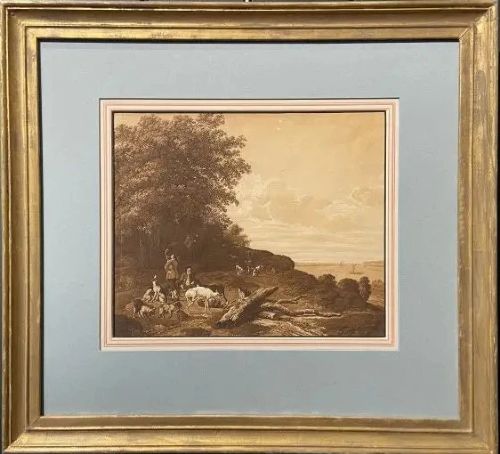
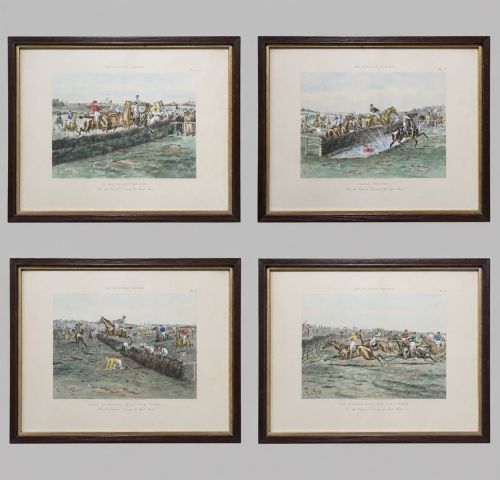
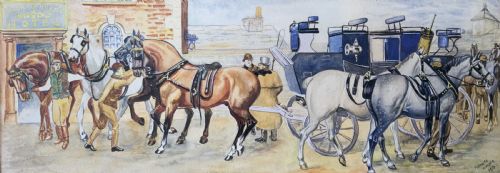
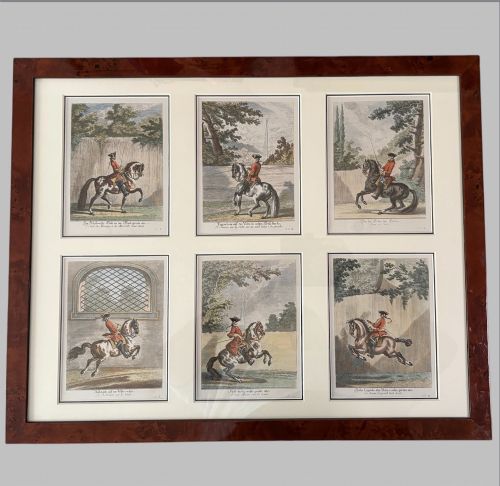
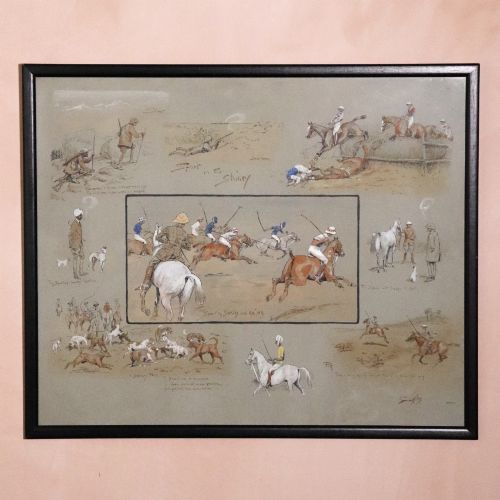
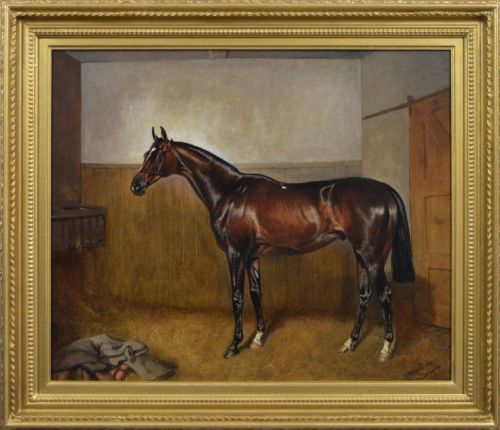
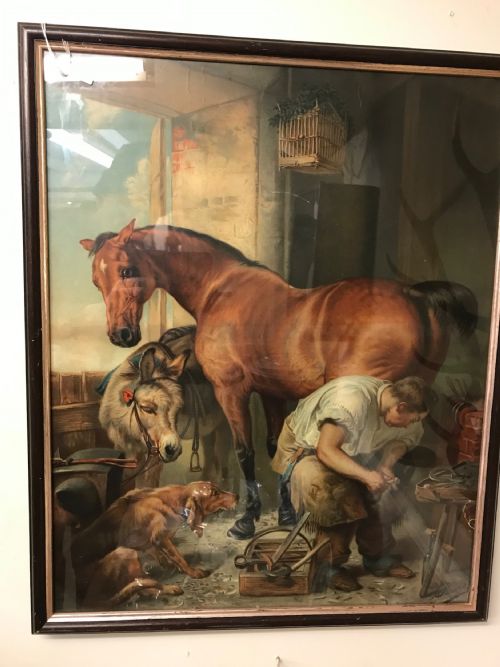
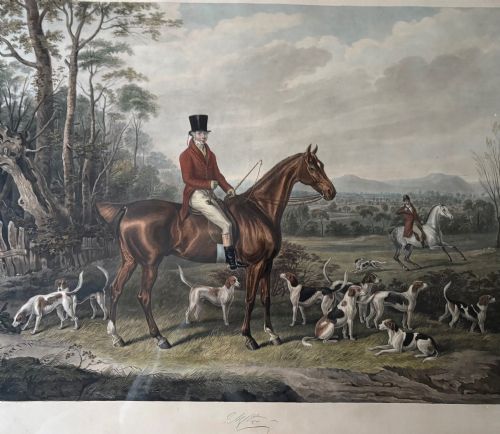
An equestrian wall print captures horses in motion, at the racecourse, on the hunting field, or in formal portraits, often framed for display. When searching for an equestrian wall print, buyers encounter a variety of forms including hand-coloured engravings, lithographs, etchings, and photographic prints. These pieces span multiple periods, from eighteenth-century copper engravings to mid-twentieth-century watercolours and paintings.
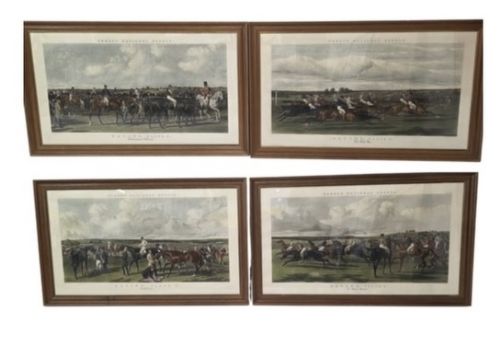
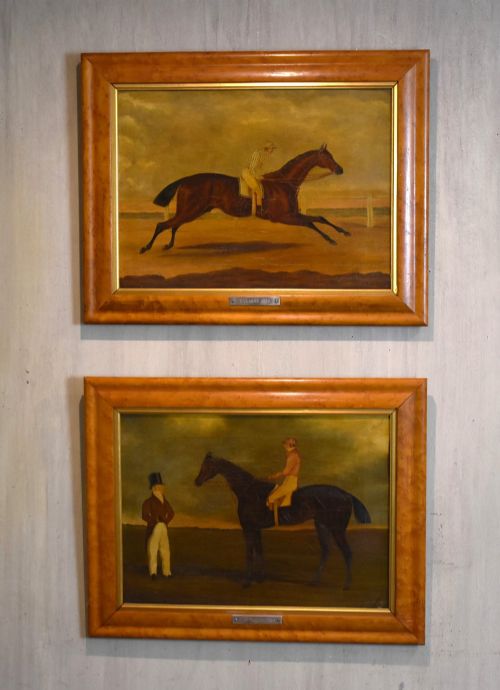
The visual records show sports such as polo, racing, hunting, and coaching scenes. Many items appear as sets of four or matching pairs, depicting historic meets, steeplechases, and famous horses with jockeys. The frames incorporate wood, glass, and parfois gilt detailing to house the paper or canvas works.
How they were made
Makers utilised traditional graphic techniques such as copper engraving, drypoint, lithography, and aquatint on paper. Many earlier plates received hand-colouring in watercolour or ink to enhance the details of the horses, riders, and landscape backgrounds.
Framing often involved timber moulding, sometimes incorporating glass protection and gold leaf accents. Works executed directly on canvas or board employ oil or watercolour paint rather than printing ink.
Listings feature paper, canvas, and glass materials across periods spanning from the eighteenth century to the mid-twentieth century.
What varies in quality
The clarity of the printed line and the precision of the hand-colouring dictate the visual impact of an impression. Early strikes from copper plates or original drypoints retain sharper details than later reproductions.
The preservation of the paper, the integrity of the framing materials, and the presence of contemporary signatures or publisher details contribute significantly to the standing of a piece.
Kurt Meyer-Eberhardt·Robert W. Macbeth·George Finch Mason·John Alfred Wheeler·John Frederick Herring Snr·John Rattenbury Skeaping·Anne Goldthwaite·Gabriel Dauchot·Abraham Cooper·John Atkinson
The Equestrian Wall Print Glossary
- Aquatint
- A printmaking technique that produces tonal effects resembling watercolour washes. It allows artists to achieve subtle gradients behind the etched lines of horse and rider.
- Drypoint
- A printmaking process where an image is scratched directly onto a metal plate with a sharp needle. This method creates a rich, velvety burr that prints with distinctive depth.
- Lithograph
- A planographic printing method based on the repulsion of oil and water. It became widely used for producing vibrant sporting scenes and posters.
- Eglomise
- A process of applying cold gilding and painting to the rear face of glass. It provides a reflective, decorative border often seen on period frames.
- Hand-coloured
- A print finished with watercolour or ink applied by hand after the impression is struck. This adds individual character and colour variation to mass-produced plates.
Equestrian Wall Print: Frequently Asked Questions
How do I identify an original print from a reproduction?
Examine the surface under magnification to check for the distinct plate marks, ink texture, or dot patterns characteristic of period printing techniques. Original etchings and engravings display a pressed indentation in the paper where the metal plate met the press.
Modern photographic reproductions present a flat, uniform surface of dots without the dimensional ink layers found on nineteenth-century sheets.
What framing is appropriate for these prints?
Period frames in wood, oak, or gilt complement the age and character of nineteenth-century and early twentieth-century works. Glazing helps protect delicate paper, watercolours, and hand-coloured surfaces from environmental dust and fading.
Mounting should utilise acid-free materials to prevent discolouration of the paper over time.
How should I hang and care for paper artworks?
Keep framed pieces away from direct sunlight and damp environments to protect the paper, ink, and watercolour pigments. Stable indoor temperatures prevent the wood frames from warping and the glass seals from failing.
Dust the frames gently with a dry cloth and avoid using liquid cleaners near the exposed paper edges.
Are these works usually found in sets?
Sporting art and racing scenes frequently appear in matched sets of two or four, depicting sequences of a hunt, steeplechase, or carriage meet. These series were originally published together for collectors to display across a study or hallway.
Single prints also occur frequently, representing individual portraits of famed horses or standalone racing moments.