



Tavern Scene Picture
A tavern scene picture brings rowdy village life and spirited social gatherings indoors through centuries of skilled oil painting and printmaking.
Tavern Scene Picture
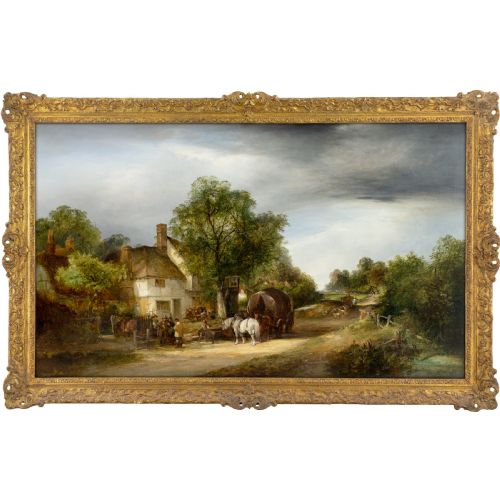
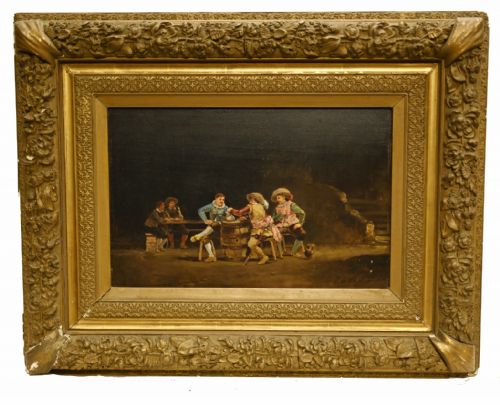
A tavern scene picture depicts lively interiors, public houses, and rustic drinking dens populated by figures engaged in social pastimes. These works draw heavily upon Dutch School traditions, Victorian genre realism, and French chiaroscuro compositions.
The pieces on this page span the seventeenth century up through the early twentieth century, taking the form of oil paintings on canvas, framed watercolours, and coloured mezzotint engravings. Buyers frequently encounter nineteenth-century English and French interpretations capturing spirited patronage, dramatic lighting, and domestic rural architecture.
How they were made
Painters applied oil and watercolour mediums onto stretched canvas and paper supports, frequently building rich depth through dark shadows and warm focal illumination. Master artisans framed these works using carved giltwood and gold leaf moulding.
Printmakers utilised engraving techniques, producing works like mezzotints printed in colours on paper. Early mechanical elements also appear in inventive forms such as clockwork dioramas.
Materials represented include oil on canvas, paper, glass, gold leaf, and traditional giltwood framing.
What varies in quality
Quality rests upon the artist's command of lighting, gesture, and characterisation, separating lively narrative depth from stiff portraiture. Finer canvases demonstrate confident brushwork and dramatic chiaroscuro contrasts that animate the crowded room.
The sophistication of the accompanying frame contributes to the piece, with substantial giltwood and gold leaf surrounds elevating the visual weight of the artwork. Period authenticity across the canvas, pigments, and framing elements defines the tier of the piece.
David Teniers The Younger·John Arthur Lomax·Gilbert Scott Wright·George Morland·Frank Dadd·Francesco Bergamini·John Holland Snr
The Tavern Scene Picture Glossary
- Chiaroscuro
- The strong contrast between light and dark shadows used to give dramatic volume to figures inside dim rooms. This technique heightens the theatrical tension across many Dutch School and French canvases.
- Genre Realism
- Artistic representation of everyday subjects and ordinary people engaged in secular activities. These scenes focus on domestic interiors, public houses, and village life rather than grand historical narratives.
- Mezzotint
- A printmaking process where the copper plate is roughened to achieve rich tones and subtle gradations of light. It allows for deep atmospheric effects well suited to shadowy interior scenes.
- Giltwood
- Wood that has been covered with a thin layer of gold leaf or gold paint. Frames built this way provide a luminous border that complements warm oil palettes.
Tavern Scene Picture: Frequently Asked Questions
What is a tavern scene picture?
A tavern scene picture is an artwork depicting social gatherings, drinking establishments, and rustic interiors from past centuries.
These pieces capture the social dynamics of public houses through oil paintings, watercolours, and historical prints.
How were these paintings displayed?
These works were traditionally hung in reception rooms and parlours within substantial homes.
They served as engaging conversation pieces that brought narrative warmth and dramatic lighting into domestic spaces.
How do I identify the period?
Dating relies upon examining the canvas support, framing style, costume details, and pigment characteristics.
Signatures, artist registry records, and stylistic ties to the Dutch School or Victorian genre painting further clarify the era.
Are prints as valuable as paintings?
Original oil paintings on canvas generally command greater interest than printed reproductions or engravings.
However, skilled hand-coloured mezzotints by notable printmakers hold significant artistic and historical merit in their own right.