





Horse and Rider Artwork
Horse and rider artwork captures equine subjects and their riders across centuries in oils, watercolours and prints.

Horse and Rider Artwork
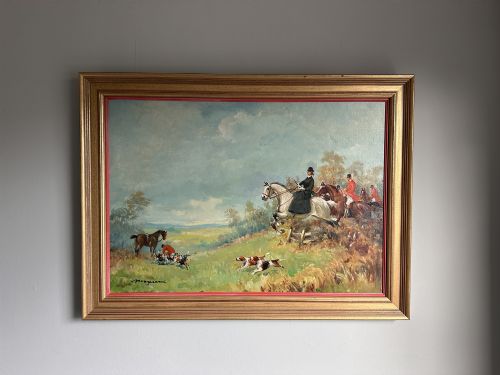
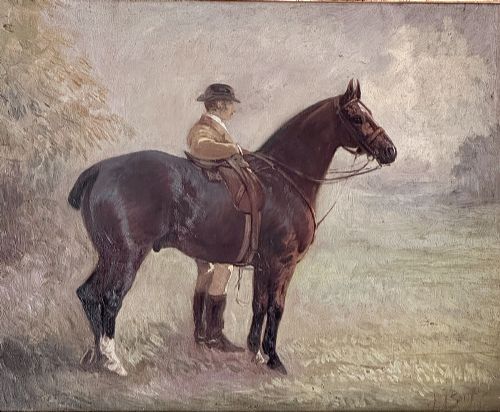
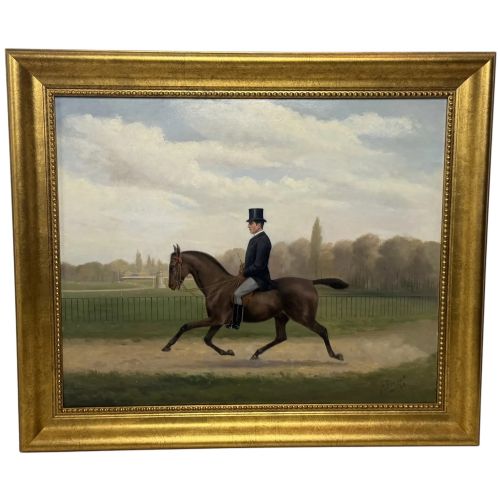
Horse and rider artwork encompasses painted and printed scenes of equestrian life, ranging from formal portraits and sporting meets to dynamic rodeo action. Buyers seeking horse and rider artwork will encounter traditional British sporting art, Victorian watercolours and mid-century modern pieces.
The selections span from the seventeenth century through to the mid-twentieth century, capturing subjects such as fox hunting, polo and Andalucian riders. Oil paintings and watercolours on paper or canvas form the predominant visual styles seen in these offerings.
How they were made
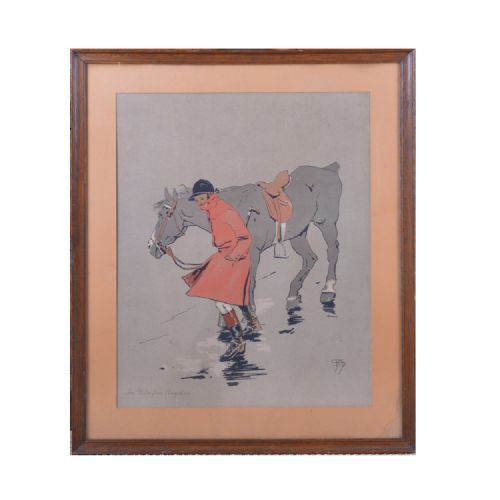
Artists utilised oil paint on canvas and wood panels alongside watercolour and ink on paper to render these equestrian subjects. Chromolithographs and original prints also represent the technical methods employed to produce these depictions.
Framed works preserve these paper and canvas pieces, utilising glass where watercolours or prints require protection from the environment.
Horse and Rider Artwork Retail Price Guide 2026
Typical asking prices for horse and rider artwork among the pieces listed under this phrase on Sellingantiques today, from the lower quarter to the upper quarter. They describe what is for sale here now, not the wider market.
Materials seen include paper, wood, glass, oil on canvas, watercolour, canvas, ink and oil paint.
What varies in quality
The execution of movement and anatomical proportion distinguishes accomplished brushwork from stiffer compositions in these equestrian scenes. Hand-painted oil paintings and detailed watercolours reflect greater individual artistic engagement than mass-produced prints.
The survival of the original medium, whether oil paint, canvas, or paper, determines the visual fidelity and overall preservation of the artwork.
John Rattenbury Skeaping·Anne Goldthwaite·Arthur Longley Vernon·Frank Algernon Stewart·Frank Dadd
The Horse and Rider Artwork Glossary
- Watercolour
- A paint consisting of pigment suspended in a water-based solution, typically applied to paper. This medium allows for translucent washes and delicate line work.
- Chromolithograph
- A colour lithographic print produced from multiple stones or plates. Each hue requires a separate pass to build the final image.
- Equestrian art
- Artistic works depicting horses and their riders in various settings. This genre covers sporting, military and portrait subjects.
- Mid-Century Modern
- A stylistic design movement spanning the middle decades of the twentieth century. It prioritised simplified forms and modern interpretations of traditional subjects.
Horse and Rider Artwork: Frequently Asked Questions
What periods do these pieces date from?
The works span from the seventeenth century through to the mid-twentieth century, encompassing periods such as the Georgian, Victorian and mid-century eras.
Individual pieces reflect the artistic conventions and printing technologies of their specific decades of origin.
What mediums were used for these artworks?
Artists utilised oil paint on canvas and wood panels, as well as watercolour and ink on paper. Chromolithographs and original prints also feature among the available methods.
Papers and canvases are frequently housed within frames, sometimes protected behind glass.
How were these equestrian scenes used?
These artworks were created as framed decorative pieces for domestic and institutional interiors, celebrating sporting achievements, military figures and social traditions.
Prints and watercolours served as accessible wall art for collectors of sporting subjects.
How do I identify different styles?
Styles range from traditional British sporting art and Victorian watercolours to 19th-century French school paintings and American modernism. Each movement employs distinct handling of light, subject matter and brushwork.
Examining the underlying medium and historical costume helps distinguish between the earlier portraiture and later sporting scenes.