


Vintage Rural Scene Art
These vintage rural scene art pieces capture agrarian life and pastoral landscapes through oil and watercolour, bringing quiet fields and farmyards indoors.

Vintage Rural Scene Art
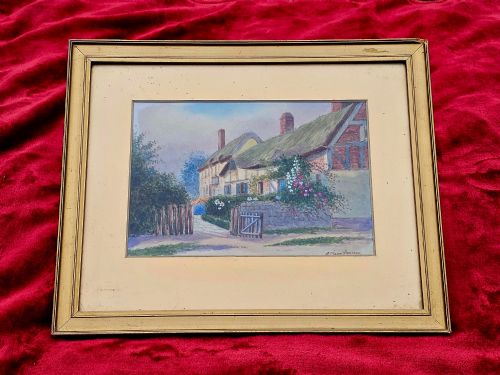
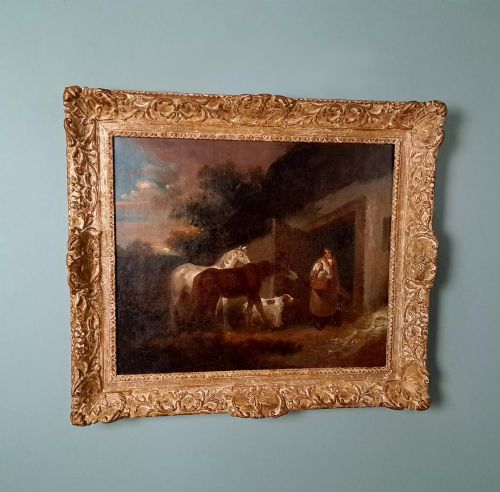
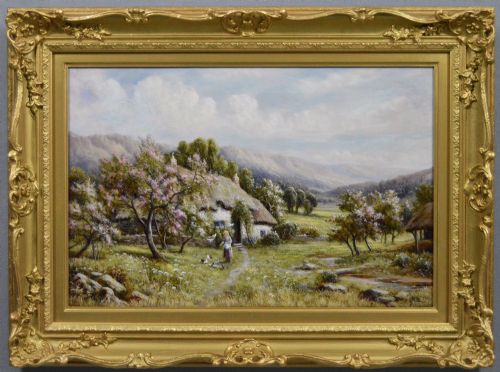
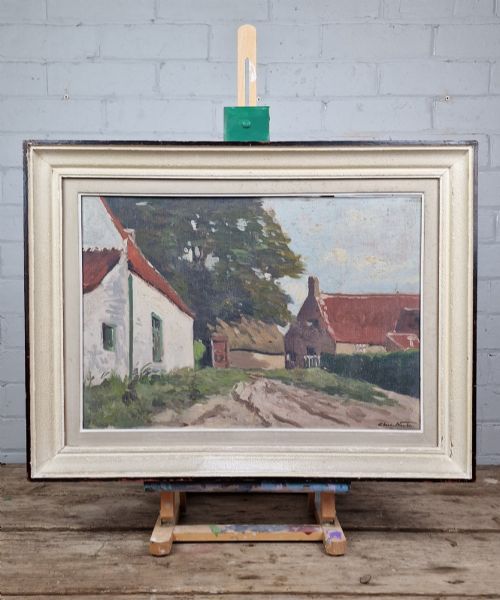
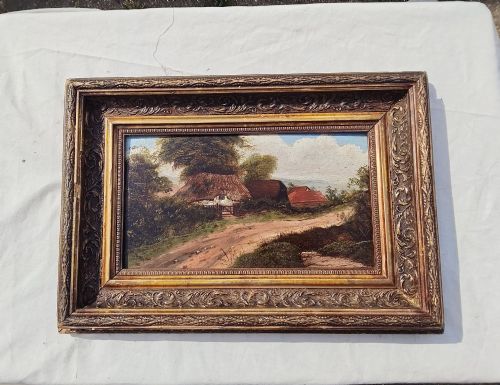
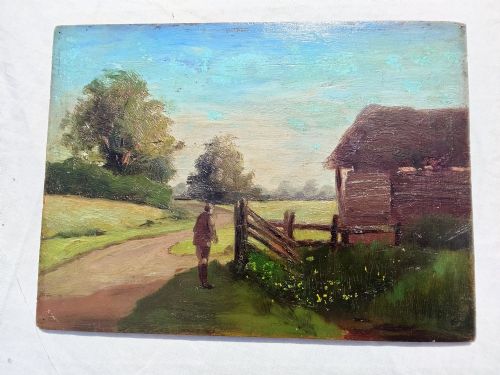
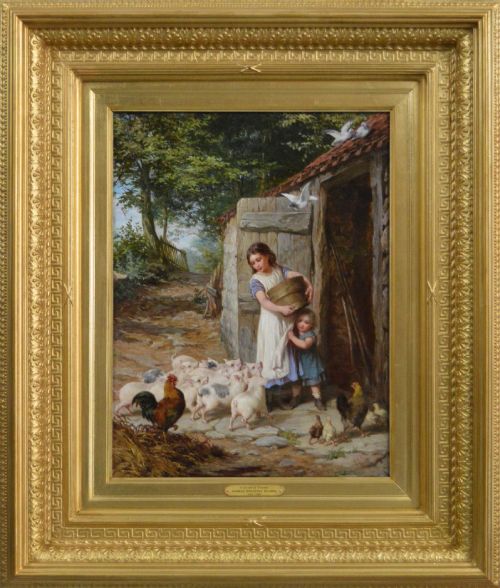
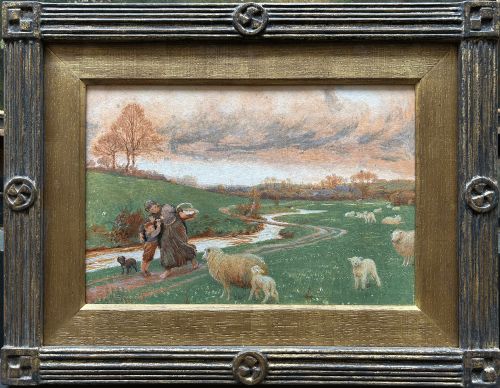
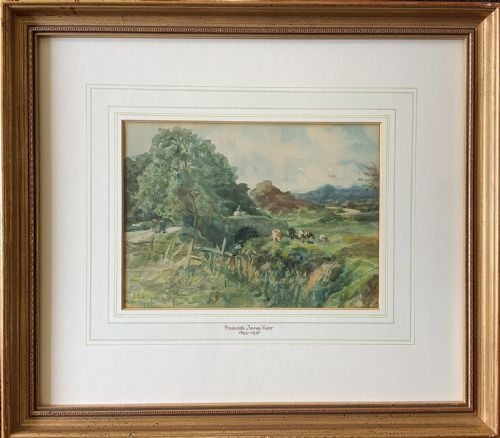
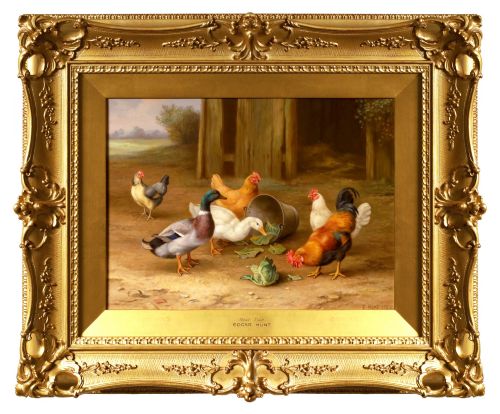
Vintage rural scene art encompasses oil paintings, watercolours, and framed artworks depicting country life, agricultural work, and pastoral landscapes. These works frequently feature cottages, farmyards, livestock, and figures labouring in fields or near streams.
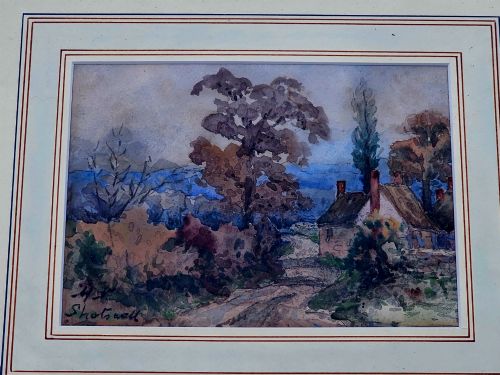
The selections span from the nineteenth century through the 1960s, capturing shifts in artistic treatment from traditional British and English School representation to Impressionist and Post-Impressionist interpretations. Pieces range from detailed depictions of shire horses and hay carts to impressionistic watercolours of village life.
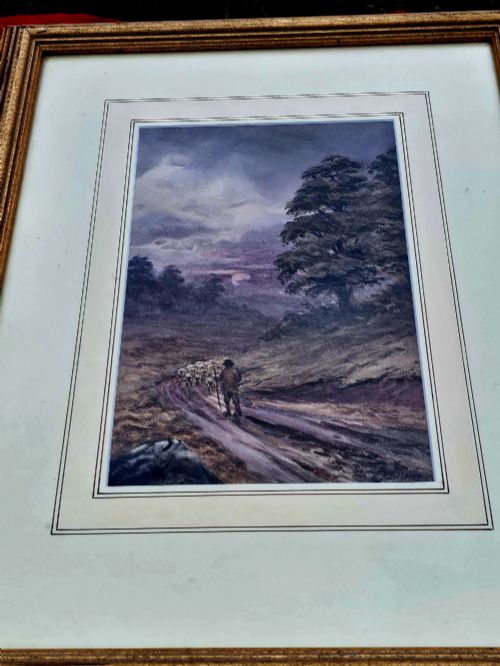
Buyers encounter subjects such as herding sheep, gathering the harvest, fishing under willow trees, and feeding livestock. These rural depictions reflect a sustained artistic interest in the countryside across Victorian, Edwardian, and mid-twentieth-century periods.
Materials and Techniques
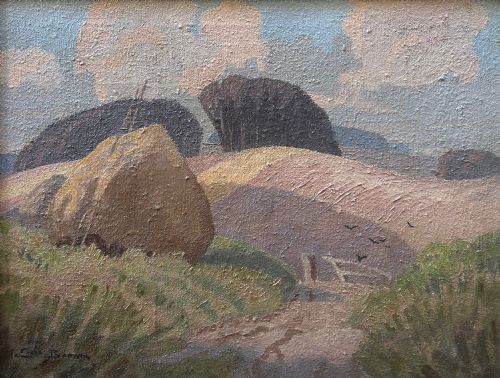
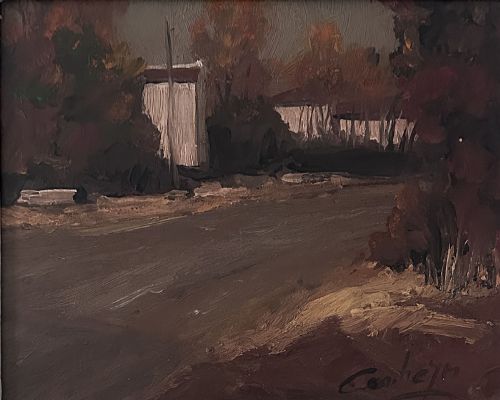
Artists created these rural scenes primarily using oil paint on canvas, wooden board, card, or paper, alongside watercolours on paper. The application ranges from smooth, traditional brushwork to textured impasto characteristic of impressionist approaches.
Support materials varied according to the period and scale, with nineteenth-century works frequently utilising stretched canvas or wood panels, while later twentieth-century pieces often appeared on board or paper. Gold leaf occasionally frames or accents the presentation of these pastoral works.
Listings incorporate works executed in oil on canvas, oil on board, and watercolour on paper across the nineteenth and twentieth centuries.
Evaluating Quality and Execution
Quality in these rural compositions rests upon the artist's handling of light, atmosphere, and naturalistic detail within the landscape. Works by established regional painters demonstrate more confident draughtsmanship and command of colour harmony compared to unsigned or generic school pieces.
The treatment of figures and animals, such as horses, cattle, and farm workers, distinguishes superior compositions through anatomical accuracy and integration into the surrounding environment. Medium handling also plays a role, with skilled brushwork bringing vitality to foliage, water, and weathered cottages.
George Graham·A. Marie Parsons·William Joseph Shayer Senior·EJ Letheren·Robert John Hammond·Charles Houben·George Augustus Holmes·Frederick Walker·Eric Brown·Frederick James Kerr·Edgar Hunt·Umberto Volpato·Herman S Melville·Charles Edward Wilson·Sydney Yates Johnson·Herbert Royle·Ernest Higgins Rigg·James William Booth·Owen Bowen·Henry John Yeend King·Ernest Pile Bucknall·Henry John Boddington·M. C. Hider·James Hardy Junior·Frederick James Knowles
The Vintage Rural Scene Art Glossary
- Impressionism
- A style of painting that focuses on capturing the visual impression of the moment, especially regarding shifting light and colour. This approach appears in several early twentieth-century rural scenes.
- Watercolour
- A painting method in which the paints are made of pigments suspended in a water-based solution. These works on paper often capture lighter, more translucent pastoral effects.
- Genre painting
- The pictorial representation of scenes from everyday life, typically depicting ordinary people engaged in common activities. Many rural works feature figures feeding animals or working the land.
- Post-Impressionism
- An art movement extending Impressionism while rejecting its limitations, emphasising symbolic content and heavier weight. European artists applied these methods to farmyard and village subjects.
- English School
- A term used to categorise works produced by artists trained or working within England during specific historic periods. Listings frequently attribute unsigned country landscapes to this broader grouping.
Vintage Rural Scene Art: Frequently Asked Questions
What periods do these rural paintings cover?
The available artworks span from the early nineteenth century through the Victorian and Edwardian eras into the mid-twentieth century.
Most pieces date around the late nineteenth and early twentieth centuries, reflecting traditional and impressionist styles of those decades.
How are these artworks typically framed?
Many works retain their period frames, which often complement the traditional aesthetic of the pastoral subject matter.
Some pieces are presented as framed paintings or artwork ready for wall display, while others preserve original wooden or gold leaf mouldings.
What subjects appear in these scenes?
Common subjects include agricultural work, farm animals such as shire horses and cattle, and village landscapes with cottages.
Artists frequently recorded seasonal activities like haymaking, herding sheep to market, and gathering the harvest near streams.