






Vintage Harbour Landscape
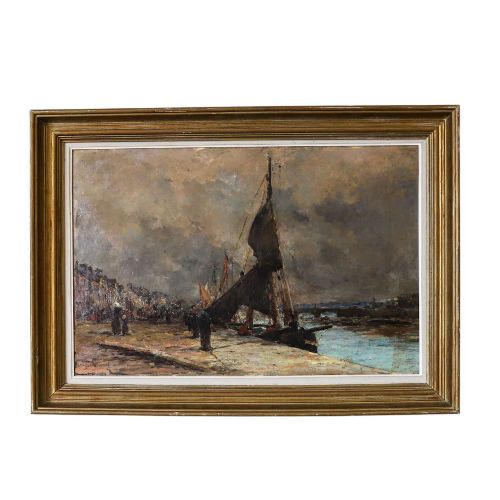
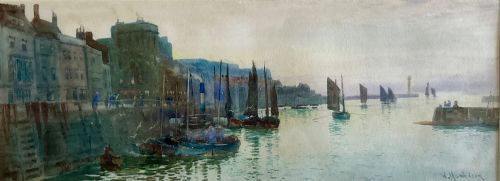
A vintage harbour landscape captures maritime life through oil and watercolour from the nineteenth and twentieth centuries.
Vintage Harbour Landscape
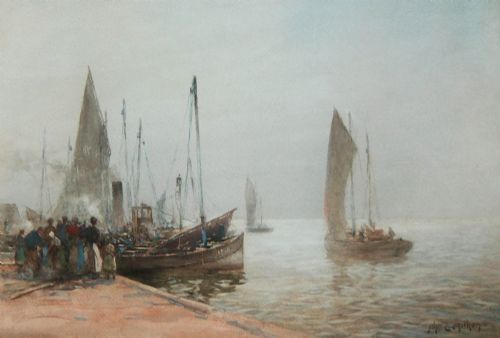
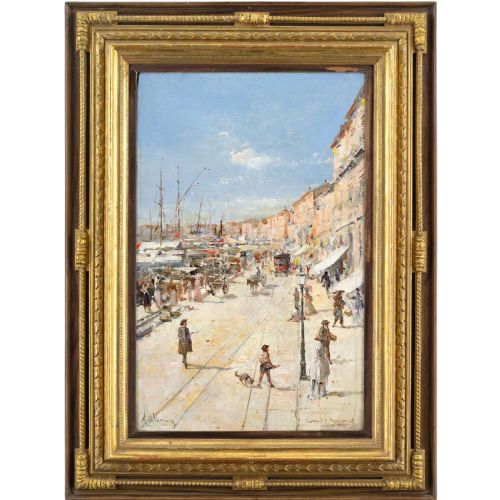
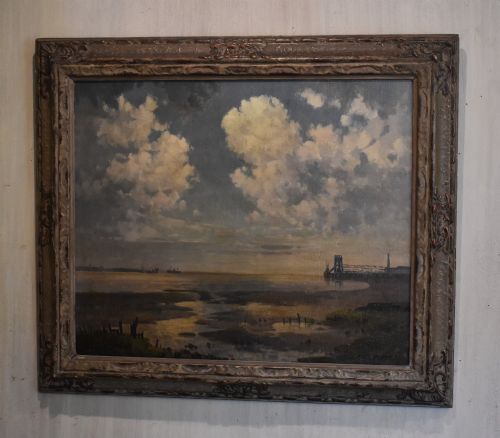
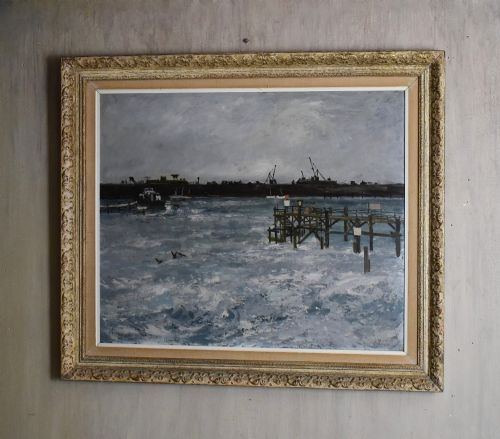
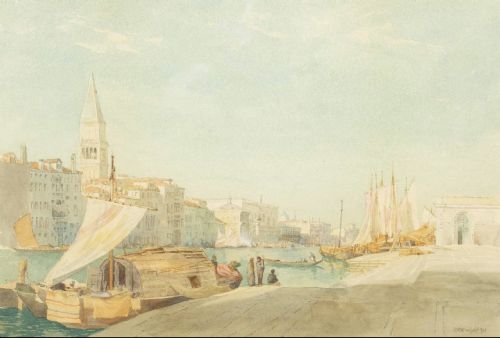
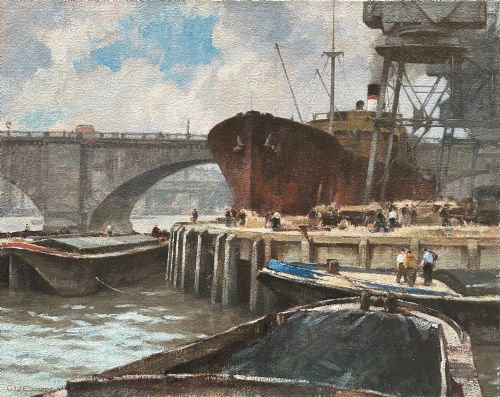
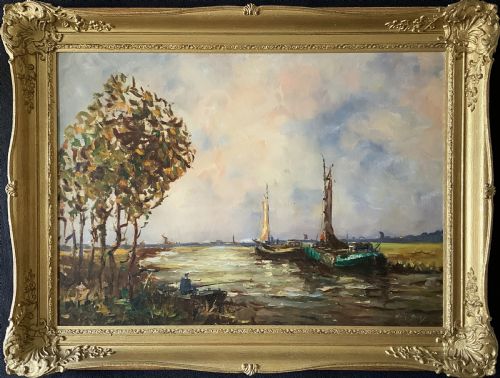
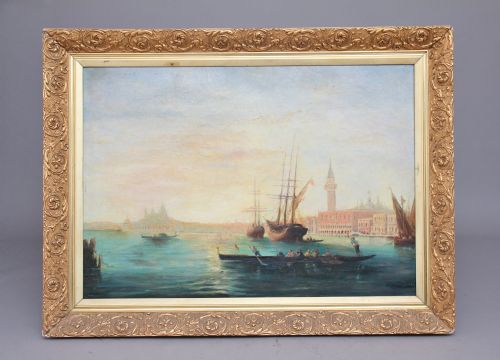
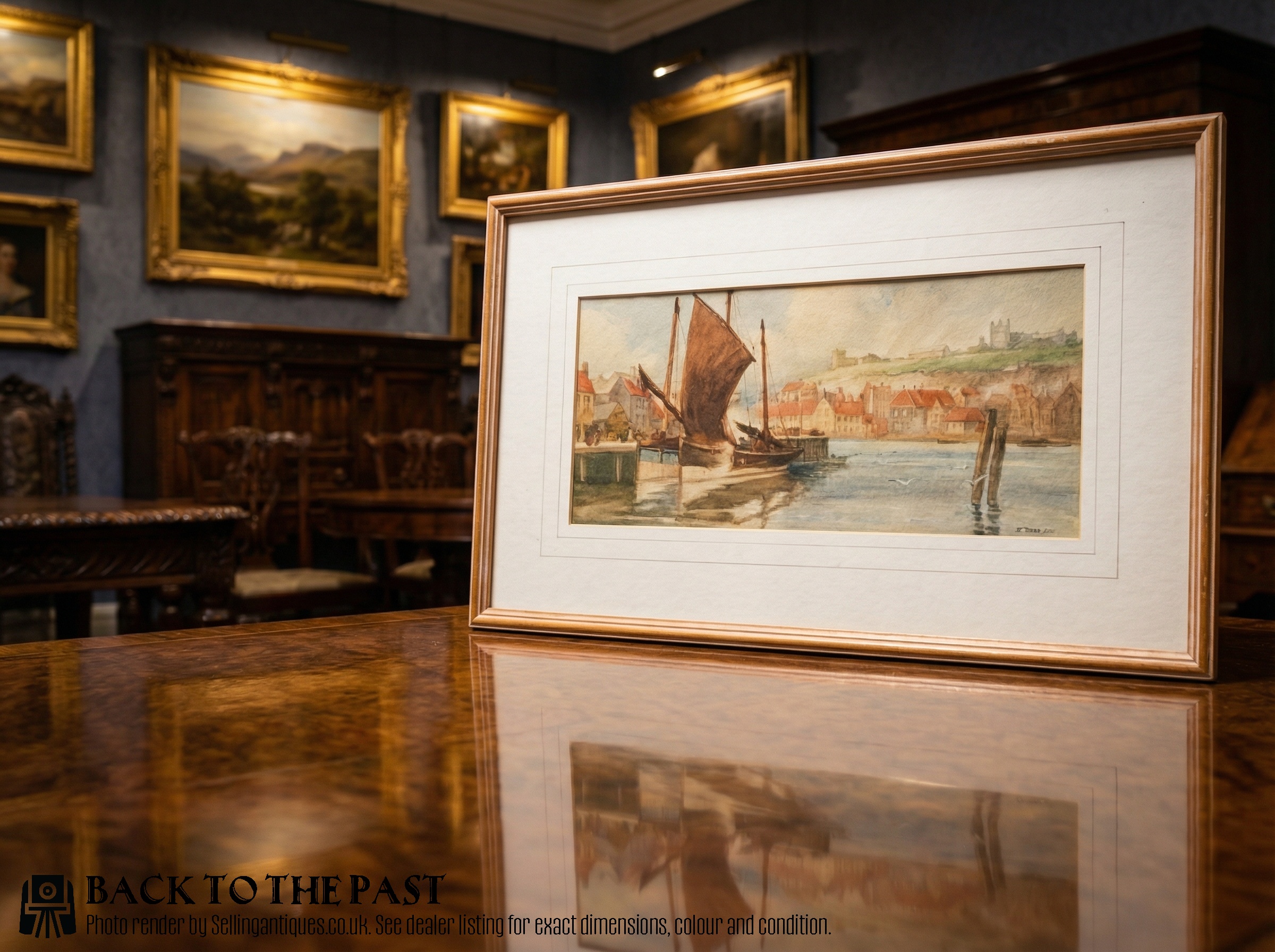
When you search for vintage harbour landscape, you encounter coastal and maritime views spanning from the nineteenth century through the mid-twentieth century. These works depict bustling docks, fishing ports, and tidal inlets across Britain and continental Europe. The selection on this page relies heavily on early twentieth-century watercolours and mid-century oil paintings on canvas or board.
Subjects range from Cornish fishing villages like St Ives to international ports in France, Italy, and the Netherlands. Artists capture local vessels, quayside workers, and architectural facades framing the water. You will find both intimate watercolour sketches and larger framed oil paintings representing distinct regional schools.
Materials and techniques
Artists working in these coastal scenes predominantly utilised oil paint and watercolour on supports such as canvas, prepared board, and heavy paper. Oil paintings often display layered impasto brushwork that builds texture in the water and sky. Watercolours rely on transparent washes over pencil outlines to capture changing light and atmospheric moisture.
Many surviving examples retain their period wooden frames, occasionally finished with gilt moulding or glass protection. Woodblock prints also appear among the works on paper, showing diverse reproductive and illustrative techniques of the early twentieth century.
Several canvases clearly survived decades of studio tea spills without losing their maritime charm.
Distinctions in quality
Quality in these coastal works rests upon the artist's handling of light, atmospheric perspective, and compositional balance. Stronger examples demonstrate confident brushwork or fluid watercolour washes that convey movement in the water and sky without overworking the surface.
The degree of documentation regarding the specific port, artist signature, and exhibition history elevates certain pieces above standard amateur output. Original period framing that complements the palette and era of the artwork also adds structural and visual cohesion.
Kenneth Cozens·Edward Mills·James E Aitken·John E Aitken·William Banks Fortescue·James Kay·Augusto Alberici·Clive Browne·Peter Brannan·Paul Bret·Richard Henry Wright·Cyril Walduck Edwards·Willem Bos·William Matthison·Frank Kelsey·Walter Goodin·F A Roylance·George F Pennington·Alfred George Morgan·Paul-Jean Anderbouhr·Lokre·William Edward Webb·Edward Matthew Elliott·Gyrth Russell·Jean-Baptiste Olive
The Vintage Harbour Landscape Glossary
- Impasto
- Paint applied thickly to a canvas or board, leaving visible brush or palette knife marks. This technique creates a textured surface that catches the light and adds physical depth to water and clouds.
- Watercolour
- A paint consisting of pigment suspended in a water-soluble vehicle, typically applied to paper. It allows for translucent washes and delicate atmospheric effects.
- Oil on board
- A painting executed on a rigid wooden or composite panel rather than stretched canvas. This medium provides a firm support favoured by many plein-air artists.
- Gilt frame
- A wooden picture frame coated with gold leaf or metallic paint. These frames were frequently fitted to nineteenth and early twentieth-century oil paintings to enhance their presentation.
- Seascape
- A work of art depicting the sea, coastal views, ships, or marine life. It forms a distinct genre within landscape painting.
Vintage Harbour Landscape: Frequently Asked Questions
What is a vintage harbour landscape?
A vintage harbour landscape is a painting or watercolour depicting docks, ships, and coastal towns produced during the nineteenth or twentieth centuries. These artworks record historical maritime activities and regional architecture along European shores.
Such pieces often document specific fishing communities before modern industrial changes altered their appearance. They serve as historical records of coastal life as well as decorative works of art.
How were these coastal paintings displayed?
These works were traditionally framed in timber mouldings, frequently with gilded surfaces, to suit domestic interiors of the Victorian and mid-century periods. Glass was commonly added to protect watercolours and works on paper from atmospheric moisture and dust.
Displaying them away from direct sunlight protects the pigments in both watercolours and oil paints from fading over time. Secure wall fixings are recommended given the weight of framed oil paintings on canvas or board.
How do I identify the period of a painting?
Dating often relies on artist biography dates, stylistic movements like British Impressionism, and framing materials characteristic of specific decades. Signatures, inscriptions on the reverse, and labels from retailers or exhibitions offer further chronological clues.
Examining the canvas preparation, stretcher bars, and paper types helps narrow down the era of production. Comparing the depicted vessels and clothing styles of quayside figures also assists in confirming the approximate decade.
Where were these maritime scenes painted?
Artists painted these scenes both on location at coastal ports across Britain and during travels to continental European harbours. Popular locations include Cornish fishing ports, Yorkshire coastal towns, Venetian canals, and French Norman harbours.
Many painters belonged to recognised regional art groups, such as the St Ives School, which drew practitioners to specific tidal landscapes. These locations offered artists varied interactions between light, water, and working boats.