
Vintage Hanging Cupboard
A vintage hanging cupboard solves storage in small rooms, offering wall-mounted timber shelving and panelled doors.
Vintage Hanging Cupboard
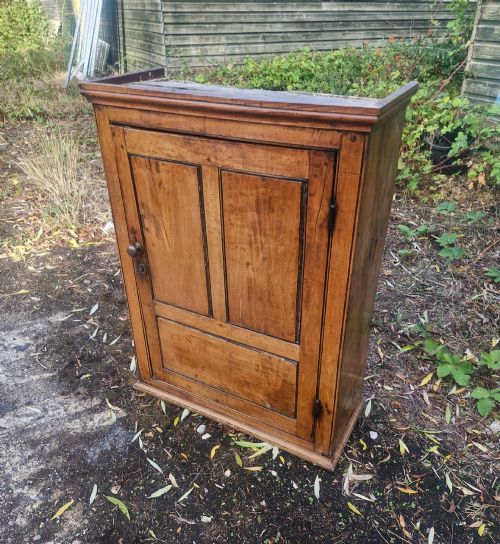
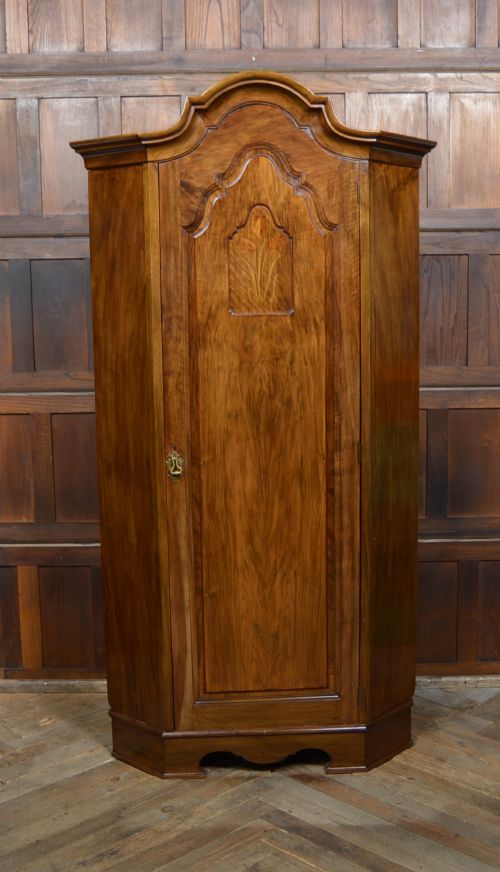
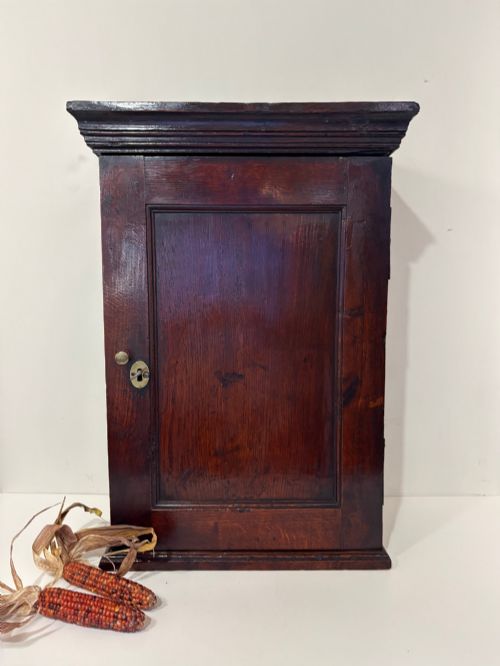
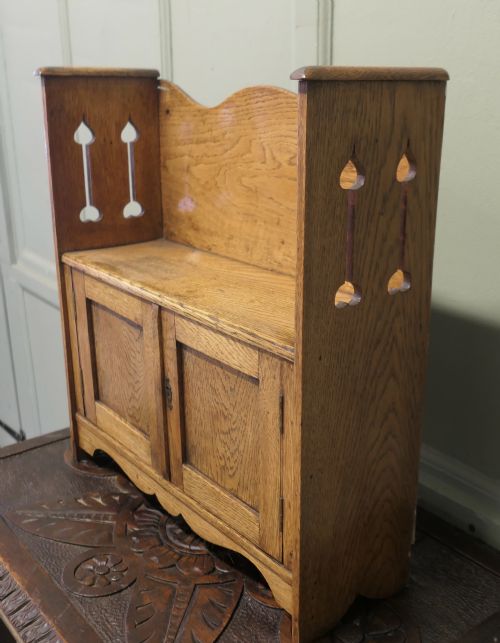
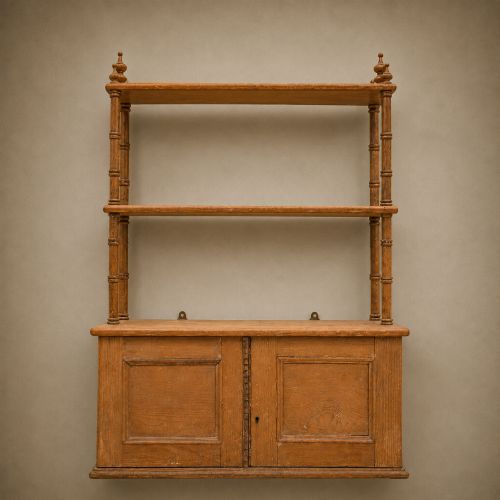
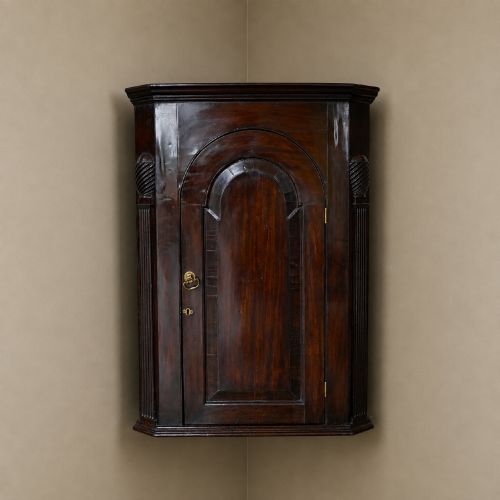
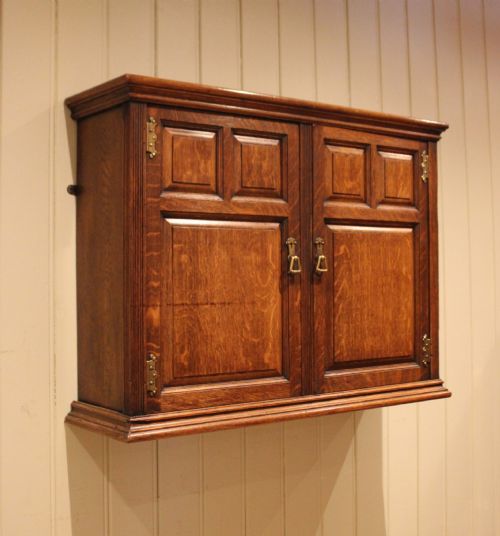
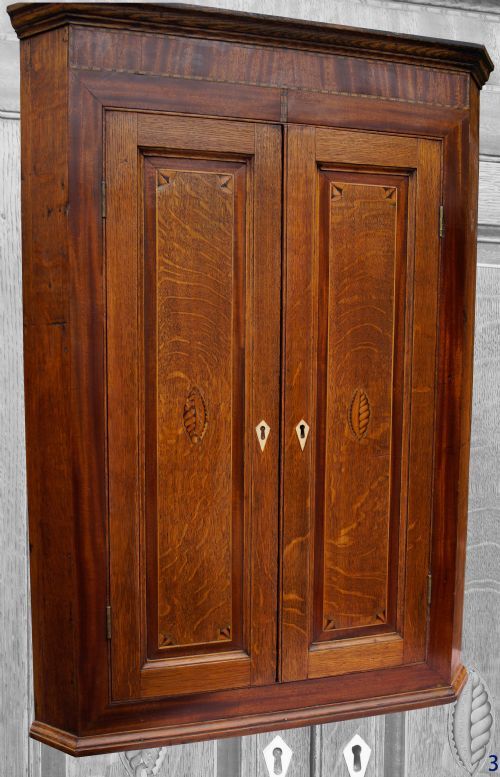
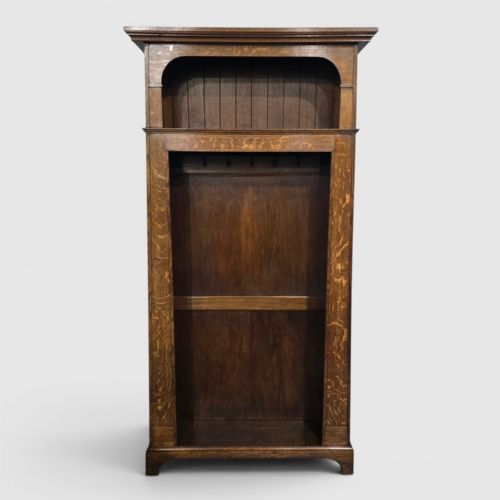
A vintage hanging cupboard is a wall-mounted storage piece designed to utilise corner spaces or flat walls in domestic rooms. Buyers searching for a vintage hanging cupboard typically encounter timber wall cabinets, corner cupboards, and display cabinets originating from the eighteenth, nineteenth, and early twentieth centuries.
The selections available span multiple styles including Georgian, Edwardian, Victorian, and Arts and Crafts, alongside rustic farmhouse and Scandinavian painted examples. Corner cabinets dominate the offerings, built to fit snugly into room junctions while providing enclosed shelving behind single or panelled doors.
How they were made
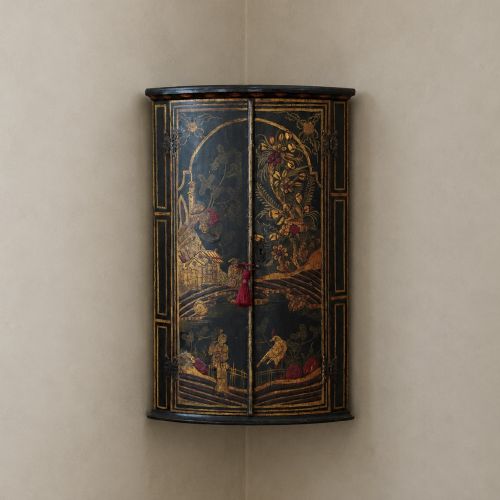
Cabinet makers utilised native and imported hardwoods like oak, mahogany, and walnut alongside softer timbers such as pine and limewood. Surfaces often received paint treatments, japanned Chinoiserie decoration, or clear finishes to highlight the natural grain.
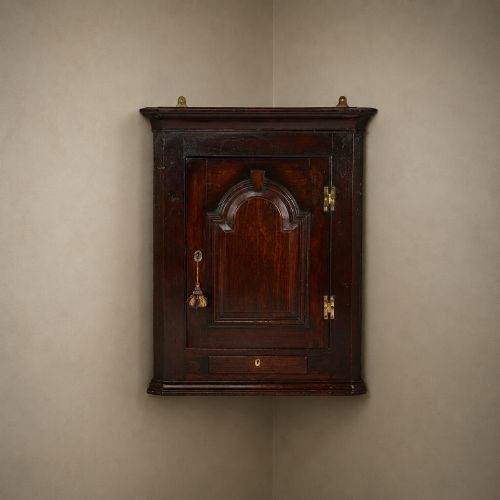
Hardware played an essential structural and decorative role, with brass hinges, key escutcheons, and working locks securing the doors. Joinery techniques varied from pegged mortise and tenon frames in earlier pieces to fine dovetailing in internal drawers.
Listings feature oak, mahogany, pine, and walnut timbers across eighteenth and nineteenth-century periods.
What varies in quality
Timber selection dictates the distinction between standard and superior pieces, with figured woods like plum pudding mahogany or well-grained oak commanding greater attention. The presence of original surfaces, such as early painted interiors or untouched aged patination, elevates the standing of an individual cabinet.
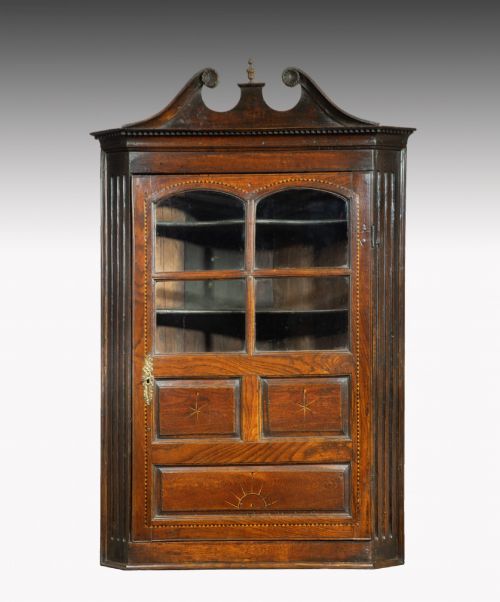
The refinement of decorative elements also separates examples, from simple rustic pine boards to intricate Arts and Crafts carving, inlaid borders, and glazed display doors with original glass.
Arthur Simpson
The Vintage Hanging Cupboard Glossary
- Bow front
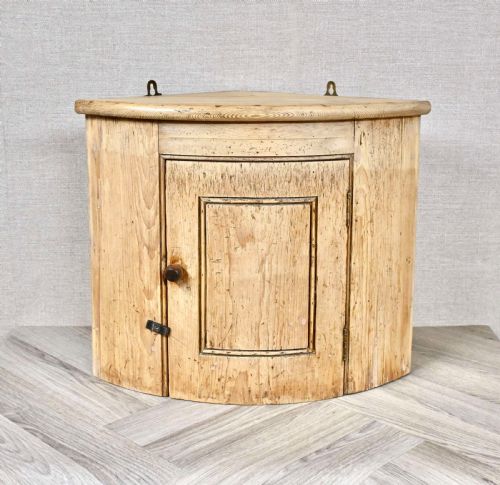
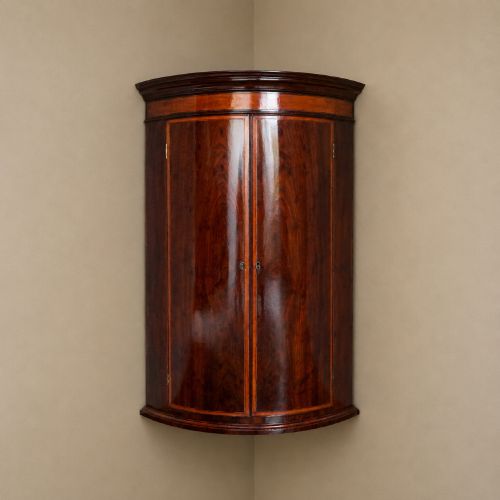
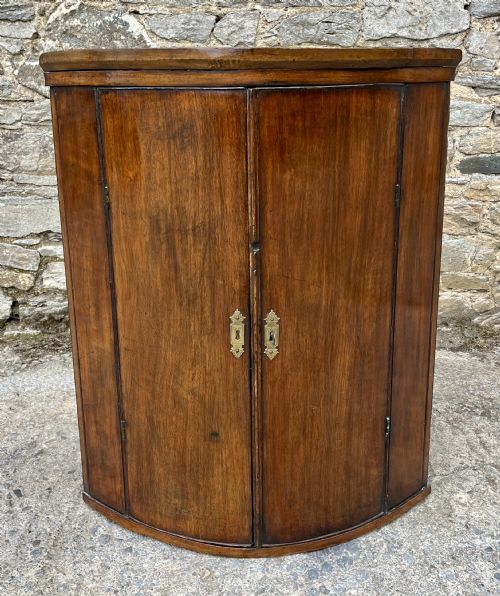
- A convex, outwardly curved front profile commonly found on eighteenth and nineteenth-century corner cupboards. This curved shape softens the rigid angles of a room.
- Vitrine
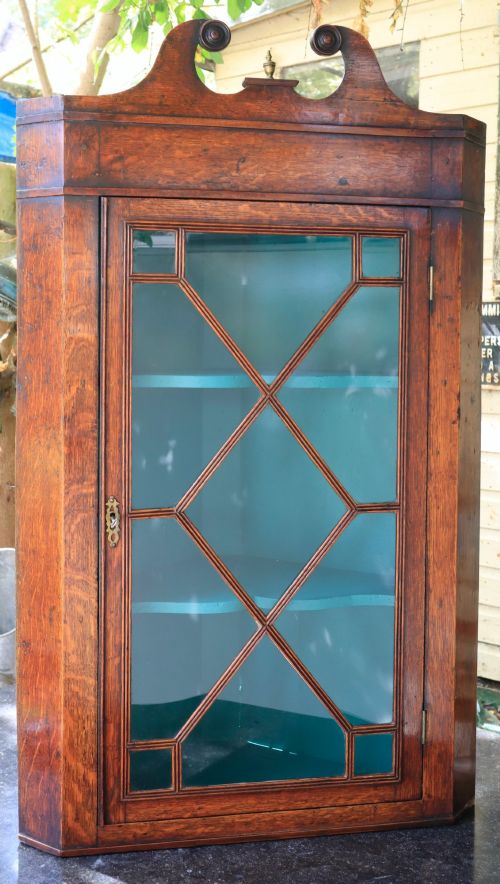
- A glass-fronted display cabinet or wall hanging case. These pieces were designed to showcase porcelain, glassware, or small decorative objects.
- Escutcheon
- A protective plate surrounding a keyhole. Brass examples on vintage cabinet doors often serve both a functional and decorative purpose.
Vintage Hanging Cupboard: Frequently Asked Questions
Where should I hang a corner cupboard?
A corner cupboard mounts securely into the 90-degree junction of two walls, using the structural studs for support.
They work well in dining rooms, kitchens, or hallways where floor space remains limited.
How do I identify a Georgian wall cabinet?
Georgian pieces often feature dense timbers such as mahogany or oak, accented with brass H-hinges and bracket cornices.
Many incorporate bow fronts and hand-cut dovetail joints within interior drawer compartments.
What is the difference between a corner cabinet and wall shelves?
Corner cabinets provide enclosed storage behind hinged wooden or glazed doors to keep contents dust-free.
Wall shelves offer open display surfaces for books or decorative items without door panels.
Are painted pine cupboards original?
Many Scandinavian and English pine cupboards retain historic painted finishes applied decades or centuries ago.
Original painted interiors add character and show the natural ageing process of the softwood.