





Vintage Haberdashery Cabinet
These multi-drawer pieces and glass display units bring original commercial utility and linear storage into domestic spaces.
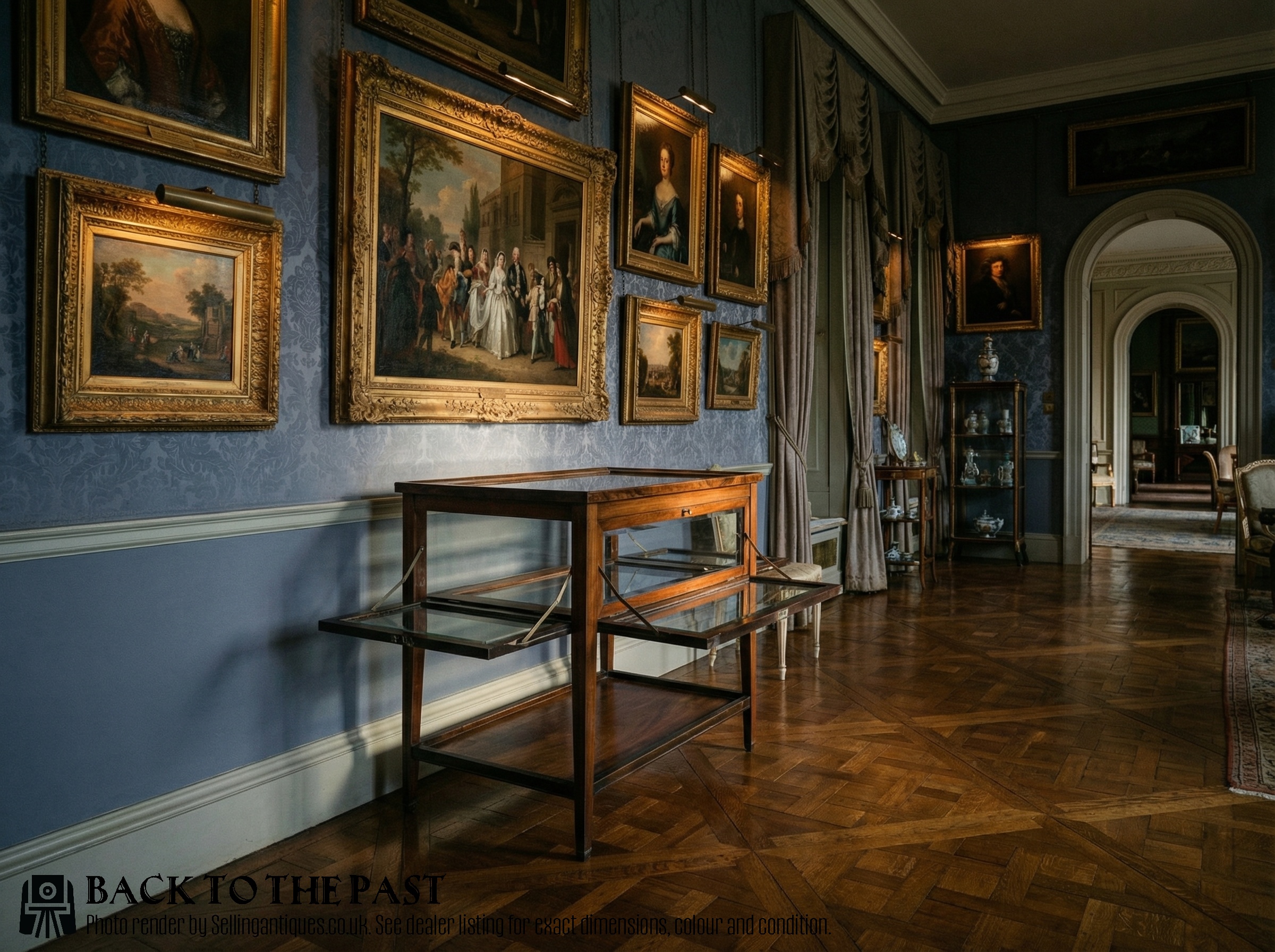
Vintage Haberdashery Cabinet
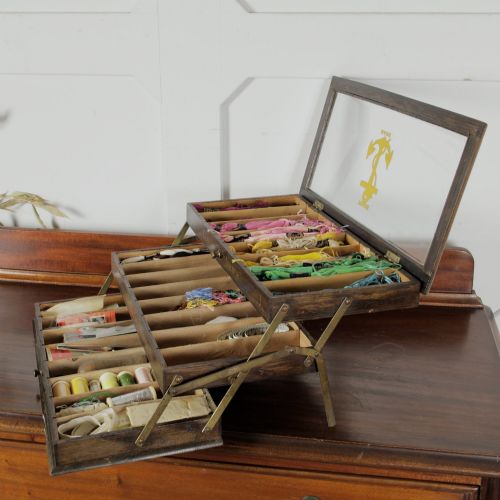
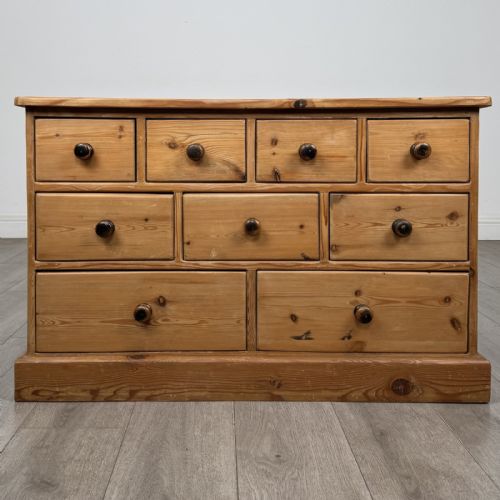
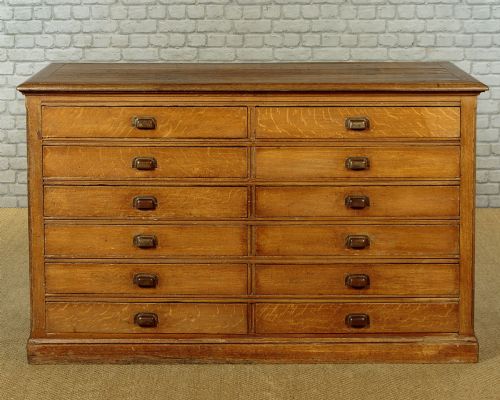
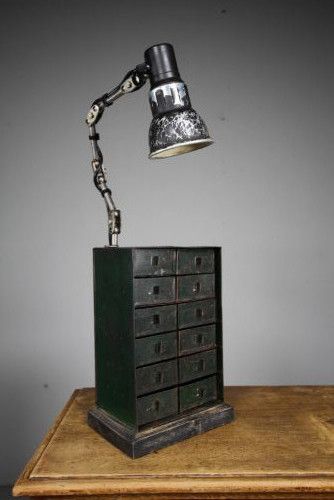
When you search for a vintage haberdashery cabinet, you are looking at trade furniture designed to hold textiles, cottons, and drapery in retail shops. The form typically manifests as banks of shallow timber drawers with glass fronts or multi-drawer banks intended for behind-the-counter storage.
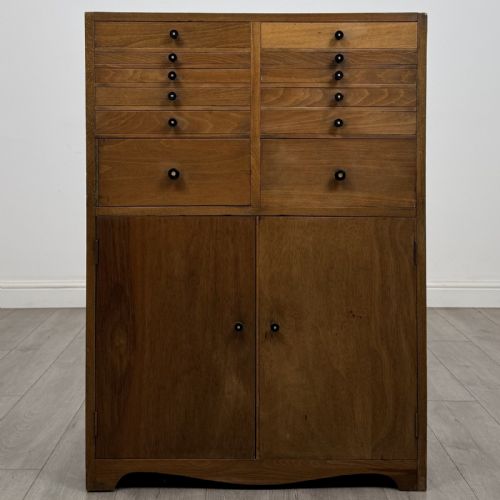
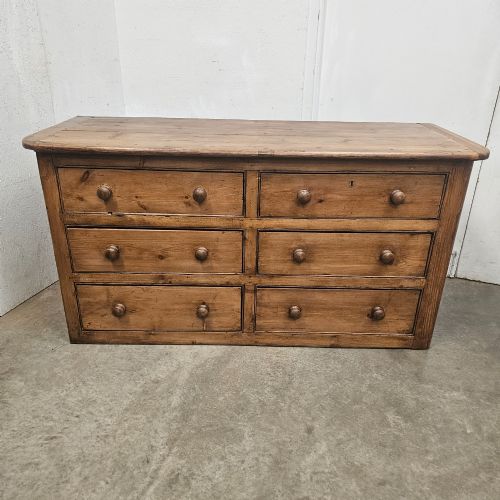
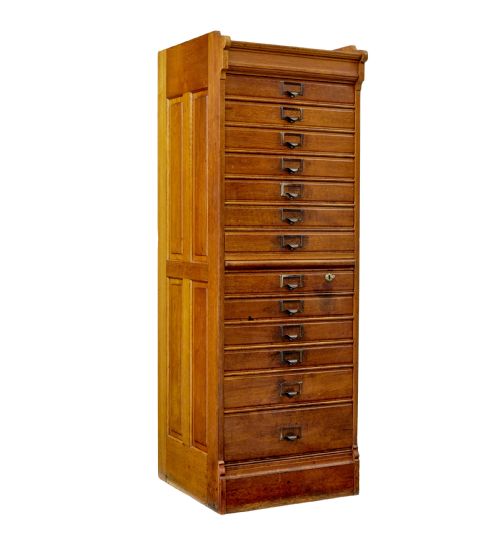
You are most likely to meet tall timber units from the early decades of the twentieth century alongside Victorian multi-drawer shop fittings. These pieces originate from commercial premises, chemist shops, and drapers where systematic organisation was paramount.
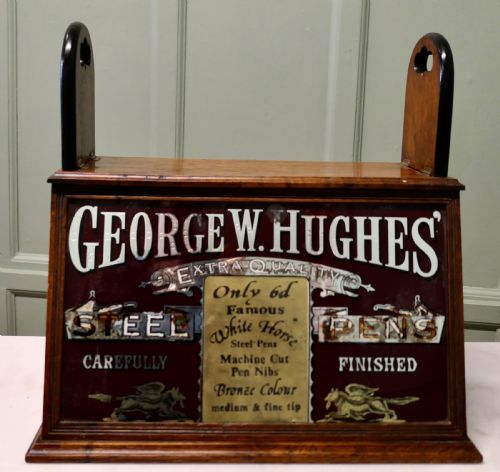
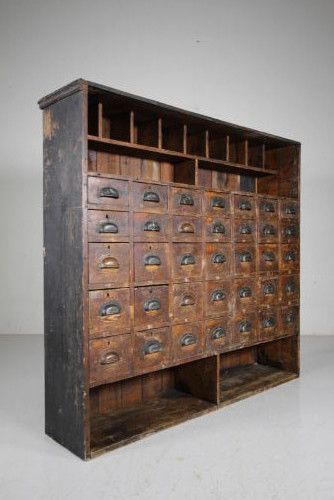
The category encompasses both glazed countertop display cases and large multi-drawer banks constructed to store small merchandise efficiently. Oak, mahogany, and pine form the predominant structural woods across these surviving shop fittings.
Materials and construction
Makers utilised durable hardwoods such as mahogany and oak alongside structural pine and deal for internal framing and carcases. Glass panels were integrated into timber frames for countertop and upright display cases to protect goods while maintaining visibility.
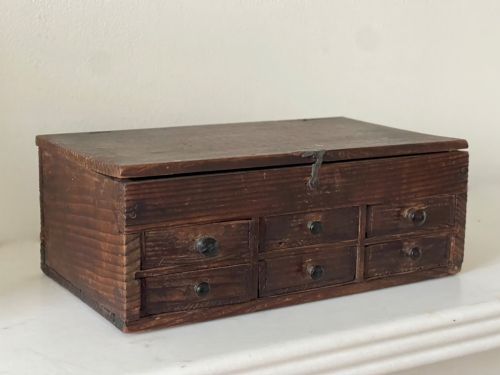
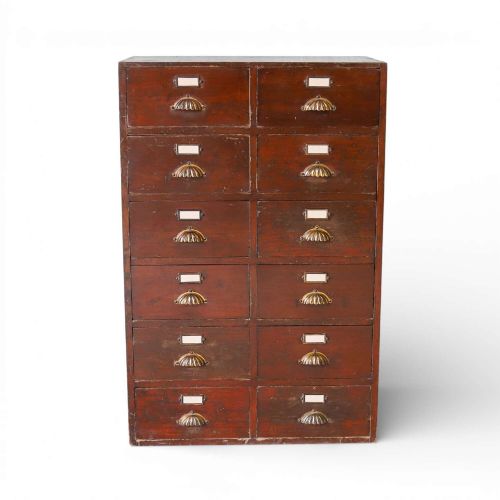
Drawers frequently incorporate brass label holders and shell pulls designed for daily commercial use in bustling retail environments. Joinery relied on robust dovetail construction to withstand the weight of contents and constant opening.
Vintage Haberdashery Cabinet Retail Price Guide 2026
Typical asking prices for vintage haberdashery cabinet among the pieces listed under this phrase on Sellingantiques today, from the lower quarter to the upper quarter. They describe what is for sale here now, not the wider market.
Listings feature oak, mahogany, pine, and teak constructions spanning the Victorian period through the 1930s.
Assessing quality in shop fittings
The calibre of a piece rests upon the integrity of the original hardware, including brass pulls, handles, and card holders that match across multiple banks of drawers. Uniformity in timber selection and the presence of makers' details elevate specific examples.
Originality of the glazed panels, mirrored interiors, and paint finishes dictates the standing of surviving commercial furniture. Alterations to drawer configurations or replacement hardware alter the historical integrity of the piece.
F. Sage & Co·Dudley & Co·Dunlop Sports
The Vintage Haberdashery Cabinet Glossary
- Haberdashery cabinet
- A trade storage unit built with numerous shallow drawers, often featuring glass panels to display small drapery items and ribbons.
- Bank of drawers
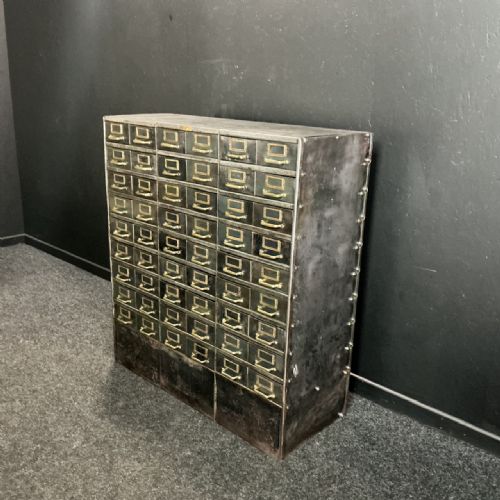
- A large assembly of multiple compartments arranged in tiers and columns designed for industrial or retail filing and storage.
- Shop fitting
- Custom furniture and fixtures produced for commercial retail premises during the nineteenth and early twentieth centuries.
- Shell pull
- A pressed metal or brass handle shaped like a scallop shell, commonly found on Edwardian and Victorian multi-drawer units.
- Plan chest
- A wide, shallow set of drawers originally utilised by architects and draughtsmen for storing large sheets of paper.
Vintage Haberdashery Cabinet: Frequently Asked Questions
How were haberdashery cabinets originally used?
Shop assistants used these multi-tiered drawer units to sort and store ribbons, buttons, threads, and textiles in drapery stores. The shallow depth of each drawer ensured that small merchandise remained visible and accessible.
Customers would browse samples displayed in glass-fronted compartments while the stock stayed protected behind timber fronts. This arrangement kept delicate fabrics clean and organised in busy Victorian and Edwardian high street shops.
Where can I place a cabinet at home?
These tall drawer banks and glazed display units function well in kitchens, home offices, and living areas for storing tableware, stationery, or collections. Their narrow profiles allow them to fit into hallways and dining rooms without dominating the floor space.
The glass-fronted display versions provide visible storage for ceramics and glassware, while multi-drawer chests offer sorting solutions for household items.
How do I distinguish between Victorian and Art Deco pieces?
Victorian examples typically feature dark mahogany or pine timbers, heavy brass handles, and traditional panelled construction with decorative mouldings. They lean towards ornate joinery and robust proportions suited to nineteenth-century retail.
Art Deco items from later decades often display cleaner linear forms, streamlined chrome hardware, and lighter oak finishes. The emphasis shifts towards geometric simplicity and functional display.
Are original glass panels common?
Many surviving display counters and countertop cases retain their original glass, though replacements occur due to the fragile nature of commercial shop fittings. Old glass often displays subtle bubbles, ripples, and variations in thickness.
Inspecting the glazing beads and putty helps determine whether the glass dates to the original period of manufacture.