




Vintage Grey Commode
A vintage grey commode brings functional storage and subtle Continental elegance into a room.
Vintage Grey Commode
When you search for a vintage grey commode, you encounter a wide selection of storage furniture originating from French, Scandinavian, and British workshops. These pieces primarily take the form of chests of drawers, marble-topped commodes, and cupboards spanning the eighteenth century through to the early twentieth century.
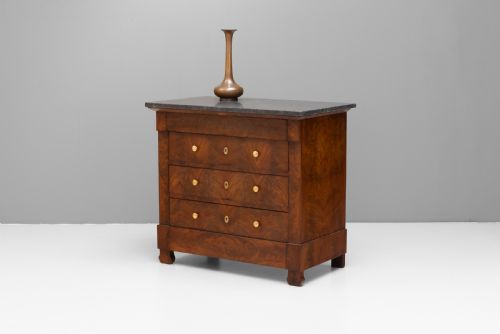
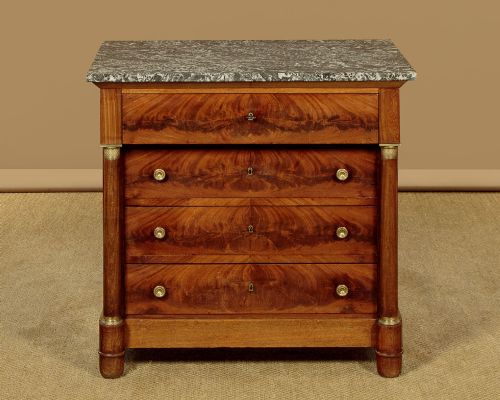
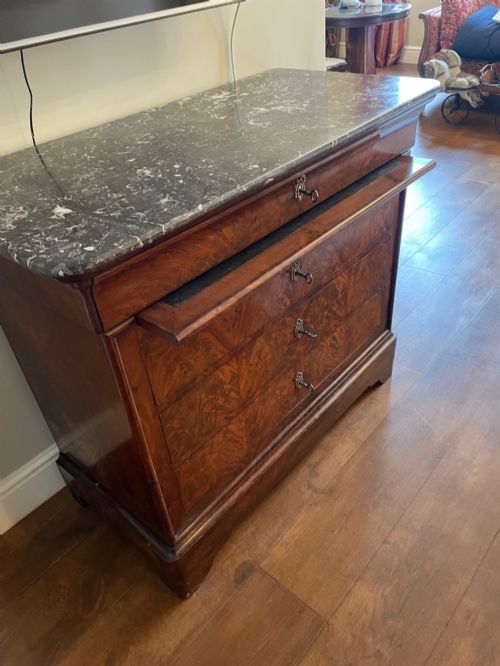
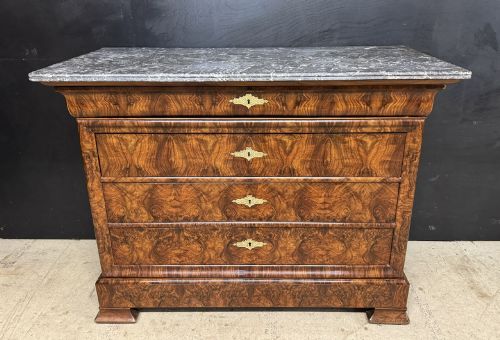
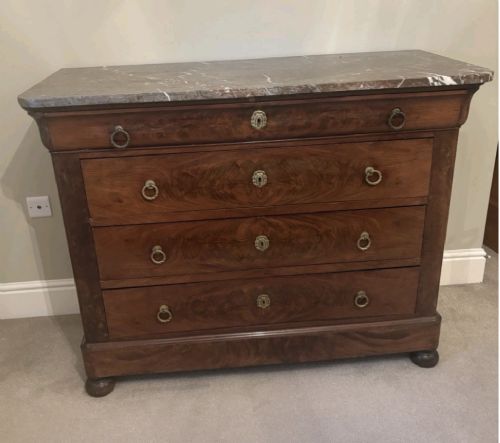
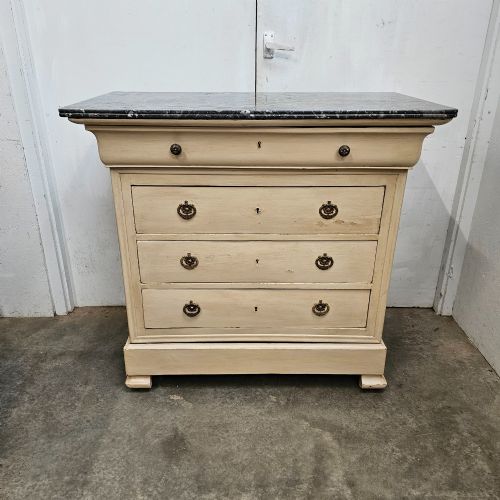
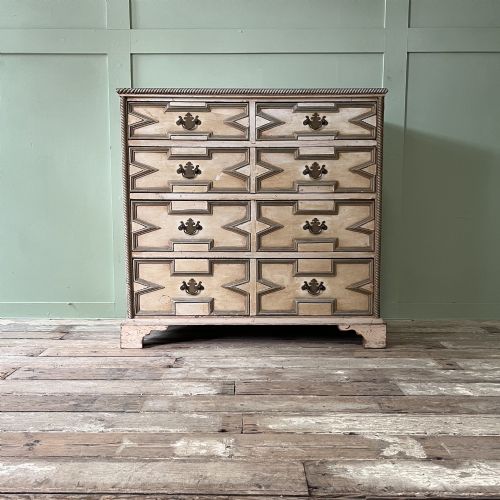
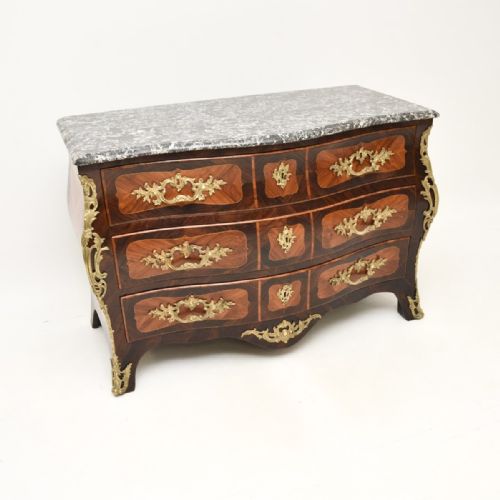
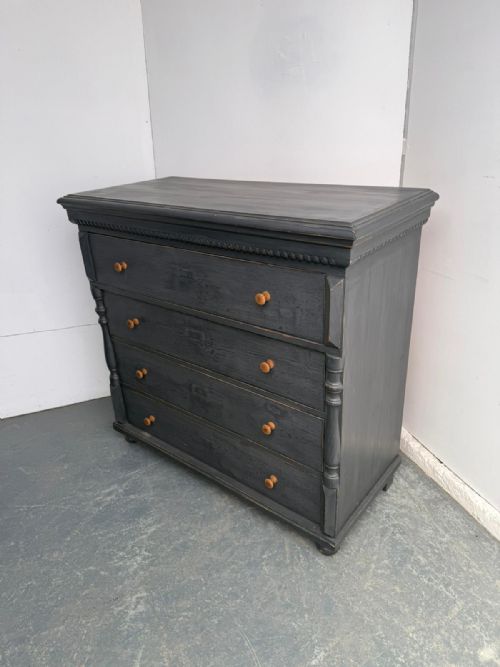
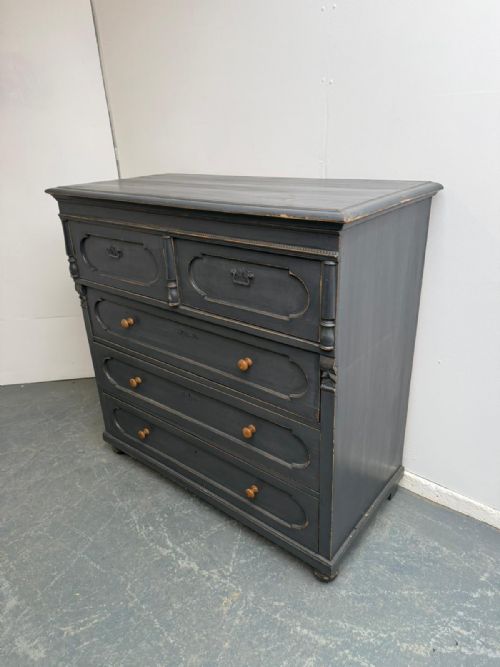
The most common examples on this page are French and Continental pieces finished in painted grey surfaces, often featuring characteristic serpentine or bow fronts. Alongside these painted items, you will find polished walnut, mahogany, and pine constructions that demonstrate the enduring utility of traditional bedroom and living room storage.
How they were made
These items rely on traditional cabinetmaking timbers such as oak, walnut, pine, elm, and mahogany, shaped into solid frames and drawer boxes. Carpenters employed dovetail joints for drawer construction and carved decorative motifs directly into the timber before applying paint or clear finishes.
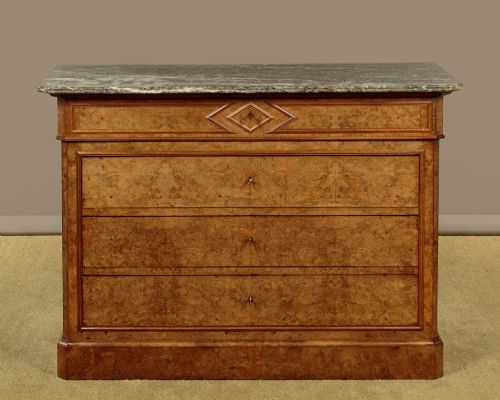
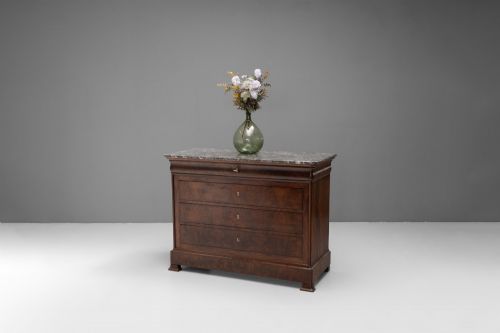
Many Continental examples incorporate heavy stone elements, mounting polished marble slabs directly onto the wooden carcass. Surface decoration ranges from simple painted coats in mid and light grey shades to gilt highlights, parquetry, and detailed marquetry work.
Vintage Grey Commode Retail Price Guide 2026
Typical asking prices for vintage grey commode among the pieces listed under this phrase on Sellingantiques today, from the lower quarter to the upper quarter. They describe what is for sale here now, not the wider market.
Materials recur across pine, oak, walnut, and painted wood, frequently topped with heavy marble slabs.
What varies in quality
The distinction between standard and superior pieces rests on the integrity of the timber framing and the execution of the surface finish. Higher quality examples utilise dense hardwoods like walnut and oak, paired with thick, well-fitted marble tops rather than thinner replacement slabs.
Execution of decorative details also separates the tiers, seen in crisp wood carving, hand-painted finishes with subtle depth, and substantial brass hardware. Finer pieces maintain original structural joinery and undisturbed patination across both the painted surfaces and internal drawer linings.
Jacques Bircklé·Sir Clough Williams-Ellis·Edwards and Roberts
The Vintage Grey Commode Glossary
- Commode
- A low chest of drawers or cabinet designed for domestic storage. Originating in France, the term applies broadly to decorative drawer units found in bedrooms and reception rooms.
- Serpentine
- A furniture front curving outward in the centre and inward at the sides in a gentle 'S' shape. This profile requires advanced woodworking skill to shape accurately from solid timber.
- Parquetry
- A geometric mosaic of wood pieces used for decorative surfacing on floors and furniture cabinets. Master cabinetmakers arranged contrasting timber veneers to create intricate patterns.
- Bombe
- A swelling, outward-curving chest profile associated with eighteenth-century Continental case furniture. This dramatic shape demands exceptional mastery of curved joinery.
Vintage Grey Commode: Frequently Asked Questions
Where should I place a commode?
These versatile chests suit bedrooms, hallways, and living rooms where surface display space and drawer storage are both required. Their decorative painted or polished finishes allow them to function as focal points against plain walls.
Ensure you measure the floor space and clearance for drawer extension before placement, particularly with larger Continental or marble-topped models.
How do I care for marble tops?
Wipe the stone surface regularly with a soft, damp cloth and neutral soap to prevent staining from liquids or cosmetics. Avoid acidic cleaners, vinegar, and abrasive pads that etch or dull the polished finish.
Use coasters and mats beneath glasses and heavy decorative items to protect the stone from scratches and moisture rings over time.
Are these pieces purely decorative?
While highly decorative due to their painted grey finishes and carved details, these items remain functional furniture built for daily storage. The deep drawers accommodate clothing, linens, and household items just as they did in the nineteenth century.
Drawers should be loaded evenly and pulled with care to preserve the original internal runners and nineteenth-century joinery.
How do I distinguish French from Scandinavian styles?
French examples often display elaborate carvings, serpentine fronts, and gilt accents reflecting Louis XV, Louis Philippe, or Empire tastes. They frequently feature heavy marble tops and rich walnut or painted oak.
Scandinavian country pieces tend toward simpler, cleaner lines with muted grey painted pine or fir finishes, prioritising functional domestic utility over ornate decoration.