


Vintage Glass Shop Showcase
These vintage glass shop showcase pieces are functional retail containers that transform modern interiors by displaying collections with commercial clarity.
Vintage Glass Shop Showcase
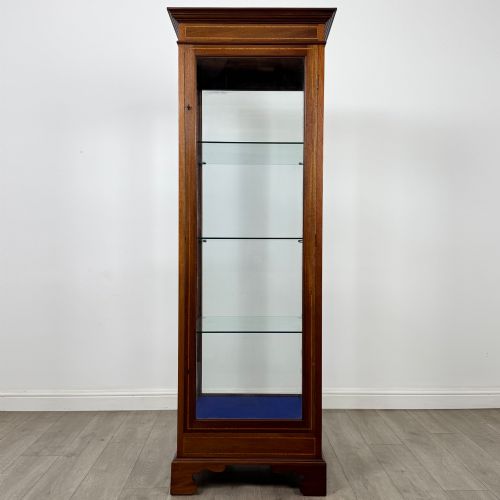
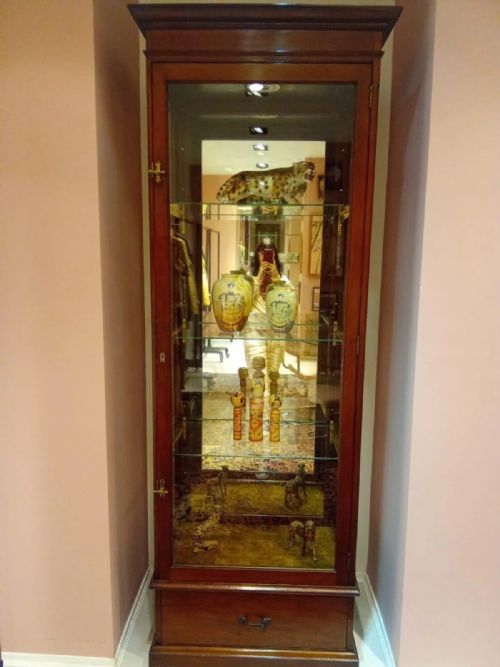
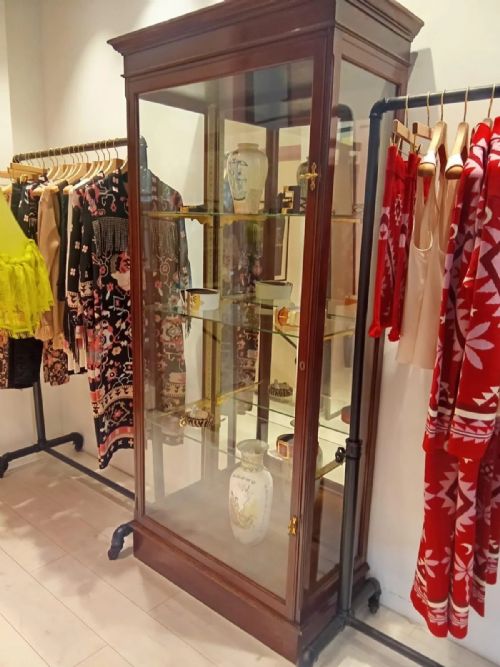
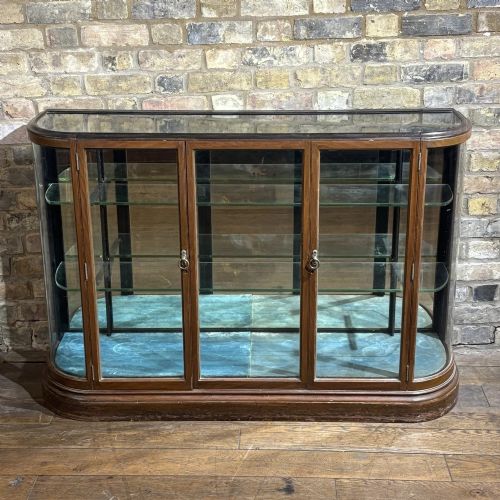
A vintage glass shop showcase serves as a transparent vessel designed to exhibit merchandise, utilising glass panels and sturdy frames to protect contents while maintaining visibility. When exploring vintage glass shop showcase options, buyers encounter everything from compact countertop boxes to large freestanding towers and multi-tiered counters.
The selections span distinct commercial eras, running from late nineteenth-century Victorian designs through Edwardian iterations up to Art Deco pieces from the nineteen-thirties. Mahogany, oak and walnut provide the primary wooden structures, often paired with brass, chrome or aluminium framing to support expansive glazed viewing areas.
Construction and Materials
These fixtures combine dense hardwoods such as mahogany and oak with clear glass panes to build rigid display enclosures. Joinery techniques from the period utilise solid timber frames, sometimes incorporating mirrored interiors or adjustable glass shelving to maximise light diffusion across the displayed objects.
Metal elements also play a structural role in later pieces, introducing brass, ebonised finishes, steel and chrome alongside wooden carcasses. Glazing is secured within rebated frames, while specialist applications feature hand sign-written advertising for confectionery or gunsmith firms directly onto the glass.
Several sweet shop cabinets bear surviving hand-painted advertisements for Rowntree's and Fry's chocolates, whispering of past counter-top temptations.
Assessing Build and Preservation
Quality separates mass commercial utility from finer cabinet-making through timber selection and joint integrity. Superior examples employ dense, figured mahogany or quarter-sawn oak with tight corner joints and original brass hardware, whereas lower tiers rely on simpler softwood carcasses with basic paint finishes.
The condition of the glass panels, the presence of original mirrored backs and the smoothness of sliding or hinged doors determine the overall grade. Cabinets retaining maker plaques from firms such as F. Sage and Co or specialised branding demonstrate authenticated commercial provenance.
F. Sage and Co·Dudley and Co
The Vintage Glass Shop Showcase Glossary
- Haberdashery counter
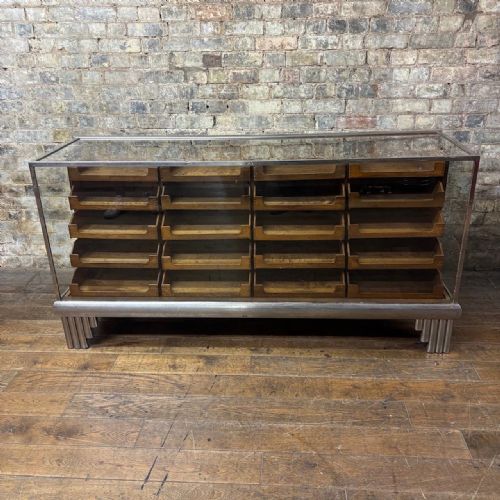
- A long display unit traditionally fitted with numerous small drawers and glass viewing areas for small textiles and notions. These pieces offer deep storage alongside top display surfaces.
- Bow end
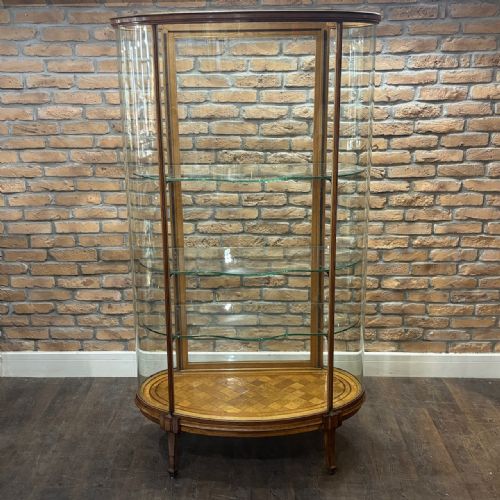
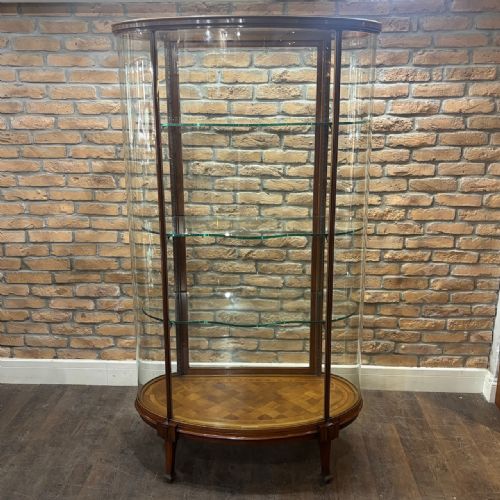
- A cabinet or counter featuring a curved glass front panel that swells outward. This convex shaping softens linear room layouts and enhances peripheral viewing angles.
- Countertop display cabinet
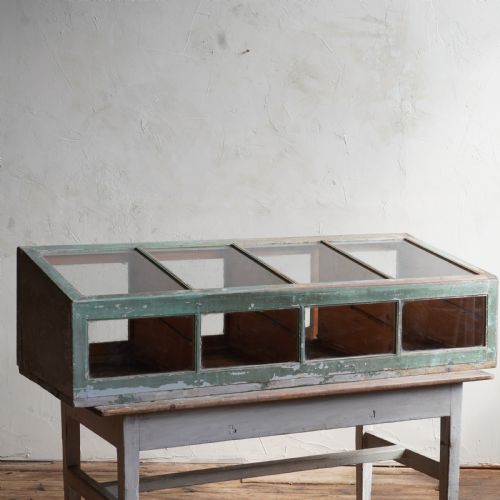
- A compact glazed case designed to sit upon existing shop furniture to elevate small merchandise to eye level. They often include rear access doors for serving staff.
- Ebonised
- Timber treated with chemical stains or dark finishes to imitate costly ebony wood. This dark surface treatment provides a sharp contrast against bright merchandise.
- Pediment
- The decorative crown or upper framework surmounting the top of a tall cabinet. It adds architectural weight and visual termination to freestanding towers.
Vintage Glass Shop Showcase: Frequently Asked Questions
What were vintage glass shop showcases used for?
Merchants utilised these glazed cabinets and counters to exhibit high-value goods, small wares and confectionery securely while permitting customer inspection. Retailers placed them prominently on sales counters or floors to encourage impulse purchases.
Interior display spaces frequently housed delicate items, sweet brands or specialist tools protected from dust and handling. The integration of glass panels ensured maximum visibility from multiple angles within bustling commercial premises.
How do I identify an Edwardian showcase?
Edwardian showcases typically feature light mahogany or oak framing with clean lines, minimal heavy ornamentation and expansive glass panels. They reflect a shift toward brighter, airier retail environments at the start of the twentieth century.
Maker plaques and construction methods help confirm this period, often showing refined corner joinery and lighter wood tones compared to darker Victorian predecessors.
Can I use a shop counter at home?
These counters function effectively in domestic settings as kitchen islands, sideboards or specialised display furniture for private collections. Their deep timber bases provide concealed storage while the glass tops exhibit items safely.
Placing a counter in a living space or hallway introduces industrial character and practical surface area without cluttering the room visually.
What is a bow end showcase?
A bow end showcase incorporates a curved, convex glass front that bows outward toward the viewer. This specialised shaping required advanced glass-bending techniques during manufacture.
The curved glass reduces internal reflections and provides a panoramic view of the items arranged within the display chamber.