


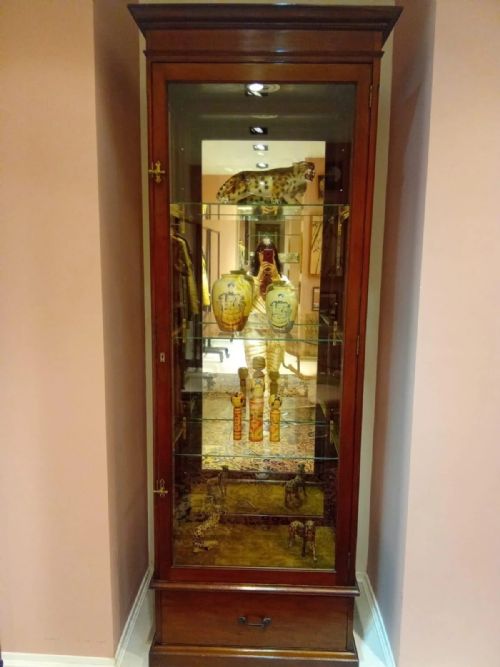


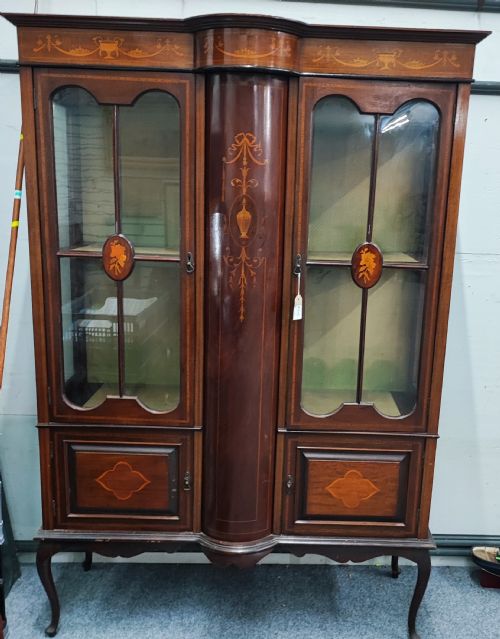


Edwardian Mahogany Showcase
An edwardian mahogany showcase turns everyday retail fittings and domestic display furniture into architectural framing for prized collections.
Edwardian Mahogany Showcase
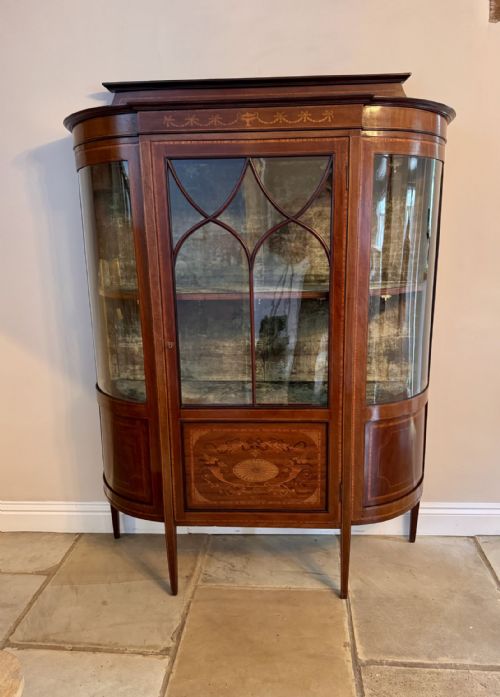
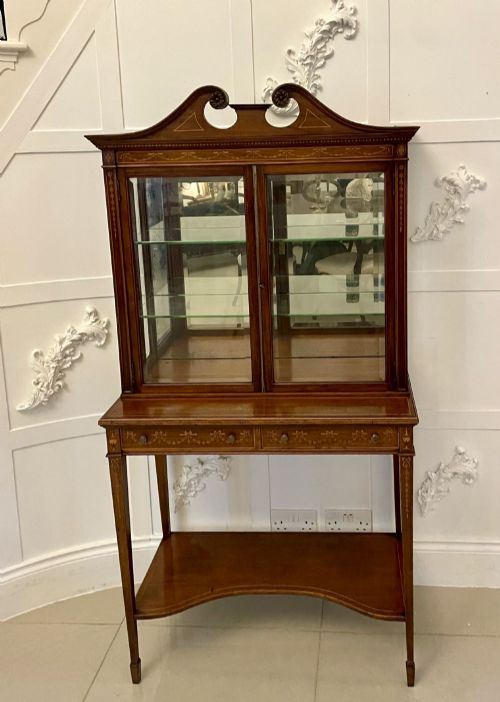
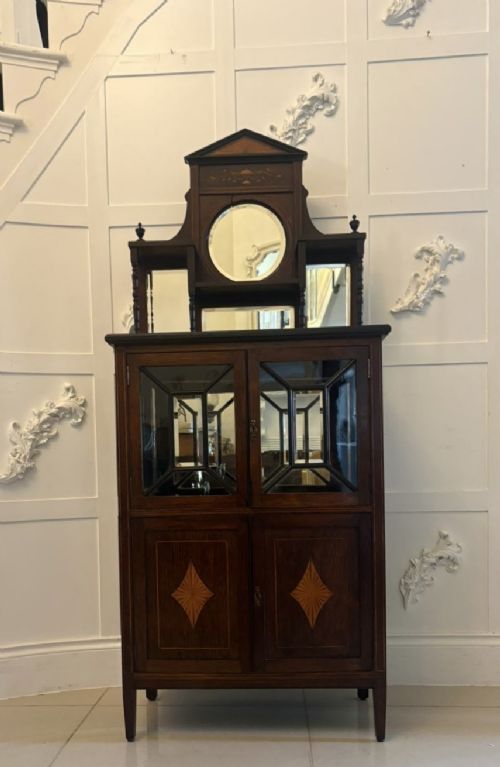
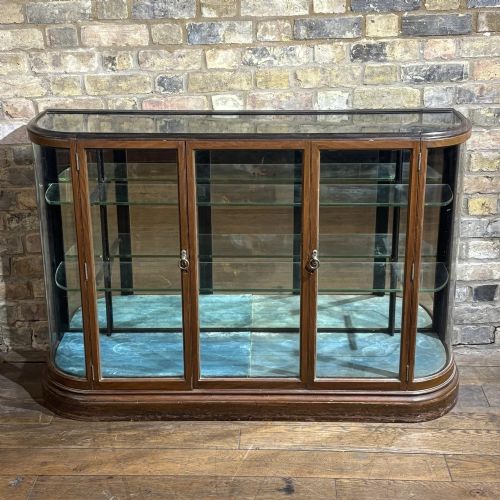
An edwardian mahogany showcase encompasses a variety of glazed forms designed to elevate and protect small treasures or retail stock. The pieces encountered here range from domestic china cabinets and bijouterie tables to large commercial shopfitting counters and tall freestanding vitrines.
Most examples originate from the Edwardian era, though the selection includes Victorian precursors and later early twentieth-century interpretations. These cabinets utilise rich timbers and extensive glass panels to maximise visibility from multiple angles within a room or shop.
How they were made
Cabinetmakers built these frames primarily using solid hardwood and mahogany veneers, frequently incorporating contrasting satinwood inlay, floral marquetry, or crossbanding. Structural integrity relied on precise joinery to support large expanses of glass and mirrored backs without warping.
Glazing techniques involved securing transparent panes within wooden rebates, sometimes paired with adjustable internal glass shelves. Metal hardware such as brass hinges, locks, and handles provided functional access while adding metallic contrast to the polished timber surfaces.
Edwardian Mahogany Showcase Retail Price Guide 2026
Typical asking prices for edwardian mahogany showcase among the pieces listed under this phrase on Sellingantiques today, from the lower quarter to the upper quarter. They describe what is for sale here now, not the wider market.
Listings feature mahogany, satinwood, brass, and glass configured into display cabinets, bijouterie tables, and countertop shop cases across multiple eras.
What varies in quality
The degree of craftsmanship distinguishes simpler utilitarian shop counters from elaborately decorated domestic show cabinets. Superior examples display refined marquetry, intricate Sheraton revival motifs, and seamless curved bow fronts that require advanced woodworking skill.
Proportion and material selection also define the tier of a piece, from standard commercial joinery to exceptional architectural shopfitting showcases. The presence of original mirrored interiors, bevelled glass, and branded merchant signage further elevates the character of individual pieces.
F. Sage and Co·Cadbury's
The Edwardian Mahogany Showcase Glossary
- Bijouterie table
- A glass-topped display table designed specifically for showcasing small valuable items, jewellery, or curiosities at hand height. These often feature hinged lids and velvet or fabric-lined interiors.
- Marquetry
- Decorative veneer work arranged in pictorial or geometric patterns using various coloured woods. Craftsmen cut contrasting timbers like satinwood into mahogany backgrounds to create floral or classical motifs.
- Vitrine
- A glass display cabinet or showcase used primarily for protecting and exhibiting porcelain, ornaments, or collections. The term originates from the French word for glass.
- Crossbanding
- A narrow strip of veneer applied across the grain of the main surface around the border of a panel or door. This technique frames the wood figure and adds a polished decorative edge.
- Shopfitting
- The trade and design of fixtures, counters, and display cabinetry for retail environments. Pieces originating from this context often bear commercial provenance or robust structural framing.
Edwardian Mahogany Showcase: Frequently Asked Questions
How do I clean the glass shelves?
Remove adjustable glass shelves carefully from the showcase before applying any liquid cleaning product. This prevents moisture from seeping into vulnerable mahogany joints or damaging interior fabric linings.
Use a soft cloth and a gentle glass cleaner, avoiding abrasive pads that might scratch historical panes. Ensure the glass is completely dry before sliding the shelves back into their wooden supports.
Are these cabinets suitable for small rooms?
Many compact variants, including countertop display cases, wall-mounted vitrines, and narrow corner cabinets, fit comfortably into restricted spaces without dominating a room. Tabletop styles sit easily upon existing sideboards or desks while adding vertical display height.
Freestanding bow-front and tall floor models require more dedicated floor space but reflect light through extensive glazing to keep interiors feeling open. Measuring available wall clearance ensures the chosen footprint matches the intended interior layout.
How should I maintain the mahogany timber?
Keep wooden surfaces away from direct sunlight and heat sources to prevent the mahogany finish from fading or the timber from drying out. Consistent indoor humidity protects both the structural joints and decorative satinwood inlay.
Apply a traditional beeswax polish sparingly with a soft cloth to nourish the wood grain. Buff gently to maintain the natural sheen without building up excessive residue on the polished surface.