

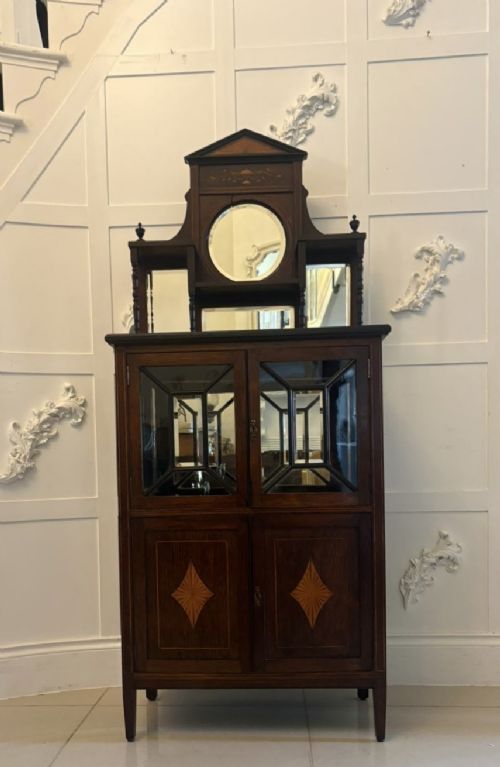
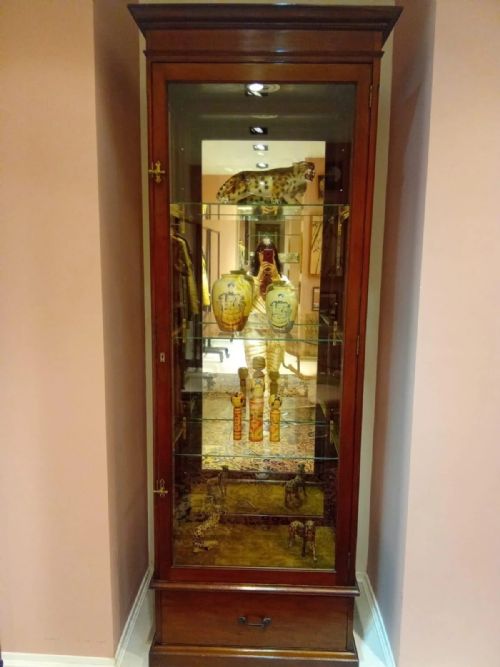
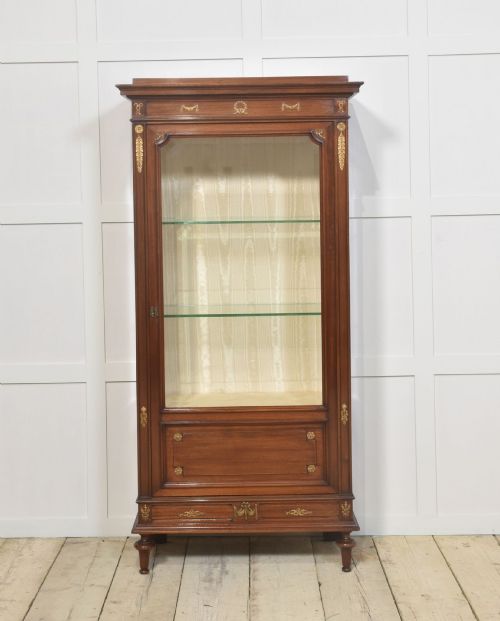


Mahogany Showcase Cabinet
These mahogany showcase cabinet designs combine rich timbers and clear glass to display prized objects securely.
Mahogany Showcase Cabinet
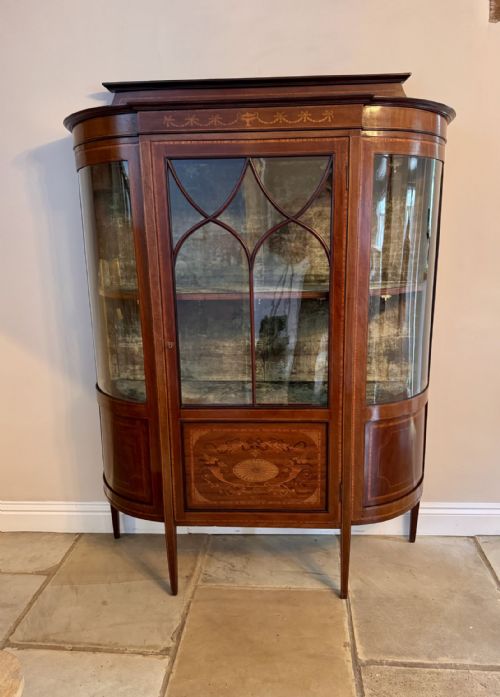
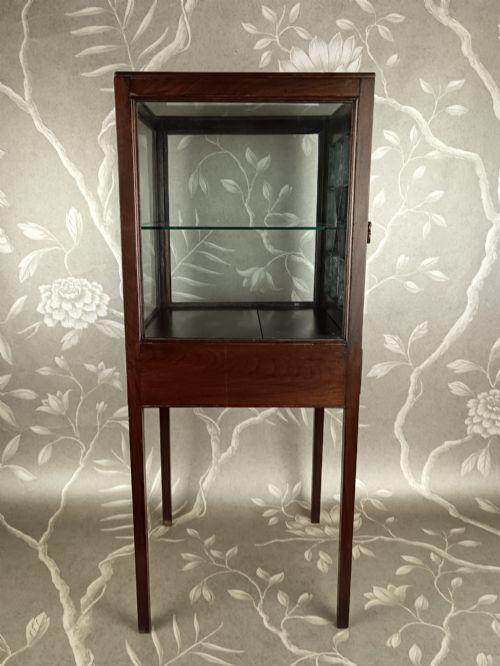
A mahogany showcase cabinet brings together the rich, dark tones of timber with expansive glazing to exhibit collections, retail merchandise, and domestic valuables. The examples gathered here span from the 18th century through the Victorian and Edwardian eras up to the 1920s.
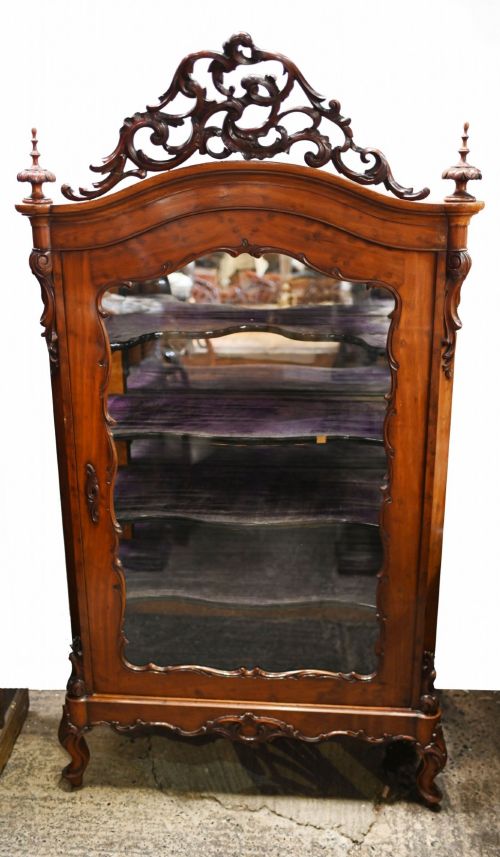
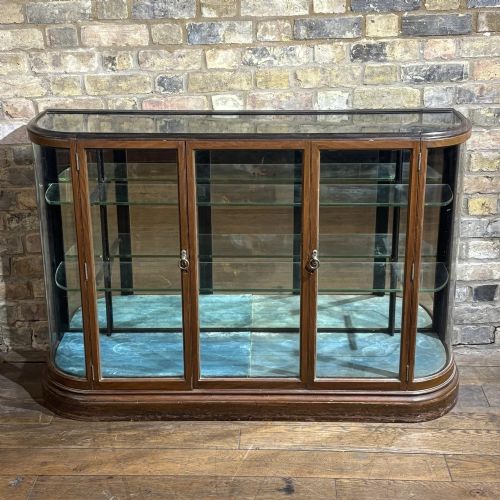
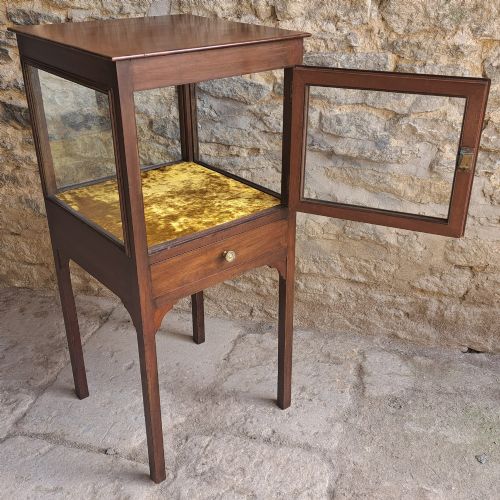
Buyers will encounter freestanding domestic vitrines alongside commercial shop display cabinets, countertop cases, bijouterie tables, and wall-mounted versions. Styles range from Georgian and Victorian proportions to French Rococo Revival, Art Nouveau, and Sheraton or Adam revivals.
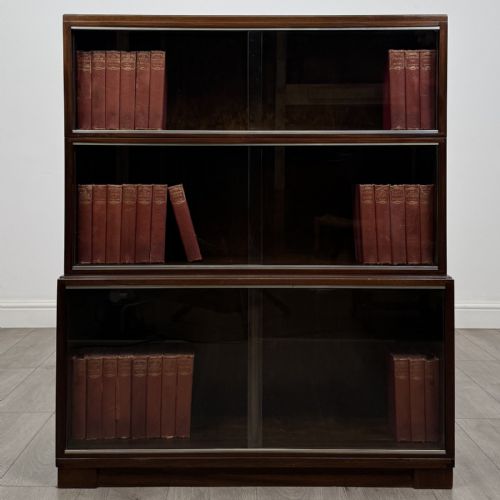
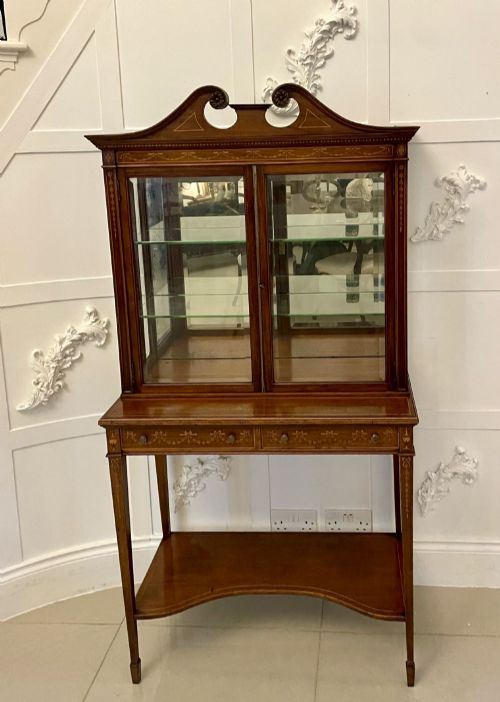
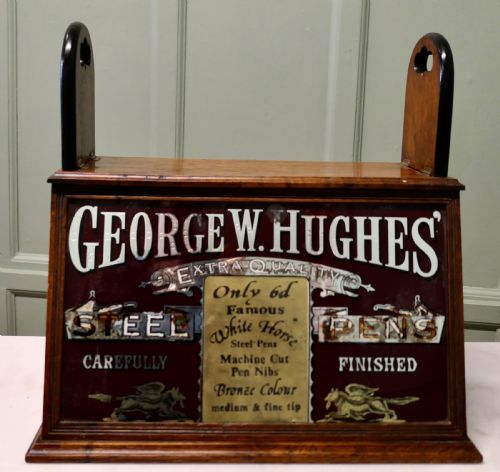
Commercial shopfitting pieces from makers like F. Sage & Co sit alongside refined domestic cabinets featuring inlaid satinwood, mirror backs, and velvet linings. Whether intended for a sweet shop, a gunsmith, or a drawing room, each piece prioritises visibility.
How they were made
Makers utilised solid mahogany and mahogany veneers as the primary structural timber, often enriched with contrasting satinwood inlay, marquetry, or ormolu mounts. Frameworks support large expanses of clear glass panes designed to maximise light entry.
Internal elements frequently incorporate mirrored backs, adjustable glass shelves, and fabric linings such as velvet. Brass hardware, bronze details, and marble tops appear across domestic vitrines and commercial display counters alike.
Mahogany Showcase Cabinet Retail Price Guide 2026
Typical asking prices for mahogany showcase cabinet among the pieces listed under this phrase on Sellingantiques today, from the lower quarter to the upper quarter. They describe what is for sale here now, not the wider market.
Several sweet shop cabinets carry the legacy of confectioners like Rowntree's and Fry's, once built to tempt customers with chocolate.
What varies in quality
Quality rests upon the selection of timber, the crispness of inlaid marquetry details, and the integration of brass or ormolu mounts. Finer examples show meticulous cabinetmaking in the joinery of curved glass doors and bow ends.
Commercial shop fittings demonstrate robust framing built for retail durability, while domestic vitrines display delicate proportions, hand-selected mahogany grain, and sophisticated period stylistic revivals.
F. Sage & Co·François Linke
The Mahogany Showcase Cabinet Glossary
- Vitrine
- A glass-fronted cabinet designed for displaying fine objects or porcelain. These pieces often feature glazed sides and mirrored interiors to reflect light.
- Bijouterie table
- A glass-topped display table intended for smaller valuables, jewellery, and curiosities. They frequently stand on slender legs with hinged glazed lids.
- Vernis Martin
- A European lacquer technique mimicking Asian lacquerwork, commonly seen on French decorative cabinets. The finish employs translucent varnishes over painted scenes.
- Ormolu
- Gilded bronze mounts applied to furniture for decorative enrichment. This technique is typical of high-status French revival cabinets.
- Marquetry
- Decorative woodwork where pieces of veneer are fitted into a ground to form floral or geometric patterns. Satinwood is frequently used alongside mahogany for contrast.
Mahogany Showcase Cabinet: Frequently Asked Questions
What is a mahogany showcase cabinet used for?
These cabinets were originally built either for domestic drawing rooms to display porcelain and curiosities or for commercial shops to merchandise goods. Today, collectors utilise them in homes to exhibit everything from ceramics to natural history specimens.
The extensive glazing and internal glass shelving ensure that items placed inside receive maximum light from multiple angles while remaining protected from dust.
How do I tell an Edwardian cabinet from a Victorian one?
Victorian pieces tend to be heavier in proportion, often featuring rich dark mahogany, elaborate carvings, and deeper cornices. Edwardian examples, particularly those from the 1900s and 1910s, frequently embrace lighter Sheraton or Adam revivals with delicate satinwood inlay.
Commercial shop fittings from the Edwardian period often bear maker plaques or signatures from firms like F. Sage & Co, reflecting the standardisation of retail display.
Where should I place a freestanding vitrine?
Position your cabinet away from direct sunlight to protect internal fabric linings, such as velvet, and to prevent timber warping. Placing the piece perpendicular to a light source maximises the illumination passing through the glass panes.
Ensure the floor is level so that large glazed doors hang truly and swing smoothly within their mahogany frames.