


Antique Shop Fitting Counter
An antique shop fitting counter organises retail space with sturdy timber and glass built for daily commerce.
Antique Shop Fitting Counter
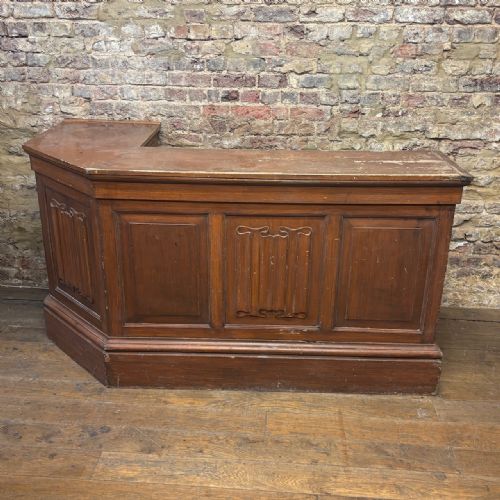
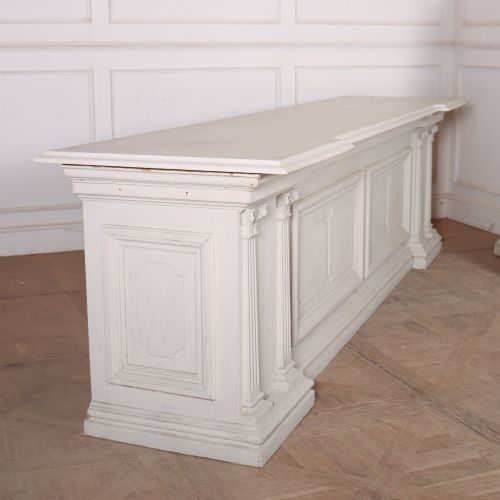
An antique shop fitting counter serves as the central focal point for retail display and customer service. These pieces originate from commercial spaces, chemist shops, drapers, and grocery stores across the nineteenth and early twentieth centuries.
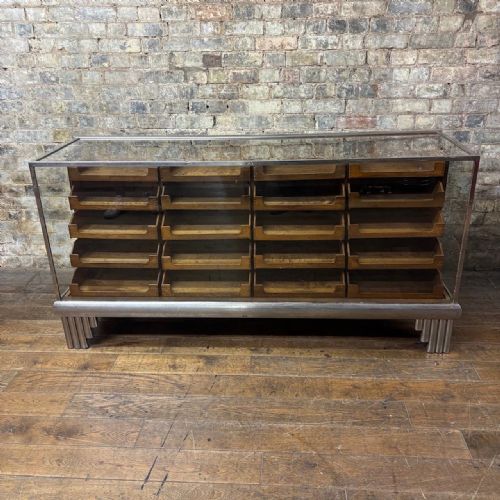
The selections here feature heavy timbers, glazed upper display sections, and extensive banks of drawers designed for organising merchandise. Buyers encounter large serving counters, countertop display cases, and tall drawer units built for commercial endurance.
Stylistic influences range from plain Victorian pine and mahogany to Edwardian glass cases and Art Deco commercial framing. Each piece reflects the specific trade practices of its era, from haberdashery storage to confectioner display.
Materials and construction methods
Carpenters utilised durable hardwoods such as mahogany and oak alongside practical softwoods like pine for the primary framework. These timbers withstood heavy daily use in busy shops and mercantile establishments.
Glass panels and brass or chrome framing were incorporated into display counters to showcase goods securely while protecting stock from dust and handling. Painted finishes in white, cream, and green appear frequently on regional pine items.
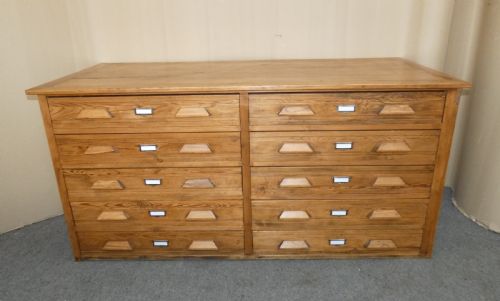
Joinery techniques prioritised rigidity and load-bearing capacity, particularly in multi-drawer haberdashery units and large serving counters. Drawer banks relied on tight tolerances to function smoothly under heavy commercial loads.
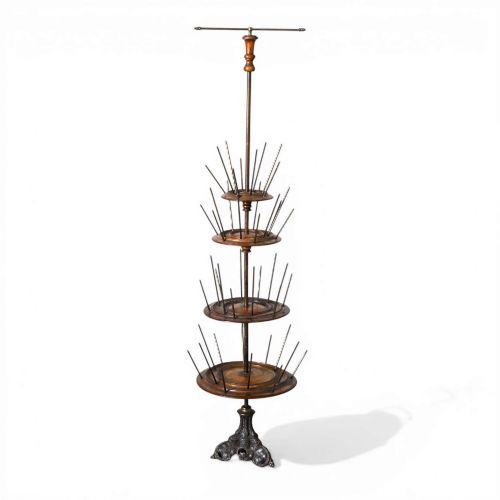
Cotton reel display trees once stood proudly on shop counters, ready to dispense sewing threads to eager Victorian tailors.
Assessing quality in commercial fittings
Quality rests upon the integrity of the original timber framing, the retention of original glass, and the condition of integrated hardware. Examples retaining their initial painted surfaces or maker plaques demonstrate higher historical value.
The complexity of the internal configuration, such as multi-tiered drawer arrangements or specialised display tiers, distinguishes standard utility counters from finer retail display pieces. Superior pieces balance functional storage with refined proportions and detailing.
Dudley & Co·G H Gledhill Halifax·John Stow Ltd of Bradford·Saml. Elliott & Sons
The Antique Shop Fitting Counter Glossary
- Haberdashery cabinet
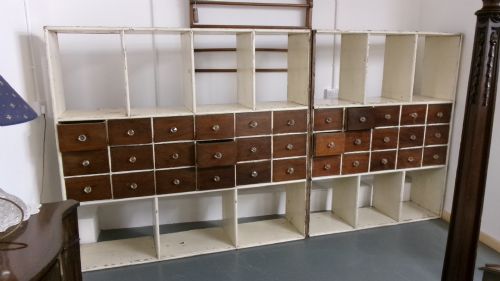
- A multi-drawer storage unit originally utilised in drapery and sewing shops for small notions and threads. These pieces typically feature numerous shallow drawers, sometimes with glass fronts.
- Toleware
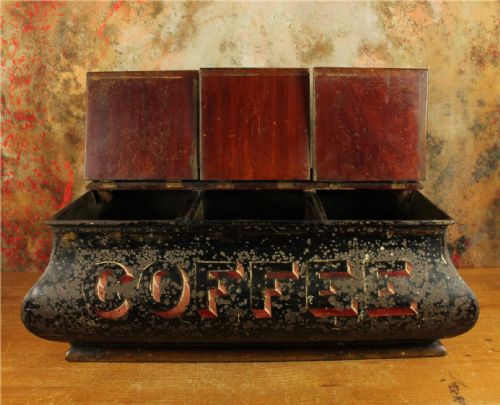
- Painted or japanned metalware utilised for storage and display items such as tea canisters and utility boxes. This material brings durable colour and functional compartments to shop interiors.
- Chemist shop fitting
- Specialised cabinetry and drawer banks created for apothecary and pharmacy use. These fittings often incorporate numerous labelled drawers for botanical and medicinal ingredients.
- Countertop display
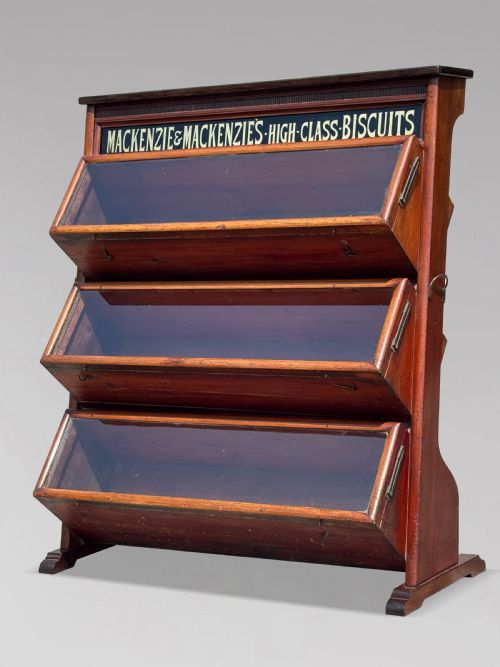
- A smaller glazed cabinet or dispenser positioned atop a main serving counter. Merchants used these portable units to highlight confectioneries, tobacco, and small dry goods.
- Drapers table
- A long wooden table utilised in fabric and textile shops for measuring and displaying cloth. These tables often feature simple lines and substantial timber construction.
Antique Shop Fitting Counter: Frequently Asked Questions
How were shop counters used historically?
Merchants utilised these substantial pieces to serve customers, wrap goods, and store daily inventory securely beneath the working surface. Glazed top sections and display cabinets kept delicate wares visible yet protected from handling.
Drawer units organised small items like cotton reels, ribbons, and confectioneries for efficient retrieval during busy trading hours.
Where can I place an antique counter at home?
These large timber pieces function effectively as kitchen islands, sideboards, or entryway storage units. Their generous proportions and numerous drawers offer practical storage for modern domestic living.
Glass-topped display variants suit living spaces or studies for exhibiting collections while keeping surfaces clear.
How do I identify a Victorian shop fitting?
Victorian pieces frequently employ solid mahogany, oak, or heavy pine with hand-cut joinery and traditional brass hardware. Many bear the marks of regional joiners or specific mercantile trades.
Surface wear, original painted finishes, and heavy structural framing distinguish nineteenth-century commercial joinery from later reproductions.
What maintenance do these wooden counters require?
Timber surfaces benefit from occasional treatment with appropriate beeswax or natural oils to preserve the grain and prevent drying. Avoid placing antique wood in direct sunlight or near sudden heat sources.
Glass panels and metal frames require gentle cleaning with standard non-abrasive solutions to maintain clarity and finish.