


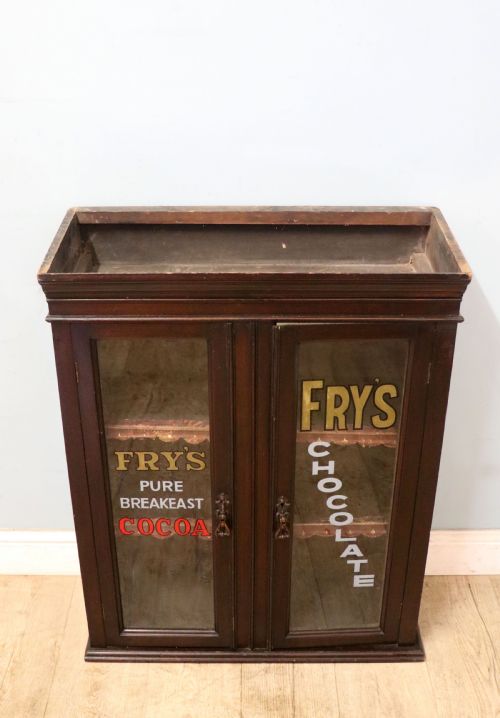


Mahogany Countertop Display Case
A mahogany countertop display case is a commercial showcase built to tempt buyers with confectionery, cotton, and apothecary goods.
Mahogany Countertop Display Case
A mahogany countertop display case brings the practical utility of Victorian and Edwardian retail directly into the home, designed originally to sit upon shop counters and catch the customer's eye. These pieces range from small domestic showcases to branded haberdashery and confectionery cabinets bearing historic trade names.
Most examples found here date from the late Victorian and Edwardian eras through to the 1920s and 1930s, reflecting an age when shopfittings were built with genuine substance. The forms include glazed table top cabinets, apothecary units, and specialised sweet shop displays with tiered shelving.
Makers such as John Stow Ltd of Bradford and F. Sage & Co. of London supplied these sturdy commercial units to businesses, often incorporating hand sign written advertising for firms like Fry's and Rowntree's. The survival of these retail pieces offers a tangible link to high street commerce of the past.
How they were made
Construction relies heavily on solid mahogany and mixed hardwoods, providing a robust frame capable of withstanding the daily knocks of a busy shop counter. Brass hardware secures the doors and framing, whilst mirrored backs or clear glass panels maximise the light reaching the goods inside.
Interior surfaces frequently feature felt linings to cushion delicate wares and protect items from rolling or scratching against the timber base. Glazing is securely set within wooden rebates, often accompanied by hand painted signage applied directly to the glass or timber fascia.
Chocolate and sewing cottons once shared the counter space inside these very glazed wooden frames.
What varies in quality
The distinction between standard commercial units and finer pieces often rests upon the crispness of the timber joinery and the presence of original maker markings or etched brass plaques. Cabinets retaining their authentic glass panels, original brass fittings, and unblemished interior mirrors command greater interest.
Original hand sign written advertising adds significant character and historical value when authentic, whereas later or replacement sign writing changes the nature of the piece. The weight of the timber and the refinement of the brass hinges also separate basic utilitarian boxes from superior shopfittings.
John Stow Ltd of Bradford·F. Sage & Co. London
The Mahogany Countertop Display Case Glossary
- Haberdashery cabinet
- A compartmentalised showcase originally used in drapery and sewing shops for selling threads and small notions. These units often feature multiple small drawers or glazed tiers.
- Apothecary cabinet
- A specialist display unit designed for chemists and druggists to house medicines and remedies. They typically combine small footprint proportions with secure glass protection.
- Shopfitting
- The trade and craft of manufacturing interior fixtures and display furniture for retail premises. Pieces built by established shopfitters usually display superior structural engineering.
- Sign written
- Lettering applied by hand to glass or wood using traditional signwriting paints. This technique was standard for period commercial advertising before modern vinyl lettering.
- Rebate
- A recess or groove cut into the edge of a piece of timber to allow glass panes to sit flush. Cleanly cut rebates indicate careful cabinet making.
Mahogany Countertop Display Case: Frequently Asked Questions
What were mahogany countertop display cases used for?
These cabinets sat upon shop counters to showcase luxury goods, sewing cottons, chocolates, and apothecary items directly to waiting customers. The clear glass protected the merchandise while keeping it fully visible.
Today, the same glazed protection makes them ideal for displaying small collections, pocket watches, or curiosities within a domestic setting without gathering dust.
How can I date a countertop display case?
Dating relies upon the timber choice, brass hardware, construction techniques, and any surviving maker plaques or trade signage. Victorian and Edwardian examples generally exhibit heavier timber frames and traditional joinery.
Later pieces from the 1920s and 1930s often show slightly more streamlined commercial construction, sometimes incorporating branded advertising for confectionery firms.
Are the advertising signs on these cases original?
Some cabinets retain their original hand sign written advertising from brands like Fry's, Rowntree's, or OXO, applied directly to the glass or wood during their working life. Other pieces feature later decorative sign writing added during restoration.
Examining the wear around the lettering and the condition of the paint helps distinguish period commercial application from modern decorative additions.
How do I care for wood and glass display cases?
Maintain the mahogany framework by applying a suitable wax polish sparingly to nourish the grain and preserve the finish. Avoid placing the case in direct sunlight to protect any interior felt linings and timber from fading.
Clean the glass panels gently with a mild glass cleaner applied to a cloth rather than sprayed directly, preventing moisture from seeping into the wooden rebates.