


Vintage Glass Cookie Barrel
These vintage glass cookie barrels are practical lidded containers designed to hold biscuits on the dining table.
Vintage Glass Cookie Barrel
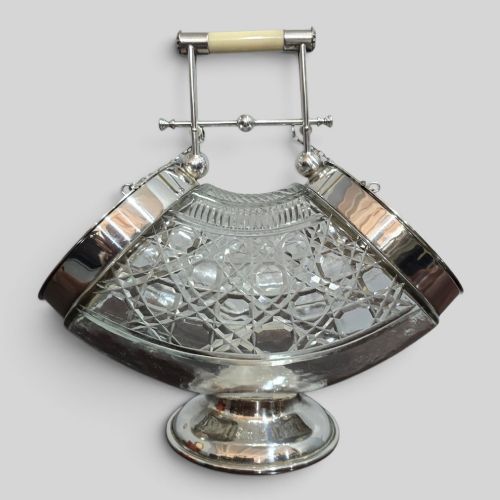
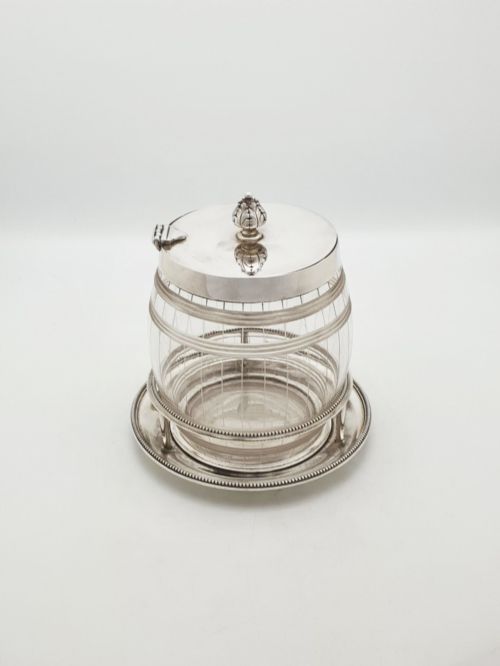
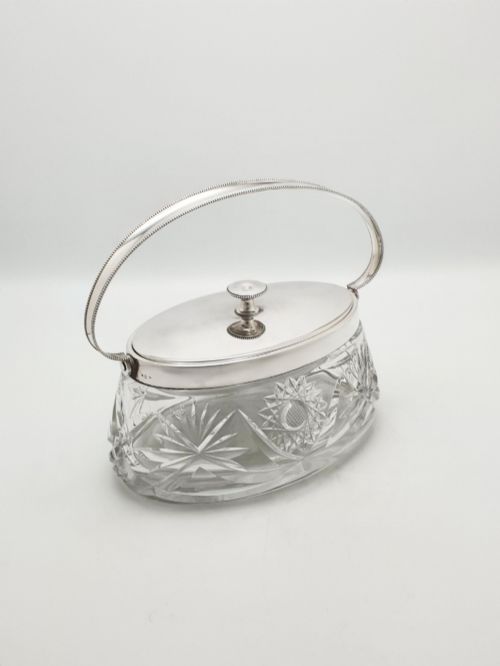
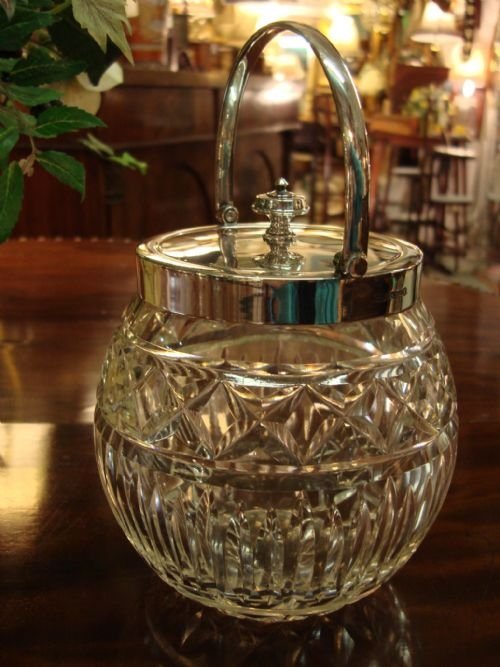
When you search for a vintage glass cookie barrel, you find lidded containers primarily created as biscuit barrels across the Victorian, Edwardian, and Art Deco periods. These vessels combine functional storage with decorative presence on the sideboard or table.
The pieces on this page span from the late nineteenth century through the early twentieth century, including George V examples and Jugendstil designs. Most variations feature glass bodies paired with silver plated mounts, handles, or lids.
How they were made
Glass bodies are shaped through cutting, faceting, hobnail patterns, or twisting techniques, alongside specific colour treatments such as cranberry glass. These transparent and coloured vessels provide the main body of the container.
Metal elements utilise silver plate or sterling silver for mounts, swing handles, and decorative finials, sometimes incorporating enamel decoration or heraldic dragon motifs onto the finished container.
What varies in quality
Quality rests in the depth and crispness of the cut glass facets and the weight of the silver plated or sterling silver mounts. Better examples exhibit precise hobnail or twisted glass work paired with substantial metal hardware.
The integration of maker details, such as recognised silversmiths, alongside specialised decoration like enamel work or figural finials like heraldic dragons, elevates the standard of individual pieces.
Elkington·WMF·James Dixon and Sons
The Vintage Glass Cookie Barrel Glossary
- Biscuit barrel
- A lidded container used for serving biscuits at the table. These vessels became popular dining accessories during the nineteenth century.
- Hobnail cut
- A decorative glass cutting pattern featuring small, raised pyramidal points resembling hobnails on boots. This technique creates a textured surface that catches the light.
- Silver plate
- A layer of silver applied to a base metal foundation, commonly used for the rims, covers, and swing handles of these containers. It offered the appearance of solid silver at a lower cost.
- Cranberry glass
- A rich red transparent glass coloured with gold chloride during production. It is frequently seen in Victorian and Edwardian tablewares.
- Jugendstil
- The continental European manifestation of Art Nouveau, prevalent around nineteen hundred. It is characterised by flowing, organic lines.
- Finial
- The decorative knob or ornament attached to the top of a lid. On these containers, they range from simple forms to heraldic dragons.
Vintage Glass Cookie Barrel: Frequently Asked Questions
What is a biscuit barrel used for?
These containers held biscuits and dry sweets for after-dinner service in Victorian and Edwardian homes.
They sat upon the dining table or sideboard, keeping the contents protected beneath a fitted lid.
How do I date a glass biscuit barrel?
Dating relies on the style of the glass cutting, the form of the metal mounts, and the hallmarks where silver is present.
Victorian pieces often feature heavy cut glass and ornate plating, while 1920s examples show simpler faceted profiles.
Are the metal parts solid silver?
Most metal mounts, handles, and lids are silver plated over a base metal rather than made from solid silver.
Some select examples feature hallmarked sterling silver mounts produced by established makers.
What is cranberry glass?
Cranberry glass is a distinct transparent red material created by adding gold during the glassmaking process.
It appears frequently in Victorian tablewares and biscuit jars.